This plant at Exotenherz
Check the shop offer for current availability, price and what is included.
Check the selected shop offer for price, availability and delivery contents.
Your care table
| Topic | What to do | Why it helps |
|---|---|---|
| Light | Bright filtered daylight; consider the pot crown too. | Window edges or shelves can shade upper hanging positions. |
| Warmth | Consistently warm, away from cold draughts and hot heater airflow. | Abrupt changes stress foliage. |
| Moisture check | Check hanging-pot surface and weight together. | Foliage alone does not reveal root-ball condition. |
| Watering | Let the surface dry somewhat; maintain moderate root-ball moisture. | Avoid repeated complete drying and constant wetness. |
| Drainage | Water securely, drain fully and empty outer wrappers. | Residual water must not collect beneath the root ball. |
| Substrate | Loose draining mix; suitably larger repotting only when needed. | Air in the root zone and moisture control are preserved. |
| Feeding | Measured label-based feeding with active tips. | Extra food replaces no adequate brightness. |
| Pruning | Selectively shorten weak or awkwardly long shoots cleanly. | Natural trailing character and healthy foliage remain. |
| Checking | Inspect undersides, nodes, free shoot space and bracket. | Pests and mechanical stress are noticed early. |
Check the compost and pot weight. The care table explains how far the compost may dry.
Water only when needed. The water should reach the root ball without spilling over the rim.
Remove surplus water from the saucer or cachepot. Then return the plant to a suitable position.
Narrow green leaves set the rhythm
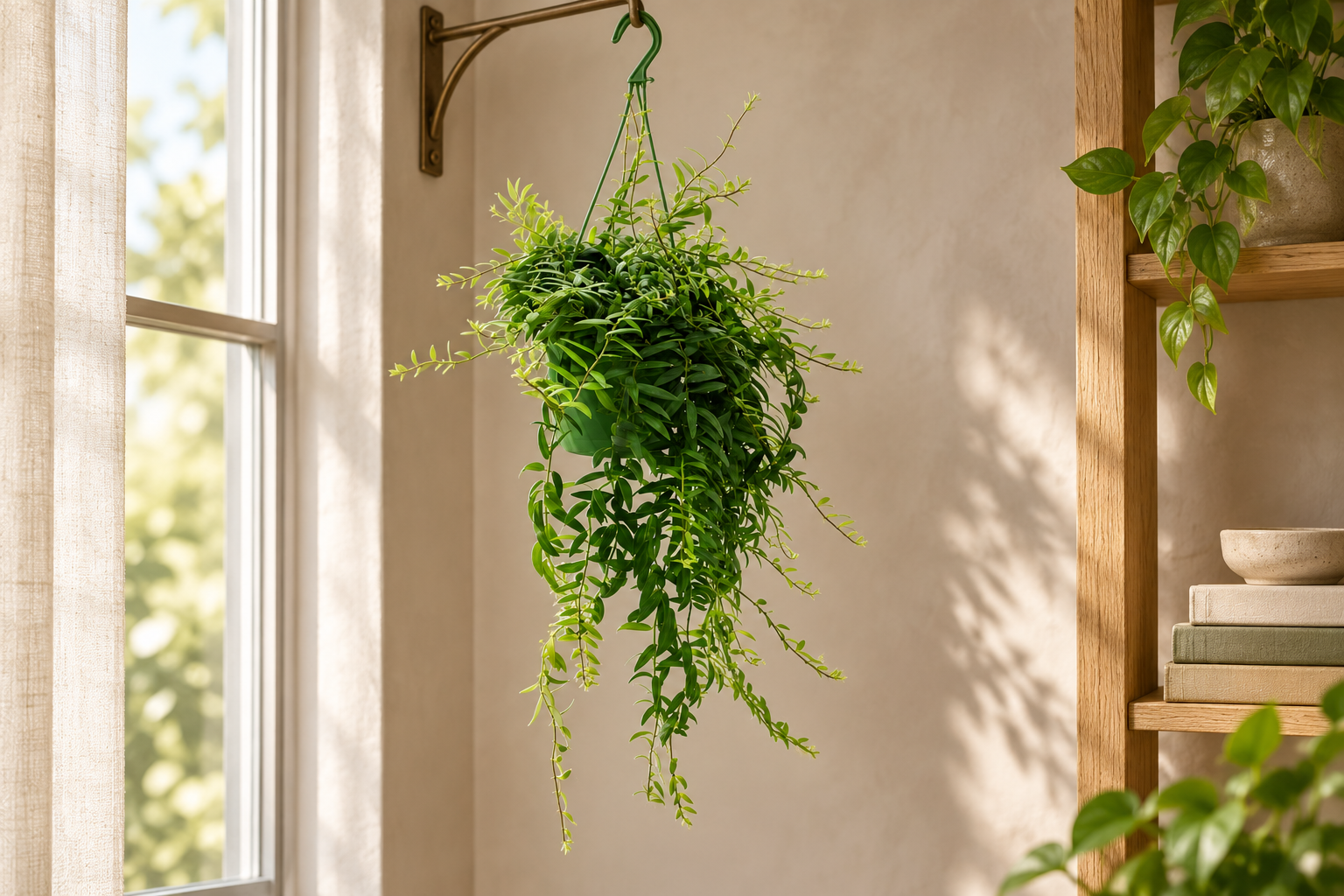
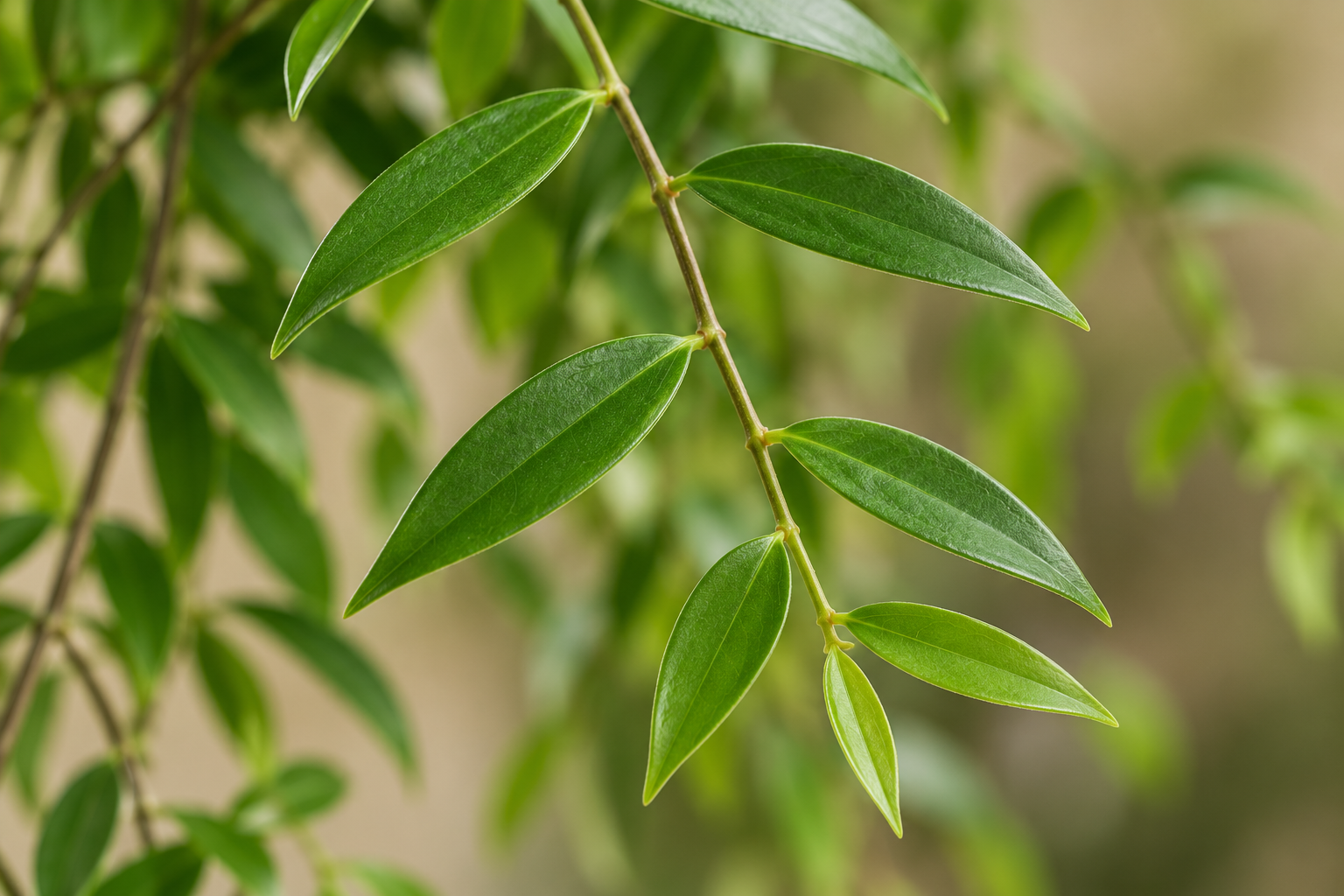
Japhrolepis is easy to view along a single shoot. Flat lance-shaped leaves taper to points and stand in pairs along a fine flexible stem. Free lengths remain visible between little pairs. Rich green foliage carries no cream margins and is not tightly curled. Many branches form a dense upper crown while longer shoots fall loosely over the hanging-pot rim. Some young tips first point sideways or upward. Against a calm warm wall this creates a fine living pattern. Let stems hang free rather than threading them like curtains between books and shelf struts.
A named selection and its offered length
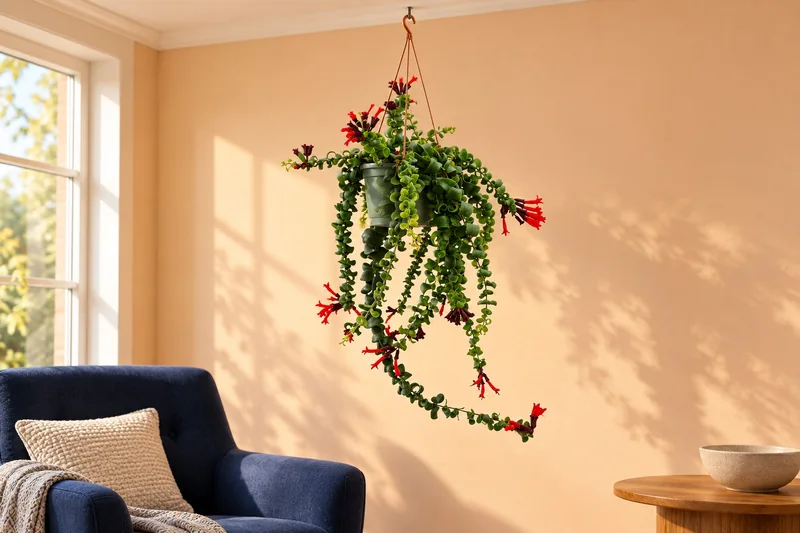
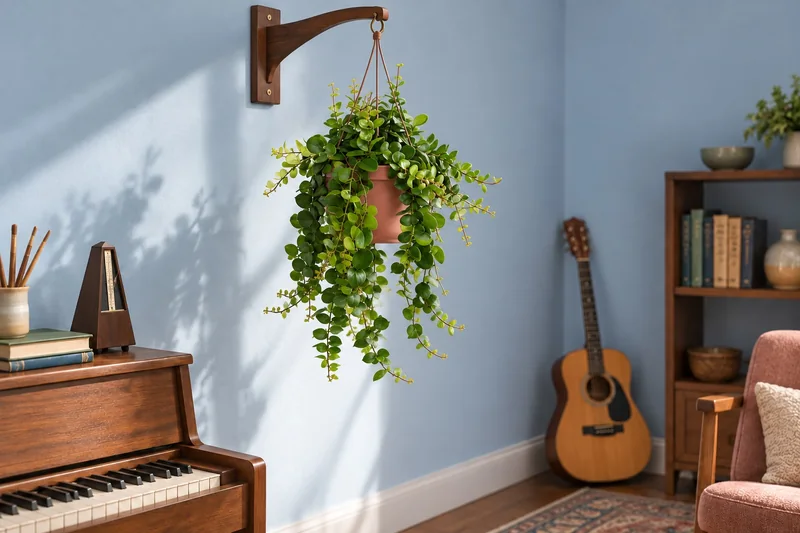
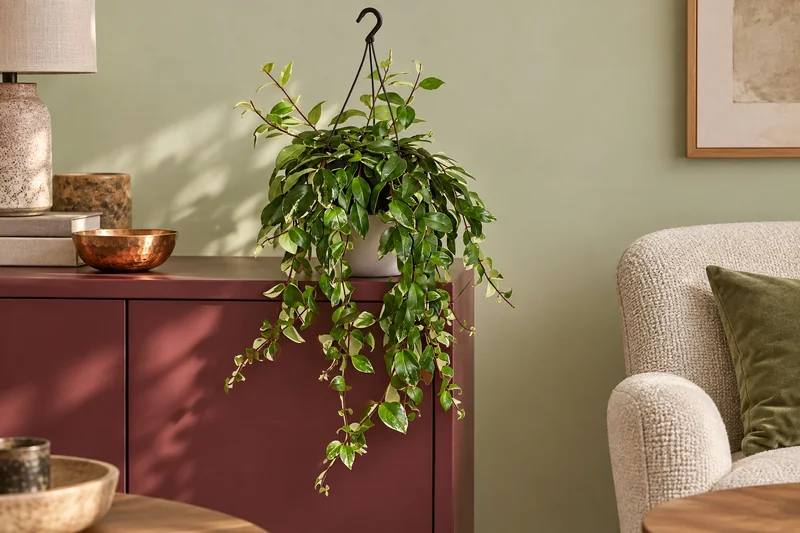
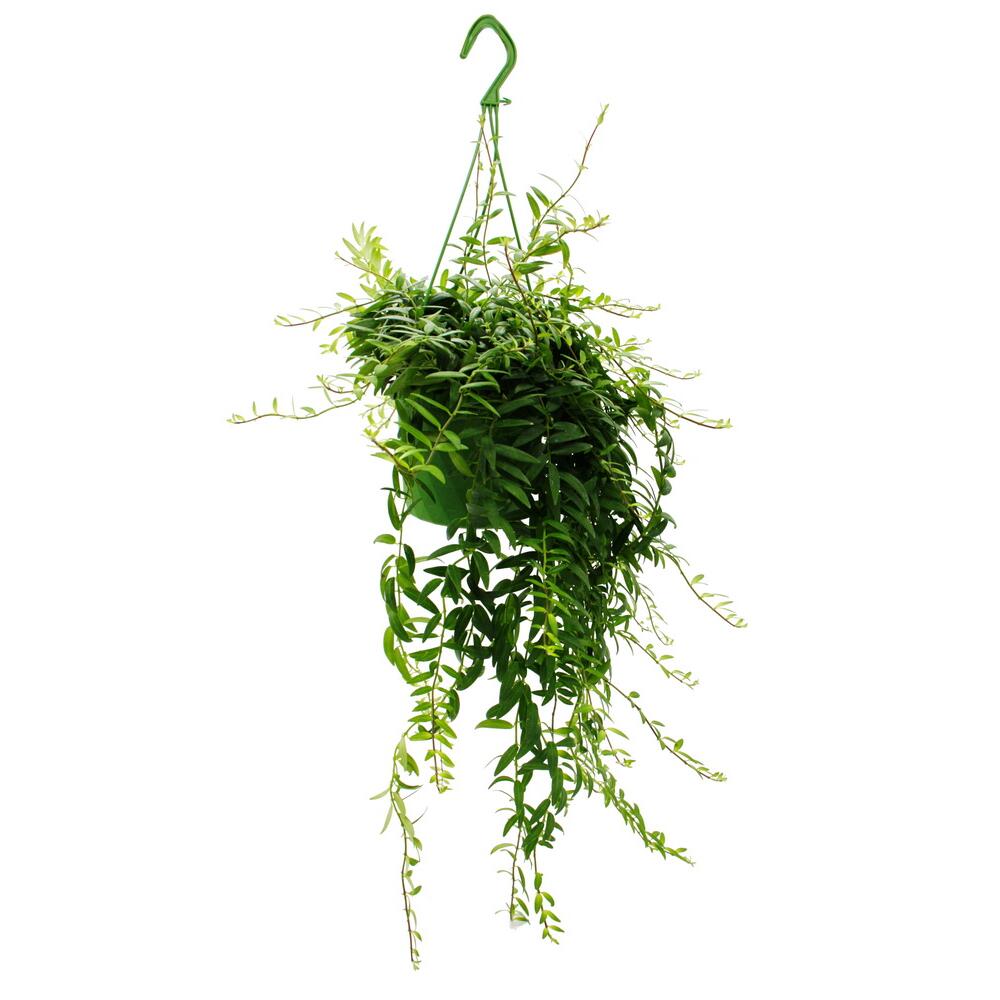
RHS lists Aeschynanthus 'Japhrolepis' as a named horticultural selection. The shop uses the same name without cultivar quotation marks. The offered material is described here under this selection name; no additional wild species or exact breeder ancestry is established. The specific offer states a fifteen-centimetre hanging pot and approximately forty to fifty centimetres overall length. This is neither a fixed later final size nor the hanger’s height. Our own original shows a flowerless plant. The portrait therefore focuses on green leaf pairs and young hanging character. Wall bracket, curtain, books and other plants in the AI scene add nothing to delivery contents.
Bring light into the small crown
A bright position with filtered daylight suits the lipstick plant. A hanging pot’s crown deserves particular attention: lower shoots can hang before the window while roots and upper leaves disappear behind a board or above its edge. Check the whole position, not just an illuminated tip. Soften hot direct summer sun through glass without moving deep into a dark corner. Consistent warmth and distance from cold draughts ease settling in. Do not hang immediately above a hot radiator. The chosen bracket must securely carry a freshly watered pot too; leave enough space below so long tips are neither touched nor trapped.
Assess surface and root ball together
Carefully take down the accessible hanging pot for checks and hold its container. Thin shoots are no handles. Compare weight with the state after watering and feel the upper substrate layer. It may dry somewhat while the root ball remains moderately moist. When water is needed, supply evenly at room temperature and drain all surplus. Neither permanently wet soil nor repeated complete drying is a good rhythm. Light, room warmth and growth affect consumption; a fixed weekday does not describe condition. With limp leaves check moisture first. An already wet pot needs no extra watering solely because of the leaf signal.
Maintain pot structure rather than enlarge reserves
A loose, freely draining houseplant mix combines air in the root zone with measured moisture reserves. Check drainage holes stay clear and any extra decorative wrapper retains no residual water. Heavily compacted mix staying wet for long deserves attention at the next sensible pot change. Repot for actual need, such as roots filling the space or clearly deteriorated substrate structure. Support shoots sideways and work gently at the root ball. A suitably slightly larger pot is easier to control than a broad damp soil margin. New leaf pairs and active tips show growth. Then feed sparingly by a suitable label; a stronger dose cannot make low light a good position.
Shape free shoots and accompany possible flowering
Trailing branches are no care mistake. They belong to Japhrolepis growth and need not constantly be cut to the same length. Particularly weak or awkwardly long shoots can be selectively shortened with clean tools. Support healthy portions without pulling the entire crown. The specialist description lists possible red tubular flowers for this selection. Neither delivery flowers nor a particular date follows for the flowerless original. If buds later appear, avoid unnecessary catching and major cuts. Green leaf pairs remain interesting outside flowering too. Water demand may fall in lower-light months; substrate state and actual activity remain decisive.
Notice changes early beneath leaf pairs
Fine stems and numerous small bases invite brief regular checks. Inspect undersides, young nodes and pot rim. Cotton-like nests or new sticky areas may indicate pests and warrant closer examination. Judge drying tips together with position, root-ball moisture and possible mechanical damage. Individual older leaves may change; rapid extensive leaf fall needs thorough inspection. Higher air humidity does not replace a supplied root ball, and dense wet foliage still needs air movement. After watering, free trapped stems and securely reattach the hanger. Japhrolepis thereby retains room while care accompanies actual condition.
One plant, several views
Good to know
Is Japhrolepis a certain wild species name here?
RHS lists Aeschynanthus Japhrolepis as a named horticultural selection. No additional wild species or exact parentage is added for the offer.
What length does the offer state?
Approximately forty to fifty centimetres overall length in a fifteen-centimetre hanging pot. This is no fixed later final size.
Why are leaves not curled?
Japhrolepis has flat narrow lance-shaped pairs. Tightly curled foliage belongs to other lipstick-plant forms such as Rasta.
Is the pictured plant flowering?
Our original and both AI motifs show foliage without flowers. Later flowering depends on development and culture.
May the soil dry somewhat?
The surface may dry slightly while the root ball remains moderately moist. Avoid repeated complete drying.
Should I constantly prune long shoots?
No. Free trailing character belongs to its habit. Only weak or awkward branches need selective clean shortening.
How do I care in winter?
Keep bright and warm and check moisture. Water less often with lower consumption; protect from cold draughts and immediate heater warmth.
Sources and editorial note
- Exotenherz: own offer and original (4 October 2026)
- RHS: Aeschynanthus 'Japhrolepis', named selection and culture (4 October 2026)
Shop offer, originals and specialist sources checked on 4 October 2026. Check current shop availability.