This plant at Exotenherz
Check the shop offer for current availability, price and what is included.
Product and delivery details are given in the individual offer.
Your care table
| Topic | What to do | Why it helps |
|---|---|---|
| Arrival | Check bulb, leaves, soil moisture and drainage holes. | An already moist plant needs no automatic starting water. |
| Light | Openly bright and sunny; acclimatise gradually to stronger sun. | An abrupt position change may stress foliage. |
| Active leaves | Water as needed and let soil dry out partly between waterings. | Growth needs water, but permanently wet soil hampers airy root space. |
| Dormancy | Keep a dormant bulb dry and continue observing. | Without active leaf development, consumption falls; topping up may retain wetness. |
| Drainage | Let surplus drain fully and empty closed covers. | A reservoir at the pot base cannot replace need-based watering. |
| Soil | Choose a loose well-drained mix and a freely draining container. | Water should be absorbed without remaining long in root space. |
| Feeding | Supply sparingly only during active growth according to product instructions. | A dormant plant needs no nutrient boost; fertiliser does not fix waterlogging. |
| Repotting | Work carefully only when actually needed and retain previous depth. | The visible bulb is not buried beneath extra heavy soil. |
| Offsets | Carefully remove side bulbs during dormancy if they release. | This disturbs active leaf development less; establishment remains to be observed. |
| Pruning | No shaping; gently remove completely dead leaves. | Green leaves supply the bulb and should not be shortened for uniform shape. |
| Winter and checks | Protect from frost; check leaf condition, firmness and moisture together. | A fixed annual calendar cannot replace this bulbous plant’s actual condition. |
Check the compost and pot weight. The care table explains how far the compost may dry.
Water only when needed. The water should reach the root ball without spilling over the rim.
Remove surplus water from the saucer or cachepot. Then return the plant to a suitable position.
A bulb worth close observation
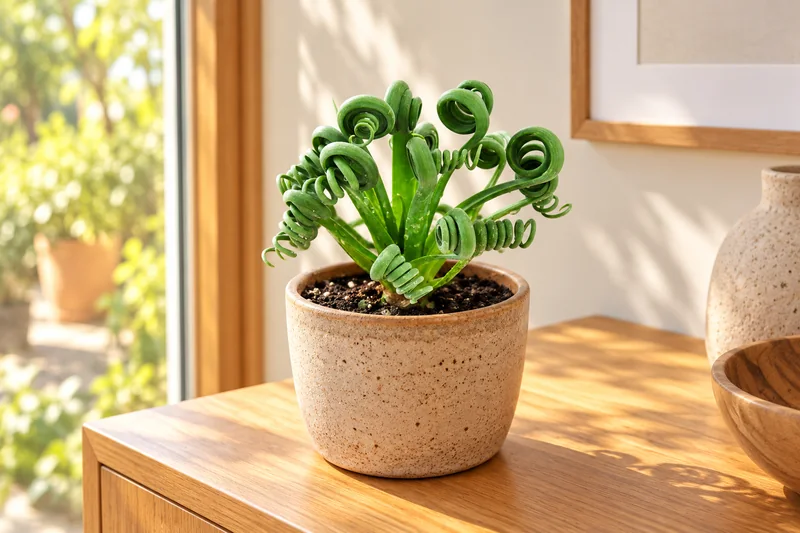
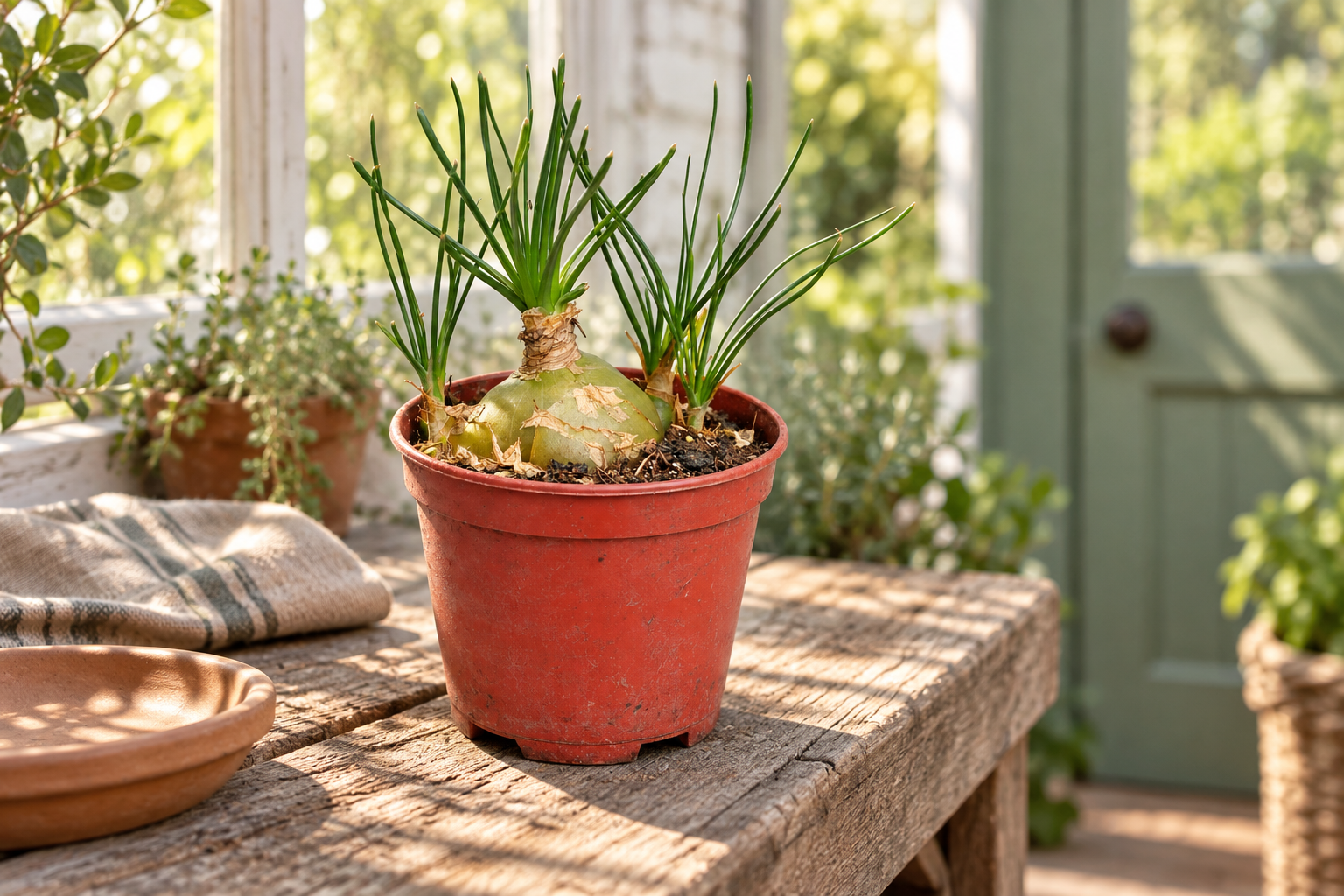
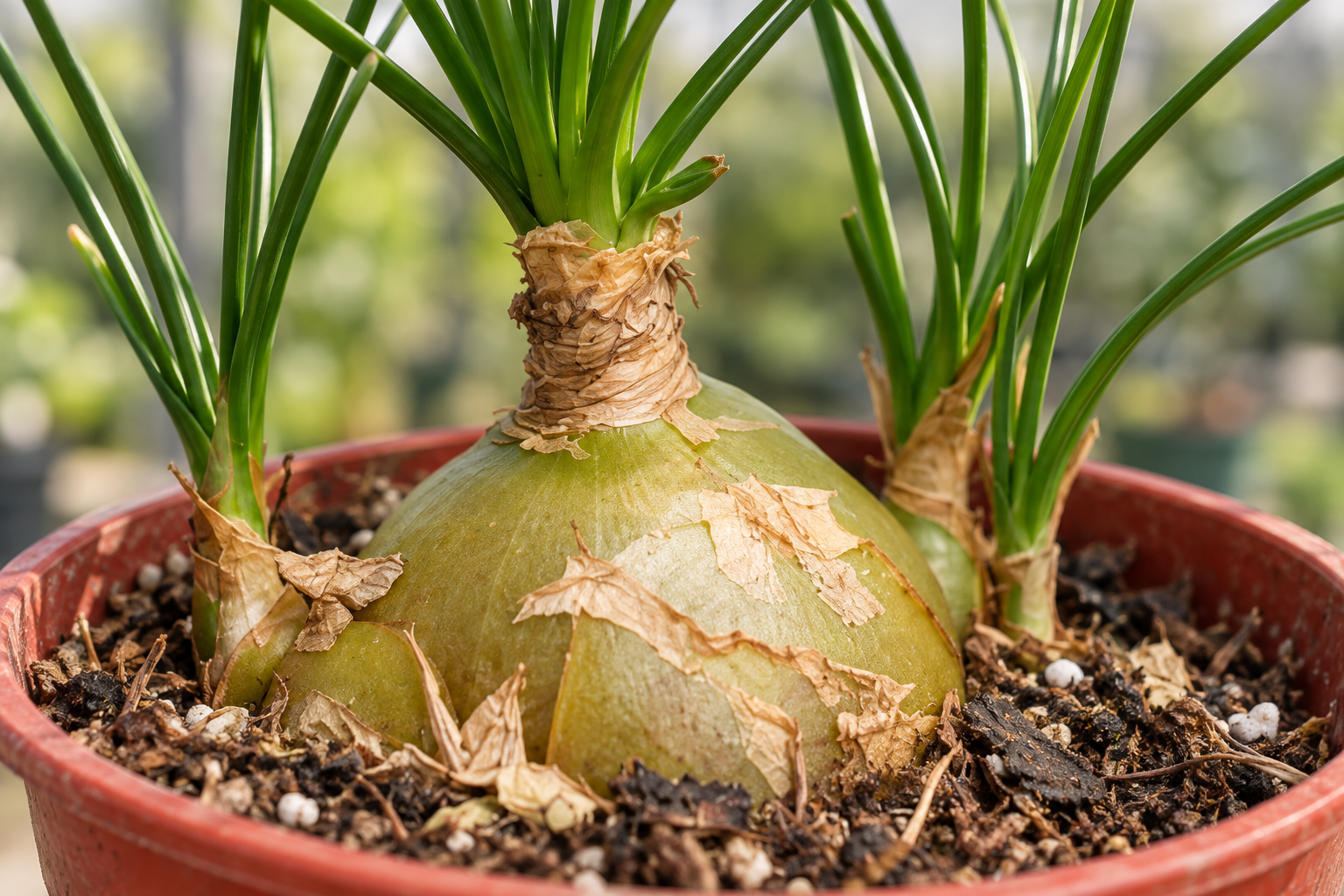
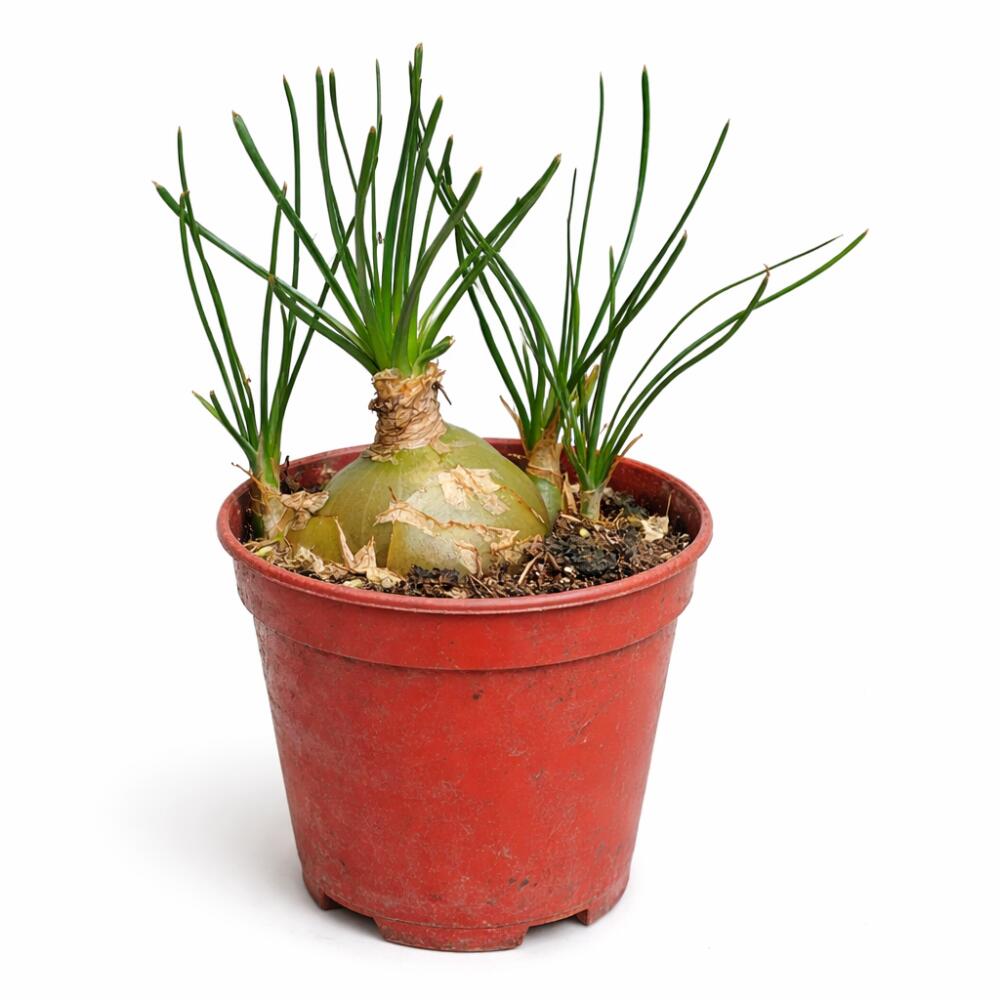
In Albuca humilis, the most striking part sits directly above the soil. A rounded green bulb carries pale papery scales, with small daughter bulbs possibly alongside. Fine dark green leaves grow from its upper part, mostly straight on the shop plant and leaning loosely outward. This gives a different impression from the strongly twisted leaves of Albuca spiralis ‘Frizzle Sizzle’. Fine lines and visible bulb look good on a bright windowsill or sheltered planting table.
Albuca humilis is a perennial bulbous plant from South Africa in the asparagus family. The shop offer spells it “Albuca hummilis”, while the label says “Albuca humilis”. This portrait uses Albuca humilis without naming a particular cultivar. Foliage may die back during development; a temporarily sparsely leafy bulb is therefore assessed differently from soft rotting tissue. White cup-shaped flowers with green outer markings and marzipan scent are a possible species feature. The shop photograph shows no open flower; flowers are not assumed at delivery.
Check bulb and soil first on arrival
Initially place the plant somewhere bright and accessible. Hold its container rather than using fine leaves to lift it. Papery outer scales may look dry while the green bulb beneath stays firm. Consider both together: dry covering and firm tissue differ from a soft dark base. Also check whether soil remains moist and water can drain below. Extra watering immediately after unpacking is not a necessary starting step.
If the nursery pot sits in a closed cover, remove it to check moisture. Empty the cover after watering, making checks easier and preventing prolonged wet soil around the bulb. Initially leave a stable place before combining repotting, feed and movement. A few dry leaf tips alone need no hard pruning. Instead note whether new leaves appear and existing foliage stays firm. This actual-plant observation also helps later dormancy care.
Offer sun and make the transition slowly
Albuca humilis receives an openly bright sunny position. A dark shelf may display fine leaves decoratively but supplies little daylight. Choose a spot where light, warmth at the pot and soil drying are easy to observe. A newly received plant is acclimatised gently to stronger sun, avoiding an unchecked combination of new light intensity and a suddenly hot pot.
A sheltered outdoor place may be used in suitable warm weather. Water must also drain freely there; persistent rain is not targeted irrigation. Outdoors, therefore check the weather and return it to protection before frost. A bright frost-free winter place is the cautious choice for container culture. A sheltered summer terrace does not automatically make the bulb a permanently planted garden plant. Visible leaves and bulb condition determine supply, not another Albuca selection’s name.
Water active leaves and pause for a dormant bulb
While the plant actively develops leaves, water as needed. Let soil dry out partly between waterings, checking beyond the surface. A container can look dry above while remaining moist deeper down. Pot weight and a cautious edge check help assess this. When water is needed, apply onto soil and let excess drain completely. Continually topping up an already wet mix does not improve bulb supply.
When leaves die back and the bulb enters dormancy, keep it dry. Do not start this pause solely by a calendar month. Observe whether leaves die gradually, new development stops and the bulb stays firm. The winter-growing rhythm of ‘Frizzle Sizzle’ is not transferred here. Nor is a dormant bulb forced into growth by more frequent watering. As new leaves appear, cautiously adapt supply to actual development. Soft tissue in moist soil, by contrast, is no ordinary dormancy sign or reason for more water.
Free drainage matters more than a decorative reservoir
Soil should absorb water and then dry again. Albuca humilis therefore needs a well-drained loose mix and a container with drainage holes. Heavy compacted soil makes assessment harder: it may stay moist while the surface has dried. A closed outer pot works only if checked after watering and emptied of accumulated water. A permanently filled saucer does not belong to this care.
Repot as needed, for example when the mix loses structure or roots no longer have suitable space. Work carefully around the root ball and retain planting depth. The visible bulb in the originals is not hidden under another soil layer for a tidier appearance. An excessively large new container creates much initially unrooted soil with moisture harder to monitor. Afterwards actual condition matters again: observe and supply as needed rather than giving abundant water simply because compost is fresh.
Supply growth without shaping leaves
While new leaves form, suitable fertiliser may be given sparingly. Dose according to product and actual development. A dormant bulb needs no nutrient boost. Extra feed also does not help poor light or overly wet soil. Clarify conditions before changing supply. Little water does not mean leaving the plant unobserved for long periods.
Regular shaping is unnecessary. Fine leaves may retain their natural position; green leaves are not shortened for an even silhouette. Completely dead foliage can be gently removed without pulling still-attached bases. For propagation, side bulbs may be removed during dormancy if they release without unnecessary injury. Sowing is also possible. But your own plant need not produce offsets to receive proper care. A firm bulb, free drainage and suitable supply remain the manageable starting point.
Distinguish dormancy, damage and possible flowers
An Albuca with fewer leaves first needs a closer look. Firm bulb tissue and gradually receding foliage may suit dormancy. Soft dark areas, an unstable base or permanently wet soil instead require investigating causes. Do not reflexively water more with these changes. Check base, moisture and drainage; with visible pests, temporarily separate from the collection and clarify the finding. Even a generally unproblematic species is not treated as guaranteed pest-free.
Flowers are a possible later state. White colour with green outer markings and the described scent help introduce the species, but do not make a flower stalk the standard for a healthy delivery plant. Shop material shows a green bulb with fine foliage. Give observed leaf development priority: supply active growth, allow drying pauses and keep a dormant bulb dry. Care accompanies change rather than holding the plant permanently in the same decorative condition.
Care attentively and handle safely
Albuca humilis is not used as an edible plant. Plant parts may cause harm if eaten and irritate skin. Wear gloves when dividing or working where injuries may occur and keep parts away from children and pets. This is especially practical when removing old scales or daughter bulbs: work on an accessible surface and clear loose parts afterwards.
A calm observation routine suffices for everyday care. Look at new leaves, firmness and soil drying; check the saucer after watering. Green bulb and papery coverings may remain visible without constant rubbing or rearrangement. Brightness and easily checked root space support this attention. During leafless dormancy the plant remains observed but receives no supply like a vigorous leafy plant. This change makes the small bulb interesting: development indicates when water and interventions make sense.
One plant, several views
Good to know
Is Albuca hummilis different from Albuca humilis?
The shop offer spells it hummilis, its label humilis. This portrait uses Albuca humilis without deriving a botanical synonym or extra cultivar.
Why are leaves not twisted like Frizzle Sizzle?
The shop Albuca humilis shows mostly straight fine leaves. Strongly spiral leaves and the named spiralis selection’s care calendar are not transferred.
When does it get water?
As needed during active leaf development, with soil drying out partly between waterings. Check the inner root ball too and remove surplus.
What do I do during dormancy?
Keep a dormant bulb dry. Observe leaf development and firmness rather than forcing a pause by a fixed month.
Is a leafless condition always damage?
No, foliage may die back. Soft dark tissue or a wet unstable base, however, need separate checking.
May it overwinter in the garden?
Choose a bright frost-free place for the pot. A sheltered summer place outdoors is no promise of permanent garden overwintering.
Are flowers present on delivery?
Flowers are not guaranteed at delivery. The shop photograph shows green bulb and fine leaves without an open flower.
Can I remove side bulbs?
During dormancy, releasing daughter bulbs may be separated carefully. Avoid unnecessary wounds and observe further development.
Sources and editorial note
- Exotenherz: own offer and original images (05.10.2026)
- RHS: Albuca humilis, species profile and cultivation (05.10.2026)
The spelling Albuca humilis connects the shop label with the species profile; the shop address retains its own spelling. Care and dormancy follow actual plant development.