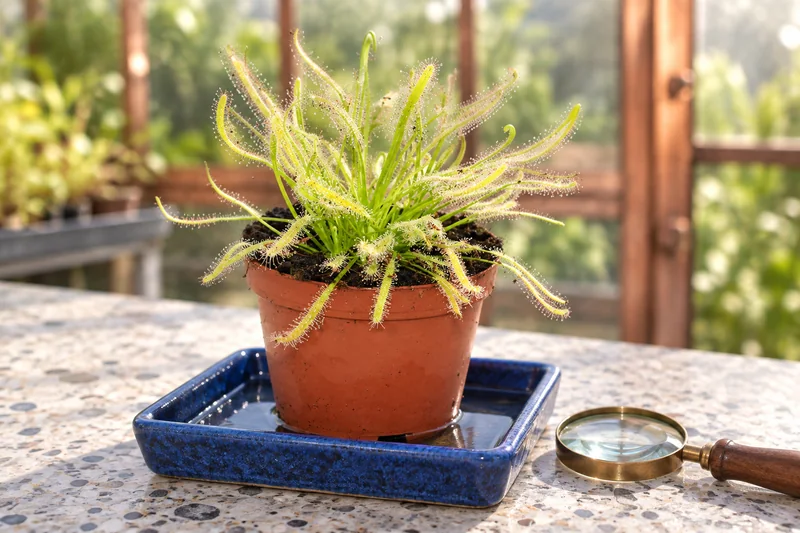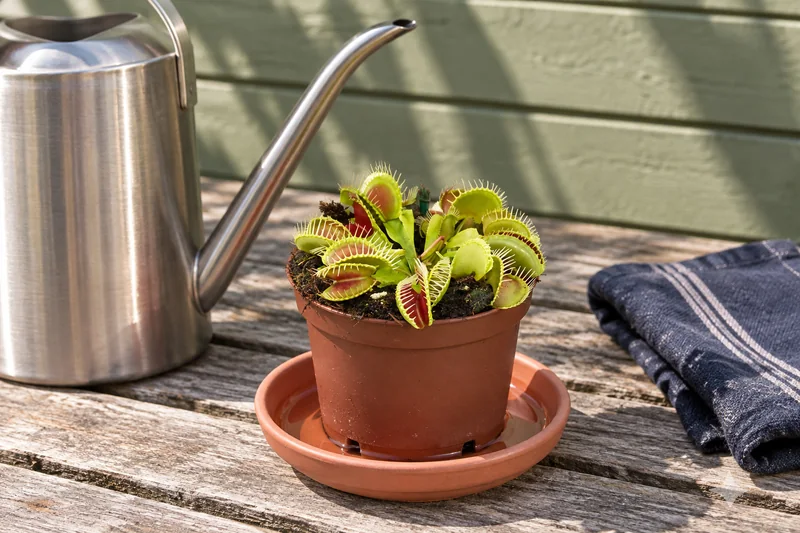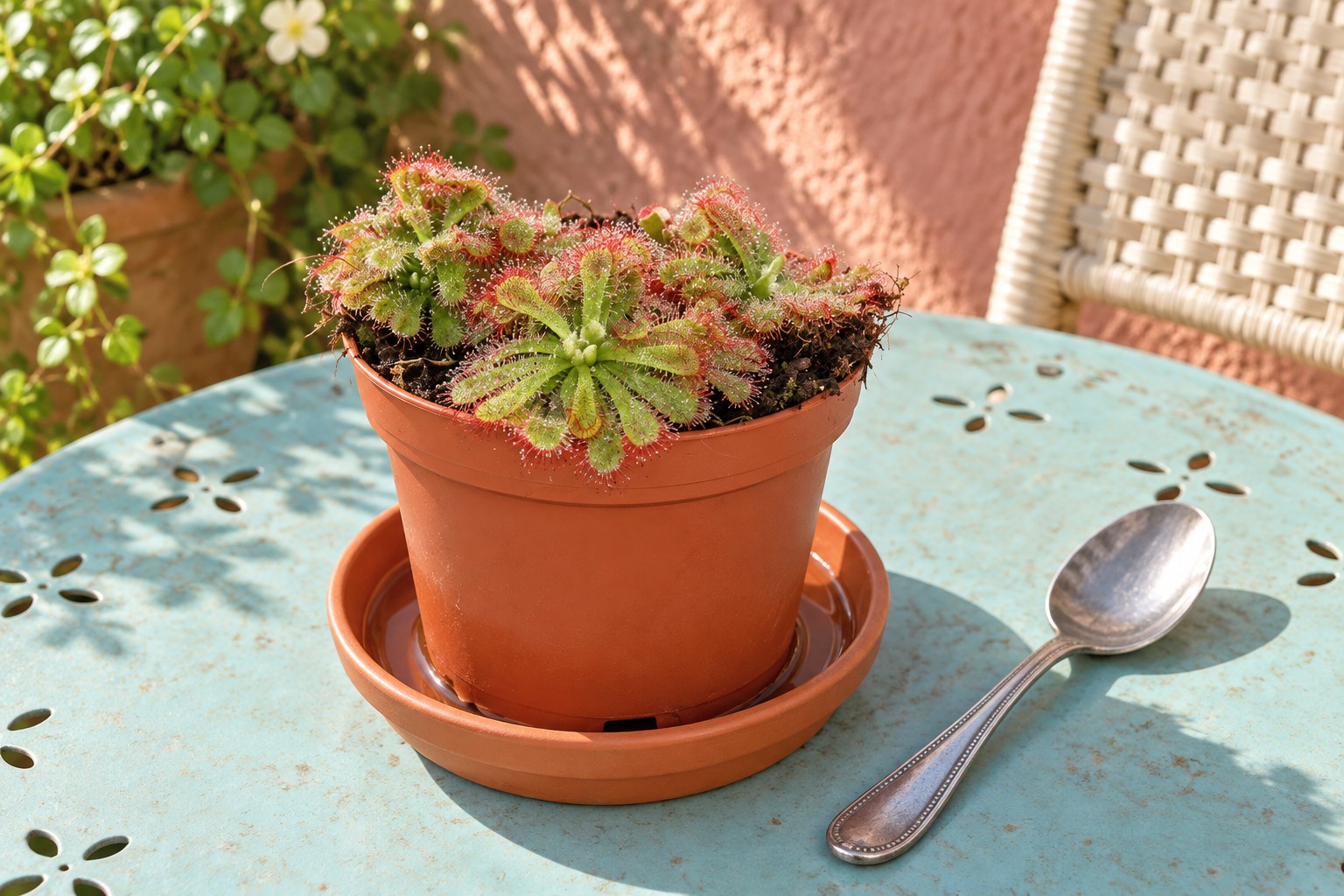
This plant at Exotenherz
Check the shop offer for current availability, price and what is included.
Check the shop for the price, current availability and what is included.
Your care table
| Topic | What to do | Why it helps |
|---|---|---|
| Light | Very bright; introduce sun gradually. | Light supports trapping secretion and healthy new growth. |
| Water | Keep evenly moist with low-mineral water. | Complete drying damages the small root ball. |
| Saucer | Monitor a small reserve; do not let compost dry out. | Demand varies with sun, wind and temperature. |
| Compost | Acidic low-nutrient carnivore mix. | Pre-fertilised potting compost is unsuitable for this culture. |
| Trapping leaves | Do not touch or spray to make them shine. | The plant produces trapping secretion itself. |
| Nutrition | No kitchen scraps or ordinary fertiliser routine. | Suitable prey is caught independently. |
| Winter | Continue very bright frost-free cultivation. | This South African species is not a native winter-hardy Drosera. |
| Maintenance | Carefully remove dead material. | The sensitive rosette centre remains untouched. |
The root ball stays moist. Check more often in warm or windy conditions and do not let it dry out completely.
A small, controlled water reserve can help during growth. The centre of the plant does not need to be deeply submerged.
In cool winter conditions, reduce the reserve while keeping the root ball moist. Keep the saucer clean and follow the frost protection in the care table.
Shiny points with a purpose
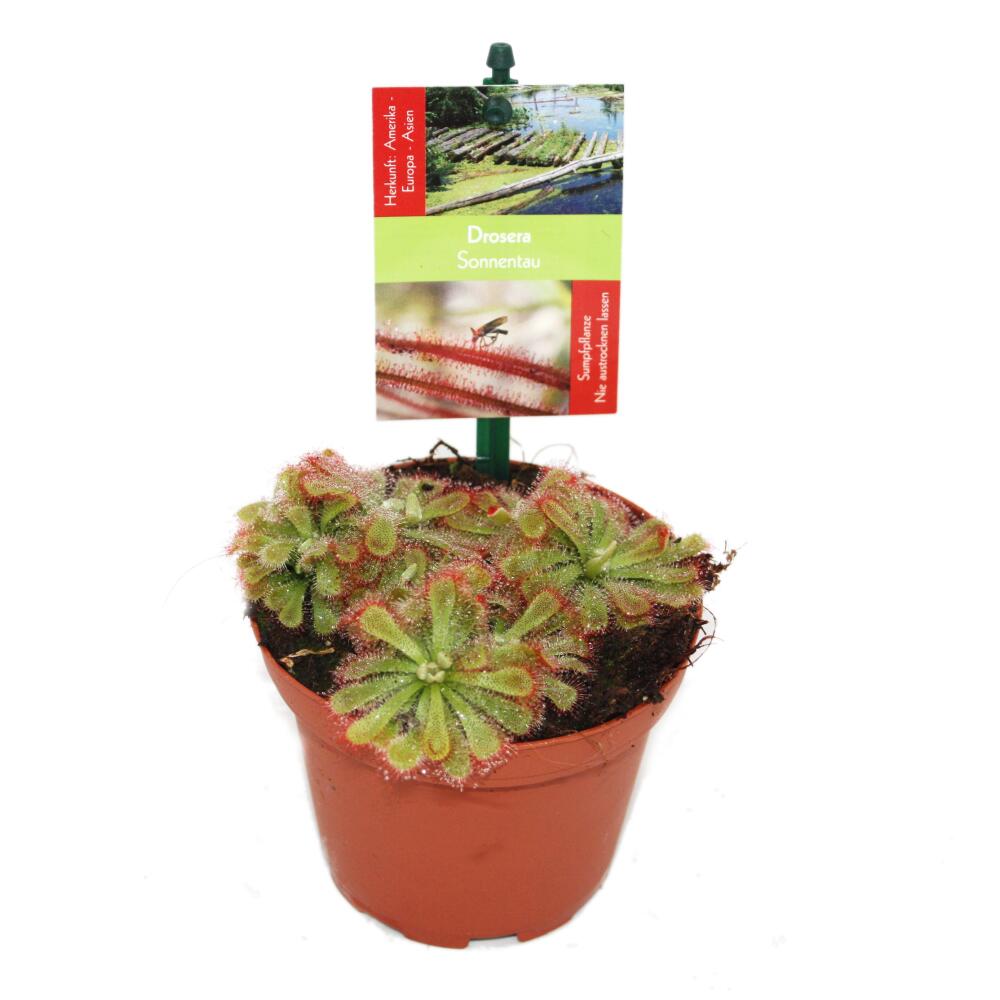
Drosera aliciae belongs to the sundew family and forms small densely leafy rosettes. Fine reddish glandular hairs carrying shiny trapping secretion sit on the spoon-shaped leaves. These are not ordinary water drops. Small insects may stick to them and provide additional nutrients. The species comes from South Africa and grows in damp sites there. It must not be equated with a native winter-hardy sundew. The correct spelling is aliciae; the shortened spelling alicae also appears in the shop.
A low rosette in a 9 cm pot
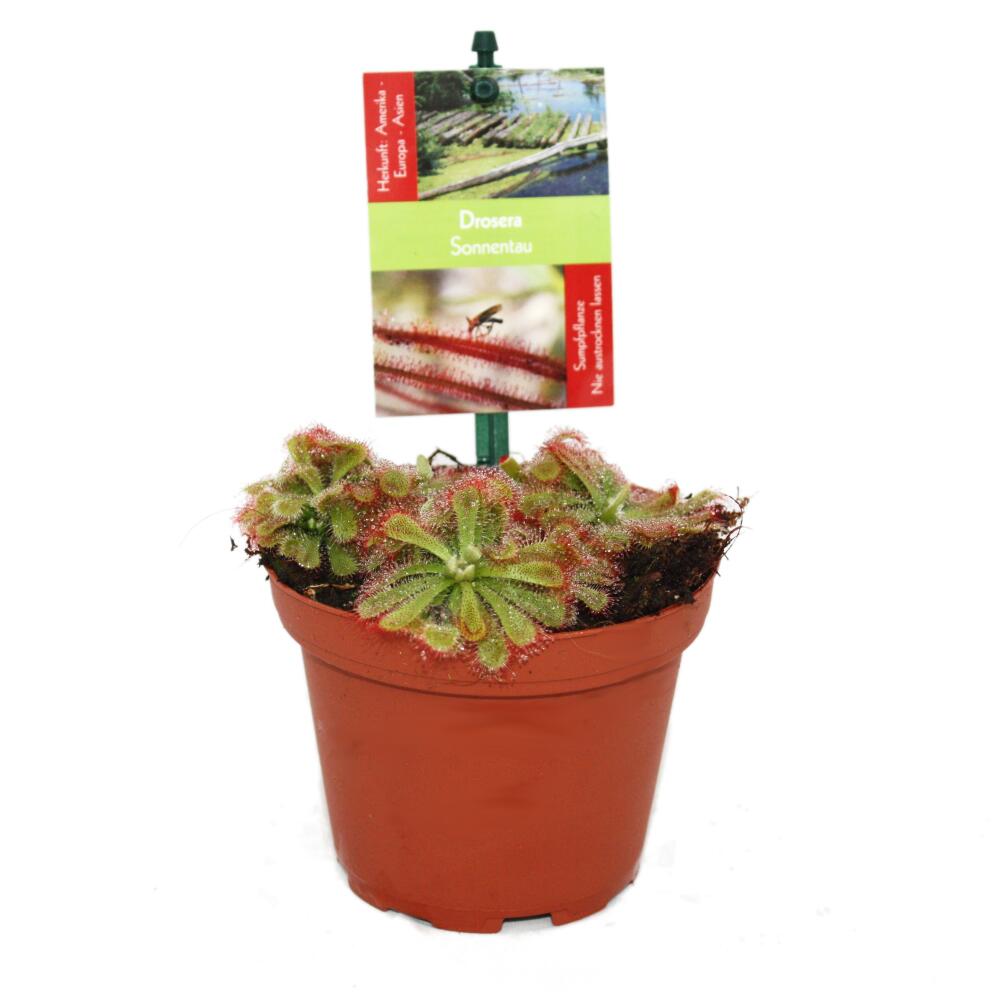
The offer states a 9 cm pot but no fixed delivery height. The original photograph shows several low rosettes with green leaf surfaces and reddish tentacles. Rosette number and colour may naturally vary. A bright easily reached position makes it possible to examine the small trapping leaves closely. Avoid constantly touching them. Secretion may be weaker immediately after transport. Check water and position and watch fresh growth rather than spraying the leaves with water to make them shine.
Light that actually reaches the plant
Plenty of brightness supports healthy new growth and typical colouring. Gradually acclimatise to direct sun after delivery or a change of position. A dark kitchen corner is not suitable simply because fruit flies occur there. A sheltered summer position outdoors may suit if root-ball moisture and temperature are monitored. Bring the plant in before cold arrives and continue frost-free cultivation. Avoid heat build-up under glass. It does not need a freezing winter rest like some native sundews. With reduced winter light, pay attention to actual water consumption.
Low-mineral water keeps the root ball moist
Clean rainwater or suitable low-mineral water forms the basis. During growth, the pot may stand in a small water reserve; the shop mentions approximately one centimetre. Check regularly, especially in sun and wind. The saucer may briefly be empty while the compost still remains clearly moist. Avoid complete drying. An acidic low-nutrient carnivore mix with an open structure is suitable. Do not top up with ordinary pre-fertilised potting compost. Supply water to the root zone rather than repeatedly giving the trapping leaves a strong shower.
Let it catch rather than feed it
The plant can catch suitable small prey itself. Meat, cheese and other kitchen scraps do not belong on its leaves. Ordinary houseplant fertilising is also no good starting point for this culture. A single plant does not reliably clear a room of fruit flies; their breeding sources must be removed independently. For observation, simply let the plant grow. Do not stimulate tentacles with objects or wipe them. A healthy new leaf crown is more informative than the number of insects currently caught.
Distinguish old foliage from new rosettes
Older leaves may dry and remain beneath the rosette. If needed, remove only clearly dead material without injuring the centre. A spent flower stalk may be cut back cleanly if seeds are not wanted. This does not guarantee faster repeat flowering. With distorted fresh growth, also inspect for aphids or other pests; do not spray home remedies at random. When repotting, protect the few sensitive roots and use an appropriately deep suitable pot. Seed sowing and leaf propagation are possible, but the purchased plant first needs stable conditions.
One plant, several views
Good to know
Are the shiny drops rainwater?
No. The glandular hairs produce their own sticky trapping secretion.
Why are some drops missing after shipping?
Transport and changed conditions may temporarily affect secretion. Check light and moisture and observe new leaves.
Does one plant reliably rid the kitchen of fruit flies?
No. It may catch individual insects but does not replace removing breeding sources.
Can Alice sundew remain outside in winter?
This South African species is cultivated frost-free here. Do not equate it with winter-hardy native sundews.
Sources and editorial note
Sources checked: 15 September 2026. Product information and delivery contents follow the linked shop offer. Care has been checked against the stated specialist sources and remains subject to plant condition, position and season.