This plant at Exotenherz
Check the shop offer for current availability, price and what is included.
Check the shop for the price, current availability and what is included.
Your care table
| Topic | What to do | Why it helps |
|---|---|---|
| Light | Bright to sunny, slowly acclimatise to stronger sun. | Compact growth needs sufficient light. |
| Water | Water evenly after good root-ball drying. | Fleshy leaves store water. |
| Drainage | Leave no residual water in the outer pot. | Permanent wetness encourages root rot. |
| Compost | Loose and succulent-suitable with mineral ingredients. | The base remains better ventilated. |
| Winter | Bright, frost-free and considerably drier. | Consumption decreases with slower growth. |
| Feed | Moderately during growth by the label. | Heavy feeding is unnecessary for the small rosette. |
| Offsets | Gently separate strong daughter rosettes. | Small beginnings first need further development. |
| Inspection | Distinguish firm white dots from soft pest deposits. | The natural leaf pattern should remain. |
Check the compost and pot weight. The care table explains how far the compost may dry.
Water only when needed. The water should reach the root ball without spilling over the rim.
Remove surplus water from the saucer or cachepot. Then return the plant to a suitable position.
White leaf pearls rather than a removable coating
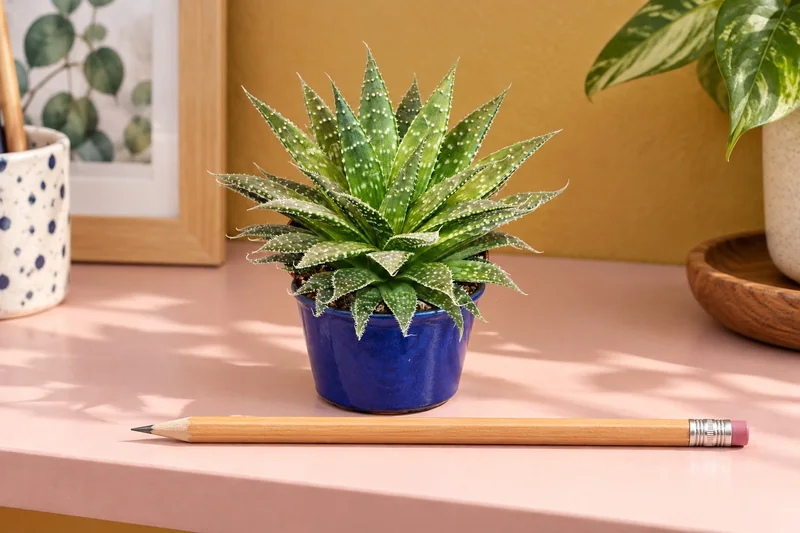
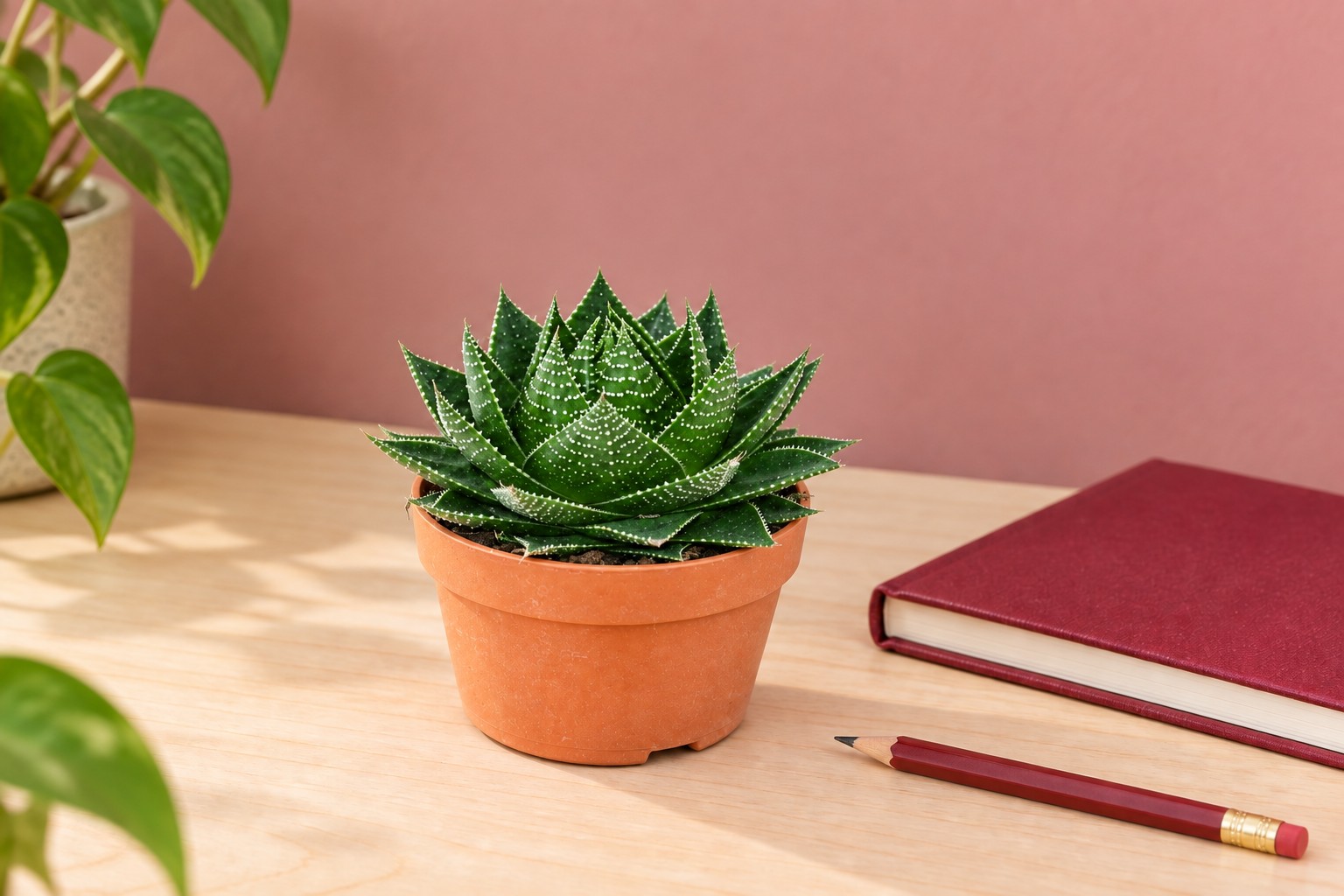
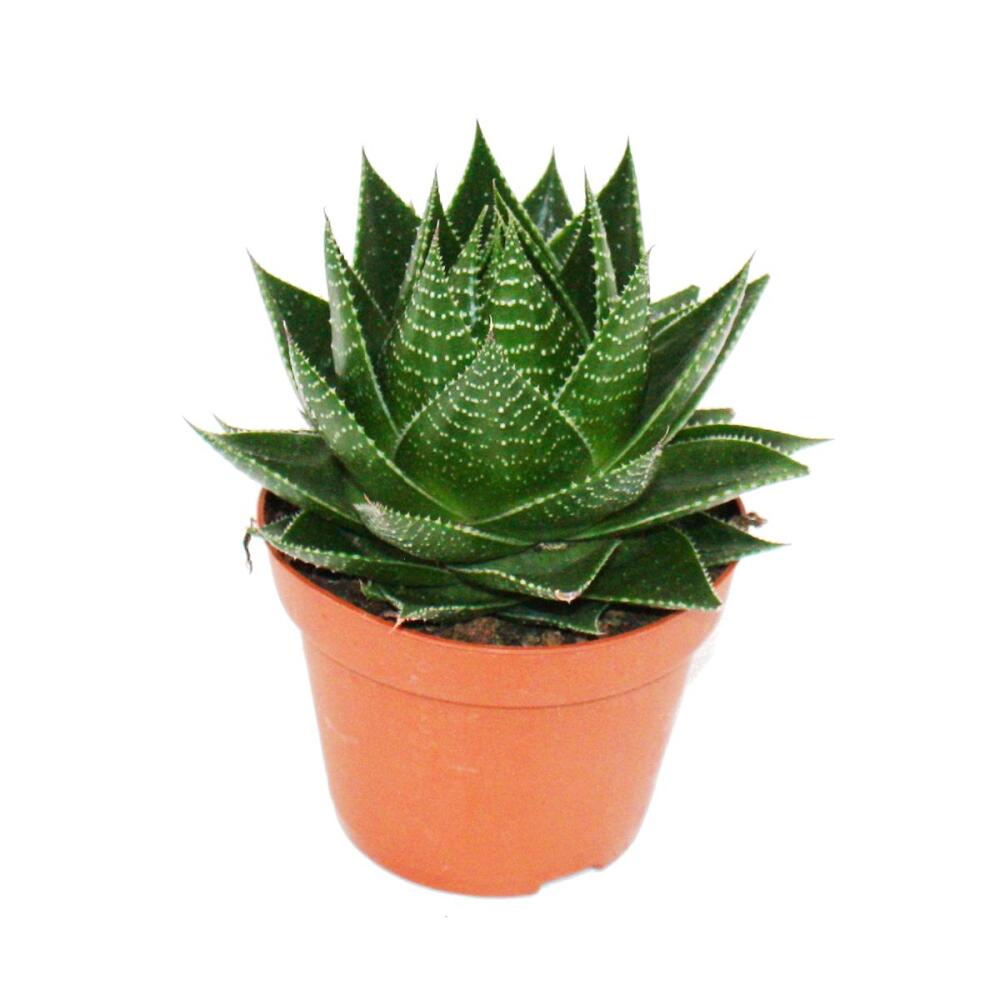
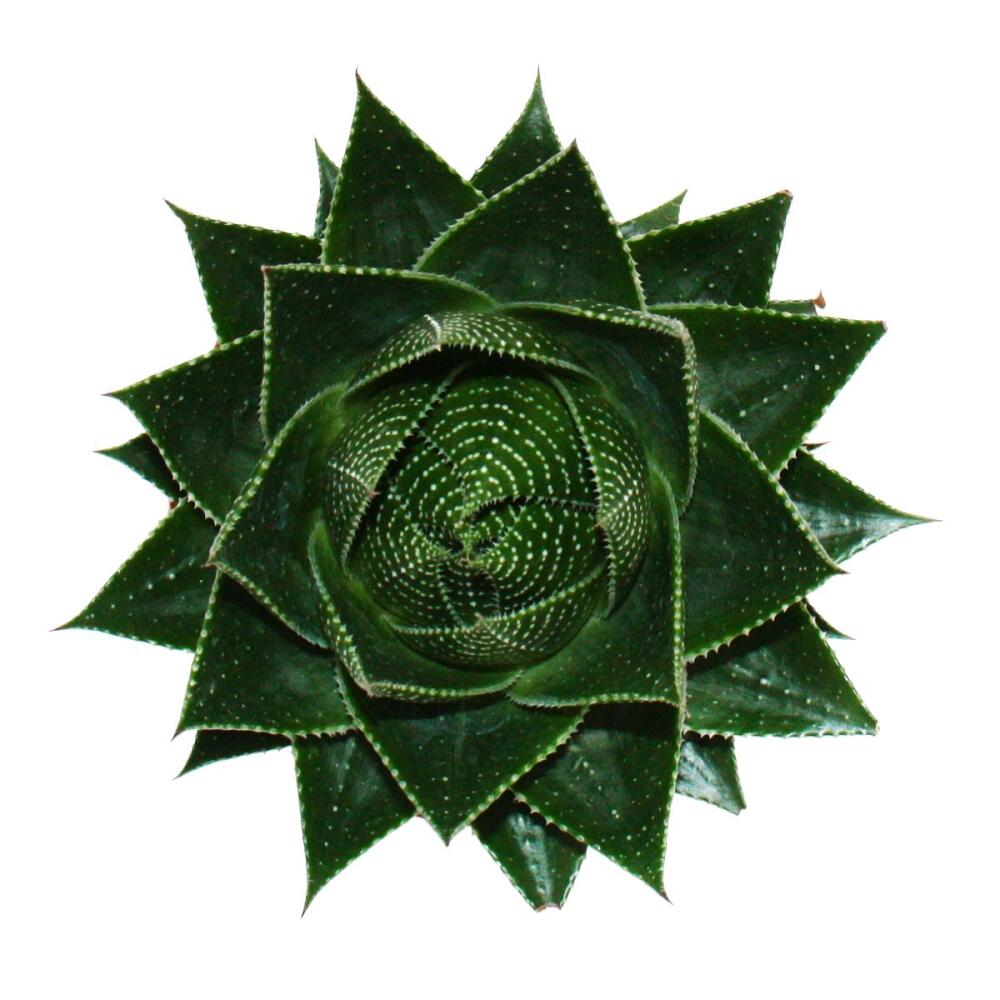
Small white raised spots form a lively pattern on green triangular leaves. Fine marginal teeth and pointed leaf ends add to it. Do not polish the surface smooth. Cosmo grows into a dense rosette whose young centre initially looks particularly upright. The offer gives a 12 cm pot and approximately 15 cm overall height. The new scene remains a small plant, not a large mature aloe bush. Flowers are not part of a guaranteed delivery.
The trade name leads to Aristaloe aristata
The shop lists Aloe aristata Cosmo. Botanically the species is now often called Aristaloe aristata; the RHS also links Cosmo with Green Pearl. Customers retain the connection with the exact offer even if botanical wording changes. This plant belongs to Asphodelaceae and is not a cactus. Nor should it be equated with Aloe vera. The portrait covers an ornamental plant, not a source of edible or medicinal leaves.
A bright place keeps the rosette dense
Good light supports compact structure. Choose a bright position and slowly acclimatise to more intense direct sun. A rosette newly arriving from sheltered cultivation can burn behind hot glass. A bright desk or small living-room display only suits if enough daylight truly reaches it. Long pale leaves and a widely opened unstable rosette may indicate too little light. A sheltered outdoor place is possible in summer. Bring the plant inside before cold nights and prolonged cold rain.
Fewer scheduled appointments, a closer look into the pot
During growth water only when the root ball has clearly dried. Then evenly water the compost and allow drainage. No lasting water remains should sit in a dense rosette centre. The surface alone can mislead in a deep pot; pot weight and moisture deeper in the compost help assessment. In cooler winter Cosmo grows more slowly and needs much less water. Firm leaves and a still-moist root ball are no reason for precautionary extra watering.
Care for an airy mix and small offsets
Free-draining cactus compost with suitable mineral ingredients is a good basis. Even an easy-care succulent cannot reliably cope in dense damp outer-pot arrangements. Repot when well rooted or the compost is permanently compacted. Choose only a slightly larger pot and do not bury the rosette base. Moderate feeding according to the label can support growth. Daughter rosettes may form over time. Allow sufficient growth before separation and preserve existing roots rather than immediately pulling tiny beginnings from the mother plant.
Interpret winter care and warning signs correctly
Cosmo is overwintered frost-free, even if the botanical species is described in some sources as tolerating limited cold. For a small potted plant, a bright protected place with greatly reduced water use is more reliable. Completely dry old outer leaves may be removed gently. Soft translucent or dark leaves, especially with wet compost, require checking for rot. Woolly deposits in leaf axils may be pests; firm regularly distributed white leaf dots belong to the plant. Look closely before treating healthy surfaces.
One plant, several views
Good to know
Are the white dots a fungus?
Firm regularly distributed white raised spots belong to the typical leaf pattern. Different soft or wipeable deposits are checked separately.
Can I use Cosmo like Aloe vera?
No. This offer is an ornamental plant, not intended for gel extraction or consumption.
Does the ball-shaped aloe need a particularly deep pot?
An unnecessarily large deep pot often holds moisture too long. A draining container matching root development is more sensible.
Can it stay outside all year?
Frost-free overwintering is recommended for this small potted plant. A suitable outdoor place is mainly an option for the warm season.
Sources and editorial note
- Product and delivery contents: Exotenherz
- Royal Horticultural Society: plant and care knowledge
- Royal Horticultural Society: plant and care knowledge
Sources checked: 15 September 2026. Product information and delivery contents follow the linked offer. Care has been checked against the stated specialist sources and remains subject to plant condition, position and season.