This plant at Exotenherz
Check the shop offer for current availability, price and what is included.
Product and delivery details are given in the individual offer.
Your care table
| Topic | What to do | Why it helps |
|---|---|---|
| Light | Bright with filtered daylight. | The clear leaf crown should grow actively. |
| Warmth | Protect against cold draughts. | The indoor anthurium is frost-sensitive. |
| Water | Water evenly after slight surface drying. | The root ball decides the next supply. |
| Cover | Remove remaining water. | Closed containers hide wetness. |
| Soil | Use a loose structurally stable mixture. | Roots need air pores. |
| Repotting | Give only slightly more room when roots fill the pot. | Much unrooted soil stays wet longer. |
| Leaves | Support when dusting and inspect undersides. | Treat arrow lobes and young leaves gently. |
| Safety | Do not eat; avoid sap contact when cutting. | Anthurium parts may irritate. |
Check the compost and pot weight. The care table explains how far the compost may dry.
Water only when needed. The water should reach the root ball without spilling over the rim.
Remove surplus water from the saucer or cachepot. Then return the plant to a suitable position.
An anthurium with a different visual language
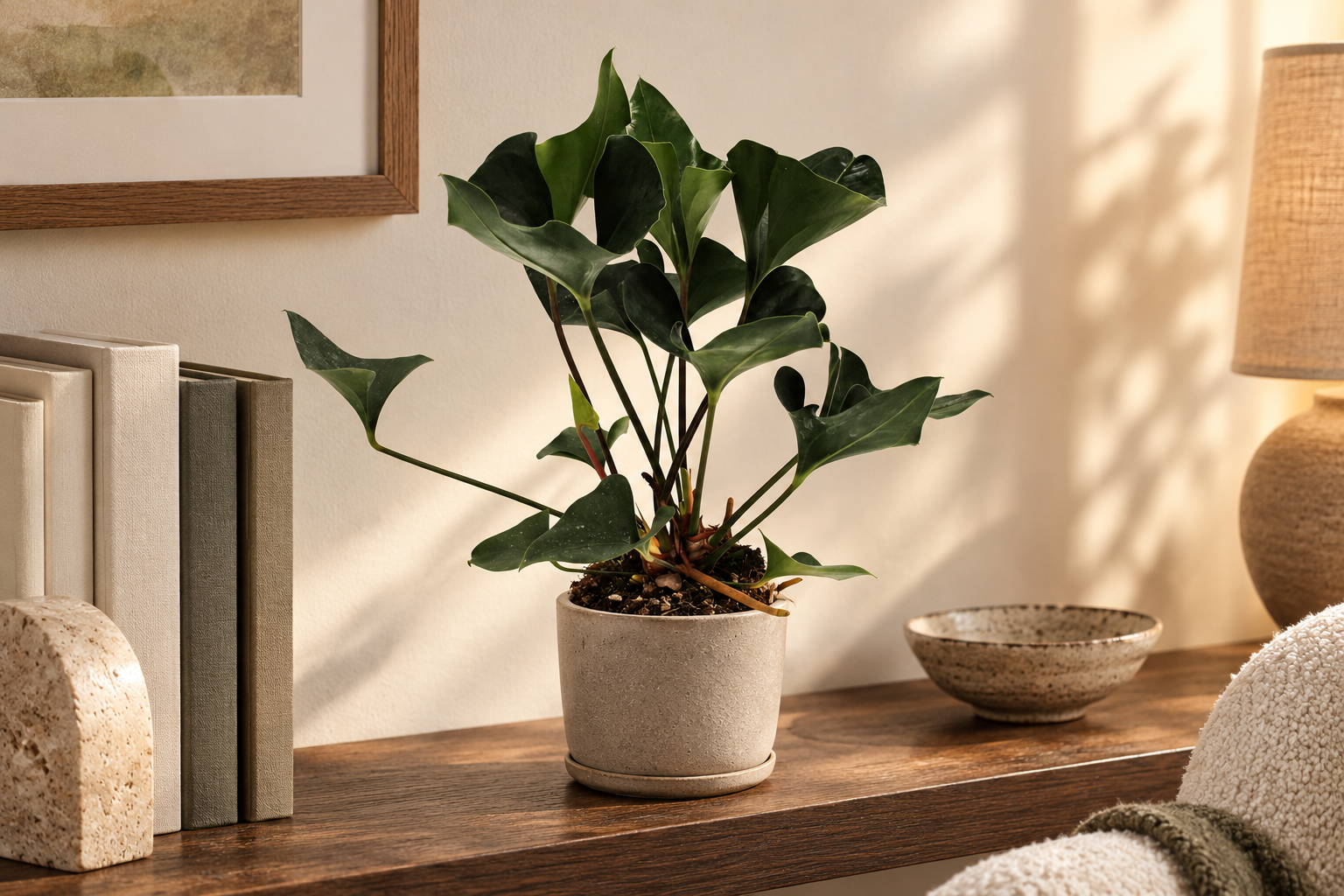
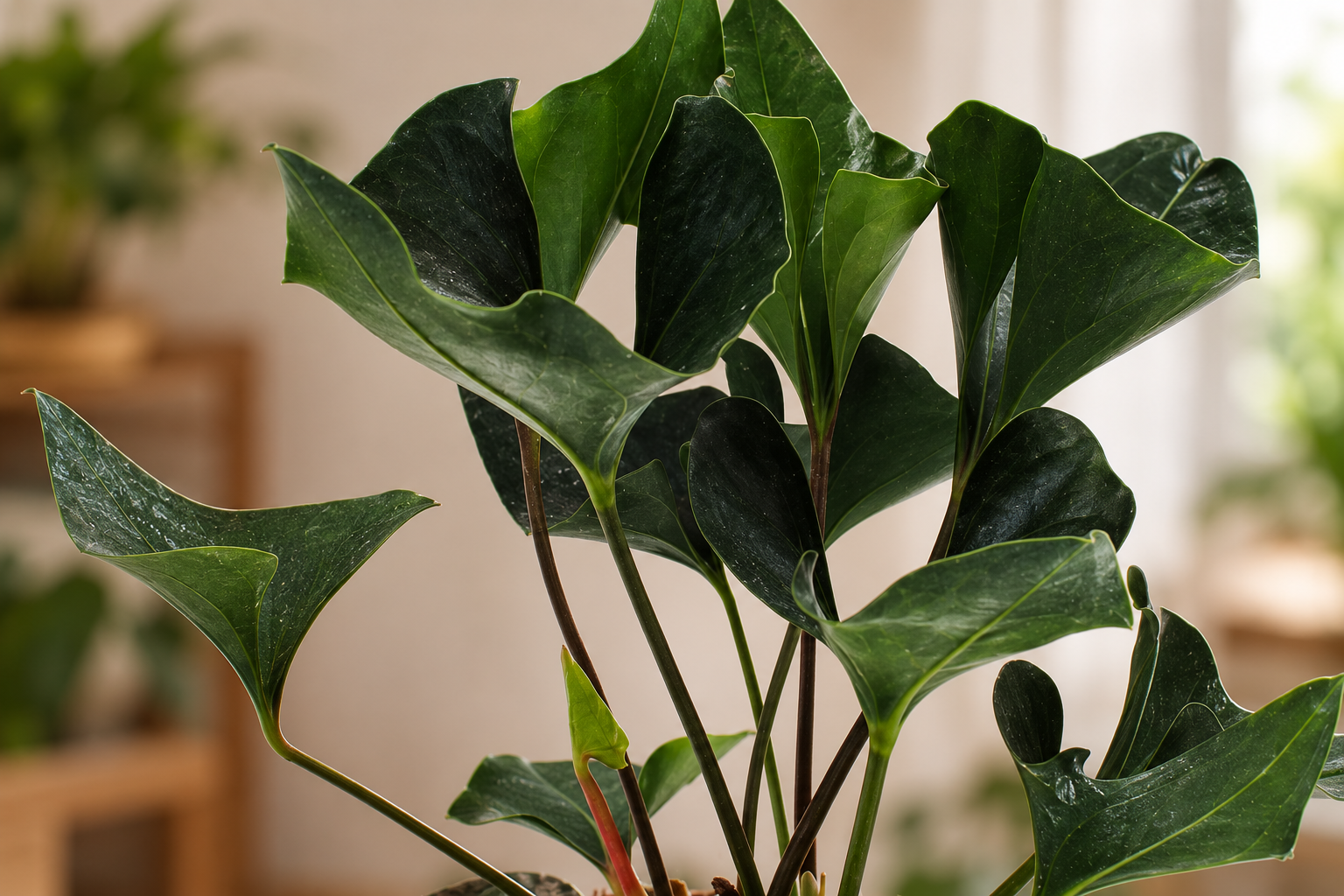
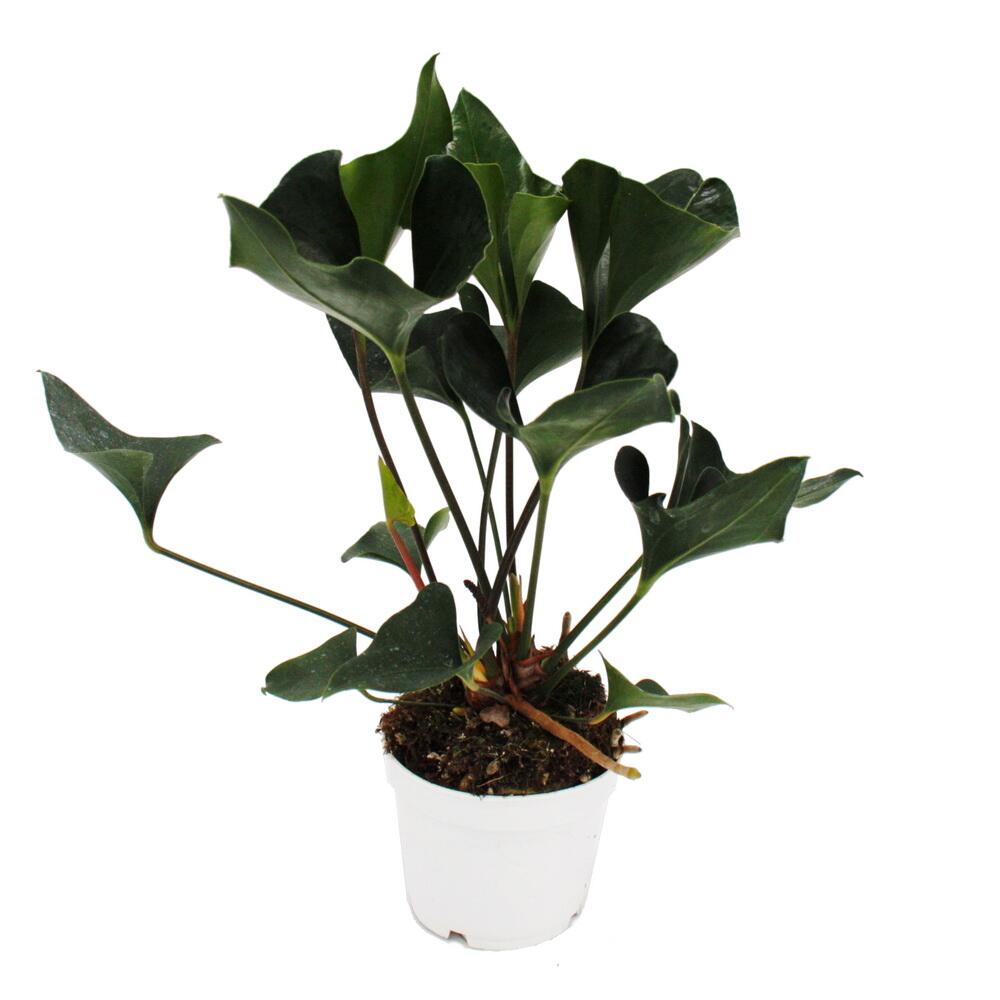
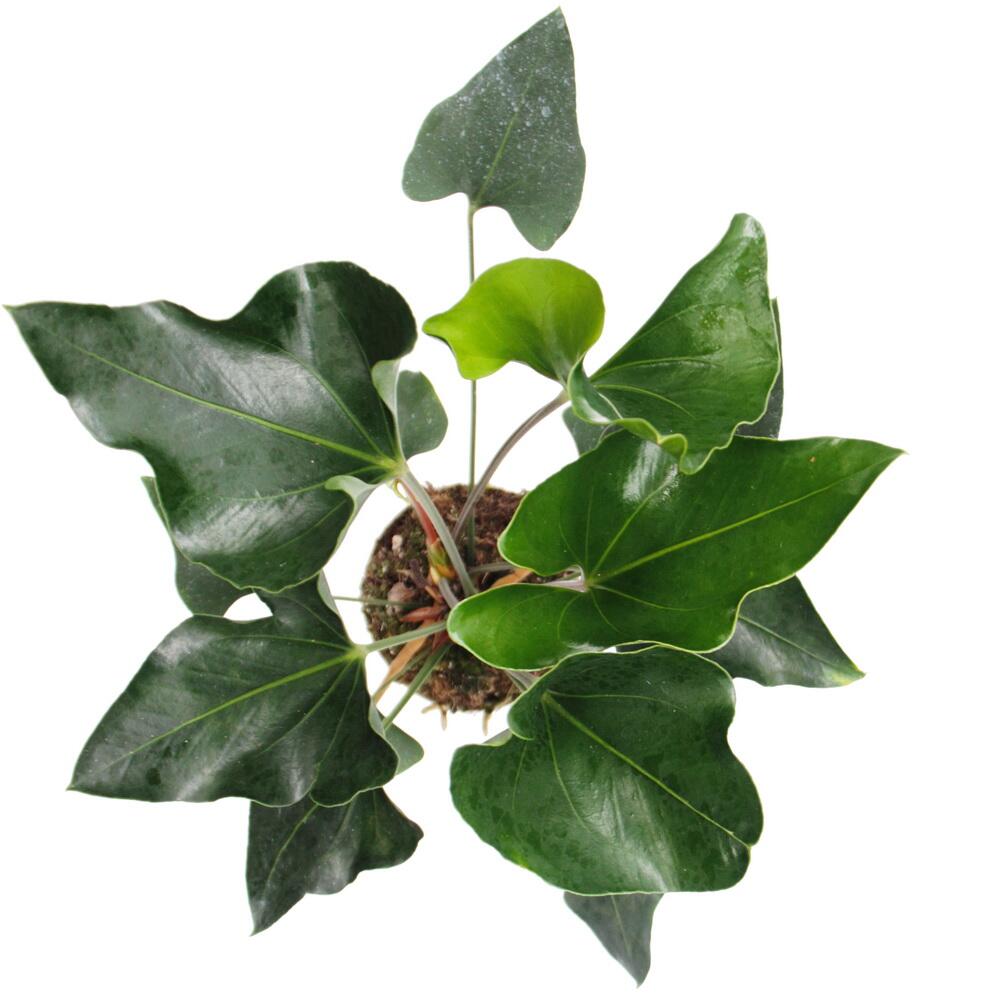
Arrow shows no colourful bowl above its foliage. Dark green leaves form distinctive arrows with side lobes, and slender stalks leave air between them. A quiet light wall shows the silhouette especially well. The range name describes the specific foliage plant. No additional species assignment is derived from it. Nor is a particular flower colour promised: the associated original shows foliage. Its attraction already lies in leaf positions, veins and alternation between surfaces and open gaps.
The small container carries a higher crown
The plant is described in a 12 cm pot at roughly 40 centimetres or more total height. Plan sufficient room above and at the sides. A too-tight shelf compartment presses tips and makes removal for care awkward. A stable cover pot may accompany the design but must not hide standing water. Delivery figures describe total height separately from later growth. Support the pot when carrying. New leaves need room to unfold without regularly catching on walls or furnishings.
A bright place maintains leaf patterns
Filtered daylight and steady warmth are a good basis for indoor cultivation. A dark decoration corner is not automatically a lasting plant position. Direct hot sun can strain surfaces. Check through the day instead of only pleasant morning light. Avoid cold draughts and dry heater proximity. Somewhat more humid room air can help, but constantly wet leaves in stagnant air are no goal. The place should allow both quiet development and easy checks of soil and undersides.
The finger test belongs below the crown
Check upper soil and pot weight for water supply. After slight drying, water evenly then let drain fully. Empty the cover afterwards. A small pot may dry faster in warmth while a cooler low-light day lowers consumption. Dark leaf colour says little about this. Even if individual leaves seem limper, inspect the root ball first. Do not soak still-wet soil again out of concern. Preferably soft room-temperature water suits better than cold supplies straight from the tap.
Roots need structure and appropriate room
Use a loose permeable tropical houseplant mixture with suitable coarse ingredients. Keep the plant at its previous height when repotting. A clearly rooted ball receives slightly more room, not an oversized soil container around few roots. Fertilise by label during actual growth. New leaves are a helpful sign. Healthy stalks are not shortened merely to squeeze the crown into an unsuitable compartment. Fully dead parts can be removed gently at their base with clean tools.
Observation keeps the arrow form legible
Remove dust with a soft damp cloth and support the leaf below. Inspect lobes and undersides for changes. Young shoots are softer initially and may stand differently from mature foliage. Save an overall picture and leaf close-up together in the plant book to show development. Anthuriums are not eaten and are placed safe from nibbling children or pets. Protect skin and eyes from sap when cutting. A quiet foliage plant needs no invented flower description to make a complete portrait.
One plant, several views
Good to know
Is Arrow an ordinary red-flowering flamingo flower?
The offer shows a foliage anthurium with arrow-shaped leaves; red flowers are not promised.
What botanical species is it?
The trade name Anthurium Arrow is confirmed. No extra species is fixed without reliable evidence.
May it go on a dark shelf?
A permanent position must receive enough filtered daylight.
Should I shorten healthy stems for a small compartment?
Choose crown space instead; healthy leaves supply the plant.
Is the height a final size?
No. About 40 cm or more denotes the offered total-height reference.
Sources and editorial note
- Exotenherz – offer and original pictures, 03.10.2026
- RHS – anthuriums, foliage plants and indoor cultivation, 03.10.2026
- Costa Farms – Anthurium substrate and care, 03.10.2026
Shop offer, article number, GTIN, availability and originals checked directly on 02.10.2026; specialist acceptance on 03.10.2026. Specialist sources read directly. SKU, delivery measurements, originals and orderability checked in the shop on 03.10.2026. Specialist care compared with actually read RHS, grower and Extension sources; cultivar form checked against the original. Currently not orderable: knowledge portrait without purchase link, social draft without dispatch approval. No tool or Wawi changes. Currently not orderable: portrait without purchase link; social drafts not approved for dispatch.