This plant at Exotenherz
Check the shop offer for current availability, price and what is included.
Check the selected shop offer for price, availability and delivery contents.
Your care table
| Topic | What to do | Why it helps |
|---|---|---|
| Position | Bright indirect daylight; soften strong summer sun. | Broad green leaves need light without burning behind glass. |
| Warmth | Even warmth without cold draughts or direct heating airflow. | Tropical plant structure is sensitive to cold and dry heat. |
| Water check | Check surface, deeper edge moisture and weight together. | A dry-looking top may hide a still-moist rootball. |
| Watering | After noticeable partial drying, water thoroughly with soft room-temperature water. | Roots should receive moisture without staying constantly wet. |
| Drainage | Let everything drain and empty decorative container again. | Permanent residual water leaves too little air around roots. |
| Substrate and pot | Use a stable airy mix and appropriately small draining pot. | Loose components retain moisture without making a large wet store. |
| Feeding | During active growth, provide moderate feeding according to suitable label. | Leaf and root growth need nutrients, not overdosing. |
| Leaf checks | Carefully remove dust and inspect bases for mealybugs. | Changes can be spotted early without stressing tips. |
| Pruning and household | Remove dead stalks at base; gloves, distance from children and animals. | Shaping is unnecessary; irritating sap needs careful handling. |
Check the compost and pot weight. The care table explains how far the compost may dry.
Water only when needed. The water should reach the root ball without spilling over the rim.
Remove surplus water from the saucer or cachepot. Then return the plant to a suitable position.
A red bract with its own shape
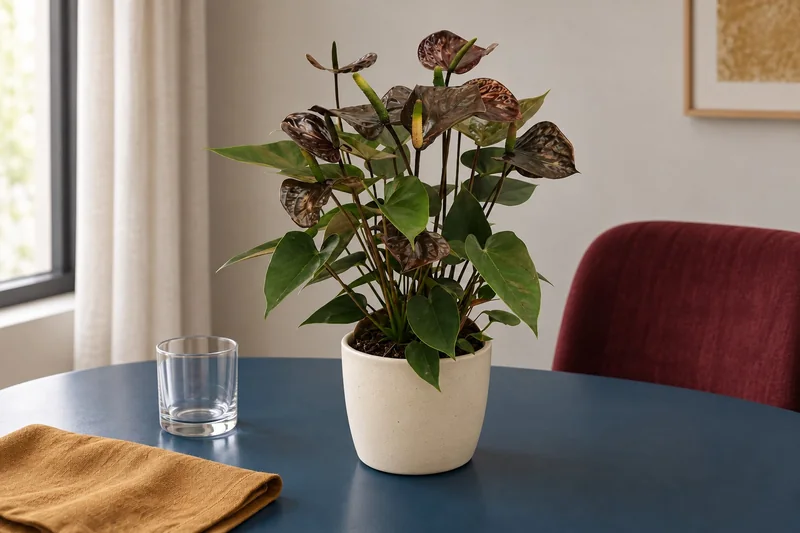
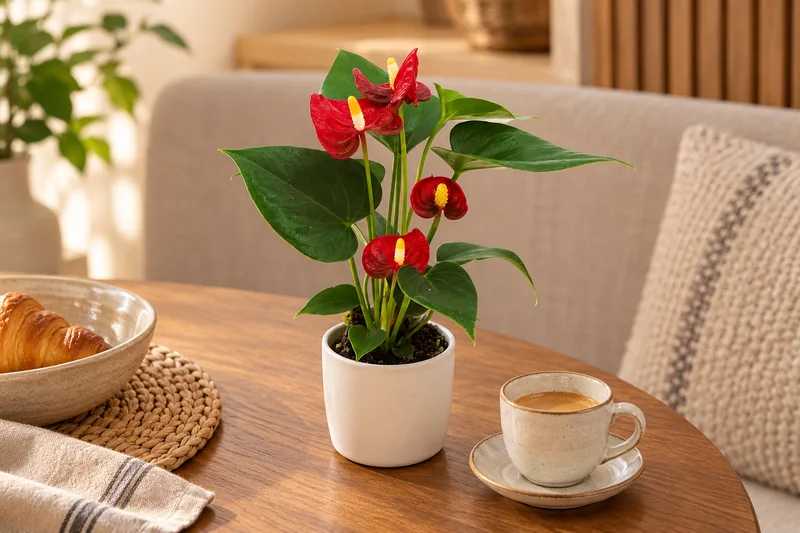
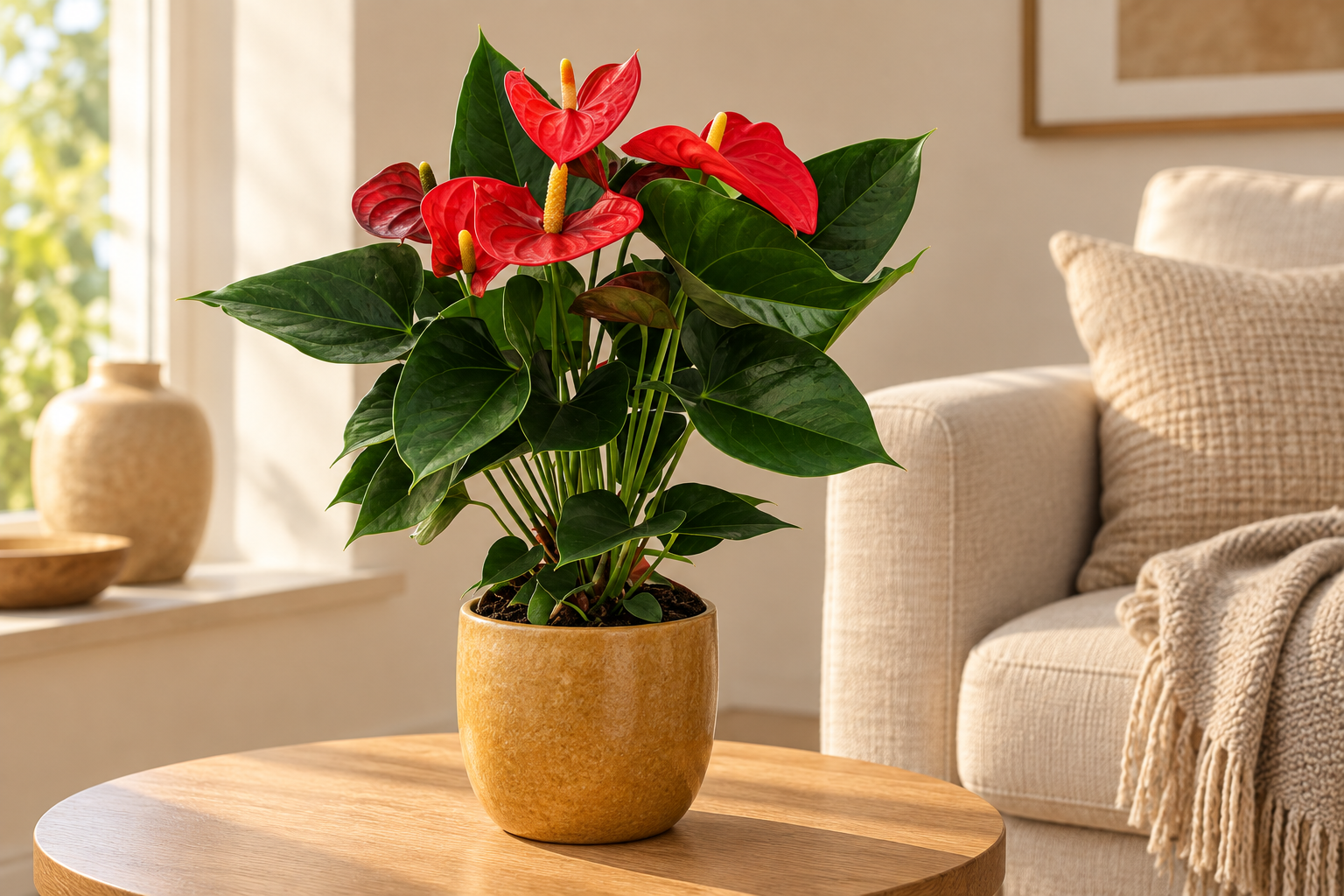
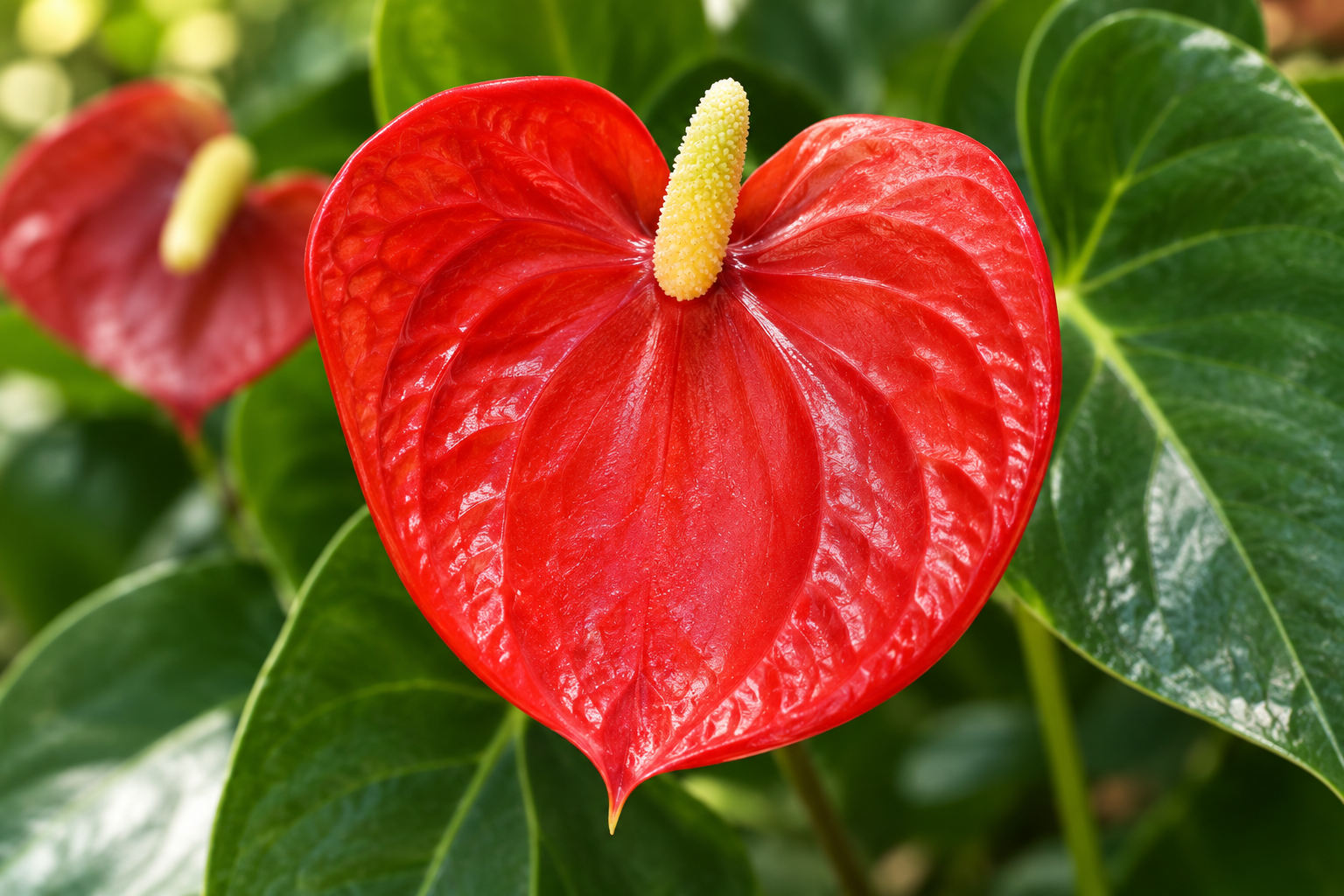
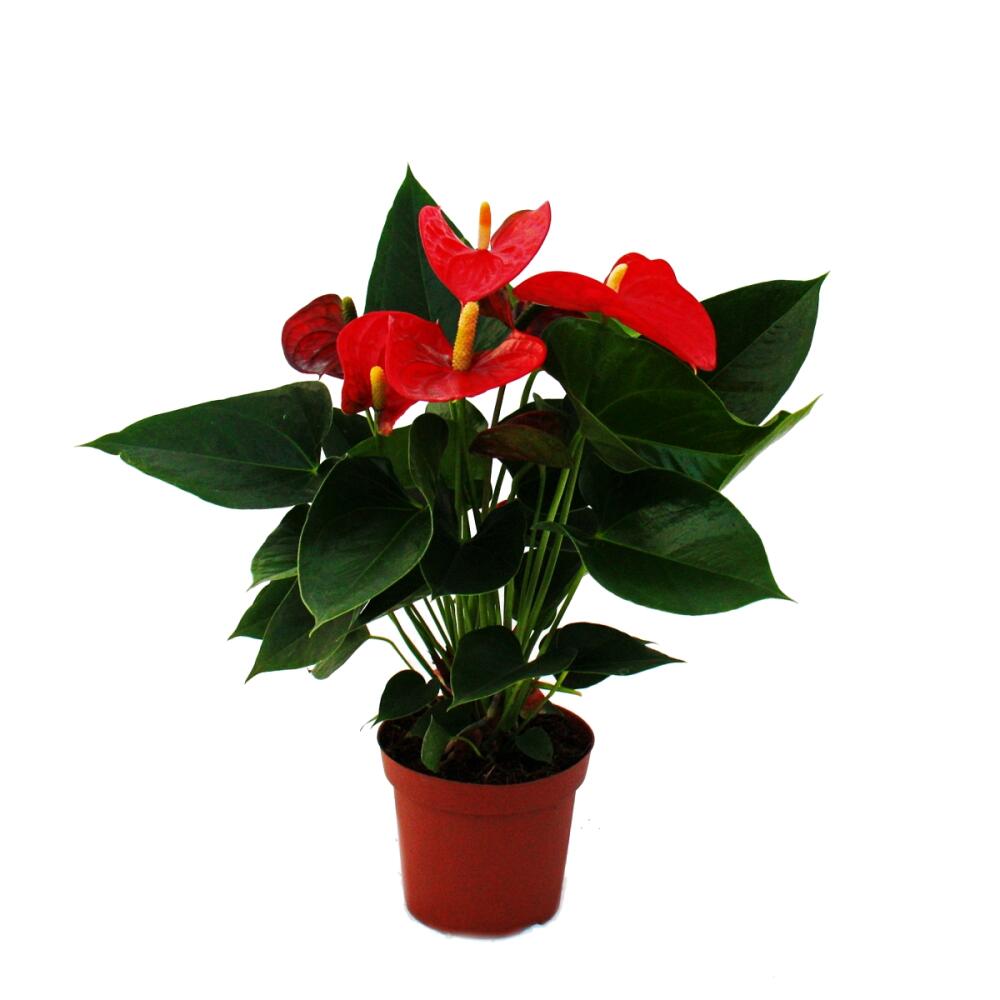
Sierra Red lifts glossy red surfaces above its strong leaf tuft. Bracts are heart-shaped with curved basal lobes, pointed ends and fine raised veins. A pale creamy-yellow spike rises nearby. Darker green leaves below are broad and pointed too, carrying red accents upright in the room. A bright side table beside an armchair reveals the open structure. Red surfaces should not be squeezed among objects. Originals show strongly red bracts with some darker areas. These visible colour differences belong to the offered plant’s appearance.
Sierra Red is a trade name
RHS lists Sierra Red in the Andraeanum Group as a trade name. The shop calls it Anthurium andreanum Sierra Red; usual botanical spelling is andraeanum. It belongs to the arum family. What is often called a large red flower is a bract, the spathe. Actual small flowers sit densely on the spadix. This combination of curved surface and slender spike creates the appearance. The named pot plant is cared for as a horticultural selection. Its name implies no particular wild origin. An ageing bract needs no special treatment either: assess its condition together with remaining leaves and roots.
Put the offered size in context
Our offer gives a fourteen-centimetre nursery pot and about fifty-five centimetres or more total height including pot. That describes the offered plant, not a fixed final size in every further cultivation. Green leaves also need sideways space. Position them so broad tips do not constantly hit furniture or curtains. Carry the pot when moving, not single leaf stalks. A decorative container may hold the inner pot but should allow room for lifting and checking it. In the AI home scene, outer pot, table and armchair are design elements. Number and condition of red bracts are a snapshot, not an unchanging delivery flower display.
Combine warmth and filtered daylight
A bright indirect-light position suits Sierra Red. Near east or west windows, leaves remain visible; soften strong summer rays behind south glass. The plant does not belong in a dark spot just because leaves look strong. Keep warmth as even as possible through the year. Cold ventilation draughts and placement beside a radiator are unfavourable. Dry heating air may affect leaf tips and edges. Consider light and air together: a bright place away from heat is more helpful than constantly wet leaves. Occasionally remove dust with a soft damp cloth so discolouration and small deposits can be seen early.
Check the rootball before watering
Feel the surface and carefully check slightly deeper at the pot edge for remaining moisture. Inner pot weight helps too. Once the mix has dried somewhat noticeably, water thoroughly with preferably soft room-temperature water. Drain fully and empty the outer pot. Roots should receive moisture without permanently standing in water. Small daily sprays onto soil do not replace checked root supply. A fixed weekly amount does not suit every room climate either. With less light, the mixture may dry more slowly. Check for less frequent need rather than continuing summer quantities unchanged. Avoid very long complete drought.
Airy mix rather than a large water store
Anthuriums need root space that retains some moisture while allowing air and water through well. A suitable structurally stable mix with loose coarse parts suits better than dense collapsed soil. When repotting, choose a well-draining pot only appropriately larger. Lots of extra wet space is not care. Gently loosen the rootball without unnecessarily damaging firm living roots. In visible growth, moderately provide suitable houseplant or orchid fertiliser according to label, considering existing nutrients in fresh mix. Extra feeding is not intended to force a particular spadix colour or permanently more red bracts. Regular brief moisture checks are more valuable.
Remove old stems and interpret changes
Faded bracts with fully dead stalks may be removed at the base. Regular shaping is unnecessary. Use clean tools and gloves; keep sap away from sensitive skin. Anthuriums contain irritants and belong out of reach of young children and nibbling pets. For brown edges, check air dryness, water quality and rootball together. Yellowish leaves and a long-wet pot justify closer root inspection. Also check leaf bases for mealybugs. Further red bracts are possible with appropriate cultivation but neither count nor timing is fixed. A healthy new green leaf is therefore also reason to enjoy development.
One plant, several views

Good to know
Is the red surface a flower?
It is a bract, the spathe. Small true flowers sit densely on the pale spike, the spadix.
What does Sierra Red mean?
RHS lists Sierra Red as a trade name in the Andraeanum Group. This portrait shows the named red pot plant.
How big is the offer?
14 cm nursery pot and about 55+ cm total height including pot. This is offer size, not an unchanging later final height.
Should I spray soil every day?
It does not replace controlled rootball watering. Check moisture and weight, thoroughly water after noticeable partial drying and drain.
May the outer pot store water?
No. Remove residual water so roots do not stay continually wet.
Why do leaf edges turn brown?
Dry air may contribute; also check water quality and roots. Do not keep soil constantly wet solely for this reason.
Are red bracts certain every year?
Further bracts are possible depending on cultivation. Neither date nor number is promised; healthy leaves remain part of development.
Sources and editorial note
- Exotenherz: our offer and originals (04.10.2026)
- RHS: Sierra Red, trade name in Andraeanum Group (04.10.2026)
- NC State: Anthurium andraeanum, complete plant and care description (04.10.2026)
- RHS: complete anthurium cultivation, water, pots and seasons (04.10.2026)
Shop offer, original images and specialist sources checked on 04.10.2026. Current availability in the shop.