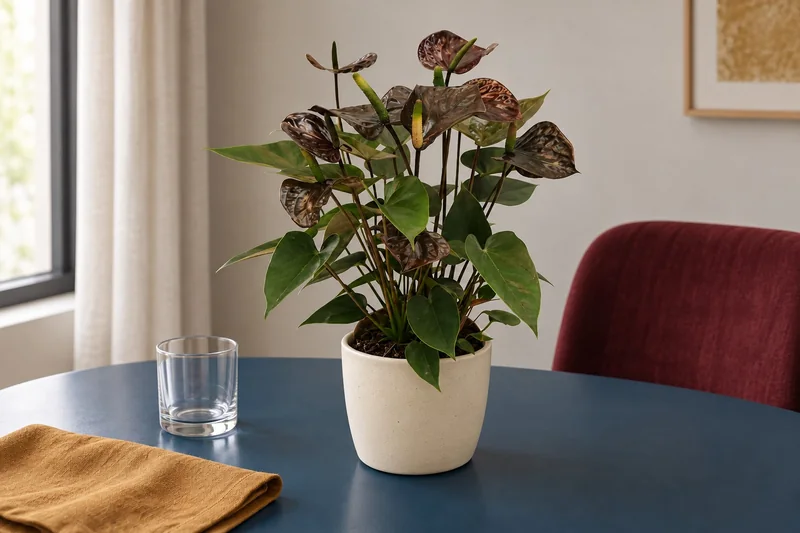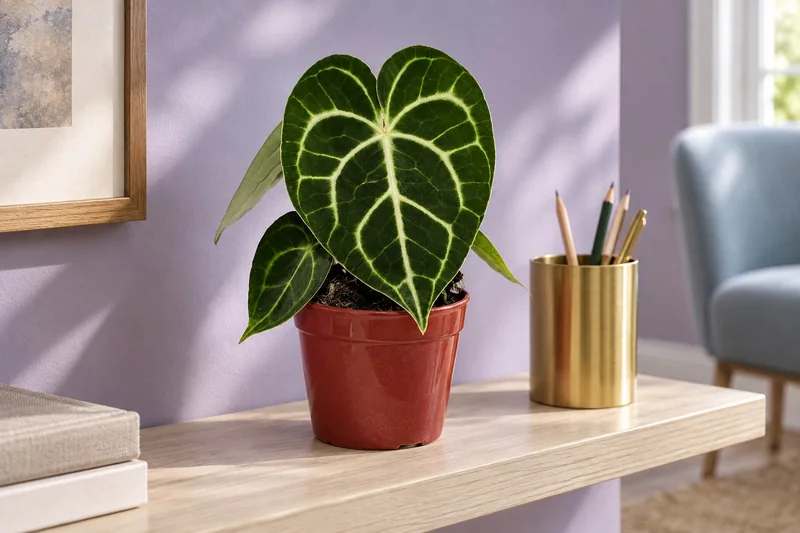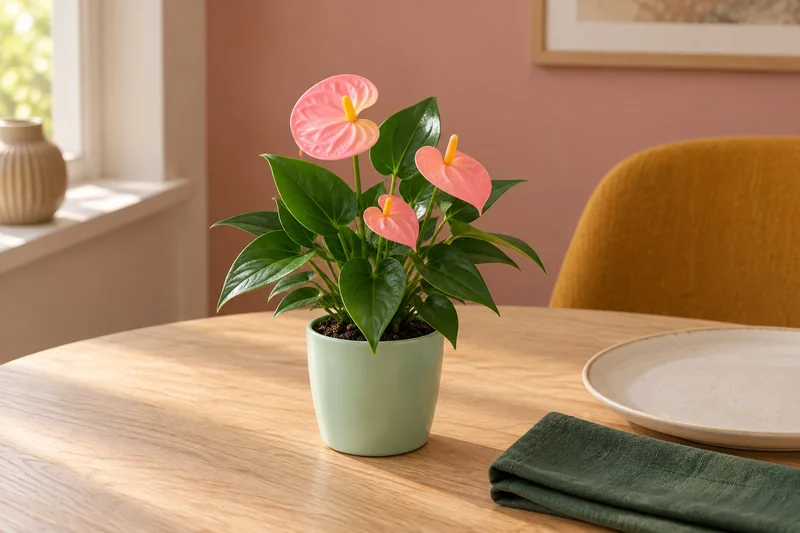
This plant at Exotenherz
Check the shop offer for current availability, price and what is included.
Product and delivery details are given in the individual offer.
Your care table
| Topic | What to do | Why it helps |
|---|---|---|
| Light | Place brightly with indirect daylight. | Hot direct sun may damage leaf surfaces and red bracts. |
| Water | Let the upper soil dry slightly, then water slowly and thoroughly. | The small 7 cm root ball needs checking rather than constant small sips. |
| Water quality | Use suitable soft water at room temperature if possible. | Anthuriums prefer a rather acidic root environment. |
| Drainage | Let it drain completely after watering. | Standing water harms fleshy roots. |
| Growing medium | Choose loose humus-rich rather acidic soil with coarse components. | Moisture and air should both have space in the root ball. |
| Nutrients | During new growth, moderately according to the label. | Flowers and new leaves need replenishment, not strong constant feeding. |
| Maintenance | Remove dead leaves and fully spent stalks at the base. | Healthy foliage remains; wear gloves when cutting. |
| Winter | Keep warm and bright; avoid heated air and cold draughts. | Consumption and new growth may decrease; continue checking the root ball. |
Check the compost and pot weight. The care table explains how far the compost may dry.
Water only when needed. The water should reach the root ball without spilling over the rim.
Remove surplus water from the saucer or cachepot. Then return the plant to a suitable position.
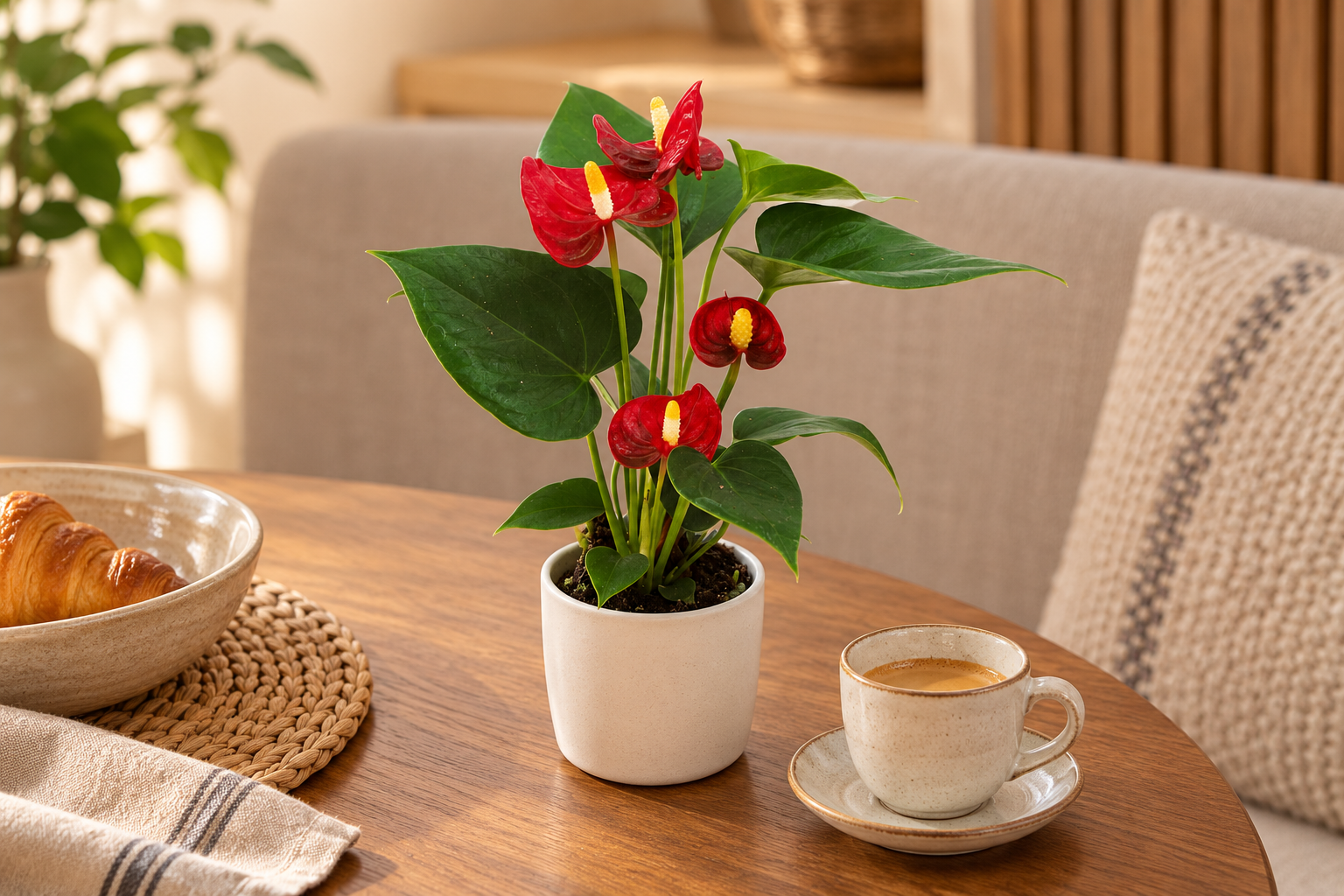
Red hearts with a small yellow centre
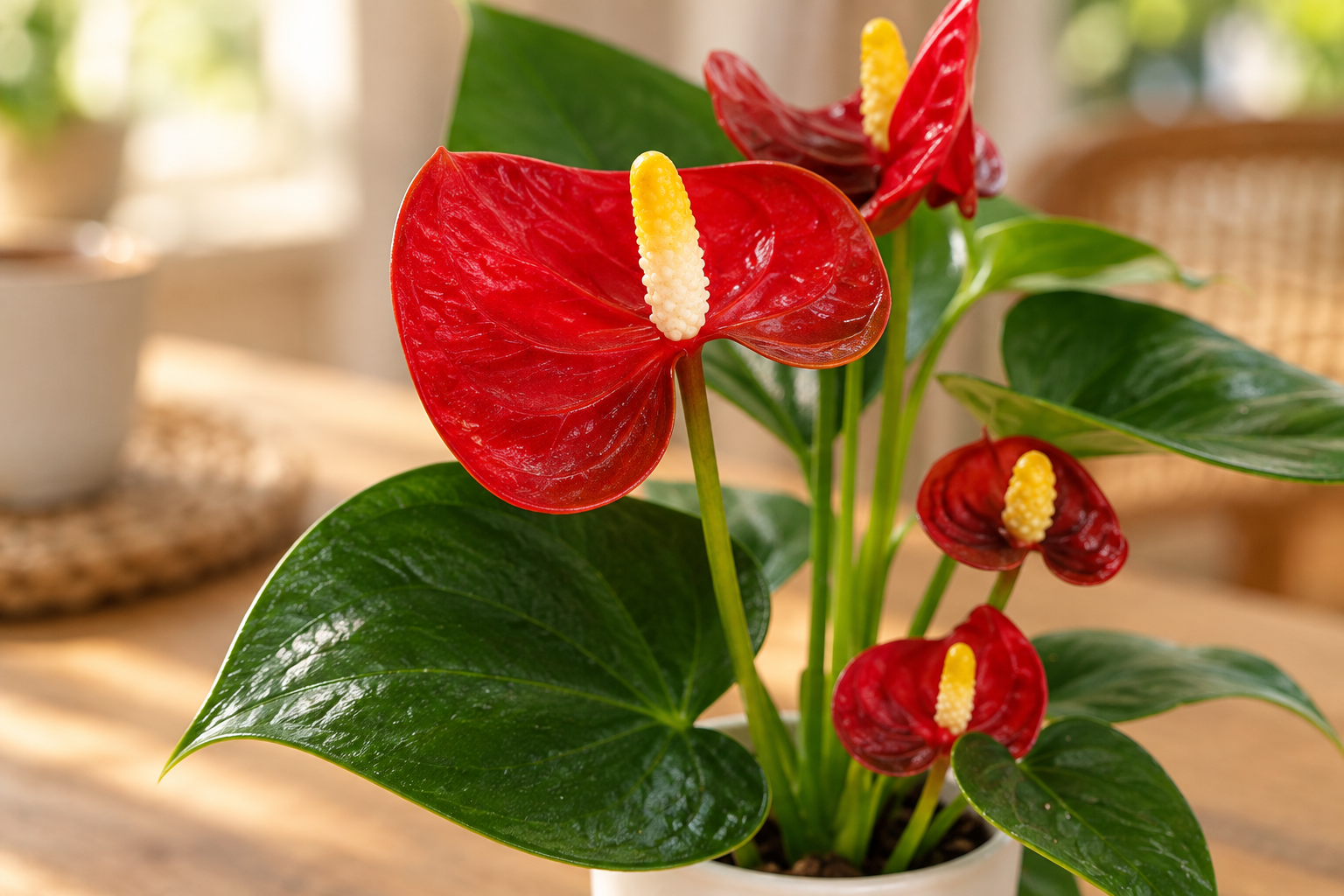
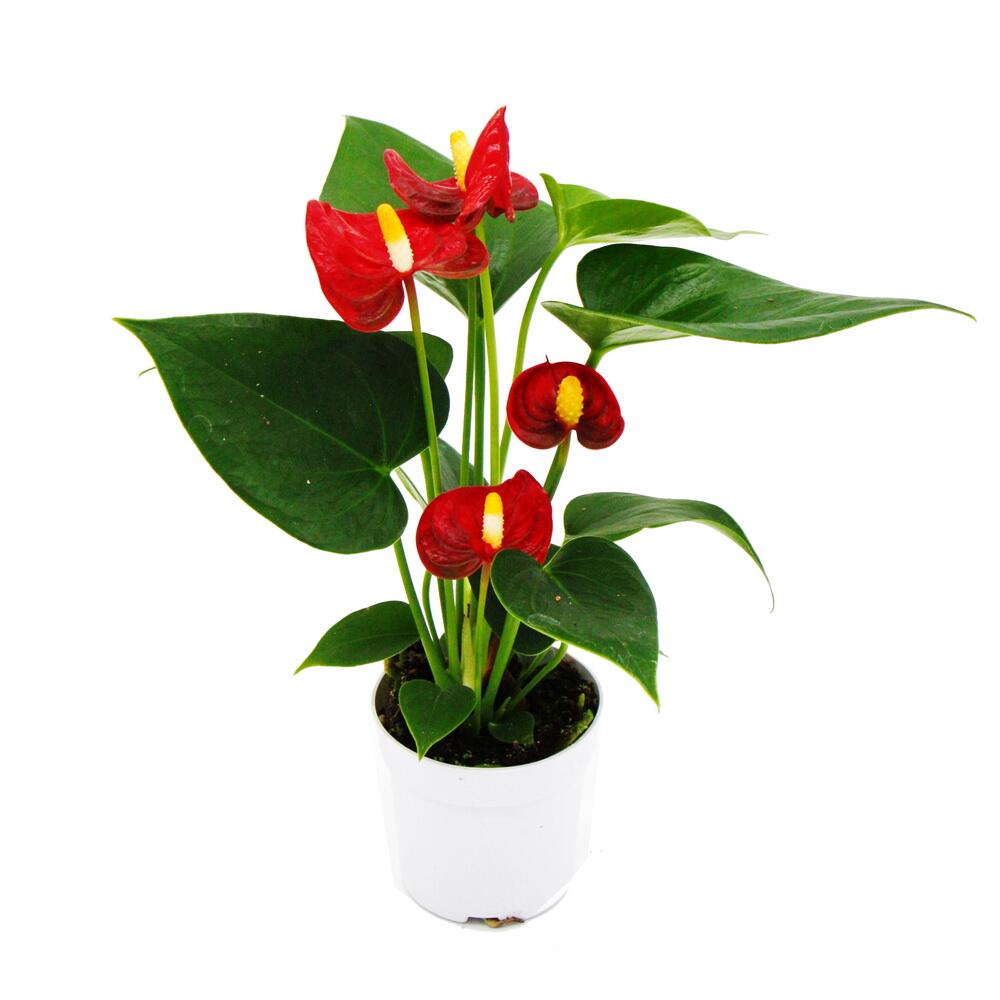
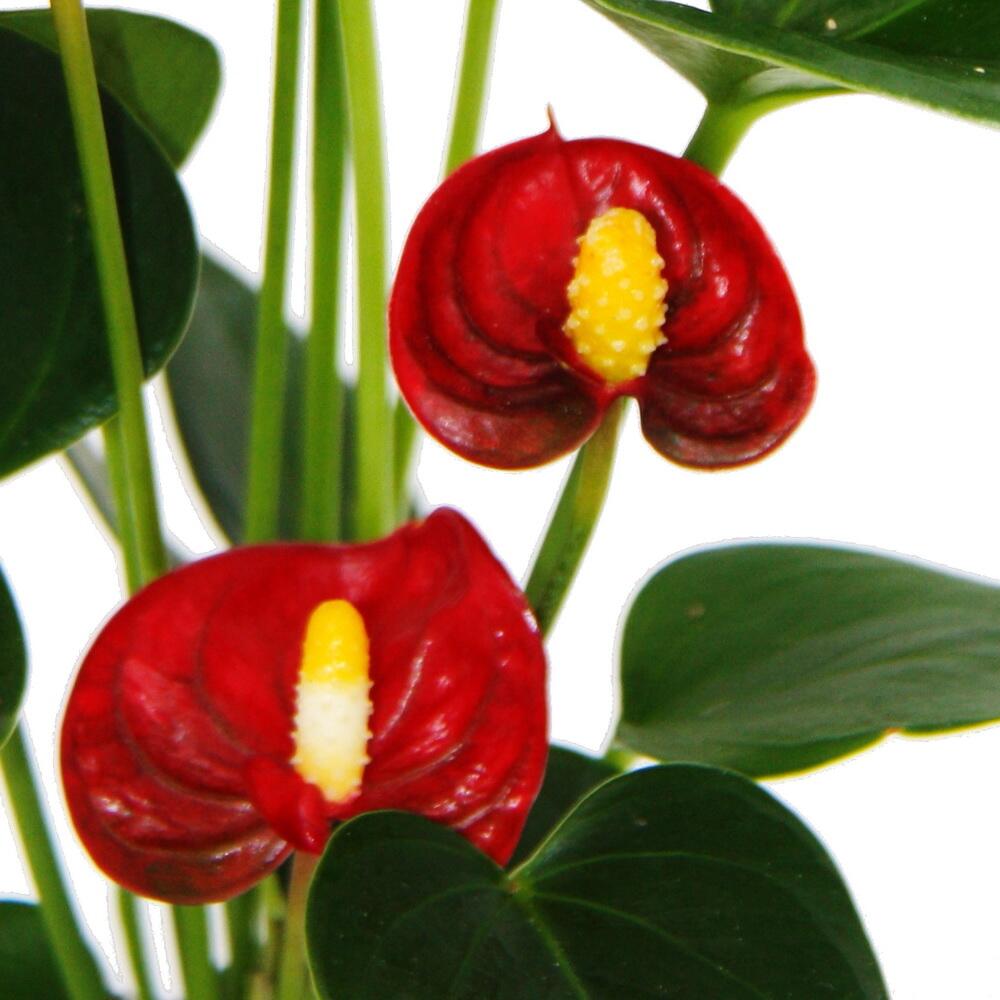
Red Champion carries glossy red surfaces on slender green stalks. What initially looks like a single petal is botanically a bract, the spathe. A short creamy-yellow to yellow spadix stands in its centre bearing the actual tiny flowers. Heart-shaped outlines and dark foliage emphasise the contrast. A single miniature plant looks harmonious on a small bright breakfast table. Give it its own fixed place instead of wedging it among crockery and decoration. Leaf tips and flower stalks should not be constantly knocked during daily use of the table.
The miniature delivery form is the starting point
The offer specifies a 7 cm pot and about 20 to 25 cm overall height including pot. Red Champion is a young small plant here, not a large table bouquet. The species name often appears as andreanum in the shop; botanical spelling is andraeanum. The RHS lists Red Champion in the Andraeanum Group and gives a possible later height of up to about 50 cm. This development is separate from delivery size. A decorative pot should hold the small inner pot securely and remains decoration unless expressly included in the offer. The number of simultaneously open inflorescences changes with development and cultivation.
A bright table also needs suitable warmth
Choose filtered daylight without hot direct sun. The red bracts are conspicuous but not insensitive to heat at the glass. After shipping, offer a sheltered place and observe new growth. Red Champion is a frost-sensitive houseplant; cold draughts suit no better than hot air directly from a radiator. As table decoration in a dark hallway, the plant is suitable only temporarily. Its permanent place needs actual daylight. Do not put the small pot directly beside a hot cup or heat source. A quiet plant position can be attractively arranged without losing sight of cultivation conditions.
Supply the whole small root ball
Check the topsoil and inner pot weight. After slight drying, water slowly and thoroughly and let excess drain completely. A small decorative pot easily hides residual water. Therefore check it after every watering. Suitable soft water at room temperature suits the anthurium well. Frequent small sips do not replace even supplies to the entire root ball. Conversely, soil should not remain wet constantly. If leaves droop in moist substrate, check drainage and roots first. A dry light miniature pot needs a different measure from a heavy wet root ball.
Airy soil beneath the flower colour
Loose humus-rich rather acidic soil with suitable coarse components maintains pore space and lets water drain. Fleshy roots need both. When they densely fill the existing root ball, give only slightly more pot space during active growth. A large volume of unrooted soil may stay moist a long time and does not help the small plant. While new leaves and flower stalks develop, feed moderately according to the label. Consider fresh pre-fertilised compost. A strong additional dose does not force permanent flower abundance. Root condition and appropriate light matter more than the wish to see even more red immediately.
Accompany inflorescences rather than hold them still
An inflorescence changes with age. The red surface may lose shine or later dry; that does not automatically indicate a care error. Remove fully spent stalks at their base with a clean tool without damaging healthy leaves. Gloves protect against irritating sap. Suitable cultivation over time matters for new flowers. A fixed monthly flowering plan and always the same number of red hearts cannot be promised. Clean dusty foliage gently while supporting the leaf surface. Leaf-shine products are unnecessary for its naturally glossy appearance.
Look closely in winter and at leaf signals
Continue warm bright cultivation in winter. Less growth may lower water and nutrient consumption, while dry heated air encourages brown edges. Therefore examine room air and root ball separately. Yellow leaves may relate to wetness, light or other stress; do not immediately feed heavily. Examine undersides and stalk bases too so unusual coatings are discovered early. Anthuriums belong outside the reach of nibbling pets and small children; plant parts are not intended for consumption. The beautiful red remains a pleasure in a living plant position when care also includes the less visible roots.
One plant, several views
Good to know
Are the red surfaces the actual flowers?
They are bracts. The actual tiny flowers sit on the spadix in their centre.
Does Red Champion stay a miniature plant?
The 7 cm offer is the young delivery form. With good cultivation, it may grow larger later.
Must it constantly flower red?
No. Inflorescences develop and age according to development and cultivation; no fixed number is guaranteed.
Why not constantly give small sips of water?
Water then does not reliably reach the whole root ball. After checking moisture, water thoroughly and remove excess.
Which water suits?
If possible, suitable soft water at room temperature. The rather acidic root environment should be maintained.
Is it a harmless table plant for pets?
No. Position anthuriums protectively; plant parts are not intended for consumption and may cause harm.
Sources and editorial note
- Exotenherz: offer and original images (02.10.2026)
- RHS: Red Champion (02.10.2026)
- RHS: growing anthuriums (02.10.2026)
- NC State Extension: Anthurium andraeanum (02.10.2026)
Shop offer, article number, GTIN, availability and original images checked directly on 02.10.2026. Specialist sources read directly. Red and creamy-yellow spadix checked against actual original images. Miniature size and later RHS size separate; no fixed flower number or year-round flowering promise. No air-purification advertising adopted.