This plant at Exotenherz
Check the shop offer for current availability, price and what is included.
Check the selected shop offer for price, availability and delivery contents.
Your care table
| Topic | What to do | Why it helps |
|---|---|---|
| Position | Bright indirect daylight; soften hot summer rays. | Leaves need light without overheating behind glass. |
| Warmth | Even warmth without cold draughts or direct heating airflow. | Cold and dry heat stress tropical foliage. |
| Water check | Assess surface, edge moisture and pot weight together. | A dry surface does not always mean a dry root ball. |
| Watering | After noticeable partial drying, water thoroughly with soft room-temperature water. | Roots need moisture and air returning between applications. |
| Drainage | Let everything drain and empty the decorative container. | Standing residual water keeps roots unnecessarily wet. |
| Substrate | Use an airy stable mix and a suitable draining pot. | Hold moisture without permanently filling the pores. |
| Feeding | Moderately during growth following the label; account for fresh soil’s feed. | New roots and leaves need nutrients without overfeeding. |
| Foliage checks | Remove dust gently and check leaf bases for pests. | Clean accessible leaves make changes easier to identify. |
| Pruning and household | Remove dead stems at the base and wear gloves. | Shaping is unnecessary; irritant sap requires care. |
Check the compost and pot weight. The care table explains how far the compost may dry.
Water only when needed. The water should reach the root ball without spilling over the rim.
Remove surplus water from the saucer or cachepot. Then return the plant to a suitable position.
White, green and the fine lines between
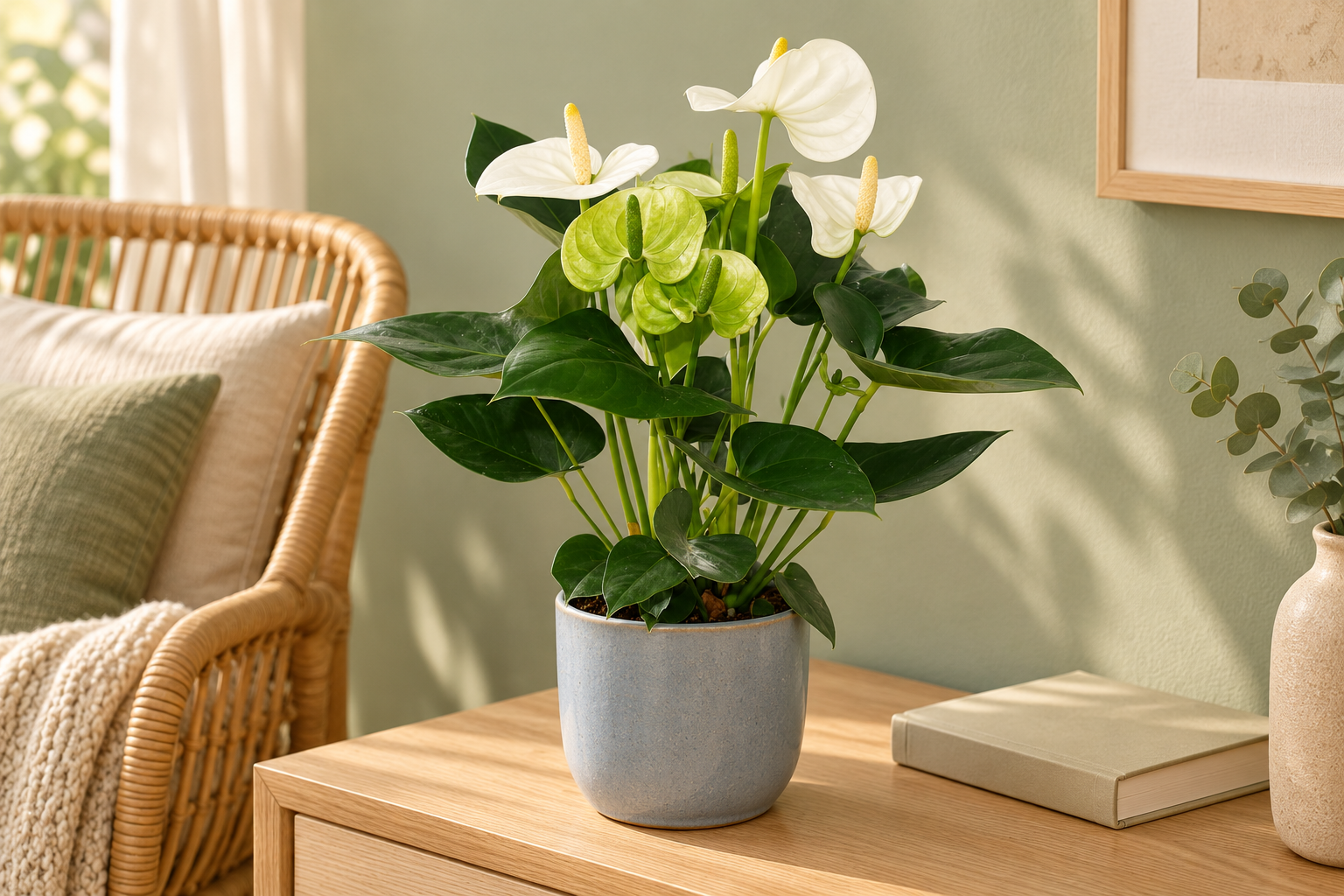
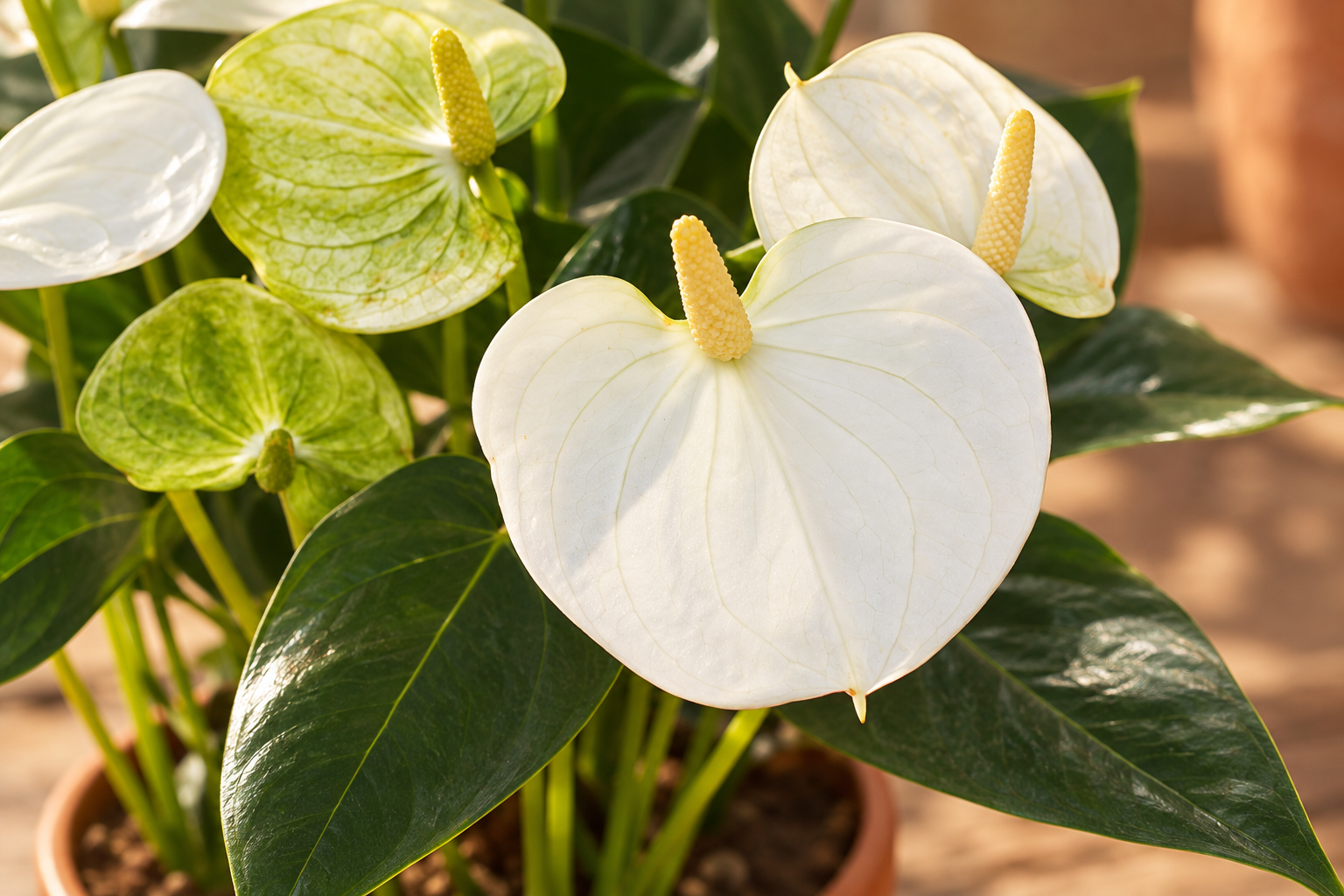
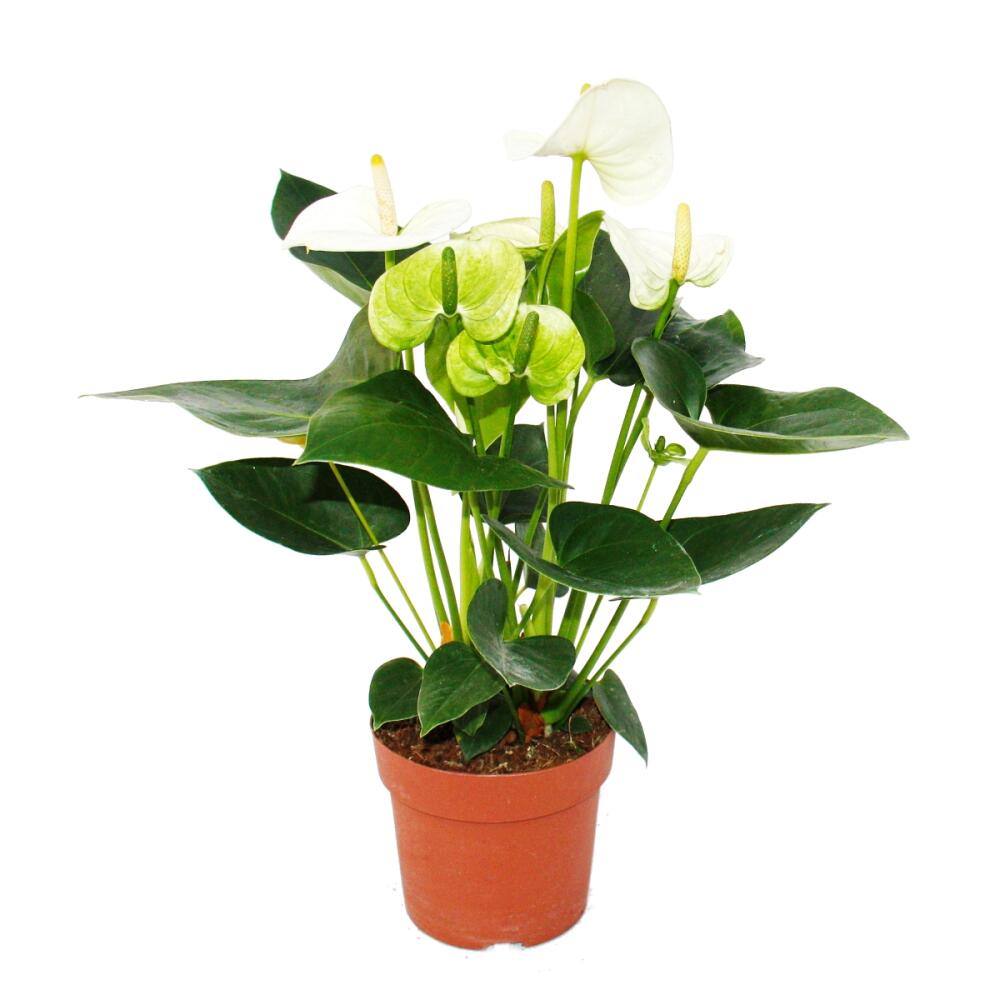
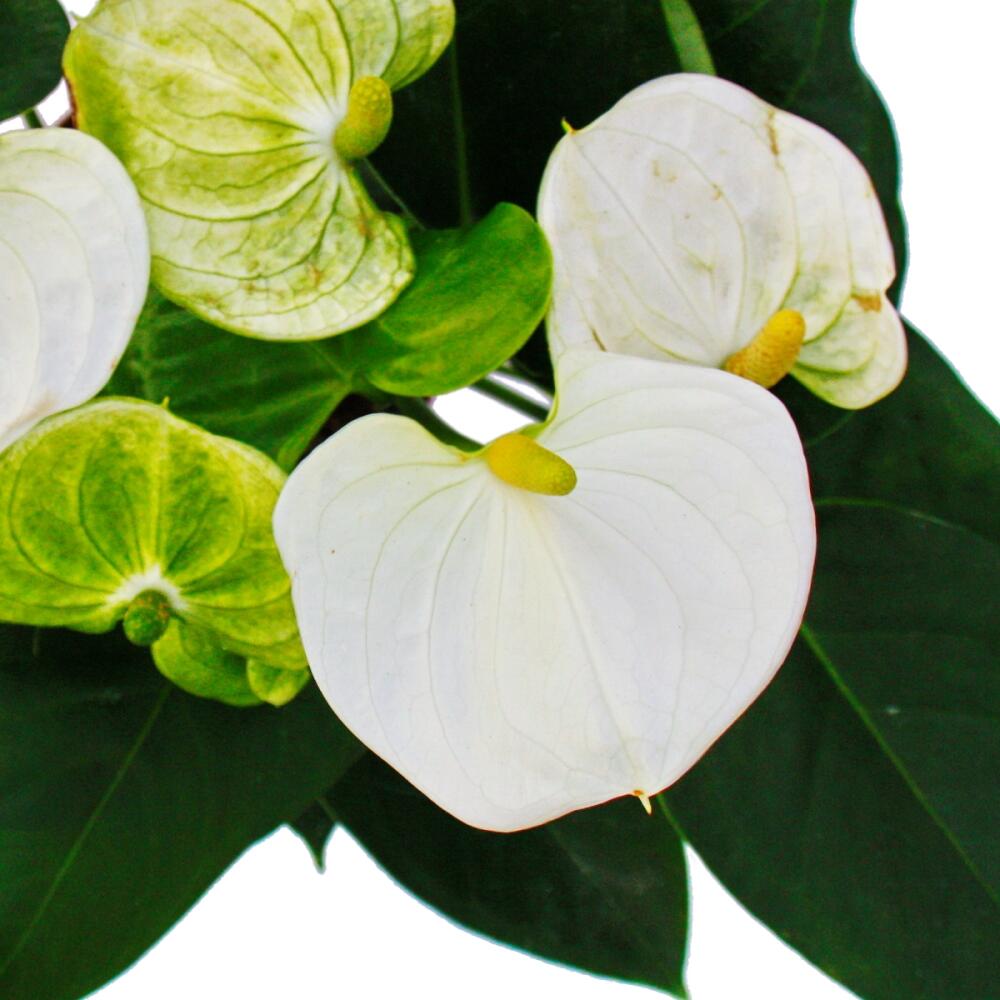
Sierra White looks calm at first glance. Broad white heart-shaped surfaces stand on slender green stems above dark foliage. Close up, pale veins become visible, running from the base to the pointed edge. Some neighbouring bracts are partly greenish. These visible differences give depth: white and leaf green need not be cleanly separated. A light sideboard provides a good view of the slightly tilted surfaces. Light should also reach the lower plant, so strong leaves do not remain hidden behind a chair back. Keep the decorative container accessible enough to lift the growing pot out comfortably.
The bract accompanies the small flowers
The striking heart-shaped surface is the spathe, a bract. The pale, usually cream-yellow spike instead carries many tiny true flowers. This spike is called the spadix. Both together form the flamingo flower’s inflorescence. Sierra White is a named horticultural selection from the anthurium offer. The name also occurs in grower assortments, without implying a particular parent combination. Our photograph shows white to greenish bracts and firm dark green heart- to arrow-shaped leaves. The bracts in our photographs vary in colour and orientation. A greenish bract need not be removed while its stem is healthy and overall growth is good.
Offer size helps with planning
Our offer states a fourteen-centimetre growing pot and approximately fifty-five centimetres or slightly more overall height, including the pot. Allow space beside it for lateral leaves; the tallest spike alone does not describe the spread. The inner pot must neither jam in the decorative container nor remain standing in water at its base. After unpacking, inspect root ball and leaf bases without exposing healthy roots as a precaution. Place the plant first in its suitable bright position and observe how quickly it consumes water there. The AI living-room scene is a styling idea. Outer pot, book and furnishings are decoration; the image does not prescribe an unchanging number of flowers.
Bright warmth rather than hot window glass
Sierra White needs bright indirect daylight. Light shading protects at a sunny summer window if strong rays heat the foliage. A pleasant position beside the window may be better than the hot area directly against the glass. Even room warmth supports cultivation. During ventilation, cold airflow should pass beside the plant, while air directly above a heater is often too dry. Leave space between leaf surfaces so they do not constantly touch. Dust can be removed gently with a soft damp cloth, supporting the leaf rather than pulling its tip. This keeps leaf and moisture checks possible even as the plant becomes denser.
Look at the whole pot when watering
Touch the topsoil and also check moisture slightly deeper near the pot edge. Lift the pot: weight complements the surface impression. Once the upper area has noticeably dried somewhat, slowly apply soft room-temperature water to the substrate to supply the root ball. Let it drain completely afterwards and empty water remaining in the outer pot. Air should return to the mix between applications without roots staying completely dry for long. Daily spraying of soil does not replace this process. Check more often during the first weeks if useful, without adding water every time. Warmth and new foliage can change consumption; in low-light weeks the same root ball often stays moist longer.
Soil and nutrients should match growth
A loose structurally stable mix holds some moisture while letting excess water drain. Suitable coarse components help prevent soil collapsing into a dense wet mass. Repotting becomes useful once the root ball is well rooted; a slightly larger draining pot is enough for the next step. Extra unrooted volume is otherwise harder to supply evenly. Handle living firm roots gently and do not bury the existing base deeply. During visible growth, use suitable feed moderately according to its label and account for nutrients in fresh soil. More fertiliser will not make the white permanently brighter. New roots and healthy foliage are important signs of continued development.
Observe changes and work cleanly
A completely dead stem can be removed at the base with a clean tool. Regular shaping is unnecessary. Gloves protect against irritant sap when working; keep anthuriums away from small children and nibbling pets. With brown edges, assess air dryness, water quality and root-ball condition together. Yellowish leaves in a pot wet for a long time warrant closer inspection of drainage and roots. Also look for mealybugs at sheltered leaf bases. Do not combine heavy repotting and strong feeding to rescue every older leaf. Improve the identifiable cause first, then observe new growth. Further pale bracts are possible depending on conditions; neither a fixed date nor an unchanging display is promised.
One plant, several views
Good to know
Are the white hearts flowers?
They are bracts called spathes. The tiny true flowers sit on the pale spike, the spadix.
Can a greenish bract stay?
Our photographs show white and greenish areas side by side. With a healthy stem and good overall growth, greenish colour alone is no reason to cut.
How large is the offer?
14 cm growing pot and approximately 55 cm or more overall height including pot. This is not a fixed mature height.
Should I spray the soil daily?
That does not replace controlled watering. Check edge moisture and weight, supply the root ball when needed and let everything drain.
How should I choose an outer pot?
Choose one which lets you lift the growing pot out comfortably and leaves no residual water at the roots.
Does Sierra White need regular pruning?
No. Completely dead stems can be removed at the base; work cleanly and with gloves.
Does the plant stay equally white?
Our originals show white to greenish bracts. An unchanging appearance is not promised. New inflorescences are possible, but not promised for a particular date.
Sources and editorial note
- Exotenherz: own offer and originals (4 October 2026)
- Aflora: named Sierra White in its 2019 assortment catalogue (4 October 2026)
- Anthura: Sierra White in Growers Supply 2024 (4 October 2026)
- NC State: complete Anthurium andraeanum plant and care description (4 October 2026)
Shop offer, original photographs and specialist sources checked on 4 October 2026. Check current availability in the shop.