This plant at Exotenherz
Check the shop offer for current availability, price and what is included.
Check the shop for the current price, availability and offer contents.
Your care table
| Topic | What to do | Why it helps |
|---|---|---|
| Arrival | Remove packaging, inspect crown and soil; give no extra water to a moist root ball. | Actual moisture determines initial need. |
| Light | Bright, sunny to partially shaded and airy. | A scented-foliage plant needs an appropriate growing place. |
| Summer start | Gradually acclimatise to outdoor conditions and sun after frost risk. | Sheltered foliage needs a transition outdoors. |
| Water | Check root ball after surface drying starts and supply moderately. | Regular checks avoid unnecessary wetness and neglect. |
| Drainage | Drain surplus and empty covers or saucers. | The pot must not stay in collected water. |
| Soil | Use draining planting soil and clear outlet. | Substrate and hole must work together. |
| Nutrients | Supplement during growth as directed, counting existing feed. | Supply follows growth and soil rather than a rigid calendar. |
| Branching | Gently pinch young tips if needed. | Targeted intervention accompanies bushy form. |
| Checking | Inspect undersides and shoot nodes; also check light, moisture and airflow. | A single leaf sign is no certain diagnosis. |
| Winter | Bring into bright airy shelter before frost; adapt water to lower growth. | Perennial cultivation requires suitable frost-free quarters. |
Check the compost and pot weight. The care table explains how far the compost may dry.
Water only when needed. The water should reach the root ball without spilling over the rim.
Remove surplus water from the saucer or cachepot. Then return the plant to a suitable position.
Apfel is a name for scented foliage here
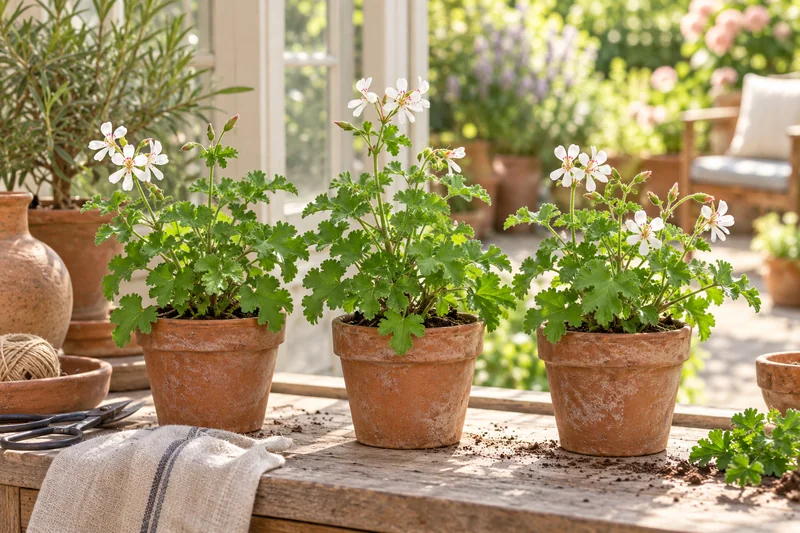
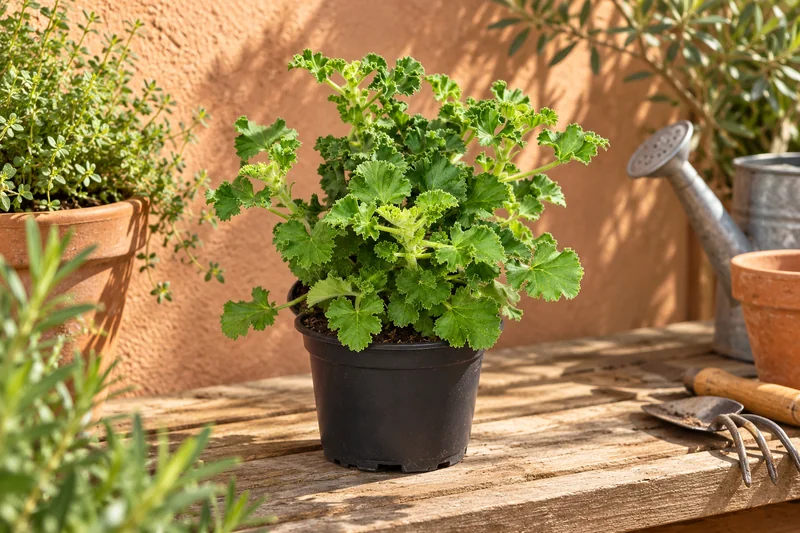
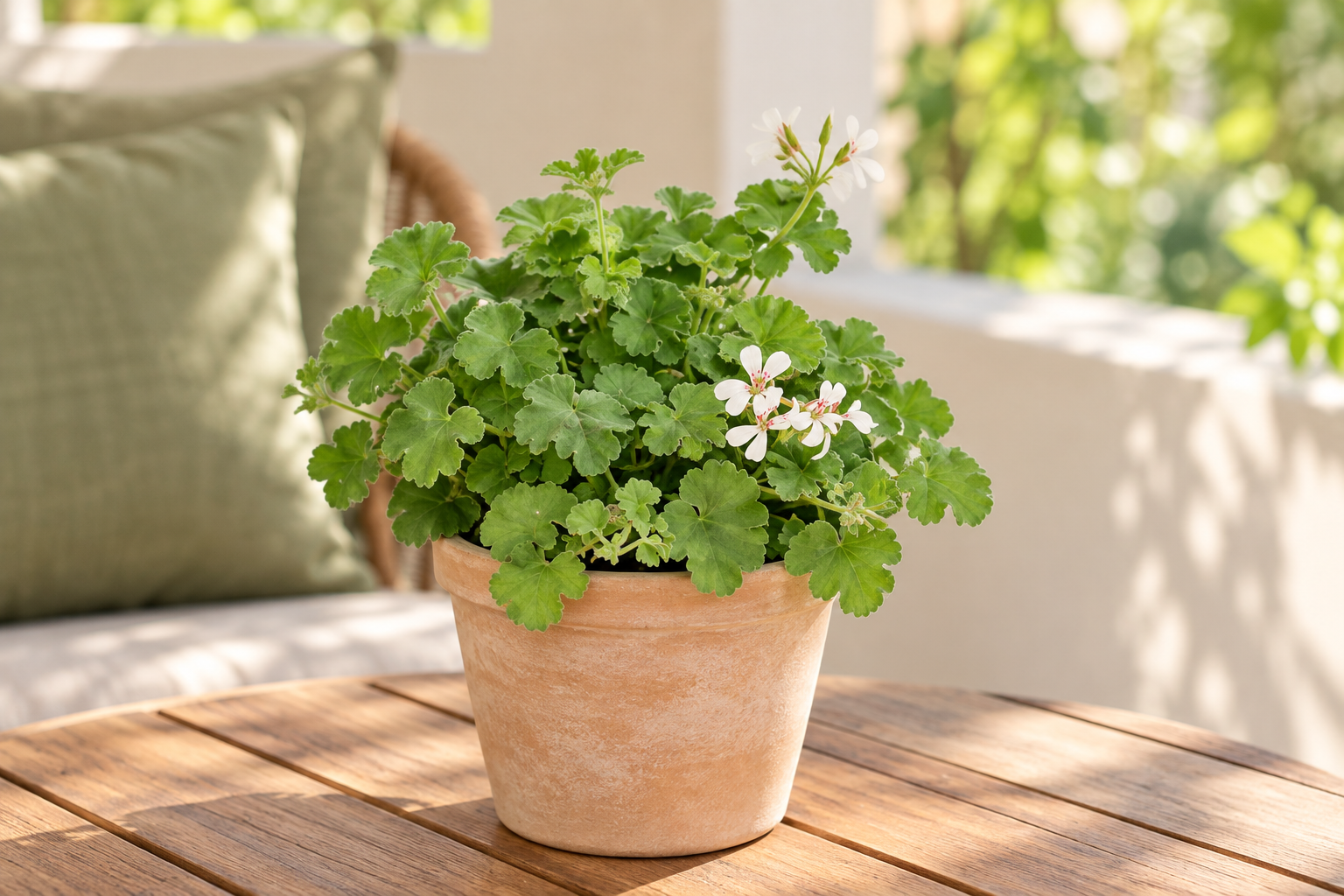
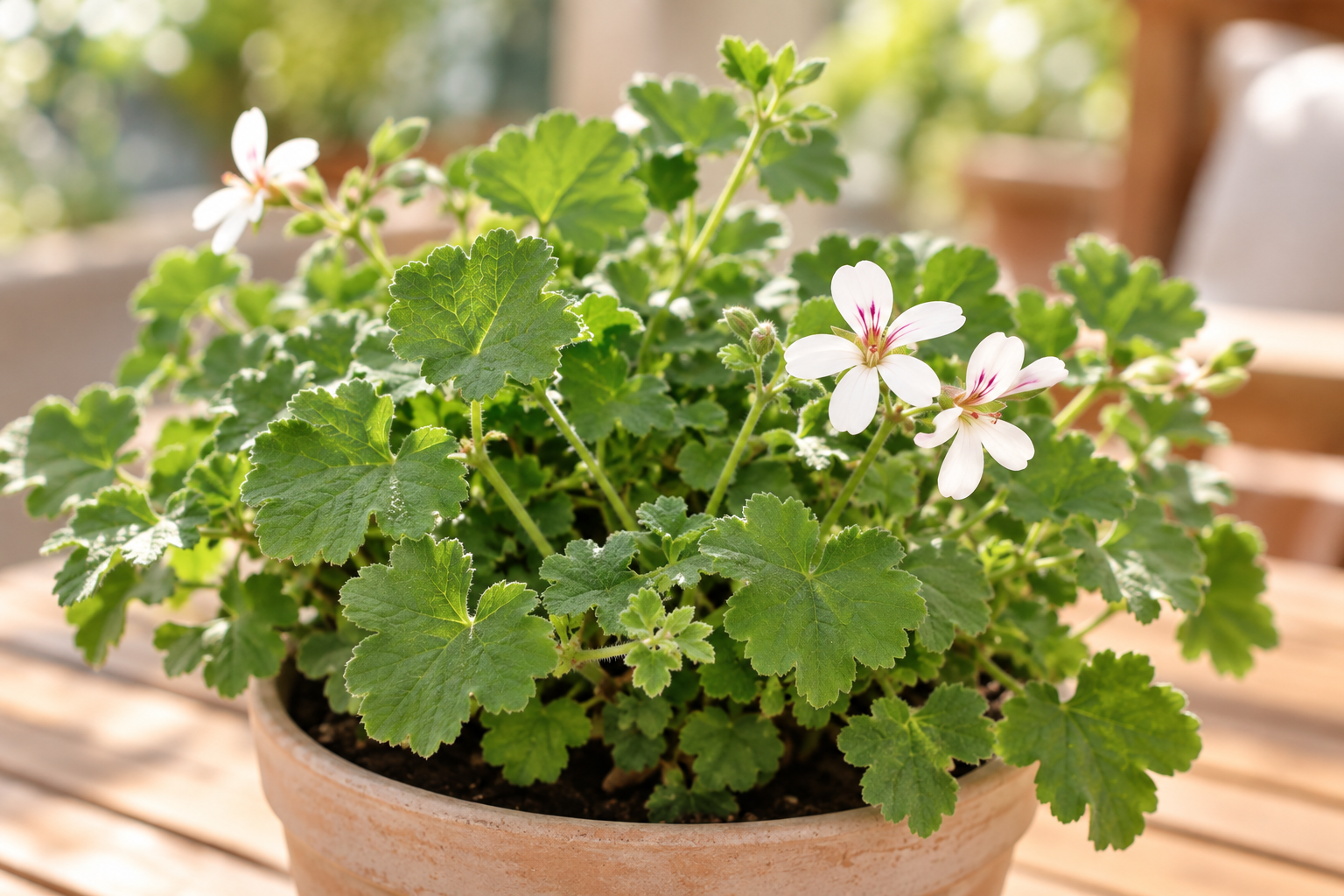
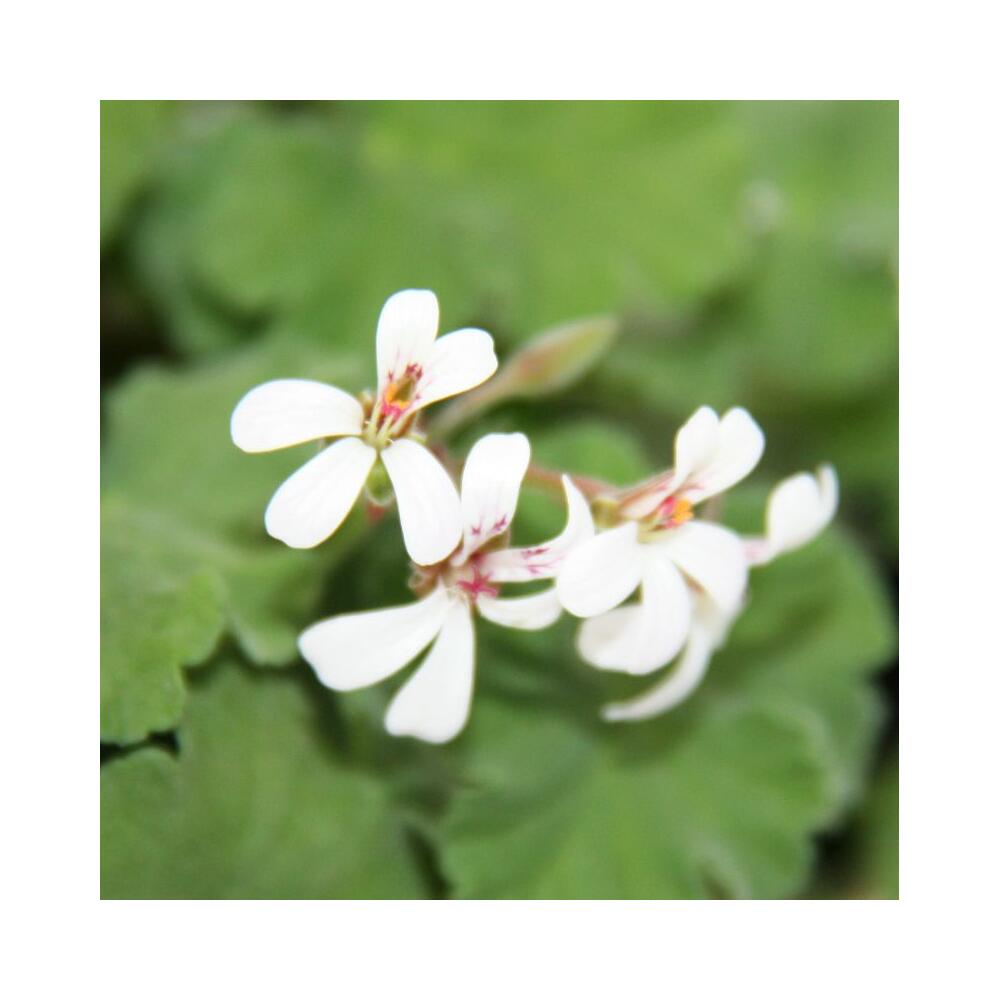
Apfel has a green bushy crown with rounded shallowly lobed leaves. Notched margins and fine leaf markings reward close viewing. Associated photographs show small white to pale pink flowers with darker pink markings. Foliage remains central: this pelargonium is also a branching foliage plant, not just a carrier of large flower heads.
Apfel is the named scent selection of this offer. We classify it as a Pelargonium hybrid without inferring a wild species from the scent name. Scented-leaf pelargoniums may release perceptible aroma when leaves and stems are gently touched. Neither photograph nor trade name guarantees how strong or apple-like it will seem. The selection invites personal viewing and perception; it is described as ornamental here.
Unpack, inspect and keep the pot accessible
Gently free the crown and hold the pot rather than pulling shoots. Inspect damaged leaves and soil surface. A still-moist plant needs no further watering merely because it travelled. Initially choose bright where leaves, soil and pot bottom are accessible, following actual condition.
Leave side room for branching. Leaves compressed between neighbours make checking and airflow harder. Decoration must not replace drainage checks: the growing pot needs to drain and collected water be removed. Repotting depends on soil and roots, not an obligation on unpacking. Draining substrate and a container with an outlet matter more than an especially large pot.
A summer place with sun and moving air
Our offer specifies sun to partial shade. A bright airy summer place in a pot suits scented pelargoniums, such as a terrace or balcony. Position the crown in light, not behind dense neighbouring foliage. Partial garden shade is not a dark indoor corner. In a protected conservatory or greenhouse, much light and airflow go together; shading may be needed against scorching midday sun.
After sheltered keeping, introduce outdoor conditions gradually. Acclimatise foliage to stronger sun before permanent placement. Frost risk must have passed. Follow local weather rather than a fixed date. After overwintering too, a familiar terrace is initially a new position for a plant just brought from shelter.
Water moderately and check drainage too
Check regularly without keeping constantly wet. Examine surface and, where possible, weight. Once the upper layer begins drying, assess the root ball and supply moderately during growth. Surface drying does not call for prolonged complete pot drought. Conversely, already moist soil gets no precautionary water. Sun, wind, pot and growth change need, so rigid intervals fit poorly.
Drain surplus after watering. Empty saucers and covers collecting water and inspect outside outer pots after rain too. Moist soil and limp foliage should be considered together: extra water does not automatically help an already wet root ball. In bright frost-free winter shelter, supply more cautiously with less growth. Real soil moisture decides there too, not a blanket summer routine.
Soil and nutrients support the branching crown
Draining planting soil that absorbs and releases water suits potted pelargoniums. Substrate and base must work together. A continually blocked hole makes even good soil problematic. If roots and soil later require a bigger pot, transfer gently while supporting crown and root ball.
During active growth, supplement nutrients as directed by a suitable feed. Existing soil fertiliser counts. This scented-foliage focus needs no fixed flowering-feed calendar. Follow growth, substrate and product directions, reducing when winter growth slows notably. Feed replaces neither enough light nor free drainage. A plant in already wet soil should not receive extra supply as a precaution.
Guide shoot tips and inspect changes early
Pelargoniums often grow bushy naturally. Gently pinch young tips if needed to encourage branching. Decide on the individual shoot which form to retain. A newly moved or weak plant needs no simultaneous heavy cutting, repotting and feeding. Small interventions make its response to position and supply easier to observe.
Selectively remove damaged parts and inspect undersides and branch junctions regularly. Dense damp crowns with little air movement encourage problems, so an airy place is part of care. Yellow leaves or altered tips are observations rather than definite diagnoses. Check light, soil moisture, drainage and visible pests. Clean tools and close examination are more sensible than speculative treatment.
A perennial plant needs frost-free winter shelter
Apfel can be grown for years with frost-free overwintering. Bring the container under protection before frost. Bright, airy and frost-free is the basis; a dark storage corner is not equivalent for a leafy plant kept growing. Check crown and root ball indoors too. Closed damp surroundings do not meet air needs.
With quieter growth, water and feed less. Soil may dry between winter supplies; still follow the need of an actively growing plant. No exact temperature or blanket resting month is fixed for this selection. After outdoor frost risk passes, begin gradual summer acclimatisation again. Overwintering is ongoing care, not simply putting the pot away.
Record flowers and scent as observations
The offer lists summer flowering. Associated pictures show small pale flowers with pink markings but prove no flowers in a later delivery. The flower close-up cannot replace the whole plant or its scent. This unchanged shop detail also occurs for the unnamed scented-pelargonium selection. Apfel comes from the selected offer, not identification from the close-up.
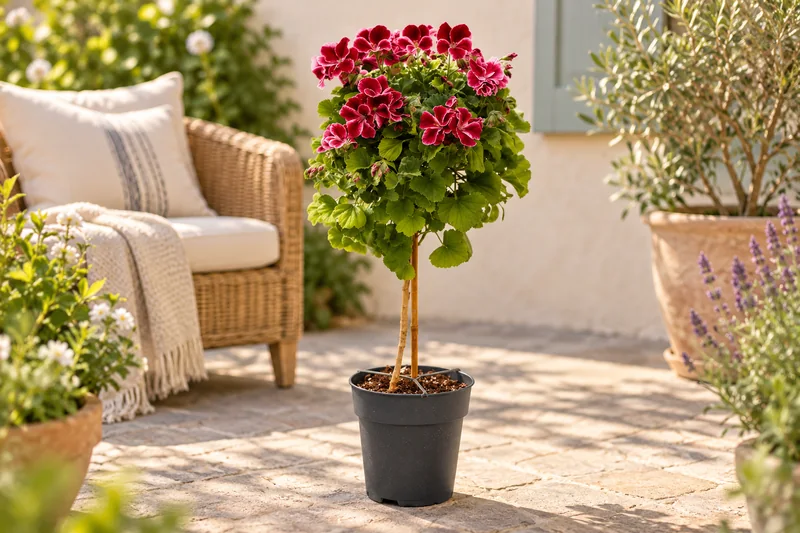
Your own leaf photograph and position notes help the plant book. Record branching, soil checks and the scent you perceive; observations stay linked to your plant. A scent name does not automatically make leaves or flowers food or remedies. Additional AI views illustrate example styling based on associated references; decoration and shown flowering do not fix delivery contents.
One plant, several views
Good to know
Is Apfel a particular wild species?
Here it is the named scent selection of a Pelargonium hybrid offer, without inferring a wild species or formal cultivar assignment.
Does every plant smell strongly of apples?
The offer uses this scent name. This portrait guarantees neither strength nor perceived apple resemblance.
Can it go straight into full sun after unpacking?
Gradually acclimatise to stronger sun and outdoors. Keep permanently outside only after local frost risk has passed.
How should I water?
Check soil and root ball after surface drying starts, then water moderately as needed. Drain surplus; moist soil gets no precautionary extra supply.
Must soil stay completely dry like a desert plant?
No. Check the young pot plant regularly and supply as needed during growth. Lower winter need does not mean unobserved dry keeping.
How can I keep the crown bushy?
Gently pinch young tips if needed. Light and appropriate supply matter too; heavy interventions are not automatically combined.
Is it winter hardy?
Overwinter frost-free. Prepare bright airy shelter before frost and adapt water and nutrients to growth.
Are flowers and leaves intended as food or remedies?
This portrait describes an ornamental. A scent name implies no food, remedy or reliable insect-repellent use.
Do images guarantee delivery condition?
No. The unchanged shop detail shows reference flowers, while AI views are examples. Flower set, decoration and enlargement determine neither delivery contents nor size.
Sources and editorial note
- Exotenherz: selected Apfel offer, our article number and associated images (6 October 2026)
- Royal Horticultural Society: complete Pelargonium guide and scented-leaf group; general cultivation (6 October 2026)
Apfel is a named trade selection of a Pelargonium hybrid. Our offer checked on 6 October 2026. General care from the complete Pelargonium guide; no wild species inferred from scent name. The public shop detail also appears for the unnamed scented-pelargonium selection.