This plant at Exotenherz
Check the shop offer for current availability, price and what is included.
Check the shop for the current price, availability and offer contents.
Your care table
| Topic | What to do | Why it helps |
|---|---|---|
| Light | Choose a bright position with gentle or filtered daylight. | Do not abruptly expose juvenile foliage to hot sun behind glass. |
| Warmth | Maintain steady warmth; the supplier specifies at least 18 °C. | Cold window air and abrupt changes stress the young tropical plant. |
| Water | Keep the root ball lightly moist, allow brief surface drying and drain thoroughly. | Moisture should reach roots without displacing air from the pot. |
| Soil | Use a humus-rich, structurally stable and freely draining houseplant mix. | A loose root ball combines water supply with root aeration. |
| Feeding | Feed moderately by label when new growth appears, accounting for pre-fertilisation. | Extra salts cannot compensate for a dark or wet position. |
| Repotting | Move only slightly larger when there is a clear need. | Disturb young palm roots as little as possible. |
| Cutting | Cleanly remove only fully dead leaves; leave new spears intact. | The palm heart produces further growth and must not be injured. |
| Winter checks | Reassess moisture and regularly examine leaf undersides. | Less light often lowers consumption; heating air encourages growing problems. |
Check the compost and pot weight. The care table explains how far the compost may dry.
Water only when needed. The water should reach the root ball without spilling over the rim.
Remove surplus water from the saucer or cachepot. Then return the plant to a suitable position.
A nut marks the beginning of the palm
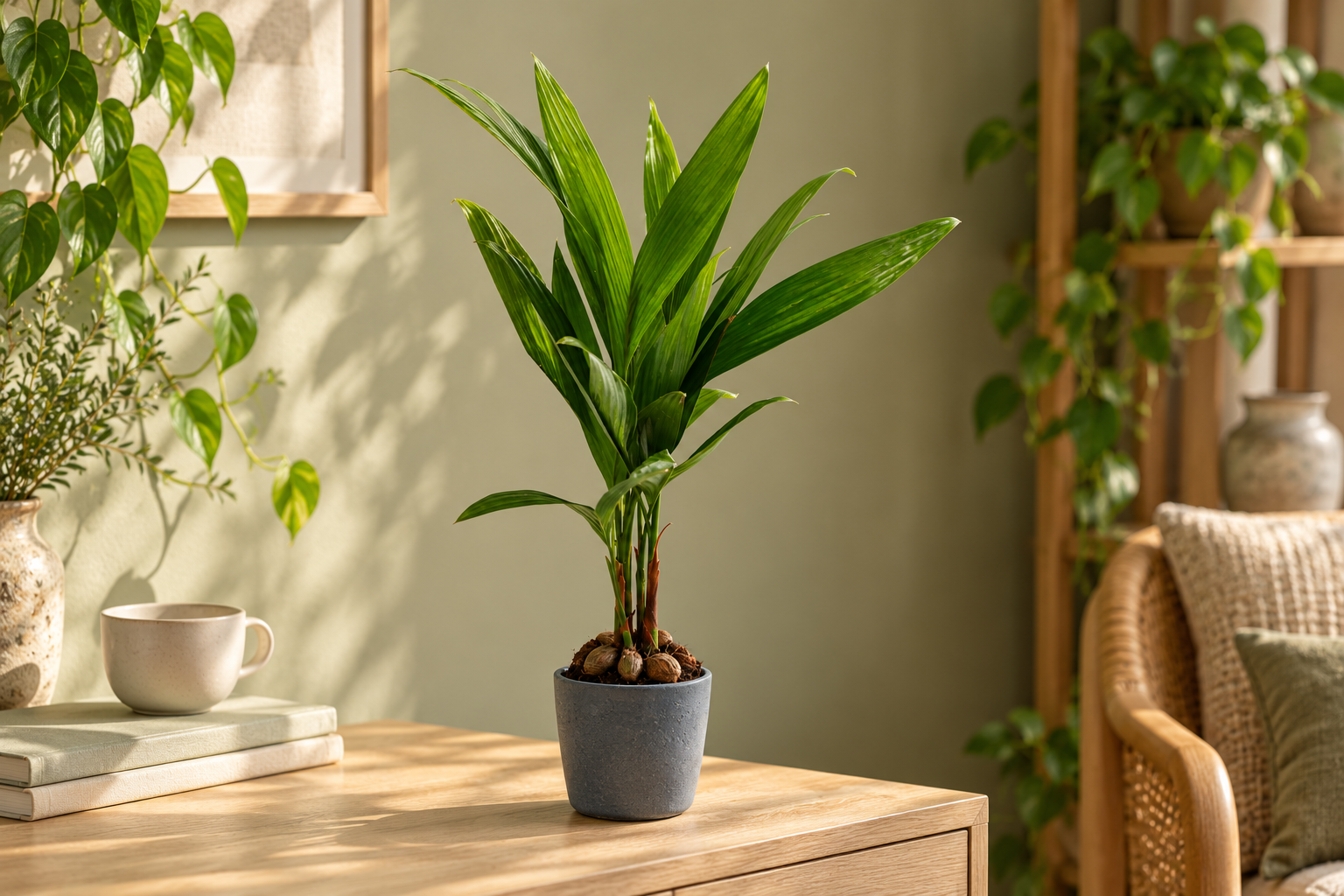
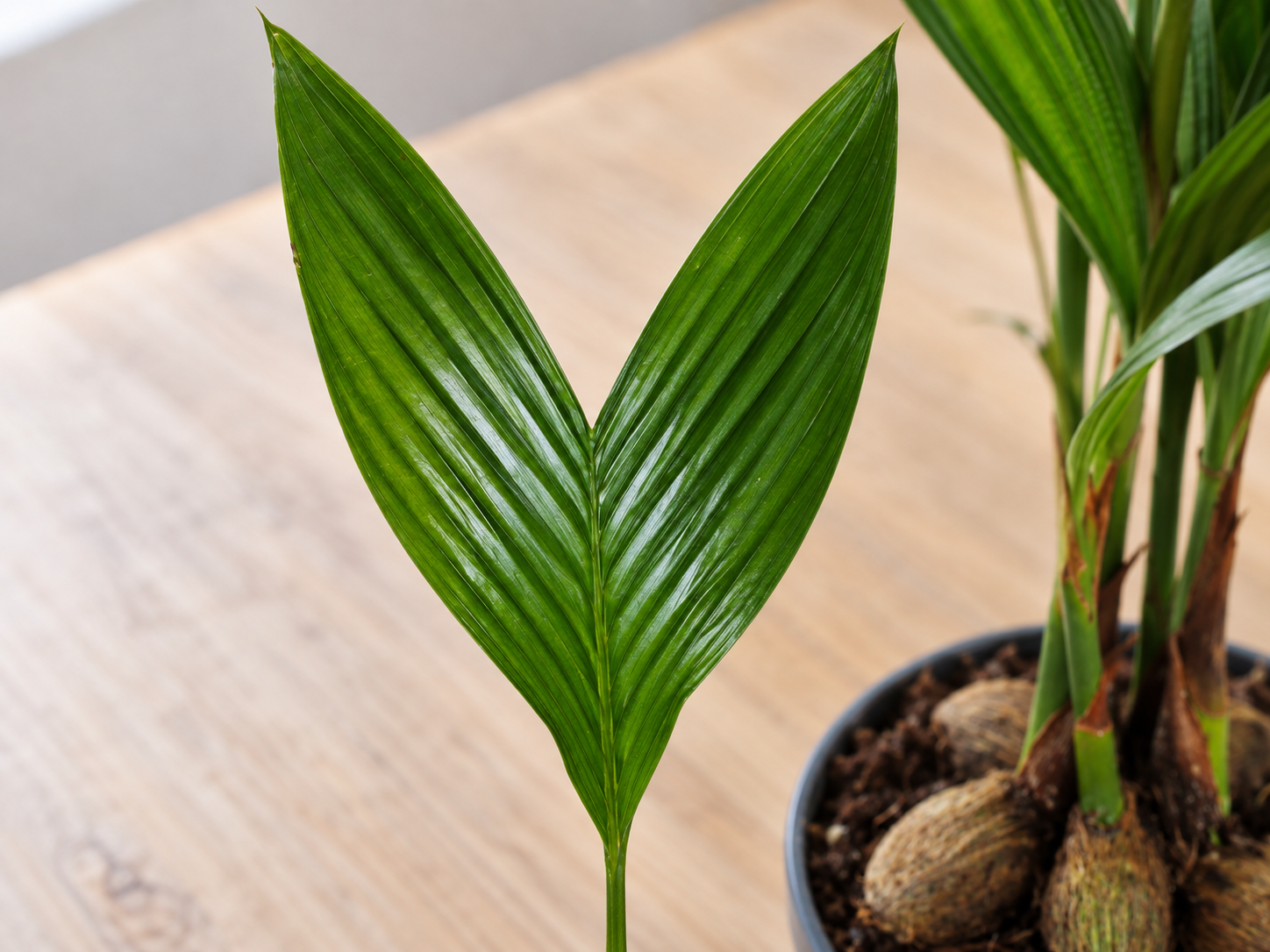
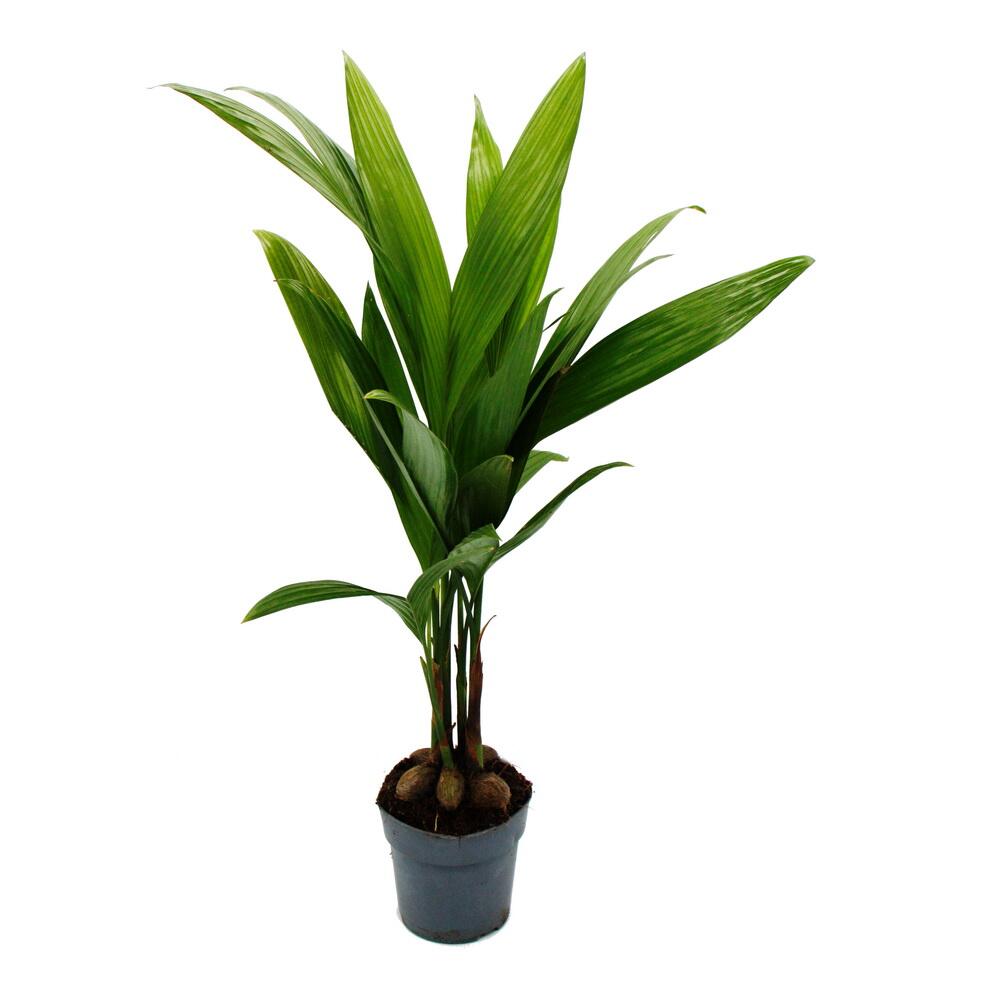
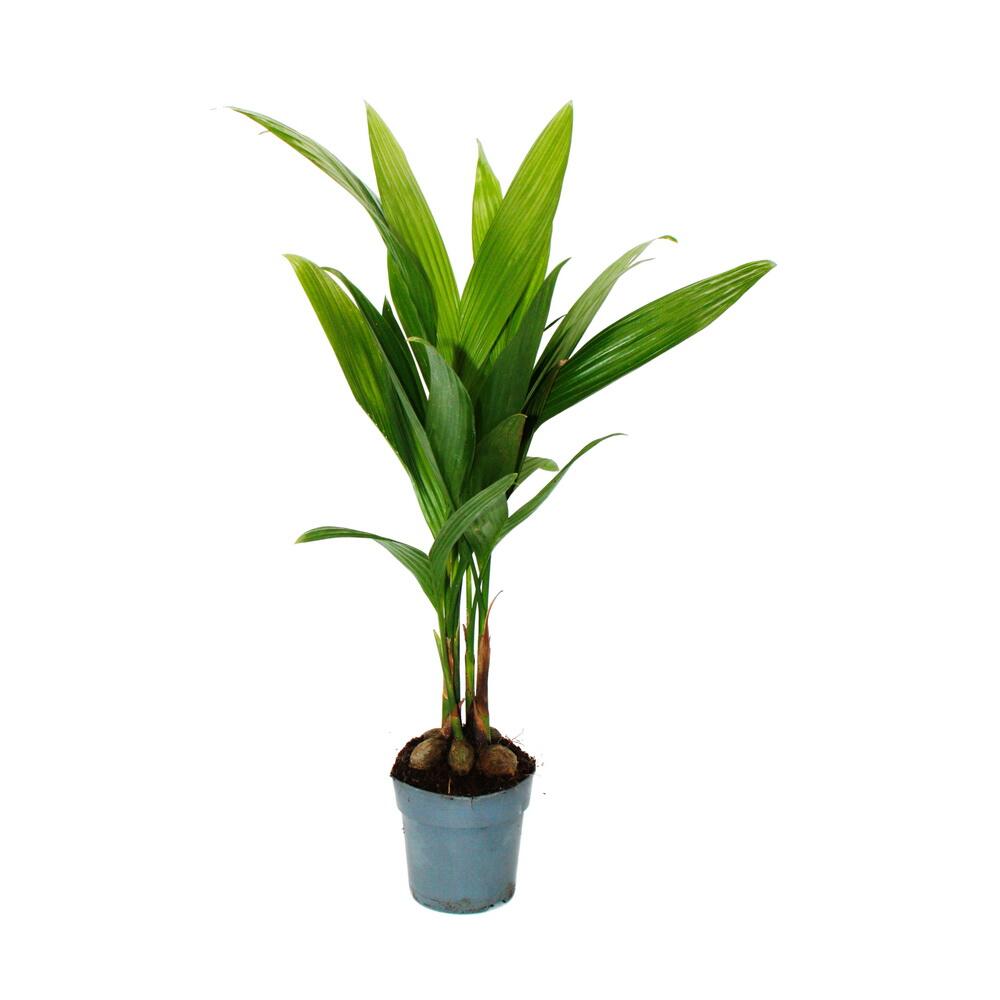
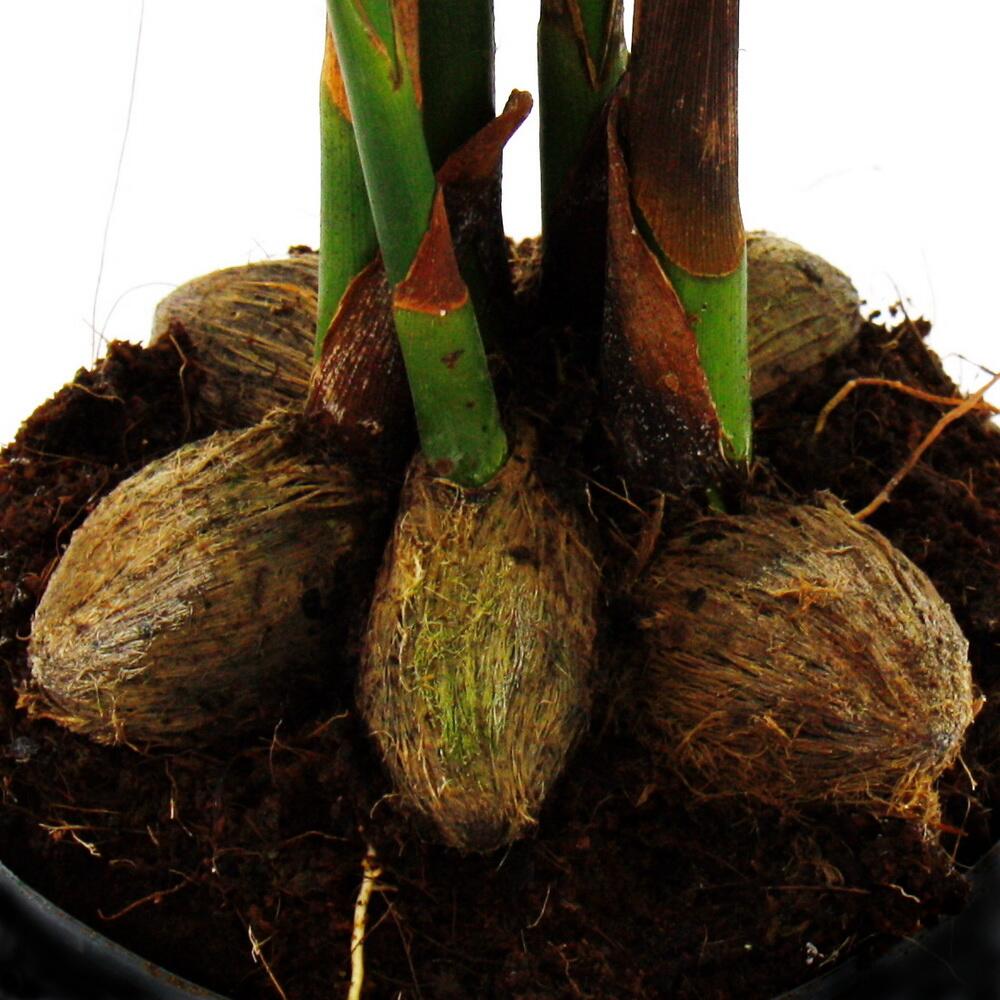
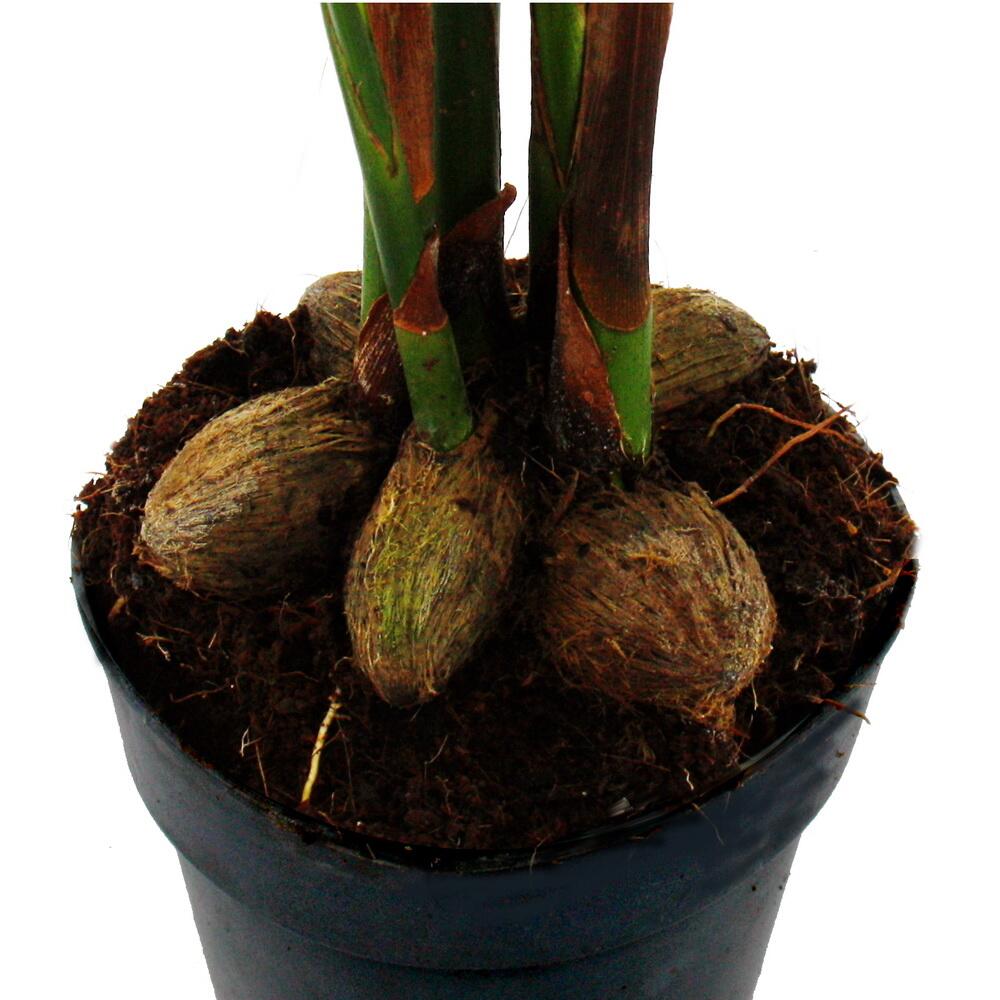
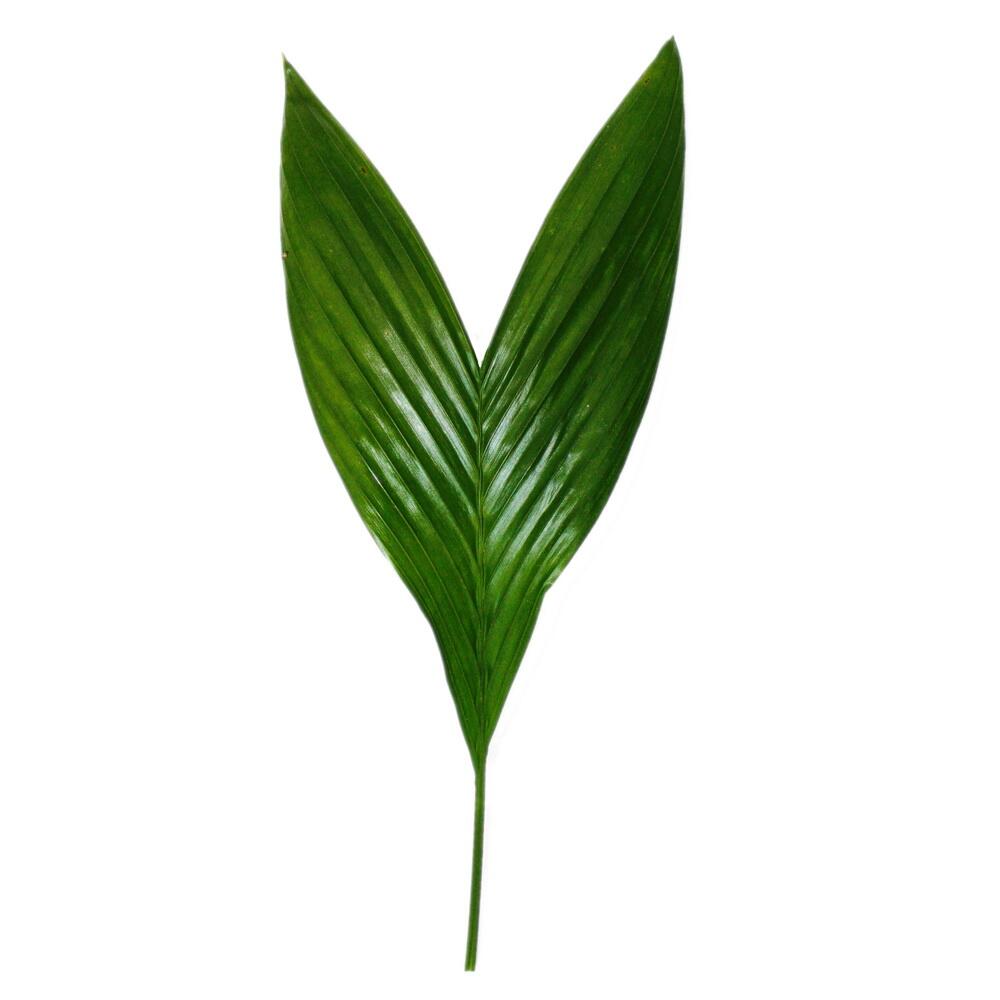
The brown fibrous seeds at soil level are an attractive feature of this young betel-nut palm. Slender stalks emerge with rich green, distinctly folded leaves. Some juvenile leaves end in two long points; others still resemble a narrow folded fan. Examine this plant at eye level rather than hiding it behind a large indoor palm. Its botanical name is Areca catechu. The golden cane palm, also often called Areca, belongs to a different species and has a different structure. This juvenile plant should retain its own form: a ready-made crown of numerous fine leaflets would not represent it. The original photographs show its actual beginning with several young plants in one pot.
Fifty centimetres describe its present start
The associated offer states a twelve-centimetre pot and approximately fifty centimetres overall height. This describes the young plant offered, not the later size of an adult betel-nut palm. In tropical cultivation the species becomes a tall slender palm; indoor conditions differ greatly and limit development. Allow room for new leaves without expecting a particular final indoor height. Support the pot and leaf stalks when unpacking. Do not pull a seed, leaf or young spear to reposition the plant. Visible seeds remain where they are while connected to the plant. Do not pre-emptively tear the small group apart merely to give each seedling its own pot immediately.
Bright light for leaves still unfolding
A bright warm position with filtered daylight suits the young indoor plant. An adult betel-nut palm outdoors in the tropics can tolerate considerably more sun; that is no reason to put newly unpacked juvenile leaves abruptly against hot south-facing glass. Observe exposure throughout the day. Bright sky and side light from a window differ from a concentrated sunny patch behind glass. Acclimatise slowly during any later move. Steady warmth matters too: the supplier specifies at least eighteen degrees Celsius. A cold draught while airing can reach the palm sooner than room temperature suggests. Choose a sheltered place away from heating, where the new leaf tip is not pressed against glass or a lamp.
Moisture to the roots without water in the outer pot
During growth, keep soil reliably lightly moist. Check the surface and pot weight before watering: an already dry upper layer can cover a still very moist interior. When water is needed, pour slowly onto the compost so the root ball is reached evenly. Allow surplus to drain freely. Empty any decorative outer pot before returning the palm. The small nursery pot needs no hidden reservoir below its drainage holes. In weaker winter light, the surface can dry a little longer and consumption falls. A fixed weekday cannot replace inspection. Drooping leaves do not prove thirst either: with wet soil, first check drainage, cold and root condition before adding another portion.
Leave the new spear undisturbed at the palm heart
The youngest growth emerges as a folded central spear. It opens unaided and must not be pulled apart with fingers. Leave the sensitive palm heart uncut: a palm is not topped like a branching shrub to make it shorter or bushier. Remove only fully dead leaves with clean tools, keeping neighbouring young stalks clear. Damaged brown parts will not turn green again. Small dry tips can be tidied sparingly if needed, without cutting deeply into healthy tissue. At the same time, look for fine webbing, little scales or cottony deposits. Inspection is easier while the leaves remain manageable. Identify a suspected infestation appropriately rather than treating preventively with arbitrary products.
Expand root space without dismantling the beginning
A humus-rich, freely draining, structurally stable mix retains water while allowing air to roots. Collapsed dense soil is as unsuitable as a huge pot whose unrooted areas stay wet for a long time. When drainage holes are heavily rooted and the ball becomes tight, move to the next suitable size during active growth. Disturb the existing root ball as little as possible. Young main roots contribute substantially to water supply and deserve gentle handling. Restore the previous planting depth, leaving connected seeds exposed as before. Check moisture and stability after repotting. Include fresh pre-fertilised soil in nutrient planning. Start extra feeding moderately, following the label, when clear new growth resumes.
Read the actual condition in winter
Keep the betel-nut palm warm and sufficiently bright in winter too. Dry heating air and reduced daylight can occur together but need different responses: do not simply water more often because the air feels dry. Check the root ball and avoid a constantly hot airflow over leaves. Gently remove dust with a soft damp cloth while supporting folded surfaces. Brown tips can relate to moisture, roots, cold or injury; investigate possible causes in turn. Healthy new growth is a better measure than an old damaged leaf. Betel-nut palm here means an ornamental plant: seeds and other parts are not for eating. Attention remains on its interesting development, from the seed at its base to the next carefully unfolding leaf.
One plant, several views
Good to know
Is Areca catechu a golden cane palm?
No. Golden cane palms are also called Areca, but belong to Chrysalidocarpus lutescens, also known as Dypsis lutescens.
Why are the leaves not pinnate yet?
The original photograph shows young plants with folded juvenile leaves, some ending in two points. Later leaves develop a different form.
Should I remove visible seeds?
Leave connected seeds undisturbed. Do not pull them or dismantle the young group merely for decoration.
May I shorten the palm heart?
No. The new spear and growth point must remain uninjured. Carefully remove only dead leaves.
Is fifty centimetres the final height?
No. It is the approximate overall height of the offer. The species can develop further; no fixed final indoor size is guaranteed.
Can I eat the betel nuts?
This offer is treated as an ornamental plant. Do not eat seeds or other parts.
Sources and editorial note
- Exotenherz: whole own offer/unchanged original gallery
- NParks: Areca juvenile culture/species/origin
- RHS: botanical horticultural Areca catechu profile
- RHS: indoor palms light/water/roots/problems
Sources compared on 4 October 2026. Complete own offer and clean original gallery read and viewed. Offer dimensions describe the young plant, not its later final size.