This plant at Exotenherz
Check the shop offer for current availability, price and what is included.
Product and delivery details are given in the individual offer.
Your care table
| Topic | What to do | Why it helps |
|---|---|---|
| Light | Choose a bright workplace without hot direct sun. | Upright fronds need usable light. |
| Roots | Keep the root ball evenly slightly moist. | Long dry phases do not suit the bird’s-nest fern. |
| Watering | Apply water slowly to soil around the rosette edge. | Young leaves sit in the centre and are protected. |
| Drainage | Use an inner pot with holes and remove excess. | Moisture must not become permanent waterlogging. |
| Climate | Avoid heating warmth and cold draughts. | Room air and root moisture affect foliage together. |
| Repotting | When clearly rooted through, move slightly larger during growth. | Large unrooted soil quantities dry more slowly. |
| Nutrients | During development, feed weakly according to the label. | Slow leaf development is not replaced by strong doses. |
| Inspection | Check undersides and remove dead fronds cleanly. | Distinguish spore-bearing structures from unusual coatings. |
Check the compost and pot weight. The care table explains how far the compost may dry.
Water only when needed. The water should reach the root ball without spilling over the rim.
Remove surplus water from the saucer or cachepot. Then return the plant to a suitable position.
Upright ribbons on the worktable
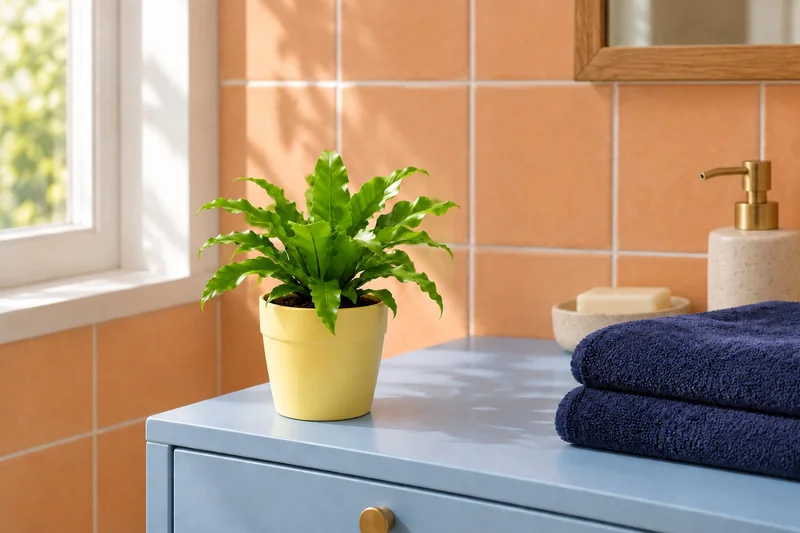
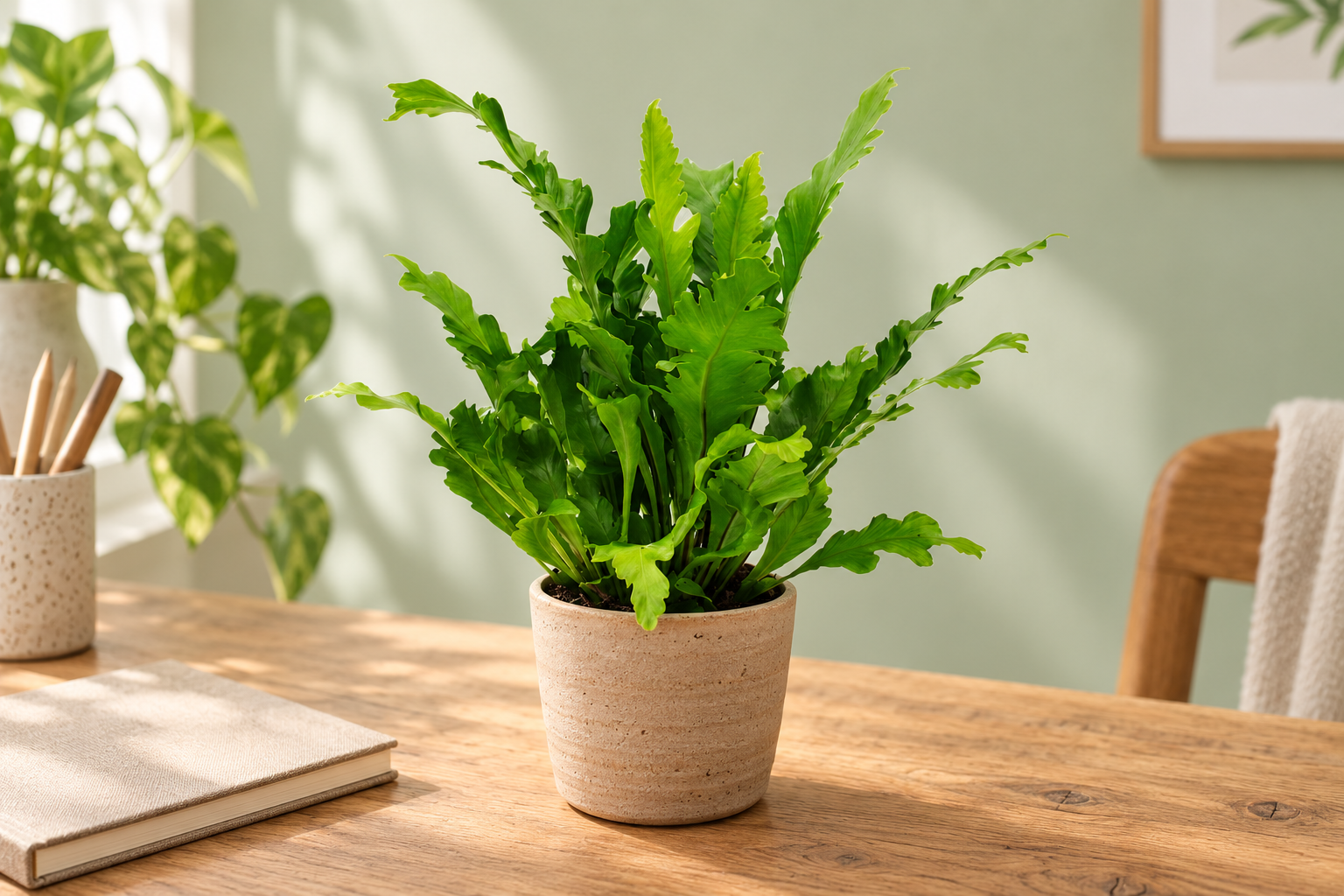
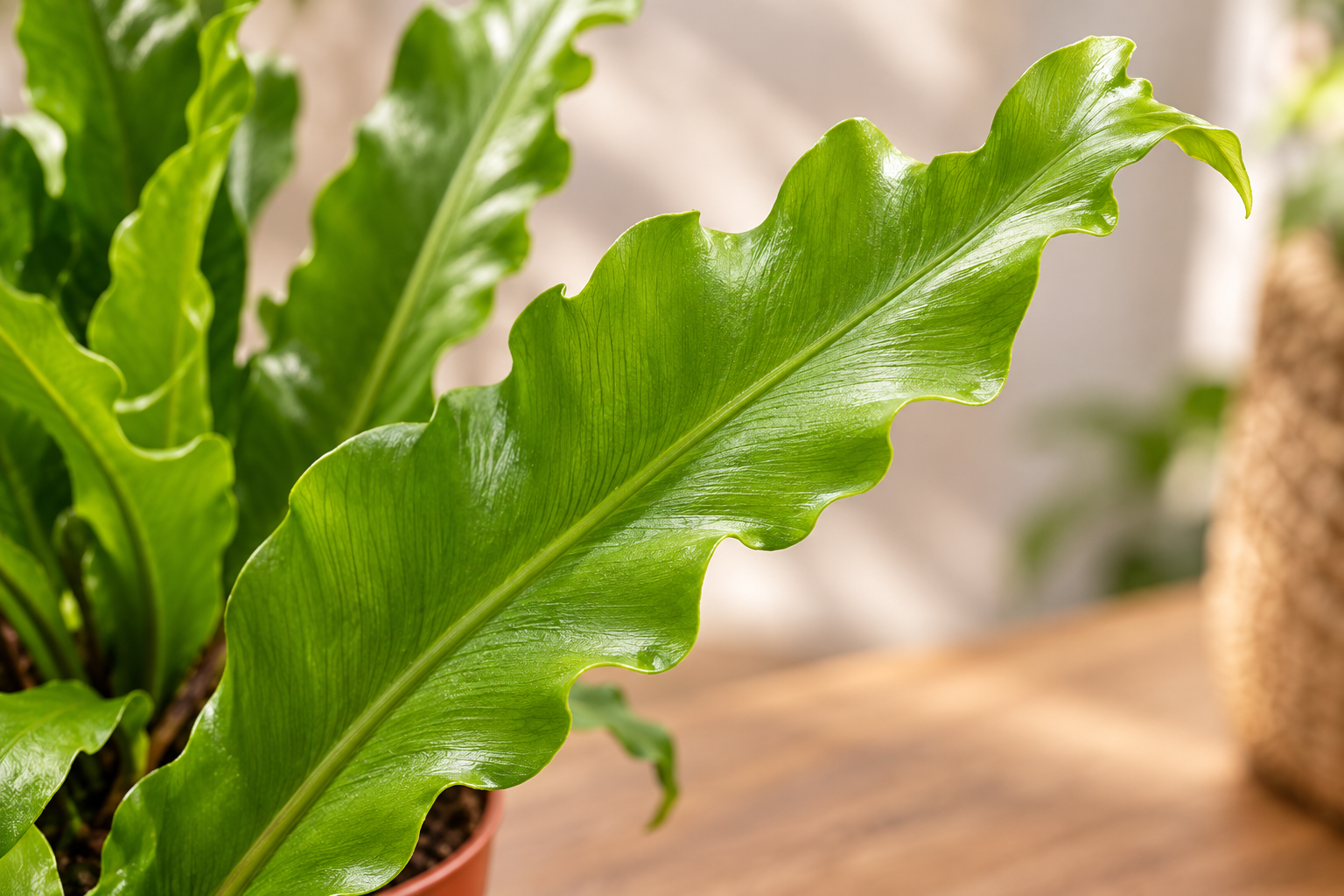
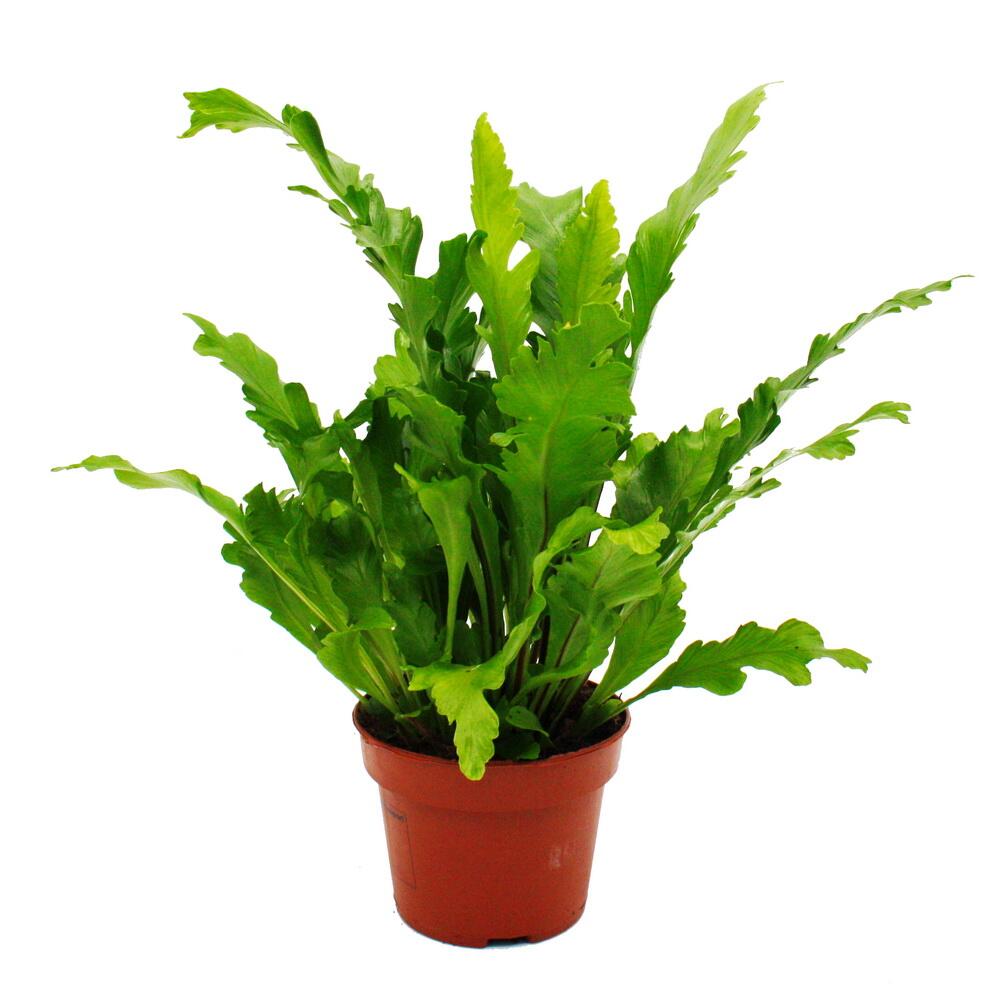
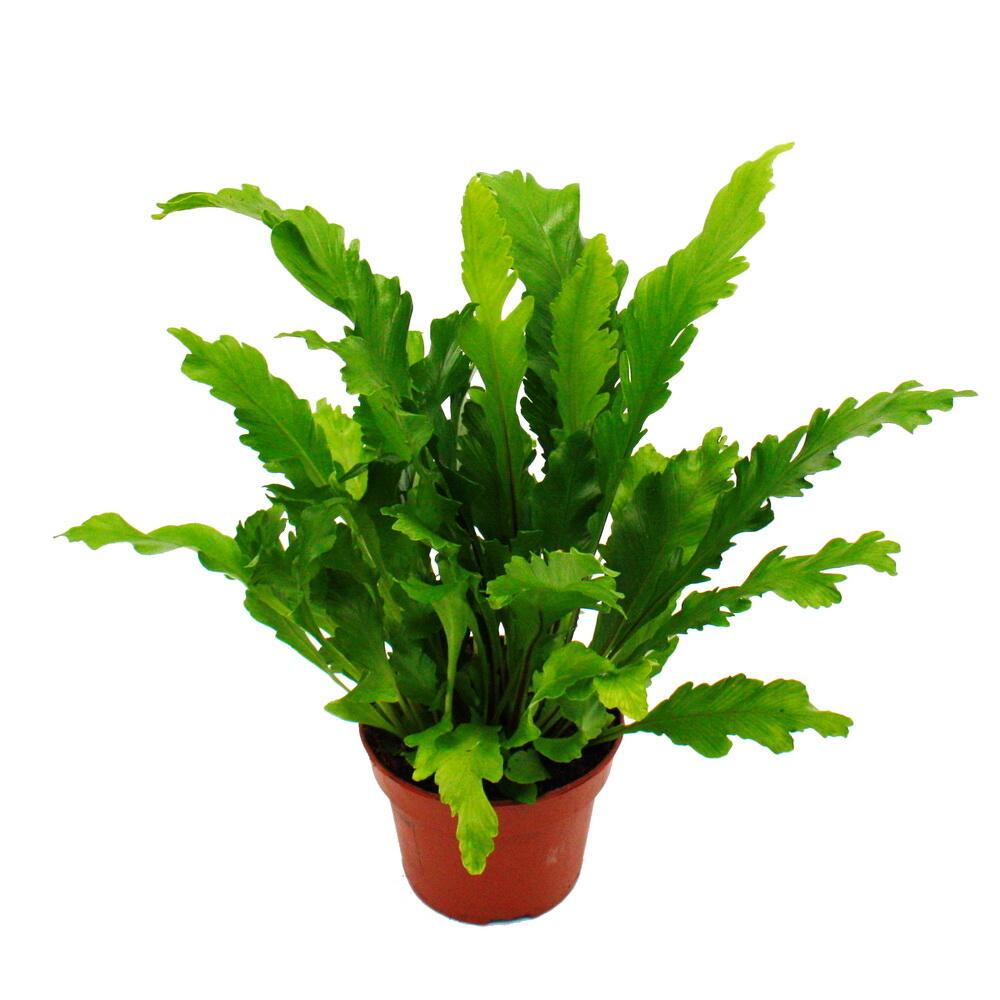
Campio brings a clear green form to the workplace. Fronds initially stand upright and open outwards, while edges and tips look softly wavy or slightly curled. The originals show space between individual leaves; the rosette is no dense spherical tuft. A bright worktable with clear space reveals this form well. Place the pot outside areas where papers are pushed or cables moved. Broad leaf surfaces should not rub against a monitor frame. This keeps the plant visible without constant handling in daily life.
Distinguish Campio from delivery height
The shop variant comes in a 12 cm pot with an overall height of about 20 to 30 cm including pot. Asplenium nidus ‘Campio’ is an evergreen bird’s-nest fern with slower development. The RHS gives a possible height of up to about one metre for an older plant under suitable conditions. This later growth is not factored into the small scene. Nevertheless, plan more space over time for longer fronds. Ferns do not flower; their attraction lies in foliage and unfolding new leaves. Spores on mature undersides belong to their biology.
Filtered light instead of heat from glass
A sheltered bright place with indirect daylight supports development. A desk directly before a hot sunny window may instead stress leaf surfaces. Watch not just room brightness but the actual position behind a screen or curtain. Campio is intended for frost-free indoor cultivation. Keep cold draughts during ventilation and dry warm radiator air away. A more humid room helps sensitive edges but replaces neither light nor root-ball care. A workplace may suit well if these conditions are fulfilled; the label office plant alone does not describe a suitable position.
Recognise need at the root space
Do not repeatedly let the root ball dry completely. Check topsoil and pot before watering. When the surface begins drying slightly, supply slowly and evenly. Water the soil around the rosette edge and let excess drain from the inner pot. Do not flood the centre with young leaves. A small decorative pot can hide water although everything looks tidy above. Therefore check it after watering. Yellow or limp foliage in wet soil first requires examining drainage and roots; more water would be no sensible automatic answer.
Suitable soil supports the rosette
Humus-rich porous fern compost holds some moisture without sealing the root ball densely. Pot drainage holes remain necessary. Once root space is clearly filled, choose a suitable only slightly larger size during active growth. Support Campio by the root ball rather than lifting it by upright fronds. The rosette heart remains clear at its previous planting depth. With new leaves, feed sparingly according to the label. Consider fresh pre-fertilised soil. Slower growth is not automatically a deficiency; excessive feeding is more likely to stress than reliably accelerate natural development.
Read frond tips and undersides
New leaves open from the centre. Let tips unfold themselves and do not pull curled ends. Mechanical damage remains visible on the affected frond. Handle old dusty surfaces carefully and use no shine products. Remove completely dead foliage cleanly at the base without injuring young starts. Regular brown lines beneath mature fronds may be spore-bearing structures. Irregular sticky or detachable spots, however, are checked for pests. Propagating a fern requires different steps from an ordinary shoot cutting; a cut leaf in a water glass is no simple substitute.
A winter desk remains a plant position
Campio may form fewer new fronds in winter. Continue checking the root ball and adjust water and fertiliser to actual development. Low consumption must not be confused with complete drying. Brown edges may be stressed by heated air while soil is still moist. Move the plant away from the heat source if needed and observe the next growth. Plan an office weekend or holiday beforehand: place the fern in a suitable sheltered position and organise checks for longer absences. A full water bowl is no reliable holiday care for its roots.
One plant, several views
Good to know
How does Campio differ from a fine-leaved fern?
Campio has whole broad upright fronds with wavy edges. Leaves do not consist of many little leaflets.
Is it delivered a metre tall?
No. The offer gives about 20–30 cm overall height in a 12 cm pot. The possible later size describes an older plant.
Can it stand beside a screen?
With enough indirect daylight, suitable room air and clear frond space. A dark place behind the screen does not suit.
Why does it not grow fast?
Campio develops rather slowly. Check light, roots and season first instead of immediately feeding more strongly.
Are brown underside lines normal?
Regular lines on mature fronds may be spore-bearing structures. Irregular or sticky coatings are checked separately.
Is a full saucer enough for the weekend?
No. Standing water can waterlog roots. Water according to need, allow drainage and organise a longer absence appropriately.
Sources and editorial note
- Exotenherz: offer and original images (02.10.2026)
- RHS: Asplenium nidus Campio, habit and cultivation (02.10.2026) (02.10.2026)
- NC State Extension: bird’s-nest fern, rosette growth and indoor cultivation (02.10.2026) (02.10.2026)
- UF/IFAS: bird’s-nest ferns, fronds and spores (02.10.2026) (02.10.2026)
- RHS: potted ferns, watering and leaf care (02.10.2026) (02.10.2026)
Shop offer, article number, GTIN, availability and original images checked directly on 02.10.2026. Specialist sources read directly. Campio confirmed using RHS cultivar profile and originals; possible ultimate height clearly separated from delivery form.