This plant at Exotenherz
Check the shop offer for current availability, price and what is included.
Product and delivery details are given in the individual offer.
Your care table
| Topic | What to do | Why it helps |
|---|---|---|
| Light | Provide indirect daylight and some space around the rosette. | Fronds should unfold freely and stay protected from hot sun. |
| Moisture | Supply the root ball evenly and check at a slightly dried surface. | A bird’s-nest fern is not a plant for long dry phases. |
| Watering | Water slowly onto soil around the rosette edge. | Water should reach roots instead of remaining in the young heart. |
| Drainage | Let excess drain and empty the decorative pot. | Air at the roots matters despite moisture. |
| Soil | Use humus-rich draining compost with stable loose structure. | The mixture must retain water without becoming a wet dense mass. |
| Nutrients | During fresh growth, feed sparingly according to the label. | Sensitive fern roots need no strong reserve doses. |
| Fronds | Do not cut divided tips; remove only fully dead fronds. | The fine fingers belong to the growth form shown. |
| Winter | Keep warm and frost-free; away from heating and cold draughts. | Less light and changed drying influence water needs. |
Check the compost and pot weight. The care table explains how far the compost may dry.
Water only when needed. The water should reach the root ball without spilling over the rim.
Remove surplus water from the saucer or cachepot. Then return the plant to a suitable position.
A bird’s-nest fern with a surprising tip
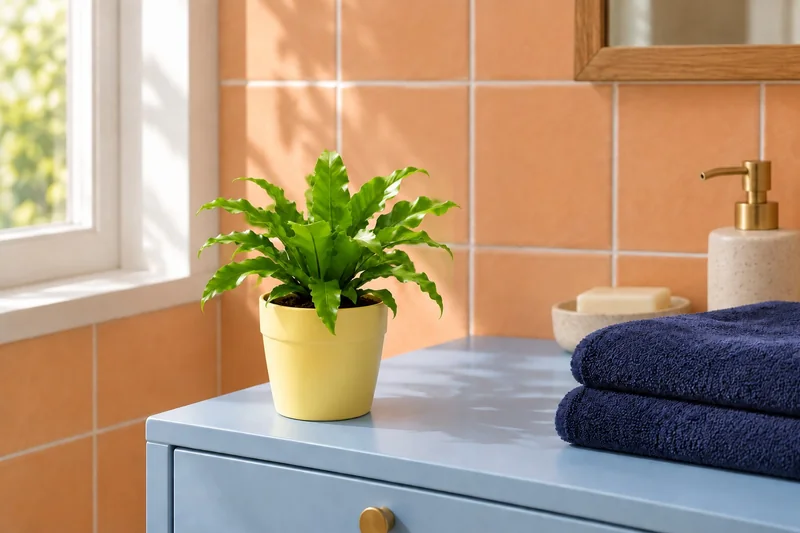
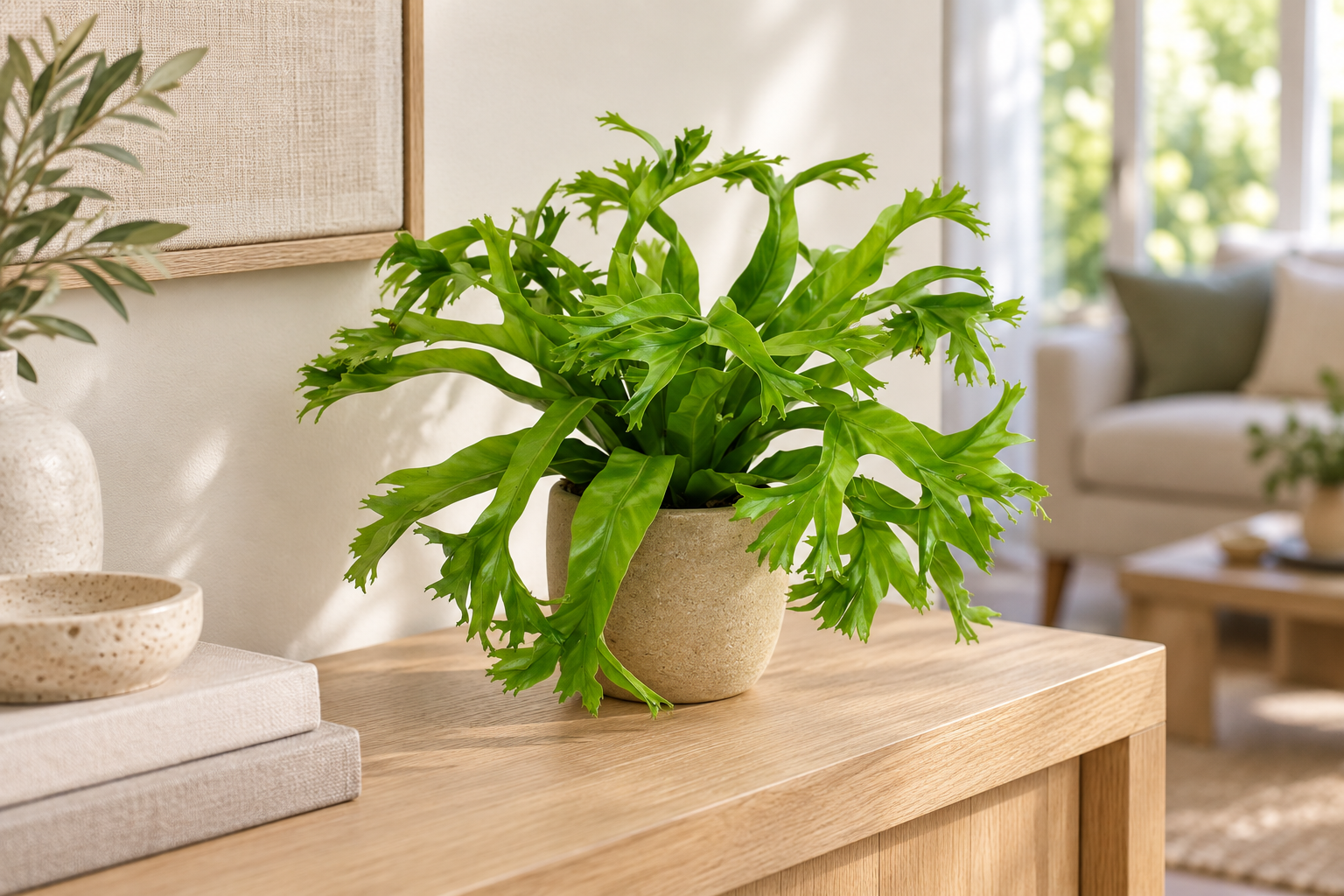
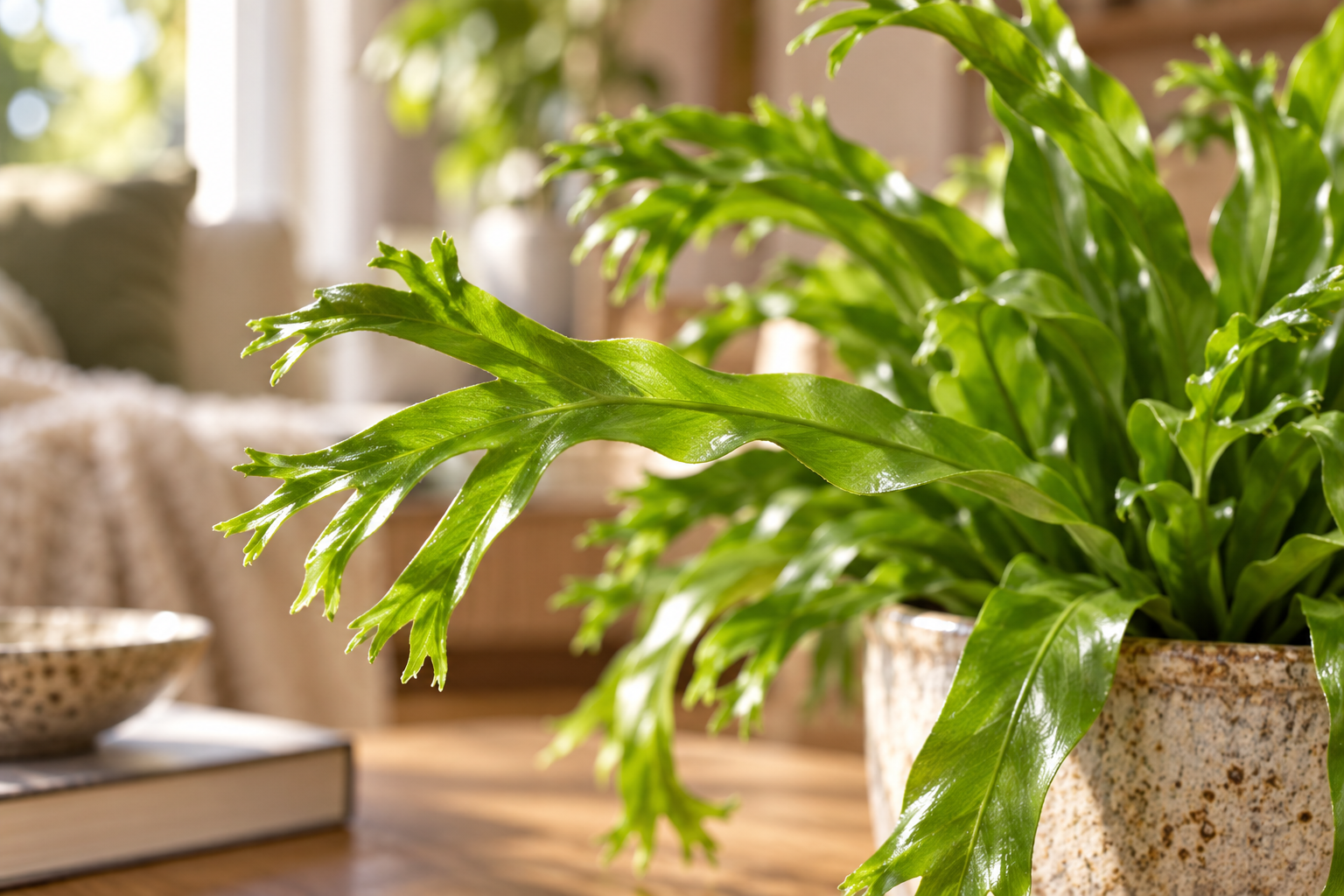
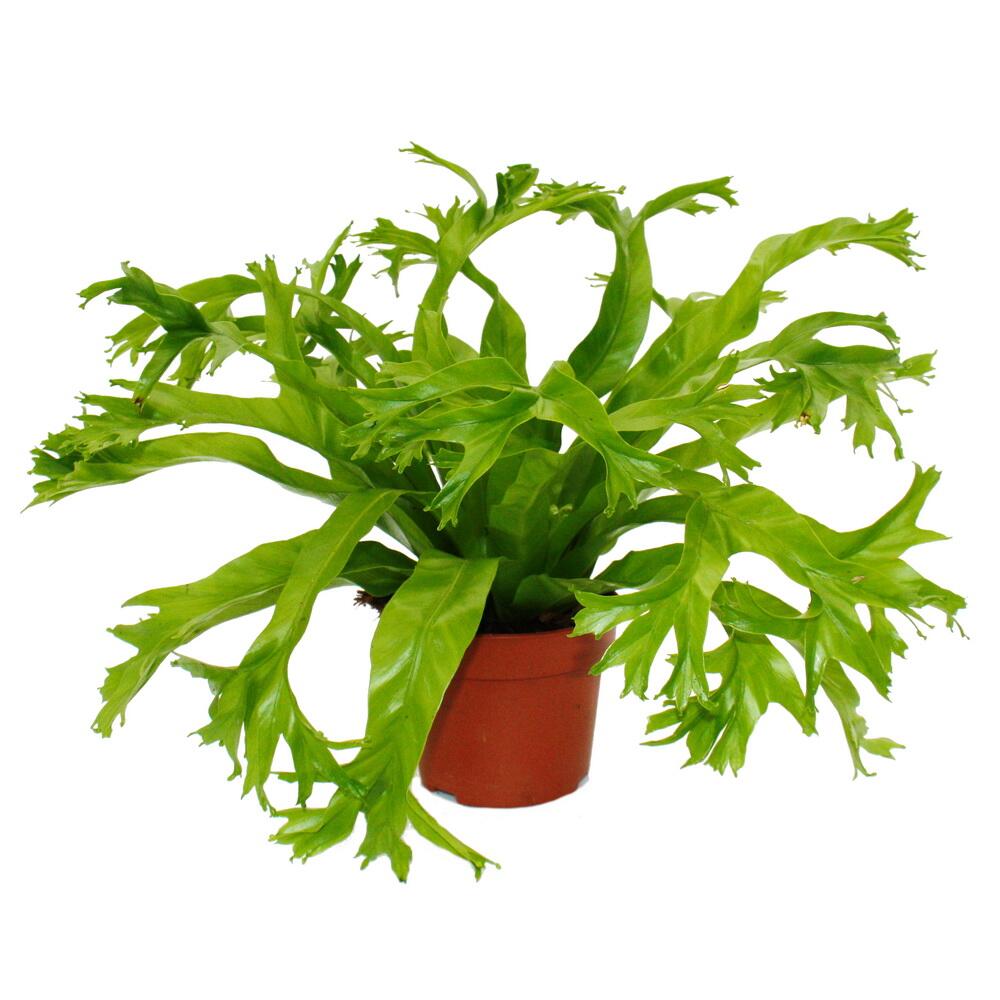
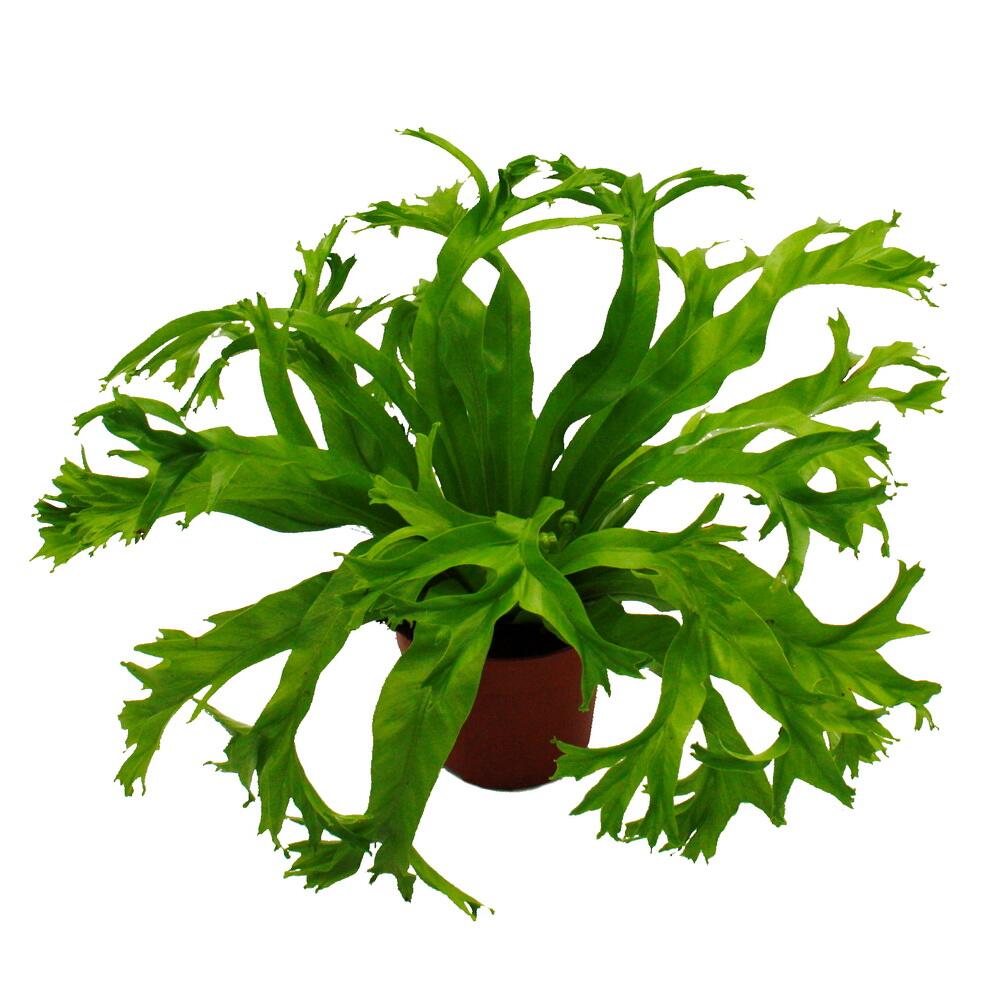
At first glance, Chrissie forms a green rosette of elongated ribbons. A closer look reveals wavy edges and finely divided tips spreading like little green fingers. This division belongs to the foliage shown and is no reason to cut the ends straight. The original clearly reveals the young rosette. On a bright console, it looks attractive beside calm ceramics or a small stack of books. Give fronds enough air so their tips do not constantly catch on a wall or objects when you pass.
The delivered plant is a small rosette
The offer gives a 12 cm pot at about 20 to 30 cm overall height; the title describes the young plant as around 25 cm. These figures concern delivery size including pot. The shop lists it as Asplenium nidus Chrissie. This portrait uses the commercial name Chrissie and explains cultivation of the visible bird’s-nest fern form. With good care, a young rosette fern can become broader. Therefore plan side space instead of only clear height above the pot. No precise adult cultivar size is inferred from delivery measurements.
Indirect light between fronds too
A bright place without hot direct sun is a good starting point. The whole rosette should receive daylight; a deep shelf compartment with only one illuminated tip is less suitable. Do not put the fern directly before a hot radiator. Air around fronds can be very dry there while the root ball still contains enough moisture. A pleasant quiet corner in a bright room works if it actually receives light. Observe new fronds and reposition the pot carefully if needed. More sun all at once is no safe answer to slow growth.
Retain moisture without flooding the heart
Check soil at a clear part of the pot edge. Once the surface has dried slightly, water slowly onto soil and then let excess drain. The root ball should neither dry completely for a long period nor stand in a filled decorative pot. If possible, avoid directing the stream into the young rosette centre where sensitive fronds unfold. A dry leaf edge alone proves no thirsty root ball; check moisture and room warmth first. Regular observation is more useful with this small container than a prescribed watering day.
Good structure matters in the root space
Humus-rich draining soil keeps water available while allowing air to roots. If the mixture has compacted strongly or the root ball densely fills the container, gentle repotting during active growth makes sense. Choose only a suitable next pot size. The rosette centre stays at its previous height and is not deeply covered in fresh soil. Hold the root ball rather than fine leaf tips when moving. Feed sparingly according to the label and consider pre-fertilisation in fresh soil. A densely leaved fern does not become prettier simply through more fertiliser.
New fronds may unfold quietly
New fronds first push upwards tightly rolled from the centre. Do not pull them apart or wipe delicate fresh surfaces strongly. Older foliage can be dusted carefully with a soft cloth while the other hand supports the frond. Divided ends remain uncut. Remove only fully dead fronds with clean tools. Ferns form no flowers; later spore structures on undersides belong to their development. An old individual frond need not have the same shape and freshness as the newest growth. These differences make the rosette interesting.
Winter care starts with the plant position
Keep Chrissie warm and frost-free in darker weeks too. Protect briefly from cold draughts when ventilating and do not place immediately in hot heating air. The root ball may now dry more slowly while individual tips still look dry. Check these observations separately and adjust water and nutrients. Brown areas invite examining light, moisture and possible rubbing together. Check undersides for unusual coatings or attached scale insects. Strong cutting, heavy feeding and immediate repotting need not happen simultaneously. Healthy new growth shows whether the position suits better than an already damaged frond.
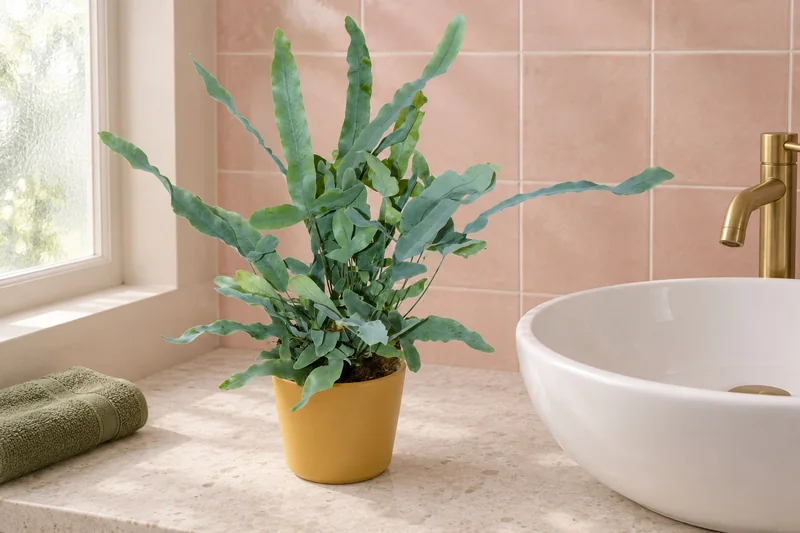
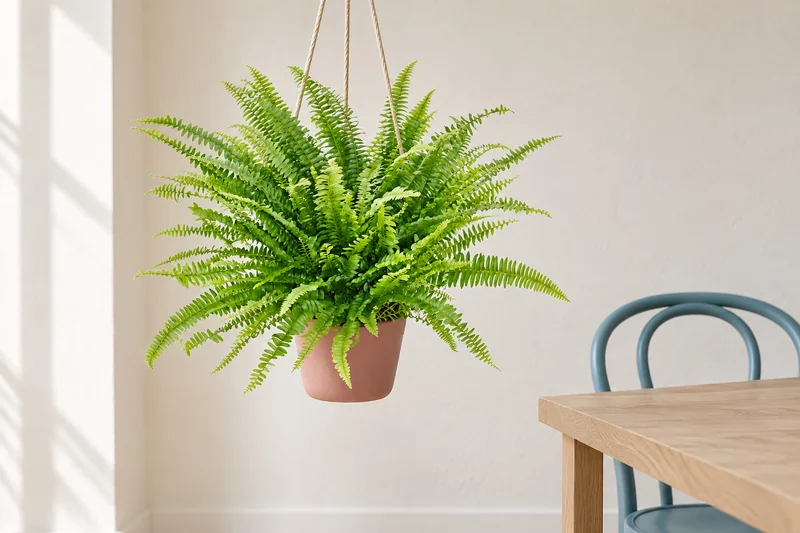
One plant, several views
Good to know
Are the divided frond tips damaged?
Finger-like divisions belong to the Chrissie form pictured. Distinguish freshly torn or brown parts from them.
Does Chrissie flower?
No. As a fern, it forms no flowers and can reproduce through spores.
How large is the delivery plant?
The offer gives a 12 cm pot and about 20–30 cm overall height. This is no adult ultimate size.
May water enter the rosette centre?
Preferably water slowly onto soil around the edge and avoid standing water in the sensitive young heart.
Must the root ball dry completely between waterings?
No. Supply evenly, check at slight surface drying and avoid waterlogging.
Why do individual tips turn brown?
Check root-ball moisture, dry heated air, hot light and mechanical contact. An already wet pot does not automatically need more water.
Sources and editorial note
- Exotenherz: offer and original images (02.10.2026)
- University of Florida: bird’s-nest fern (02.10.2026)
- NC State: Asplenium nidus (02.10.2026)
- RHS: fern cultivation (02.10.2026)
Shop offer, article number, GTIN, availability and original images checked directly on 02.10.2026. Specialist sources read directly. Chrissie as the specific visually checked shop form. Commercial designation nidus not equated with the unsecured RHS assignment antiquum Crissie; no cultivar ultimate height inferred from it. General bird’s-nest fern care confirmed by UF/NC State.