This plant at Exotenherz
Check the shop offer for current availability, price and what is included.
Product and delivery details are given in the individual offer.
Your care table
| Topic | What to do | Why it helps |
|---|---|---|
| Position | Choose a bright position and a protected distance from hot direct sun. | Lively leaf edges do not change a bird’s-nest fern’s needs. |
| Moisture | Keep the root ball evenly slightly moist. | Repeated complete dryness harms development. |
| Watering point | Water slowly onto soil around the rosette edge. | The centre with young fronds remains clear. |
| Excess | Remove residual water from saucer or decorative pot. | Good air in the root space remains important even at higher moisture. |
| Room air | Combine less dry air with gentle air exchange. | A humid bathroom without daylight is still unsuitable. |
| Substrate | Choose loose humus-rich fern compost and a pot with holes. | Moisture can distribute and excess water drain. |
| Fertiliser | During new leaf development, feed weakly according to the label. | A larger dose does not replace a suitable position. |
| Leaf care | Spare young fronds and remove dead foliage cleanly. | Preserve a healthy rosette centre for further growth. |
Check the compost and pot weight. The care table explains how far the compost may dry.
Water only when needed. The water should reach the root ball without spilling over the rim.
Remove surplus water from the saucer or cachepot. Then return the plant to a suitable position.
The edge makes the green difference
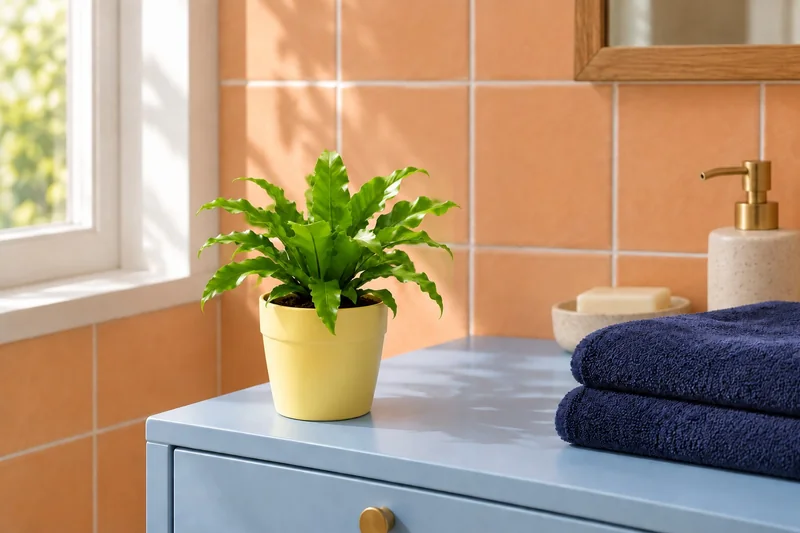
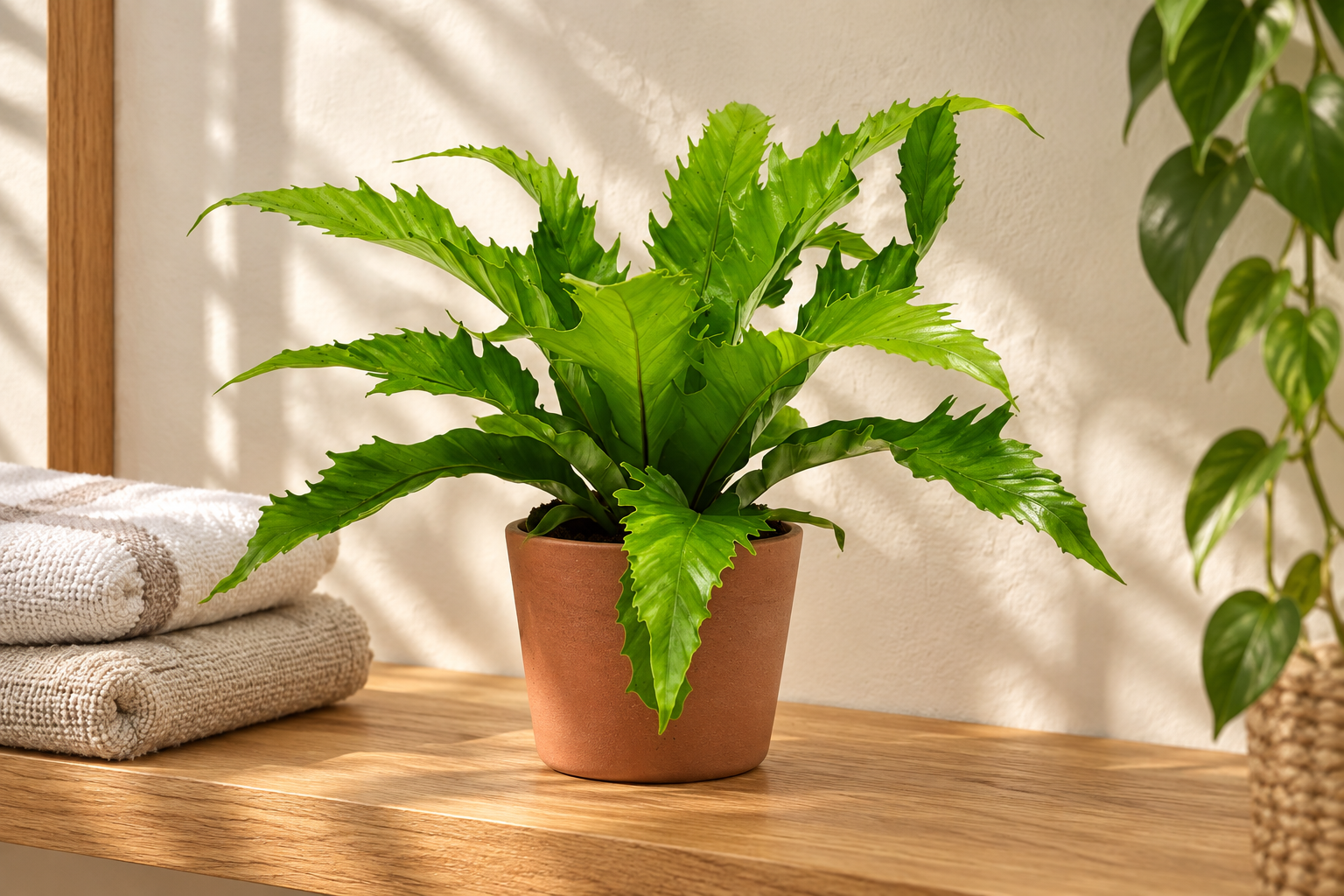
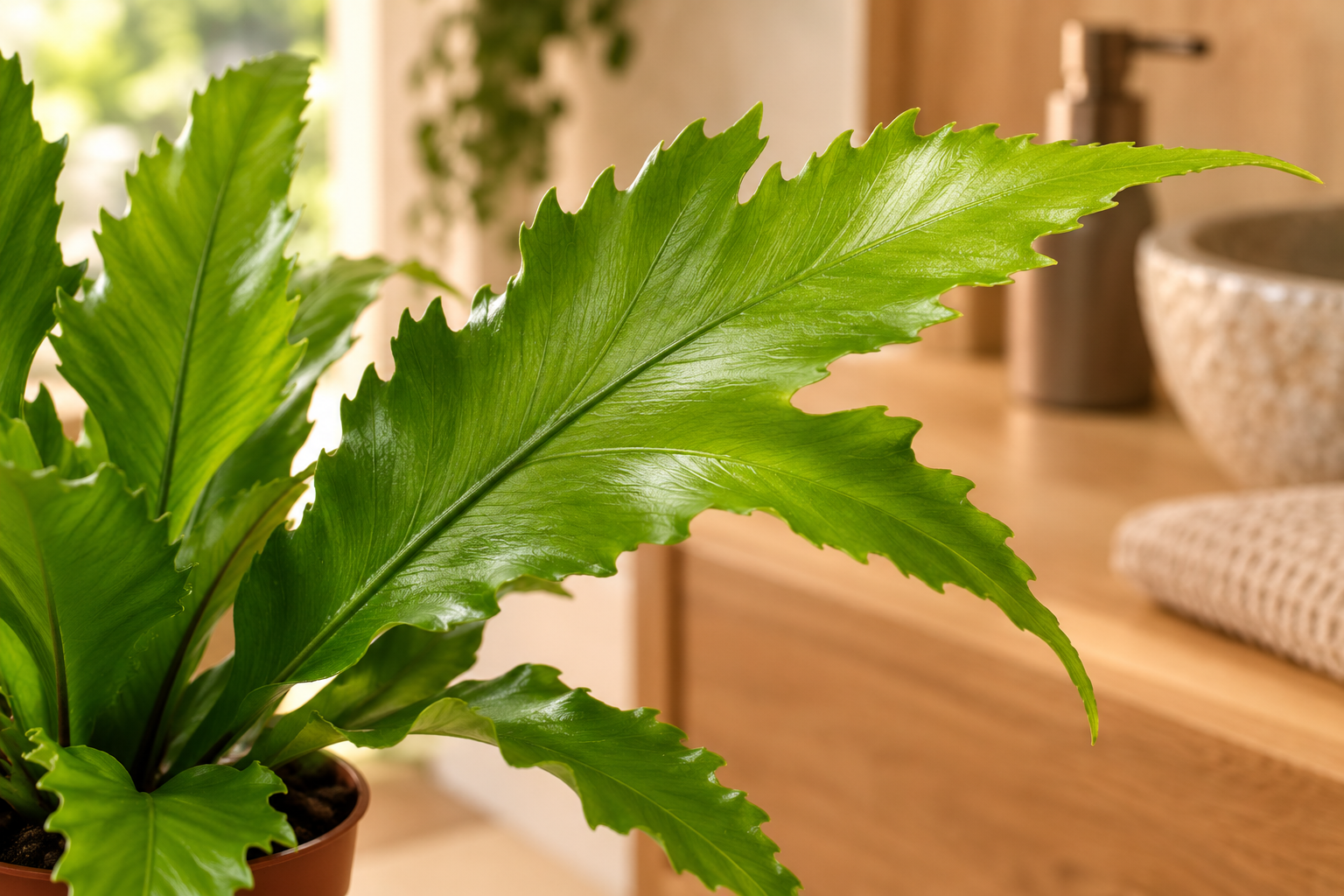
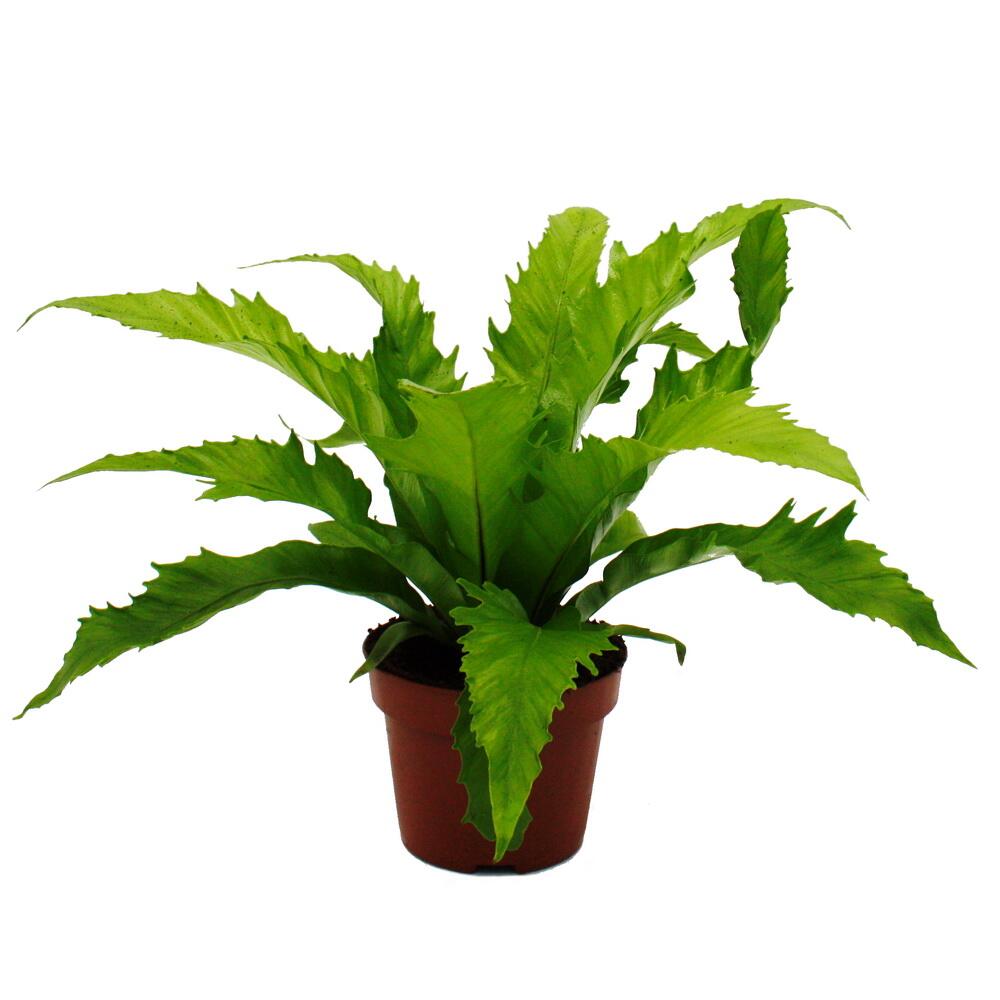
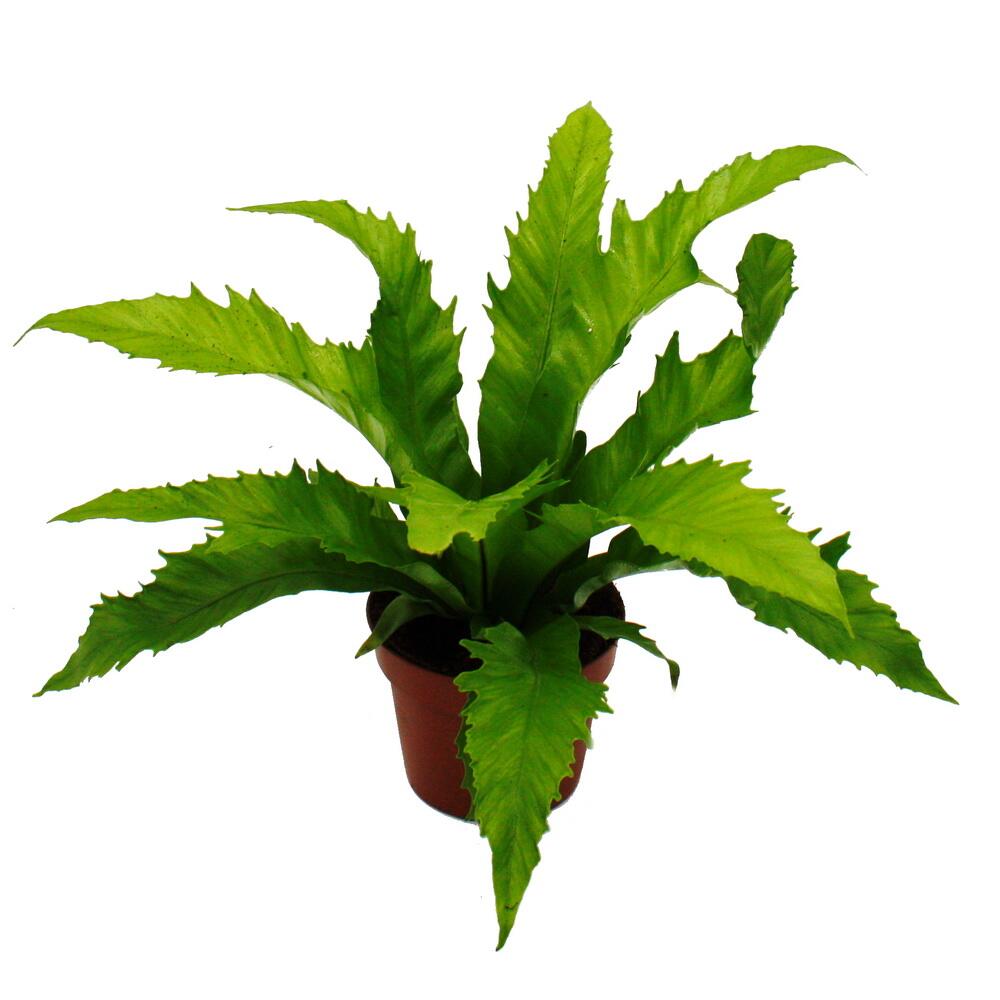
Gioia shows broad fresh green fronds with lively edges. Waves and irregular notches are clearly visible in the original pictures; some leaf surfaces stand upright, others open sideways. A calm setting reveals this shape better than many extra objects. On a bright bathroom shelf, the little rosette can look attractive if daylight is present and water does not constantly splash onto it. Leave a distance from towels and bottles moved every day. Leaf edges should remain free. Fresh green needs no flowers to bring life to the plant position.
Get to know Gioia as a specific shop selection
The offer is called Asplenium nidus Gioia and describes a 12 cm pot and about 20 to 30 cm overall height including the pot. This portrait shows precisely that fern form and its original photographs. Bird’s-nest ferns in commerce include different species and cultivars, so leaf shape is not identical in every offer. Gioia is treated here according to the specific shop attribution. We do not transfer a general ultimate size of other bird’s-nest fern cultivars to this young plant. It remains a perennial green rosette whose spread can develop with suitable cultivation. Ferns form spores rather than ordinary flowers.
A bathroom needs more than humid air
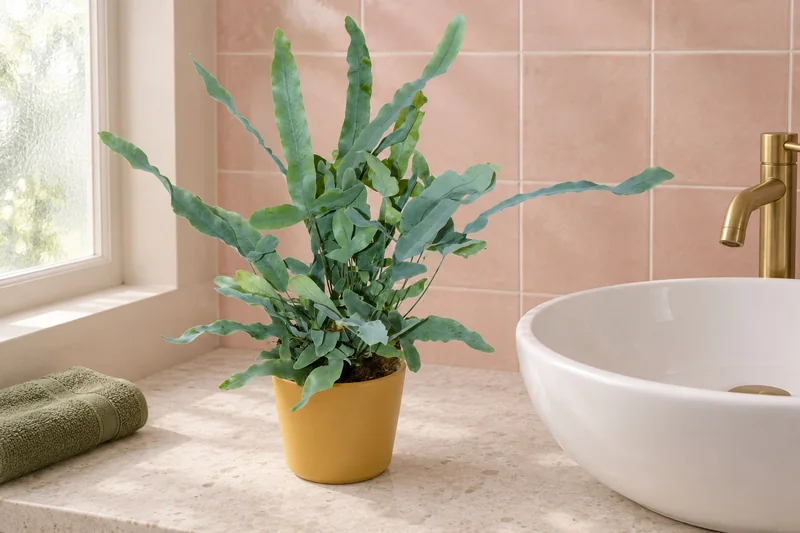
A bathroom is not suitable simply because air humidity is temporarily higher. Daylight must reach the fern; a windowless room needs suitable plant lighting. Hot direct sun is as unsuitable as a constantly dark shelf. Gioia should stand warm and protected from cold draughts. Leave a distance from a hot towel radiator and cleaning products. Gentle air exchange is useful without putting the pot in cold currents. A bright living-room position can provide the same conditions. Light and actual climate at the fern matter, not the room’s name.
Supply the root ball and spare the centre
Check the upper soil and pot weight regularly. When the surface begins to dry slightly, water slowly onto soil so the root ball receives even moisture. Roots should not dry completely time after time. Allow excess to drain and check the decorative pot; standing water remains unfavourable even for a moisture-loving fern. The rosette centre is not used as a watering funnel. New fronds emerge there. Drooping foliage first calls for a look at the soil. A dry light root ball and a heavy waterlogged pot may look similar but need different measures.
Change pot space with a sense of proportion
A porous humus-rich mixture combines water supply with air in the root zone. Use an inner pot with open drainage holes. When roots clearly fill it during fresh development, give only a little more room and support the root ball carefully. Do not pull the plant out by its foliage; the heart remains at its previous height. A lot of new unrooted soil can stay damp for a long time. During active leaf development, add fertiliser sparingly according to the label. Consider a mixture already containing fertiliser. Leaf-edge shape comes from the plant itself, not a particularly strong nutrient application.
Observe and clean fronds gently
A fresh frond opens from the centre and develops its leaf surface gradually. Do not pull curled or waved parts flat. Loosen dust carefully on older surfaces without rubbing the edges. Leaf-shine products and untargeted strong treatments do not suit delicate fern foliage. Remove fully dead fronds cleanly and leave young growth standing. Regular spore clusters on mature undersides may be normal; irregular removable deposits or sticky spots deserve closer examination. Do not simply divide a young individual rosette because several leaves emerge from the same centre.
Accompany fresh green through the seasons
In winter, keep frost-free and sufficiently bright. Less new growth may reduce water consumption, while dry heated air continues to affect leaf edges. Adjust checks to both factors. Already brown tissue does not turn green again through misting. Healthy new fronds emerging under improved conditions are what matters. Check the root ball, air and undersides before changing care strongly. Gioia is no winter-hardy garden-bed fern. A safe plant position at home also protects its lively edges from everyday knocks. Their effect comes from healthy living foliage allowed to develop its shape quietly.
One plant, several views
Good to know
Why do the leaf edges look so irregular?
Gioia’s original pictures show natural waves and notches. Brown dry damage is assessed separately.
Is the bathroom always a good position?
Only with enough light, suitable warmth and distance from radiators and splashing water. Humid air alone is not enough.
What ultimate height does Gioia reach?
No unsupported precise ultimate height is given here for this shop form. Delivery height is about 20–30 cm including pot.
Must the pot stay wet all the time?
No. Even slight moisture and free drainage belong together; remove residual water.
Should flowers be expected on the undersides?
No. Ferns do not flower. Regular clusters on mature fronds may contain spores.
Can I pull young leaves flat?
Do not pull them. New fronds unfold themselves; damaged tissue remains visible.
Sources and editorial note
- Exotenherz: offer and original images (02.10.2026)
- NC State Extension: bird’s-nest fern, rosette habit and indoor cultivation (02.10.2026) (02.10.2026)
- UF/IFAS: bird’s-nest ferns, fronds and spores (02.10.2026) (02.10.2026)
- RHS: potted ferns, watering and leaf care (02.10.2026) (02.10.2026)
Shop offer, article number, GTIN, availability and original images checked directly on 02.10.2026. Specialist sources read directly. Specific shop form Gioia checked against original pictures; public classification as Asplenium Gioia with shop name, without unsupported cultivar ultimate height. General care compared directly with Extension and RHS fern sources.