This plant at Exotenherz
Check the shop offer for current availability, price and what is included.
Check the shop for the current price, availability and offer contents.
Your care table
| Topic | What to do | Why it helps |
|---|---|---|
| Light | Position in filtered daylight without hot direct sun. | Divided fronds need a bright sheltered place. |
| Moisture | Let the upper soil dry slightly, then water the root ball thoroughly. | A steady supply does not mean permanently wet soil. |
| Drainage | Let the inner pot drain after watering. | A filled cachepot keeps roots unnecessarily wet. |
| Soil | Use humus-rich loose potting soil with good drainage. | It combines moisture storage with air in the root ball. |
| Room air | Avoid hot dry heating air and cold draughts. | Fronds stay healthy more easily in a calm plant position. |
| Nutrients | Feed sparingly according to the label during growth. | The small fern needs no strong reserve fertilising. |
| Repotting | When roots are dense, carefully provide a little more pot space. | Grip the root ball; fronds are not carrying handles. |
| Frond care | Remove dead fronds at the base with clean tools. | Healthy green fronds supply further growth. |
Check the compost and pot weight. The care table explains how far the compost may dry.
Water only when needed. The water should reach the root ball without spilling over the rim.
Remove surplus water from the saucer or cachepot. Then return the plant to a suitable position.
Gloss and branching rather than long leaf ribbons
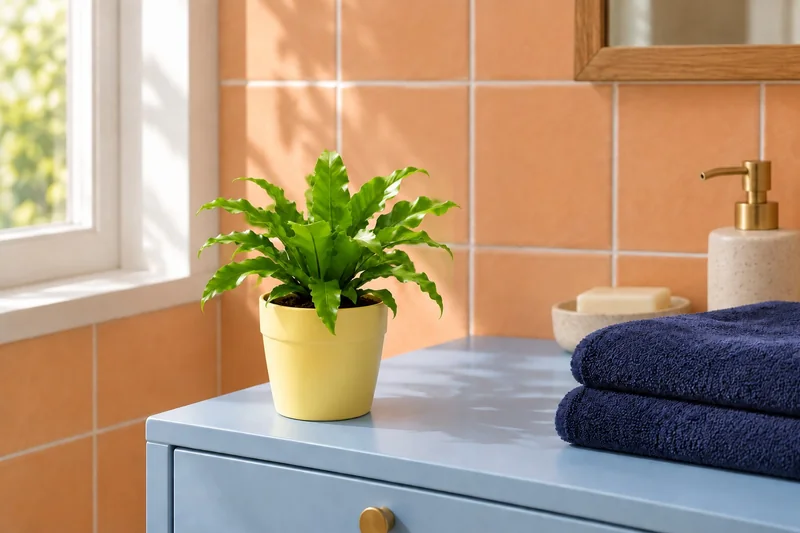
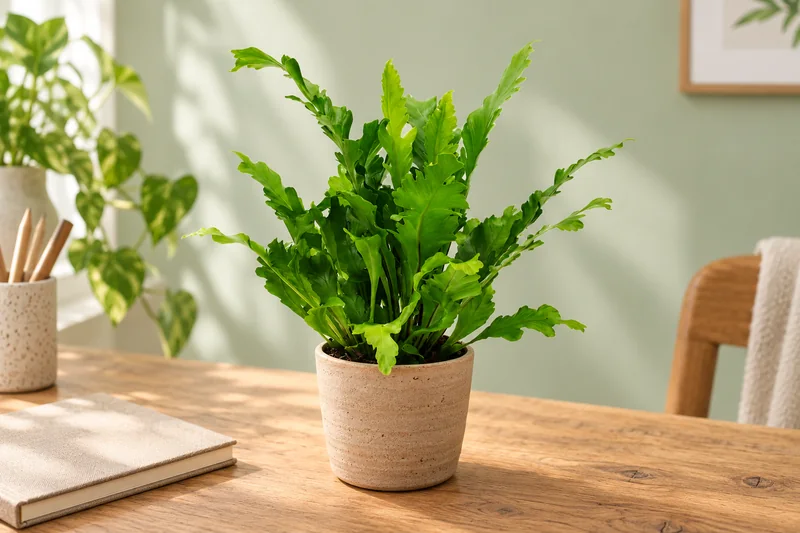
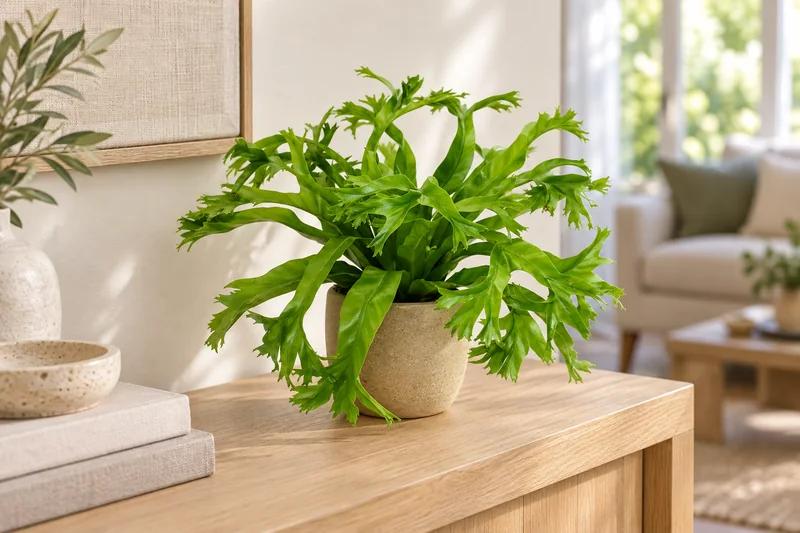
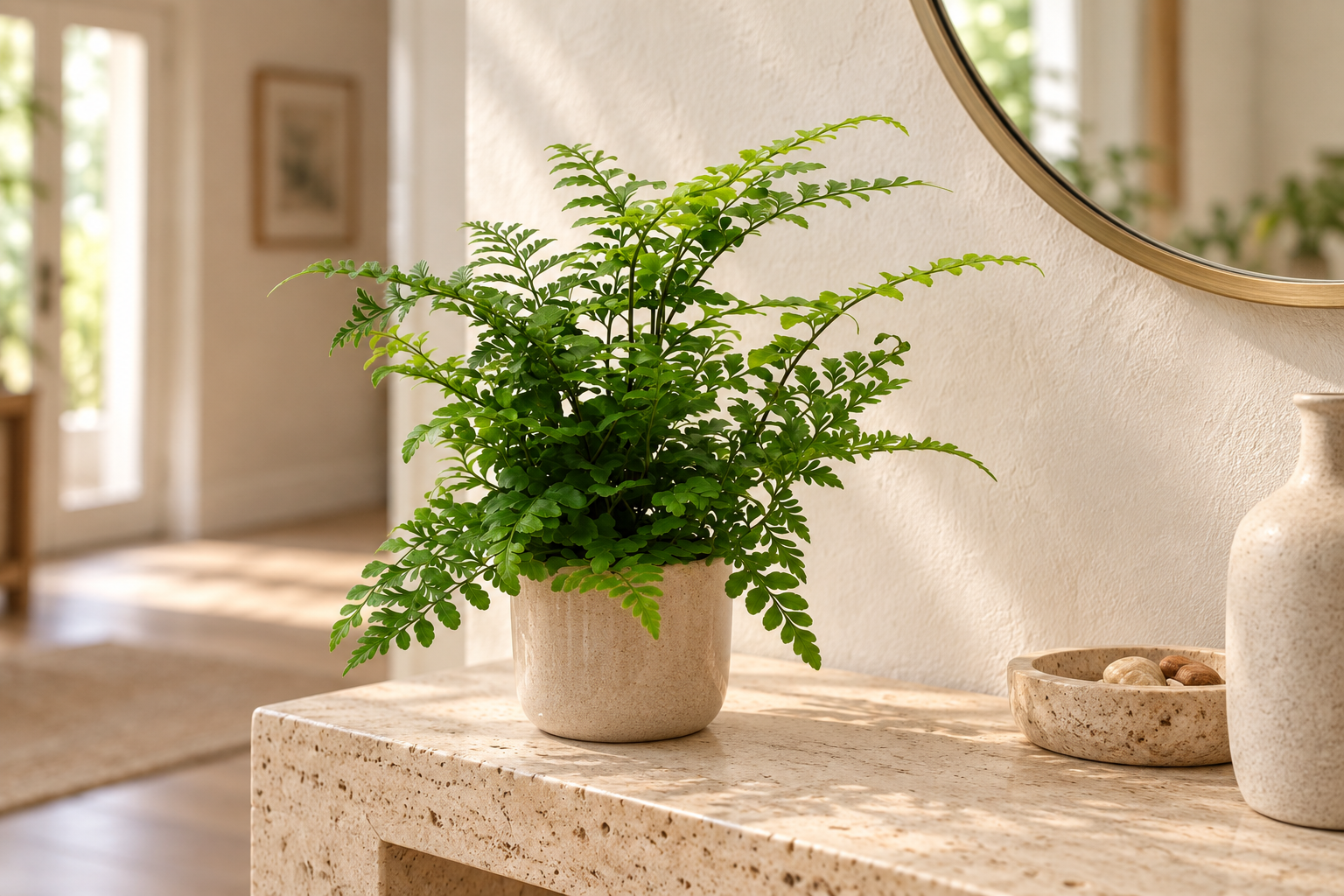
Parvati shows a small dense structure of branched fronds. Some sections are more finely divided, others carry broader rounded lobes. Glossy green and visible divisions distinguish it from ferns with long undivided leaf ribbons. This structure looks especially attractive close up on a bright console. Fronds need some free space to the sides so their tips do not brush against a wall or decoration whenever someone passes. The real shop photo shows a young compact plant. A larger room-filling cloud of fern foliage would be another stage and does not belong to the stated delivery size.
Understand the name and young size
The shop calls the plant Asplenium dimorphum Parvati. Its horticultural background describes Parvati as a hybrid of Asplenium difforme and Asplenium dimorphum. These two names help explain its unusual frond shape; the offered Parvati fern remains clearly identifiable within the assortment. The 12 cm pot is listed at approximately 20 to 30 cm overall height, while the title gives around 25 cm. These figures describe the young delivery plant including its pot. New fronds may later expand its structure. Position it so a sideways-growing frond can also unfold fully.
Filtered light in a quiet living space
A bright sheltered spot without hot direct sun suits this fern. In a hallway, what matters is how much daylight actually arrives: a console opposite a bright opening may offer good conditions, a windowless corner usually does not. Compared with very delicate indoor ferns, Parvati has relatively firm glossy fronds. That does not make the root ball independent of water and warmth. Hot radiator air and cold draughts remain unfavourable. Observe new fronds in the chosen position. They show whether the plant copes with its surroundings, while already damaged tips will not turn green again.
Moisture in the root ball and air at the roots
Let the upper soil dry slightly, then water the root ball slowly and thoroughly. Afterwards water must drain freely. Its fine divided leaf mass is not a reason to keep pouring small sips into a filled cachepot. Soil may then appear dry above a permanently wet root zone. Also check pot weight. Avoid a completely dry root ball for a prolonged period where possible, without creating the opposite extreme. If fronds droop, first examine moisture and room warmth. A wet root ball needs a different measure from a distinctly light dry pot.
Move the fern carefully
Humus-rich loose potting soil stores moisture while retaining a permeable root zone. When roots densely fill the root ball, carefully move it to a slightly larger pot during visible growth. Do not pull on fronds; work with the inner pot and root ball. Frond bases remain at their previous position; do not sink the fern deeply into new substrate. A large reserve of soil around a small plant may remain wet for a long time. Moderate nutrients according to the fertiliser label suffice during growth. Consider fresh pre-fertilised compost and supply much more sparingly when there is little new development in winter.
Retain fronds and read changes
Healthy green fronds stay on the plant. Individual completely dead ones are removed at the base with clean tools. They need not remain as short brown stumps between new green growth. Loosen dust gently without rubbing hard on the many small leaf sections. With dry tips, first examine the whole care routine: was the root ball dry, was the fern beside heating, or did strong sun suddenly strike it? Also check leaf undersides. An unfamiliar spot is not automatically a fungal disease. If the change repeats on new growth, it is worth searching closely for the triggering factor.
A fern through the seasons
Parvati forms no flowers; its effect comes from divided fronds. In winter it stays frost-free indoors and still needs daylight. Less growth may reduce consumption while heating air simultaneously encourages dry tips more quickly. Assess root ball and room air separately. Occasional misting replaces neither root supply nor a suitable position. Keep freshly rolled fronds free of touch too and allow them time to develop. Its attractive dense shape develops gradually when the plant receives good regular care and young fronds can grow back undamaged from the centre.
One plant, several views
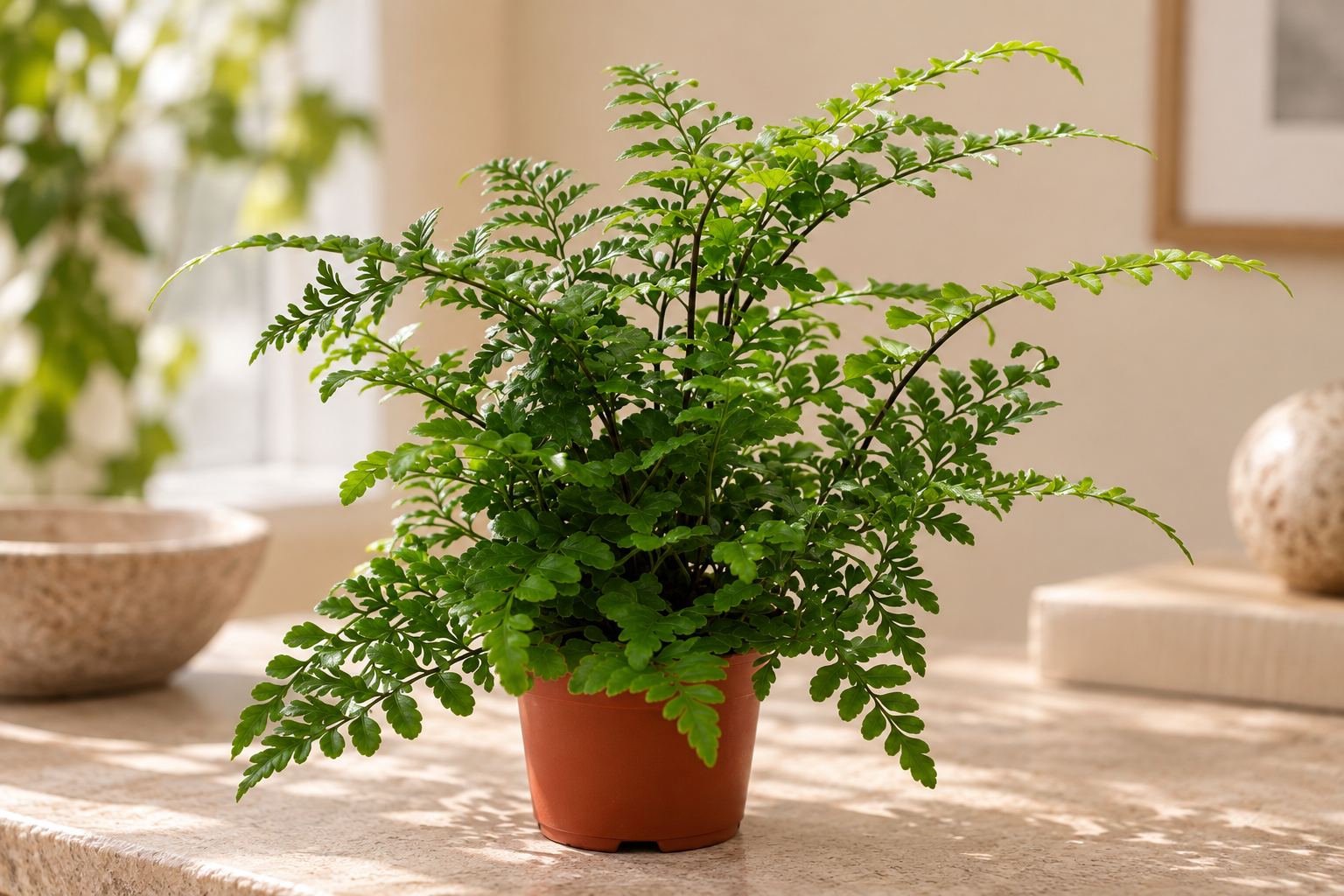
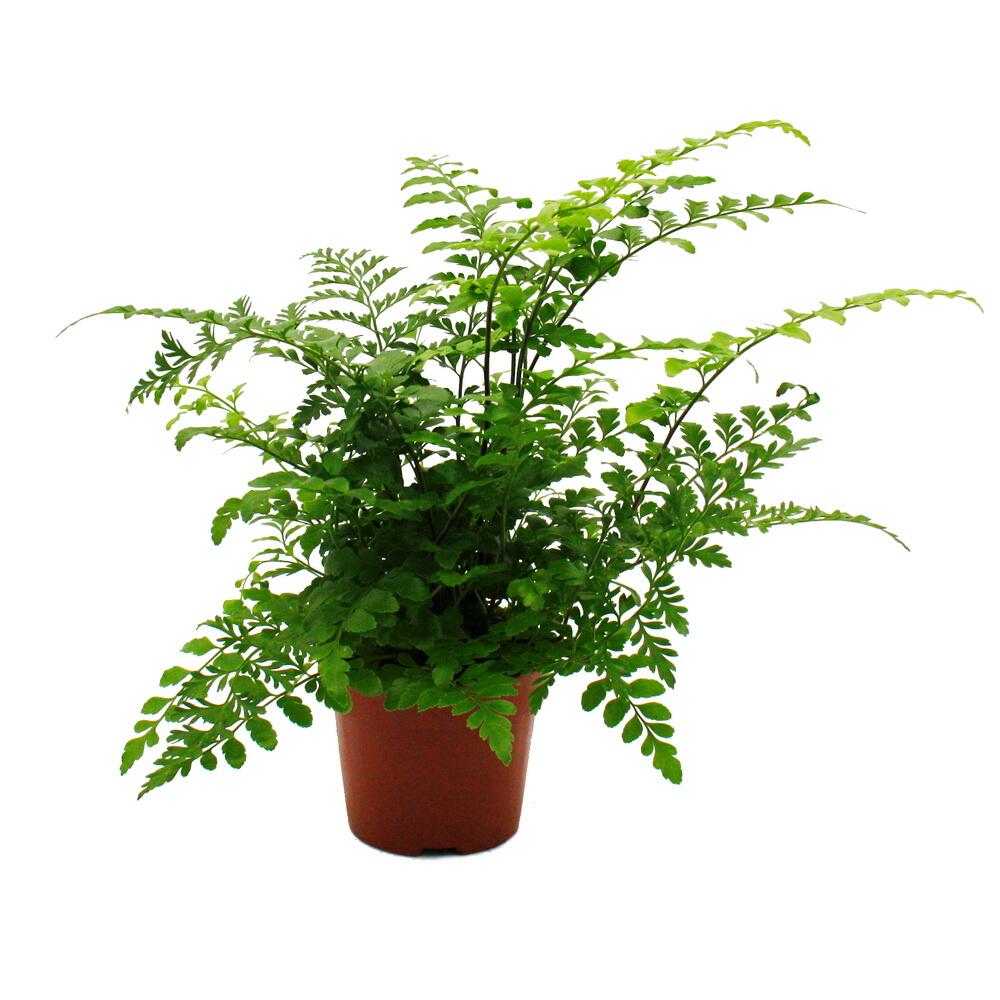
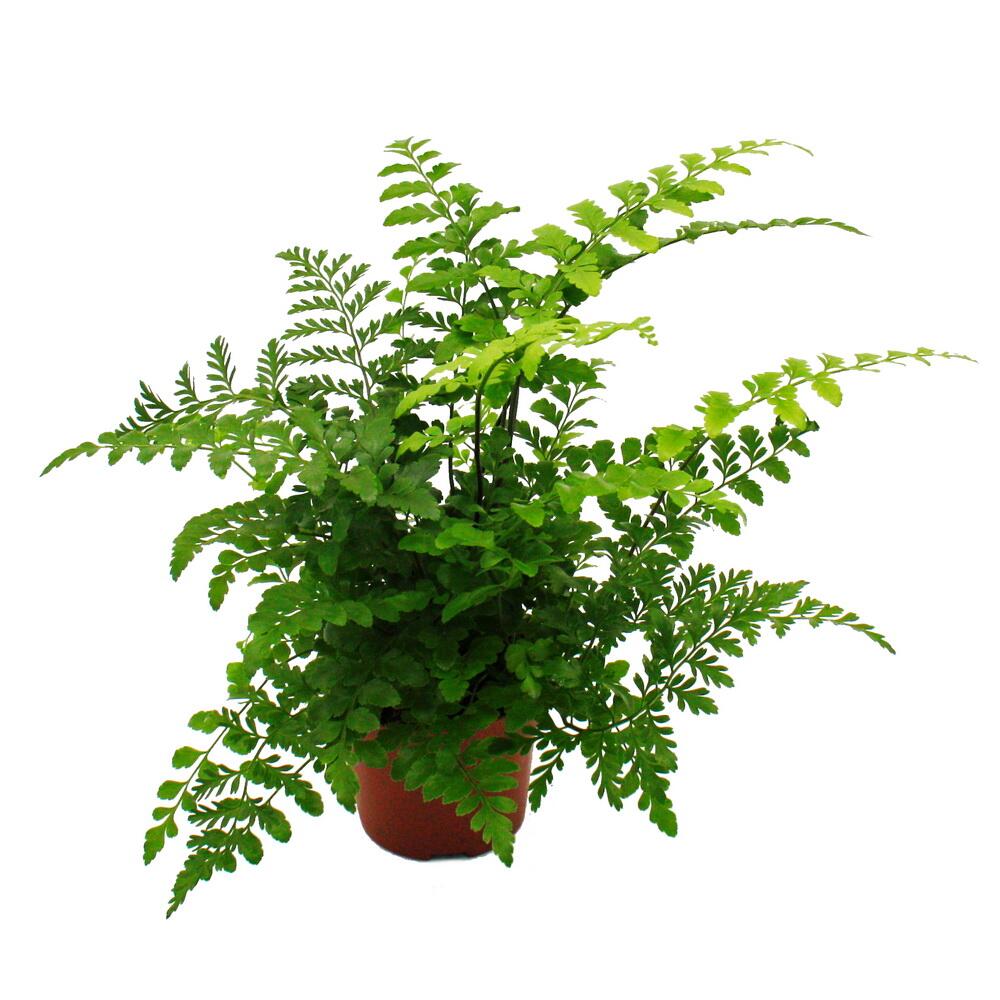
Good to know
Why does Parvati have differently divided fronds?
The mixture of finer sections and broader lobes belongs to its appearance. The original view helps with comparison.
Is Parvati a fern with undivided nest leaves?
No. It has branched divided fronds; shop images show this difference clearly.
Must soil always be wet?
No. Supply it steadily, let upper soil dry slightly and remove excess water.
Why do frond tips turn brown?
Check dryness in the root ball, heating air, sun and earlier damage together. Brown tips do not become green again.
Does this fern flower?
No. Ferns form no flowers. Parvati is kept for its divided green foliage.
Is 25 cm its final size?
No. The offer describes the young delivery plant; the detailed specification gives about 20–30 cm overall height including the pot.
Sources and editorial note
- Exotenherz: offer and original images (02.10.2026)
- Proven Winners: Parvati fern, botanical background and cultivation (02.10.2026)
Shop offer, product number, GTIN, availability and originals checked directly on 02.10.2026. Specialist sources read directly. Hybrid parentage directly from breeder source; shop name retained. About 25 cm in the title is within the detailed 20–30 cm range. No flowers or invented delivery contents. Own explanations from observed pot form; source extract not copied.