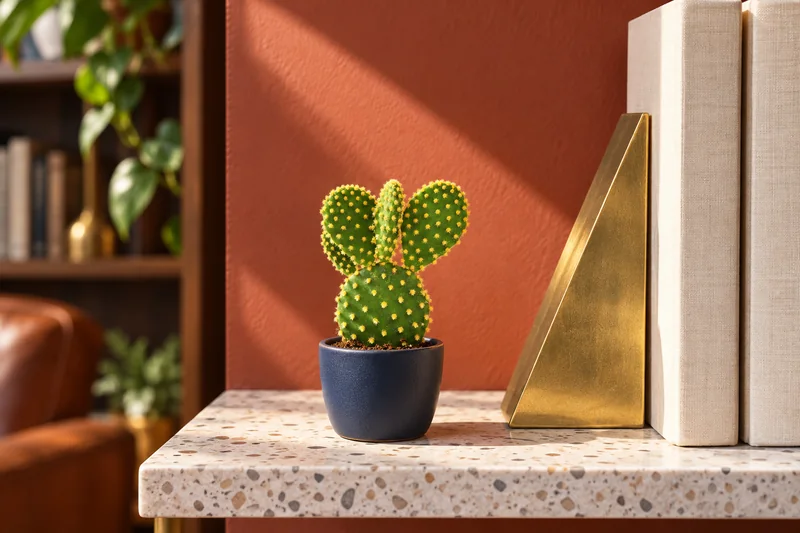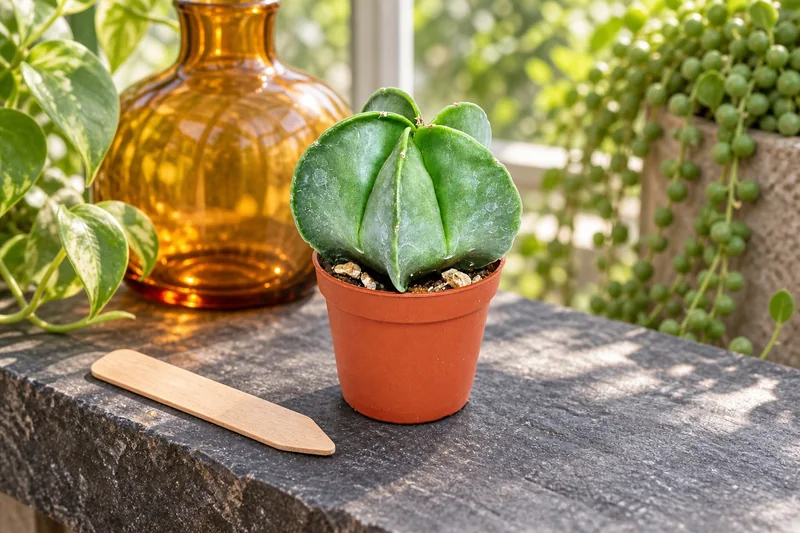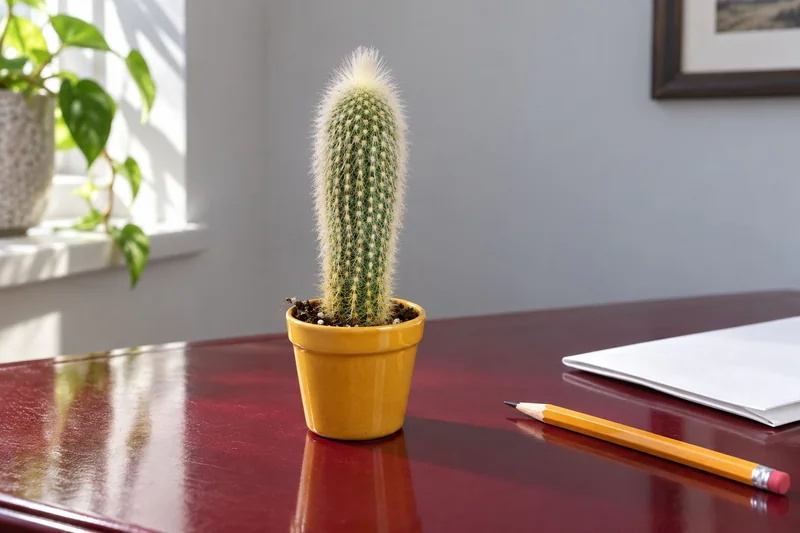
This plant at Exotenherz
Check the shop offer for current availability, price and what is included.
Check the shop for the price, current availability and what is included.
Your care table
| Topic | What to do | Why it helps |
|---|---|---|
| Light | Very bright; introduce direct sun gradually. | A young plant from sheltered cultivation may not tolerate sudden strong sun. |
| Water | During growth, water only after good root-ball drying. | Water reserves do not replace a healthy airy root space. |
| Drainage | Let all water drain and empty the outer pot. | Standing water may damage root and shoot bases. |
| Compost | Structurally stable freely draining cactus mix with mineral content. | Fine compacted compost stays wet too long in the small pot. |
| Feed | Moderately during active growth according to the product. | Pause during winter rest. |
| Winter | Bright and frost-free, watering considerably less often. | Cool wet roots are particularly at risk. |
| Handling | Distinguish leaves from spines and still work protected. | A soft green impression does not mean a harmless surface. |
| Checks | Watch for mealybugs, unusually thin new growth and soft dark patches. | Early checks distinguish insufficient light or root problems from normal ageing. |
Check the compost and pot weight. The care table explains how far the compost may dry.
Water only when needed. The water should reach the root ball without spilling over the rim.
Remove surplus water from the saucer or cachepot. Then return the plant to a suitable position.
Green needles are actually leaves here
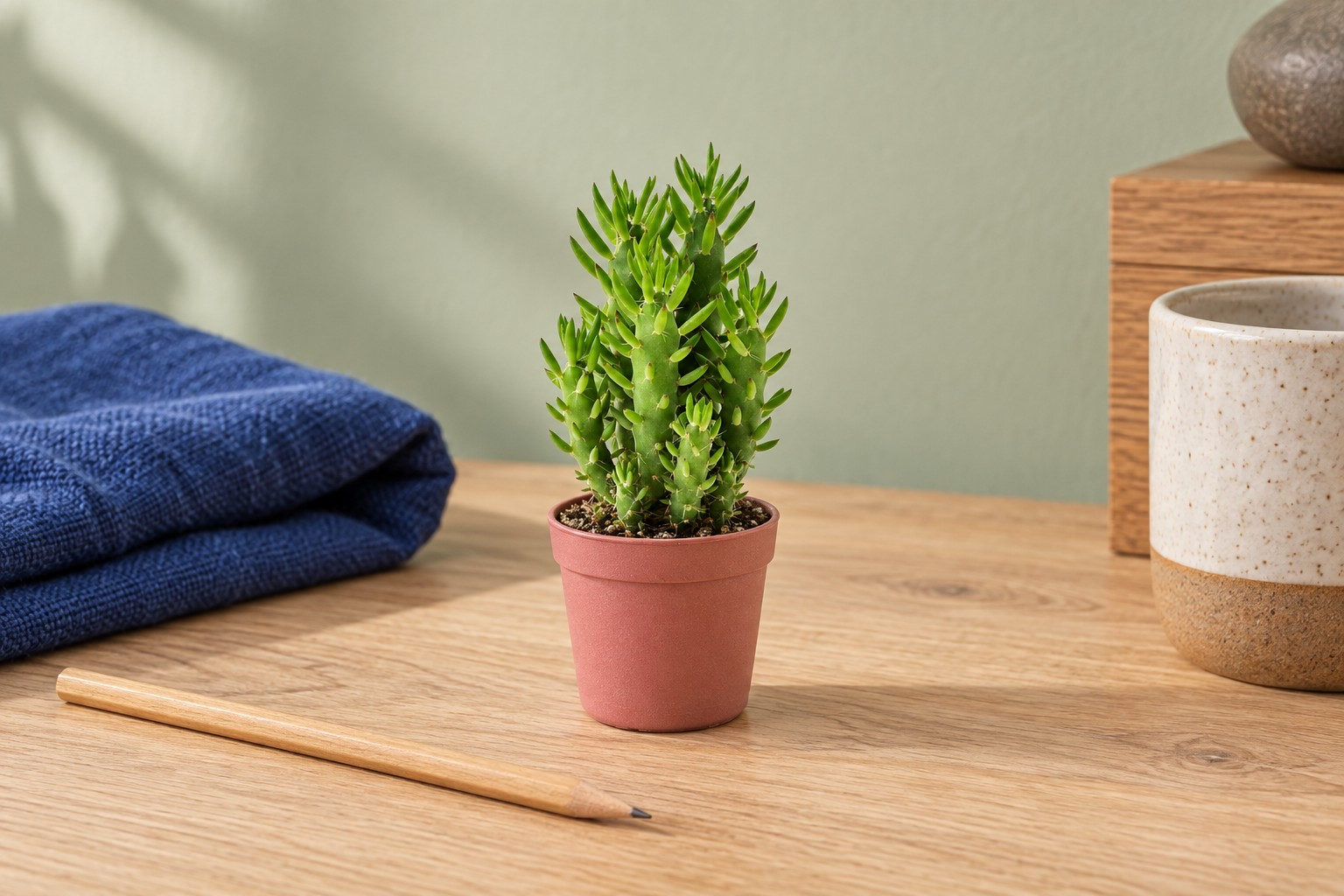
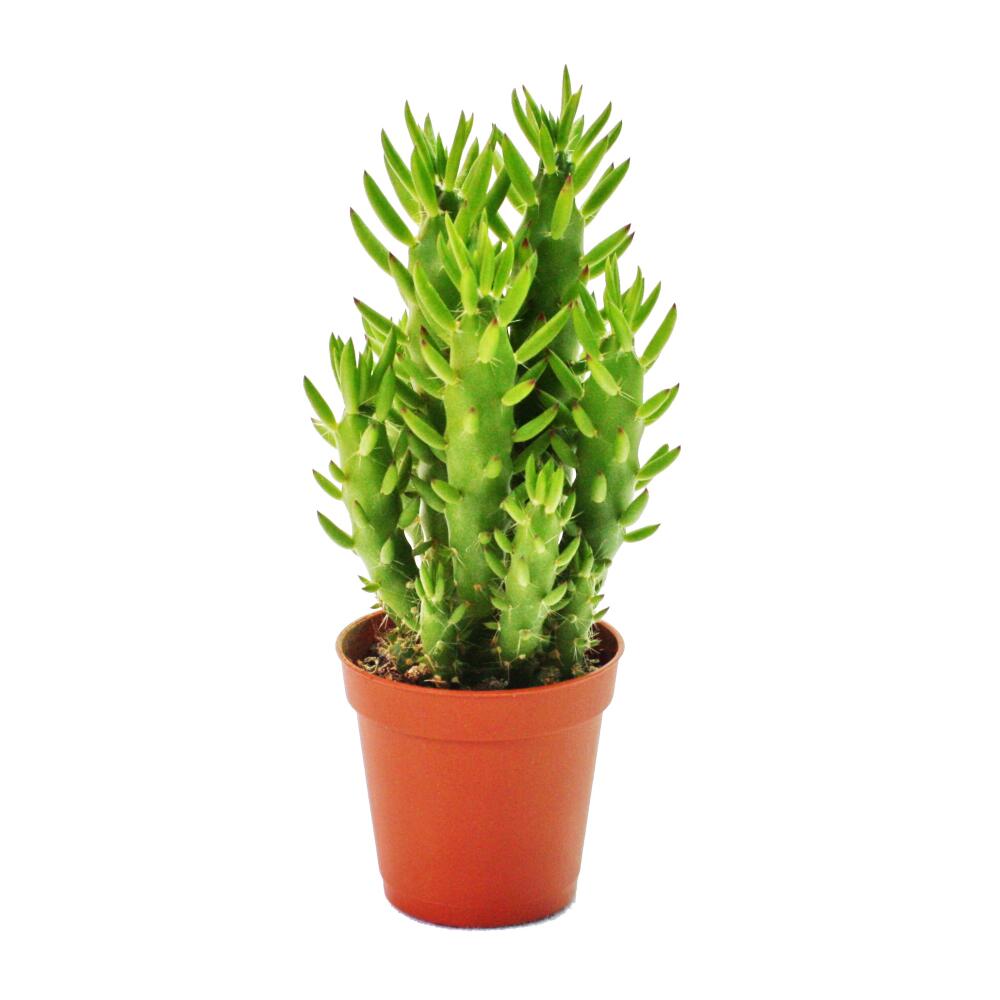
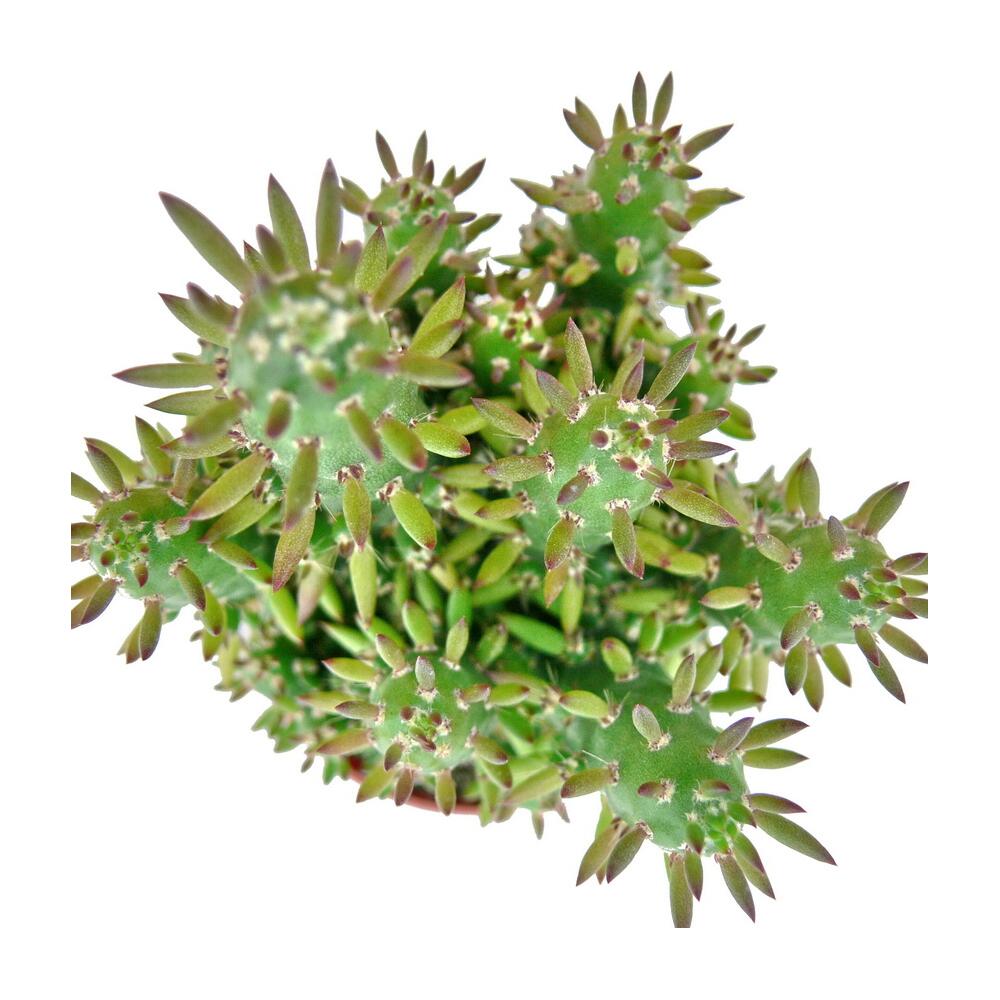
Slender awl-shaped leaves stand between the thickened green shoots. They look like soft green needles but are botanically distinct from spines at the areoles. It would therefore be wrong to describe the whole small tuft as just a crown of spines. The shop states a Monstrosa form of Austrocylindropuntia subulata. This describes irregular modified growth. The underlying species occurs in South America; the particular form is preserved in cultivation and is not a certainly distinct wild species.
An unusual young cactus in a small pot
The offered specimen stands in a 5.5 cm pot and is described as around 12 cm overall height. It is a small young cactus, not a large columnar garden plant. Shoots may have different lengths and point in different directions. A perfectly symmetrical silhouette is especially unlikely in a Monstrosa form. A bright secure place on a small shelf makes these details clear. The scene illustrates proportions; the delivered plant’s shape and branching may differ.
Light keeps shoots strong
After gentle acclimatisation, a very bright to sunny position is suitable. Insufficient light may encourage elongated weak shoots. Look at the whole plant regularly instead of judging only the decorative effect of a particular corner. Behind hot glass and directly after shipping, initially reduce strong midday sun. A warm outdoor summer position needs rain shelter and good ventilation. The trade name Monstrosa is not evidence of winter hardiness. Bring it back to a bright frost-free position before cold weather and protect the root ball from cooling.
Air must return between waterings
Thickened shoots store water. During active growth, water only after good compost drying and remove every remnant from the outer pot afterwards. Small pots may dry quickly in warmth but stay surprisingly moist for a long time in a dark winter position. Green leaflets are not a signal to treat the cactus as a thirsty marsh plant. Supply considerably less often in winter. A cold wet root ball is riskier than a cautiously maintained dry phase. Assess shrinkage, soft patches and leaf loss together with root condition.
Freely draining compost and a careful grip
A mineral-structured cactus mix and a container with drainage form the foundation. Repot only when needed into a pot slightly larger. Spines and possible fine bristles require suitable gloves and aids; even seemingly soft green areas should not be grasped bare-handed. Feed moderately during growth and pause during rest. Do not move it too often or tug at shoots. Broken pieces are not a reason to feed the remaining plant more or keep it constantly damp.
Preserve growth form and recognise changes
Irregular thickening and branching belong to the Monstrosa form. Newly appearing soft brown tissue is not a normal feature. Check especially shoot bases and sheltered gaps for wetness problems and mealybugs. Later propagation using healthy stem pieces is possible if cut surfaces dry sufficiently before rooting. Do not divide the small starting cactus unnecessarily early. Flowers or edible fruits are not guaranteed for the offer. This is an ornamental plant grown for its form.
One plant, several views
Good to know
Are the green needles spines?
The green awl-shaped structures are leaves. Spines and fine bristles may sit alongside them at areoles.
Is irregular growth diseased?
Monstrosa here describes the preserved growth form. Suddenly soft dark areas must be distinguished from it.
Can the cactus overwinter outdoors?
Reliable hardiness is not established for this small offer. Overwinter brightly and frost-free.
Should I water more often because of leaves?
Not automatically. Root-ball moisture and growth matter; let dry well between supplies.
Sources and editorial note
- Product and delivery contents: Exotenherz
- Giromagi cactus nursery: growing advice
- Royal Horticultural Society: plant and care information
- Royal Horticultural Society: plant and care information
- Royal Horticultural Society: plant and care information
Sources checked: 15 September 2026. Product information and the contents of delivery follow the linked shop offer. Care advice was checked against the cited specialist sources and should still be adapted to the plant’s condition, position and season.