This plant at Exotenherz
Check the shop offer for current availability, price and what is included.
Check the shop for the price, current availability and what is included.
Your care table
| Topic | What to do | Why it helps |
|---|---|---|
| Light | Bright filtered light away from direct sun. | Hot direct sun can damage leaf patterning. |
| Water | Keep slightly moist; allow the top to dry somewhat in winter. | Consumption changes with growth and season. |
| Watering point | Water compost without constantly wetting leaves and crown. | Wet tissue often dries slowly in sheltered cultivation. |
| Drainage | Remove excess water. | Constant wetness threatens rhizome and roots. |
| Air humidity | Combine pleasantly increased humidity with ventilation. | Dry heated air and stagnant damp air are both unsuitable. |
| Compost | Loose and humus-rich; do not plant the rhizome unnecessarily deep. | New leaf bases should remain exposed. |
| Fertiliser | Moderately during active growth following product instructions. | Reduce demand in low-light winter. |
| Leaf care | Handle gently without shine products. | Spirals and fine hairs are natural leaf features. |
Check the compost and pot weight. The care table explains how far the compost may dry.
Water only when needed. The water should reach the root ball without spilling over the rim.
Remove surplus water from the saucer or cachepot. Then return the plant to a suitable position.
A leaf spiral with silvery sheen
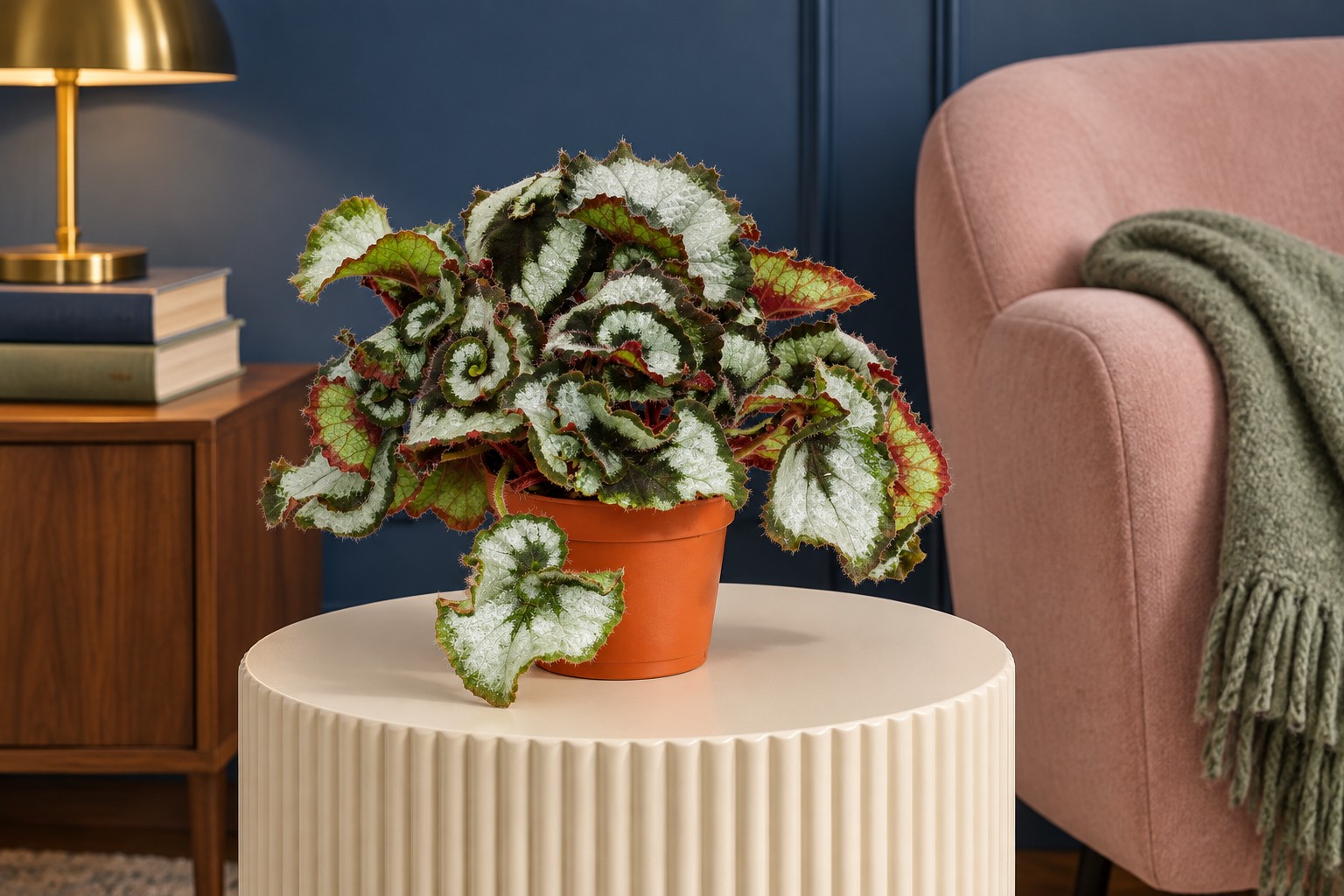
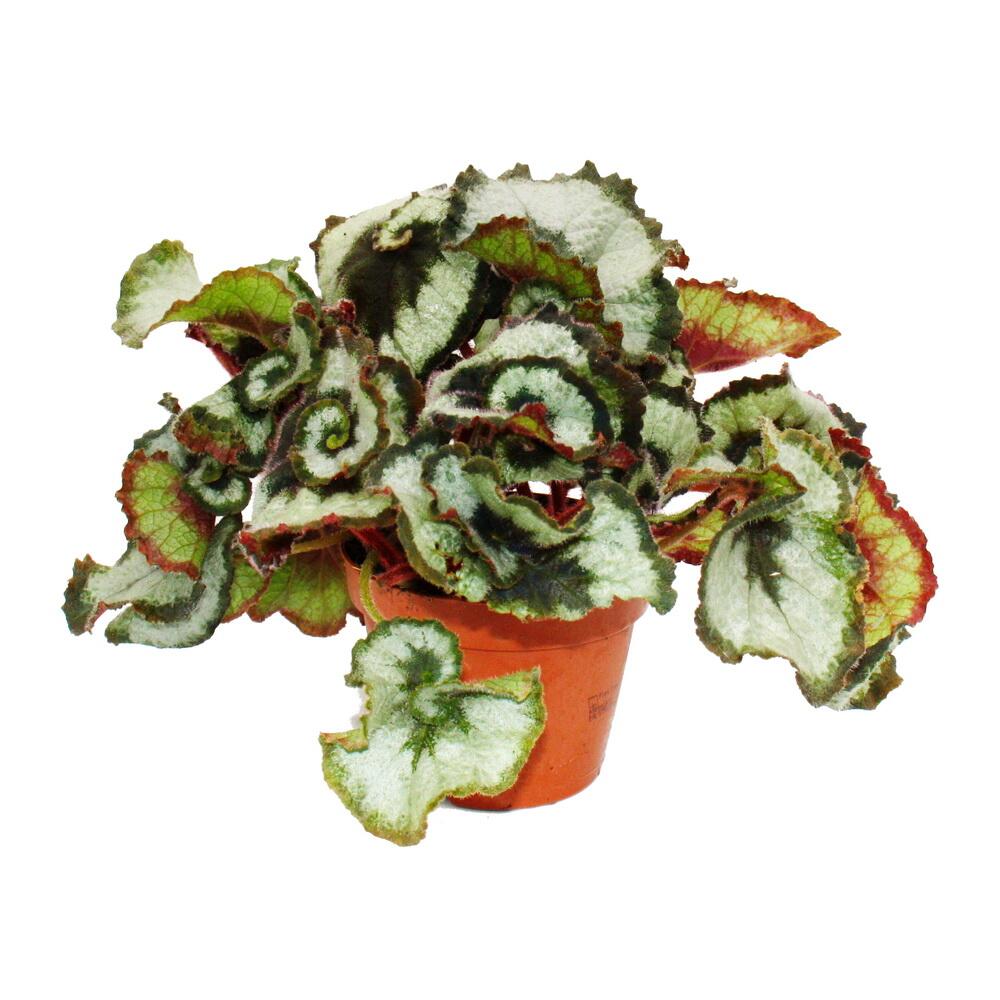
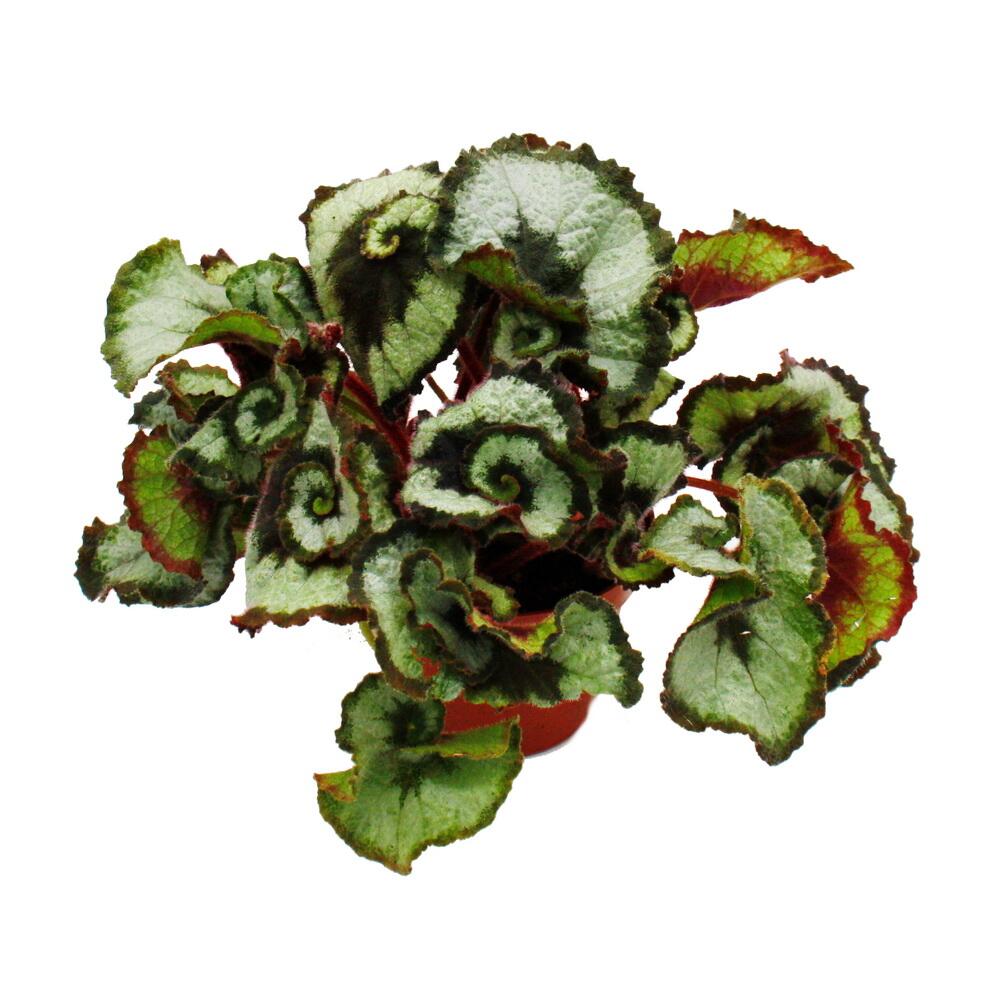
Asymmetrical leaves show dark olive-green areas and metallic silvery bands. Their base and form recall a snail shell. Reddish undersides and fine hairs add to the effect. The RHS lists Princess of Hanover as a variety of the Rex begonia group. It is a rhizomatous foliage begonia whose main ornament is foliage. Spirals may vary in strength; not every leaf is an exactly repeated template. Colours also change with age, light and viewing angle.
The young begonia initially stays manageable
The offer states a 12 cm pot and about 20 to 25 cm total height; the short description rounds to approximately 25 cm. The scene shows a compact young plant of that size. Over time, the leaf crown may broaden and need more clear space. Leaf edges should not continually rub wall, glass or decoration. When moving, grasp the pot without squeezing foliage. Shown furniture and cover pot are styling examples; they belong to delivery only if expressly stated in the shop.
Sheltered light displays the pattern
A bright filtered position away from direct sun suits well. Hot direct sun may damage leaf surfaces. Silvery areas need not be intensified through as much sun as possible. Acclimatise gently after shipping or moving and protect the begonia from cold draughts. Ordinary warm room temperatures are favourable. It is not winter-hardy and does not belong in a frosty bed like a robust garden perennial. In winter, place as brightly as possible without directly exposing to a heater’s dry airflow.
Moderate moisture without a wet leaf crown
Compost should remain slightly moist but not permanently waterlogged. In summer during active growth, supply regularly according to need. In winter, let the surface dry slightly and water correspondingly less often. Direct water onto compost; do not constantly wet hairy leaves and rhizome area. Excess must drain. Humid air may help, but continuously wet foliage with poor ventilation favours problems. One dry leaf is no unambiguous sign to give more water. First check root-ball moisture and position.
Accompany rhizome and roots gently
The rhizome is a thickened stem axis producing fresh leaves and roots. A loose free-draining humus-rich mix and suitable container with drainage are sensible. If needed, move into a slightly larger container without planting unnecessarily deep or burying leaf bases under wet soil. Feed moderately during growth following product instructions. Carefully remove dead foliage; routine shaping is unnecessary. Do not polish, brush or coat the distinctive surface with leaf-shine products.
Leaf cuttings and typical warning signs
Rex begonias may be propagated vegetatively through suitable leaf cuttings or rhizome sections. Use healthy plant parts, clean tools and a suitable moist ventilated rooting environment. A small delivered plant need not immediately be heavily reduced for an experiment. Small pale flowers may occur but are subdued beside the foliage and not guaranteed. Watch for mealybugs, mites and thrips, as well as grey coatings or soft leaf bases. Constant wetness and poor air movement may encourage rot. This begonia is ornamental and not for consumption.
One plant, several views
Good to know
Are rolled leaf bases a care mistake?
The spiral form belongs to Princess of Hanover. A suddenly limp whole leaf is different.
Can it overwinter in the garden?
No. This rex begonia is cultivated frost-free and sheltered.
Should I spray the foliage wet every day?
Avoid constantly wet leaves and a wet crown. Improve air humidity and ventilation together.
Can I grow a new plant from one leaf?
Suitable leaf cuttings are one possible propagation method for Rex begonias. Healthy material and appropriate rooting conditions are essential.
Sources and editorial note
- Product and delivery contents: Exotenherz
- Royal Horticultural Society: plant and care knowledge
- Royal Horticultural Society: plant and care knowledge
Sources checked: 15 September 2026. Product information and delivery contents follow the linked shop offer. Care has been checked against the stated specialist sources and remains subject to plant condition, position and season.