This plant at Exotenherz
Check the shop offer for current availability, price and what is included.
Product and delivery details are given in the individual offer.
Your care table
| Topic | What to do | Why it helps |
|---|---|---|
| Location | Place bright and filtered; shield hot direct sun through glass. | Enough light keeps jointed shoots strong; intense sun can damage leaf surfaces. |
| Watering | Check soil and pot weight; water evenly when the surface has dried slightly. | Fine roots need moderate moisture but must be neither constantly wet nor completely dry. |
| Room climate | Keep consistently warm, avoiding dry heating proximity and cold draughts. | A calm transition from transport indoors eases leaves and young shoots. |
| Air humidity | Provide suitable room air and gentle circulation; do not constantly spray foliage. | High humidity with wet leaves and still air may encourage fungal problems. |
| Substrate | Use loose humus-rich potting soil and clear drainage holes. | Open structure combines a water reserve with air around roots. |
| Feeding | Feed moderately according to label during visible growth, adjusting to winter growth. | Active shoots need food; concentrated stores do not help a resting or weakened plant. |
| Pruning and support | Support long shoots loosely; if needed shorten above healthy buds in late spring. | Nodes provide points for new side shoots and loose support protects stems. |
| Propagation | Root healthy stem pieces with nodes in suitable substrate. | A node may produce a new plant; any arbitrary leaf piece does not replace that shoot. |
Check the compost and pot weight. The care table explains how far the compost may dry.
Water only when needed. The water should reach the root ball without spilling over the rim.
Remove surplus water from the saucer or cachepot. Then return the plant to a suitable position.
Spots shift as the leaf turns
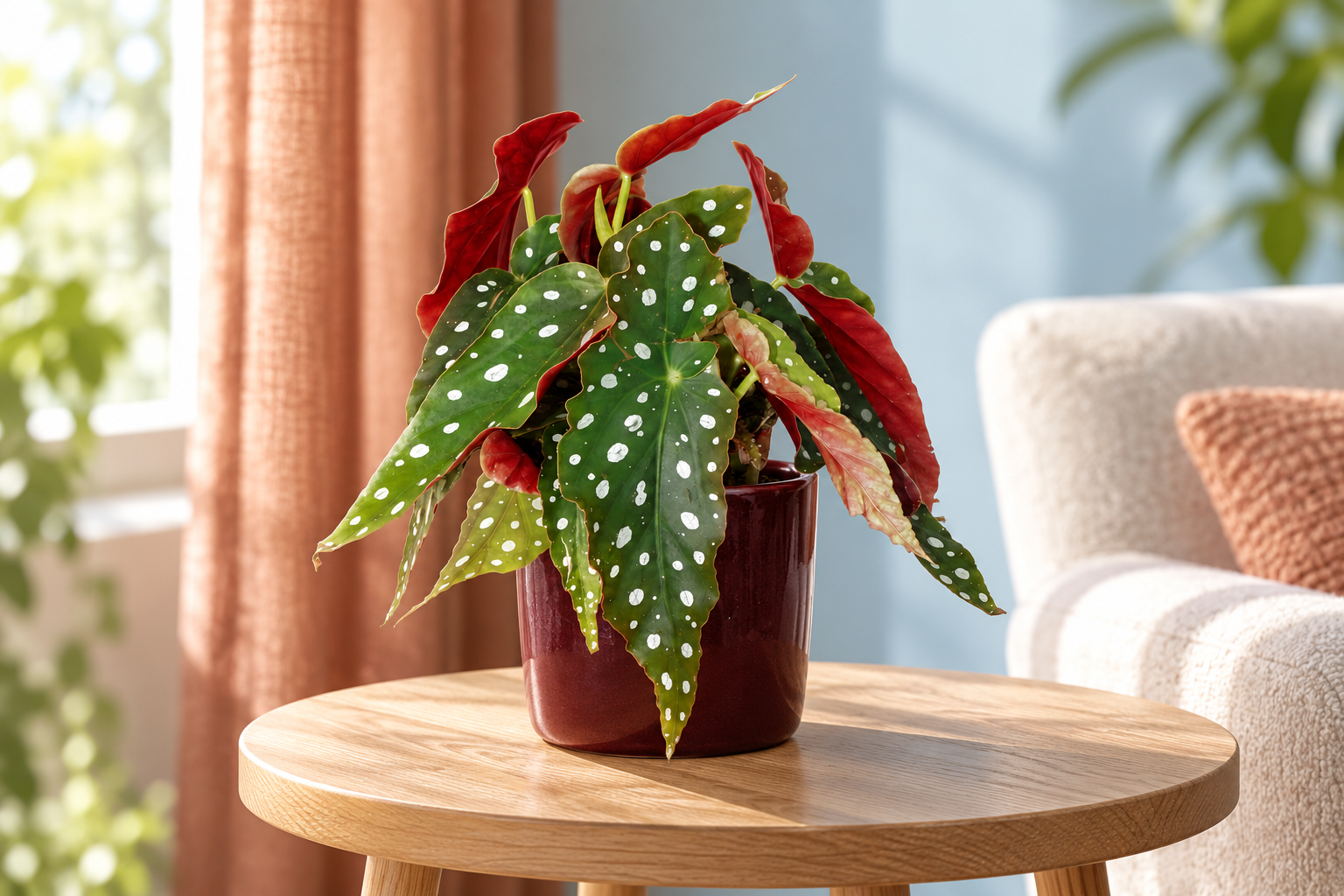
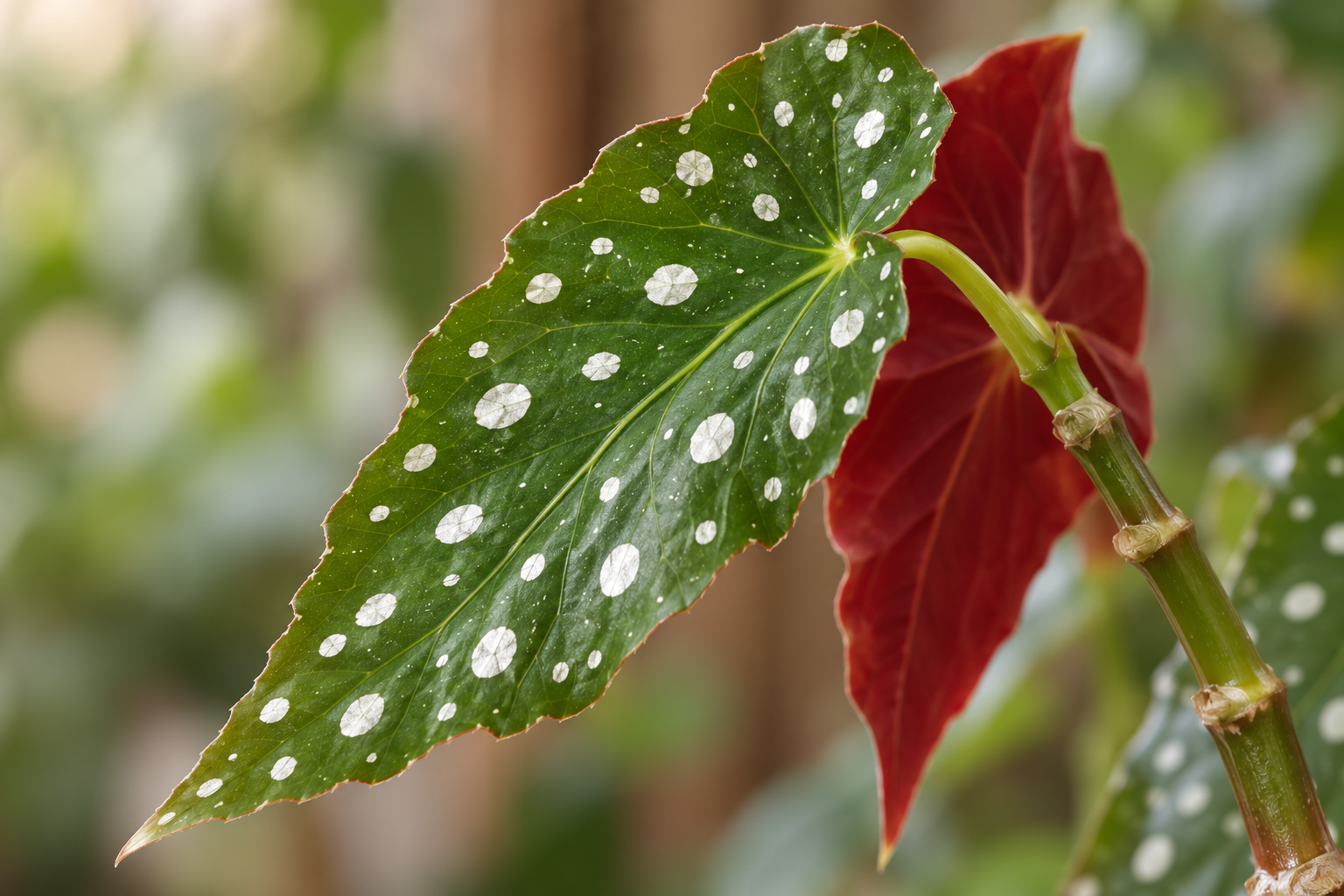
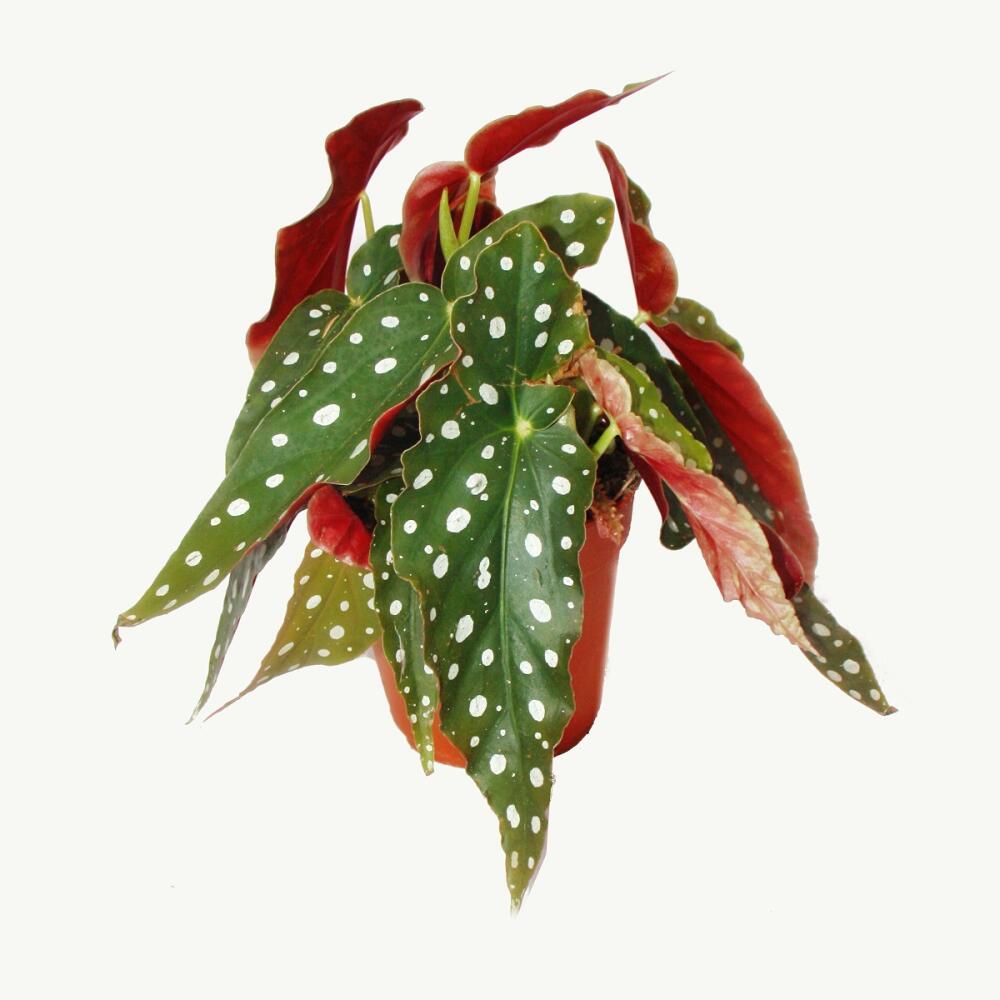
Elongated Wightii leaves carry silvery-white spots of different sizes. Their base is uneven, tip extended and edge slightly wavy and toothed. Some show strong red undersides from the side. This second colour makes a bright side table interesting: it needs no flowers to look different as you pass. The original still shows a compact young group. Leaves lie close and extend beyond the small pot. Give some air rather than squeezing the begonia among objects; repeated brushing easily marks delicate tips.
A cane begonia with recognisable nodes
Named Wightii belongs to Begonia maculata and is grown as a cane begonia. Upright shoots have thickened nodes bearing leaves and later side shoots. This explains why it develops differently from a low-growing rex begonia as it lengthens. Under favourable conditions it may reach around half a metre to a metre; pruning, light and pot culture influence this range. Allow sideways space for angled leaves too. Small whitish to delicate pink flower groups may appear. They are later development, not a requirement for an attractive table begonia.
Let the young plant settle gently
The current offer gives a twelve-centimetre pot and approximately twenty to twenty-five centimetres total height. Support the container when unpacking and remove wrapping carefully from tips. Do not pull jointed shoots. Then check soil: roots still moist after transport do not automatically need more water. A decorative pot may hold the inner pot if it remains removable and water levels checkable. A bright sheltered place with consistent warmth helps initially. Delay major interventions until fresh growth, unless damaged or rotting parts need immediate removal.
Brightness keeps later growth together
Filtered daylight shows the spotted pattern and supports strong new shoots. A position close to a bright window often beats an attractive but dark place deep in a room. Shield hot direct summer sun behind glass. Consistent room warmth around fifteen to twenty-two degrees guides cultivation. Leaves should touch neither cold glass nor dry heating warmth. Ventilate without leaving the begonia in cold airflow. With markedly stretched soft new growth, first assess brightness. More fertiliser cannot compensate for a dark position and may burden roots further.
Water to soil and air between leaves
Feel the surface before every watering and lift the pot briefly. When upper soil dries slightly, water roots evenly and let excess drain. Inside should stay moderately moist; complete dryness and a permanently wet outer pot are both unfavourable. Darker winter often lowers consumption. Prefer watering soil and keep tight leaf spaces clear of standing water. Suitable humidity supports foliage, but constant spraying with little air movement can encourage fungi. Therefore assess brown edges with root moisture, warmth and room air. One symptom alone does not decide the right water amount.
Give jointed shoots direction
When a shoot hangs noticeably, a simple support may help. Tie loosely without constricting a soft stem or stalk. If needed shorten overlong healthy shoots above suitable buds in late spring; new sides may develop below cuts. Healthy stem pieces with nodes make cuttings. Loose humus-rich soil and safe drainage suffice for the mother. With well-rooted soil, gently move to a suitably slightly larger pot. Feed moderately during active growth. A big pot full of unused moist soil is no helpful reserve for a little begonia.
The red underside is also a good inspection point
Occasionally viewing undersides reveals more than colours. Sucking pests can hide there and at nodes. With suspicious spots, sticky areas or fine webs, investigate the cause more closely. Observe new plants initially at some distance from the collection. Remove dead foliage carefully and keep air moving between leaves without draughts. If stems soften and soil stays wet, inspect roots. A healthy Wightii rewards these checks with new leaves. Let later size develop rather than forcing it through repeated moves and strong care interventions.
One plant, several views
Good to know
What characterises Wightii?
The named Begonia maculata selection has long asymmetric green leaves with silvery-white spots and strong red undersides.
What size is the delivered plant?
The specific offer gives a 12-cm pot and approx. 20–25 cm total height. The young plant can then grow further.
Will it stay as low as in the original?
It forms longer upright shoots. About 50–100 cm is horticultural guidance; location, pruning and culture change growth.
Are spots pests?
The silvery-white pattern belongs to the leaves. New damage, sticky spots or animals are checked independently.
Does every shoot immediately need support?
No. Only when a longer shoot needs support, tie it loosely without crushing nodes or stalks.
Should I spray daily?
Constantly wet foliage is not a good solution. Suitable humidity and light air circulation help more.
How do I propagate it?
With a healthy stem cutting with a node. Rooting needs suitable moisture and a sheltered bright place.
What changes in winter?
Check brightness and adjust water to lower consumption. Roots remain moderately moist without standing in water.
Sources and editorial note
- Exotenherz: offer and original photographs (03.10.2026)
- RHS: Wightii, named selection and habit (03.10.2026)
- RHS: caring for indoor and cane begonias (03.10.2026)
- NC Extension: cane begonias, nodes and propagation (03.10.2026)
- American Begonia Society: winter acclimatisation (03.10.2026)
Offer, item number, GTIN, availability and originals checked directly on03.10.2026. Specialist sources read directly. RHS names Wightii independently; no synonym evidence for Double Dot. Specific directly orderable SKU checked. Both clean originals viewed; gallery1 selected. Delivery size, later development and flowering distinguished.