This plant at Exotenherz
Check the shop offer for current availability, price and what is included.
Check the selected shop offer for price, availability and delivery contents.
Your care table
| Topic | What to do | Why it helps |
|---|---|---|
| Light | Choose bright, filtered daylight. | Delicate leaf surfaces need protection from strong midday sunshine. |
| Watering | Let the surface dry slightly, then water evenly. | A permanently wet rootball is unfavourable for the begonia. |
| Drainage | Remove excess from the outer pot. | A trunk-trained form also needs air around the roots. |
| Compost | Humus-rich, loose and dependably well drained. | The small amount of compost must keep water manageable. |
| Nutrition | Feed moderately during growth. | Leaf and shoot development need no excessive dose. |
| Crown | Shorten long healthy shoots selectively if required. | The desired shape remains manageable. |
| Leaves | Clean gently and avoid unnecessary leaf wetness. | Fine foliage may suffer in unfavourable conditions. |
| Winter | Keep bright and warm, reducing watering as required. | Less activity generally means slower drying. |
Check the compost and pot weight. The care table explains how far the compost may dry.
Water only when needed. The water should reach the root ball without spilling over the rim.
Remove surplus water from the saucer or cachepot. Then return the plant to a suitable position.
White dots on a small green crown
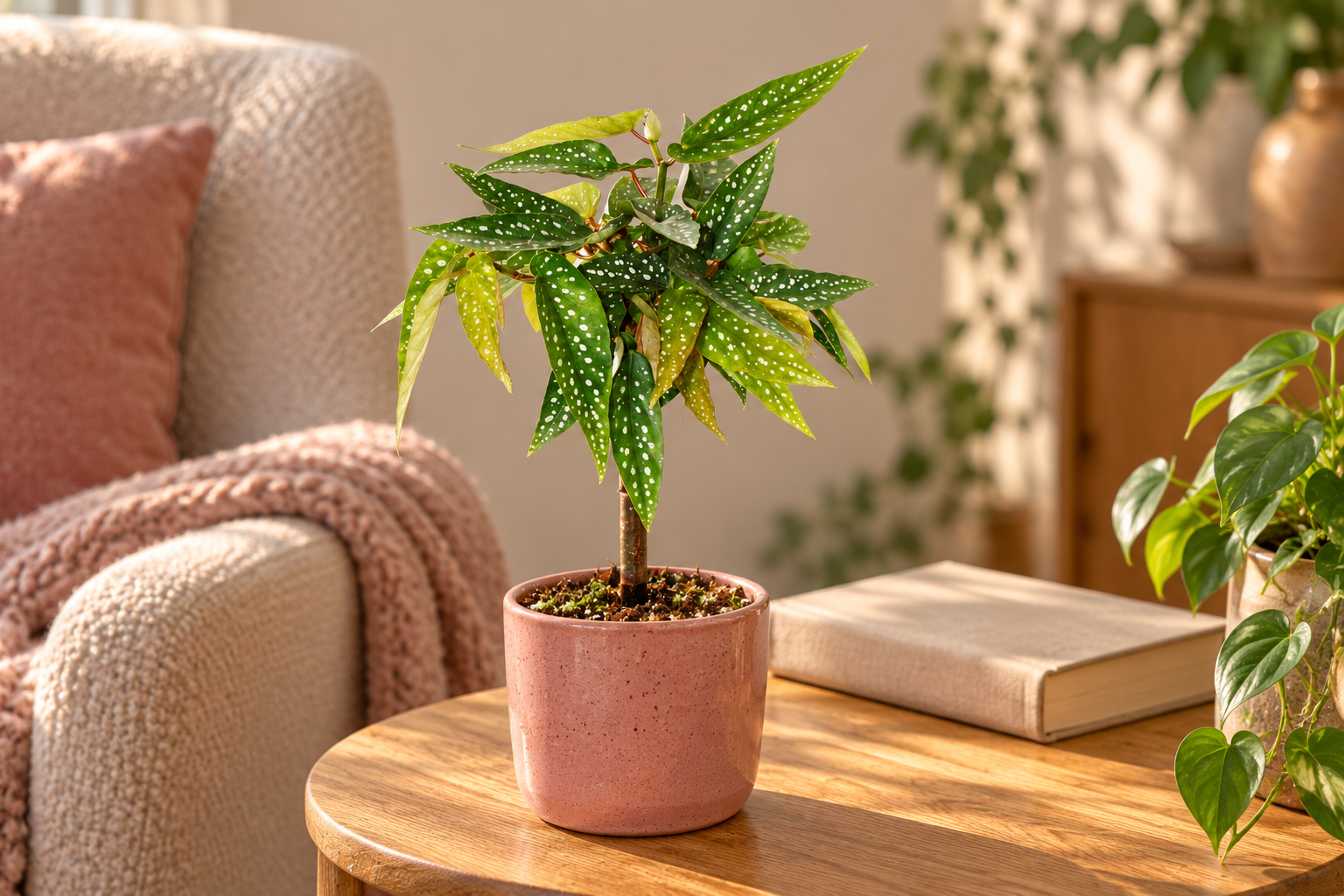
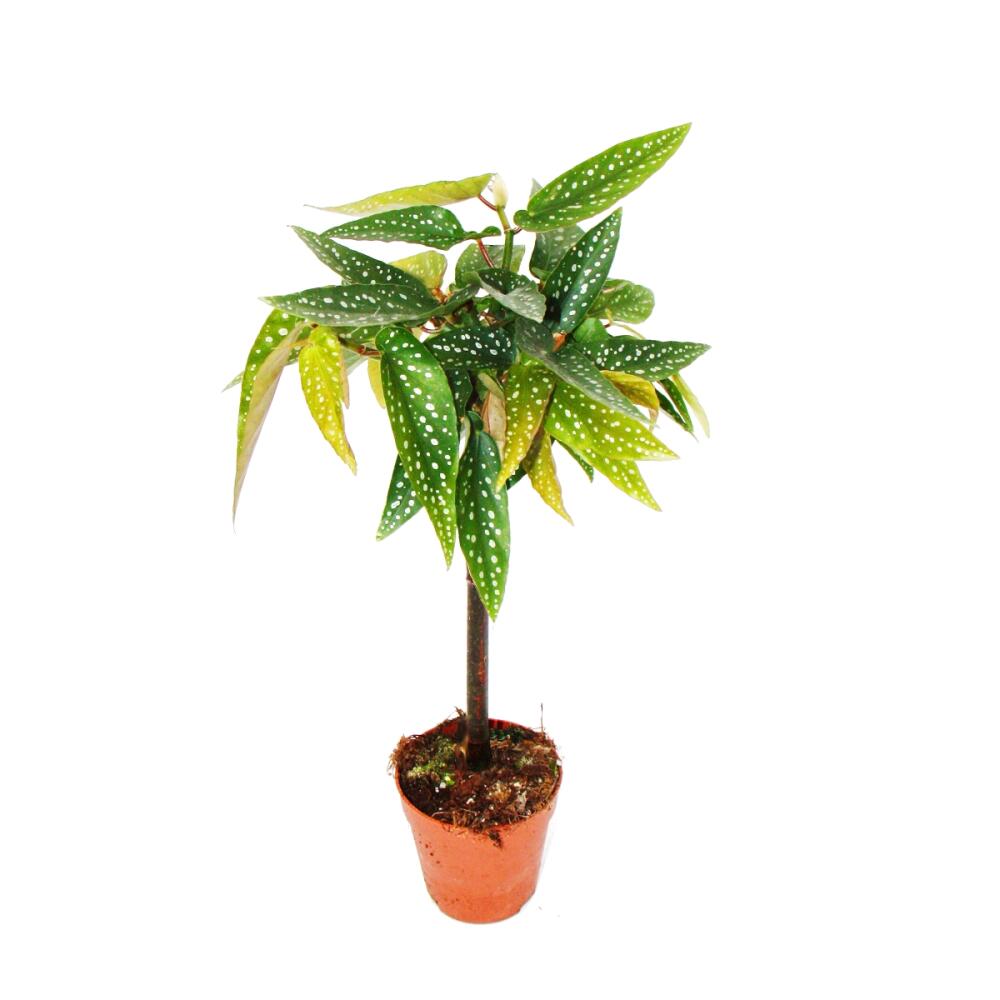
The Tamaya begonia carries narrow, pointed leaves with many small white speckles. Their asymmetrical surfaces give the crown a lively structure. Above the slender little trunk, a small green shape develops that is clearly visible even on a bright side table. The offer describes approximately thirty to thirty-five centimetres of height in a nine-centimetre pot. I leave some clear space beside the crown so that tips are not pressed against books or a wall. Attractive foliage needs no extra decoration. A large old begonia or a profusely flowering crown would be a different developmental stage, not a fixed delivery promise.
The shape belongs to cultivation, the leaf to the plant
Begonia albopicta belongs among upright-growing begonias with striking foliage. The offered Tamaya form is cultivated on a small trunk. This should imply neither special frost tolerance nor completely different care. Roots and leafy shoots remain those of a warmth-loving begonia. I support the crown gently and plan pruning according to its actual structure. White leaf speckles are natural markings and are not wiped off. Flowers may appear with suitable development but are not the focus of this portrait. The young plant may first find a stable place and keep its existing leaves healthy.
A bright table position without overheating
Filtered daylight gives the begonia a good starting point. Hot midday sunshine directly behind glass can damage delicate leaf surfaces. A light curtain or some distance helps without moving the plant deep into a dark part of the room. I consider the position at different times of day. On a low table, the whole crown remains accessible and new shoots growing towards a particularly bright side are quickly noticed. The plant can then be gently oriented if necessary rather than constantly moved. When ventilating, it stays protected from cold airflow. A small trunk is upright, but cannot withstand any amount of strain or draughts.
Water the small rootball in a controlled way
A nine-centimetre pot contains only a small amount of compost. It can lose moisture quickly in a warm, bright place, but become too wet just as quickly in a deep cover. I therefore check the surface and pot weight. After slight drying, the compost is thoroughly moistened and excess removed. Constant small sips into an already wet rootball offer no benefit. Nor should the compost repeatedly dry out completely until the entire crown droops. If leaf firmness changes, I first check roots and existing moisture. More water is appropriate only when the rootball actually needs it.
A loose foundation instead of a large reserve
Humus-rich, well-drained compost suits the begonia. It should retain moisture but still keep air around the roots after watering. A container with drainage holes is therefore sensible even inside an attractive outer pot. Once the rootball is well rooted, repotting into a modestly larger pot can take place during growth. An oversized pot stays wet longer than the small crown uses water. When new shoots appear, the plant receives restrained nutrition according to a suitable fertiliser’s dosage. Freshly pre-fertilised compost is taken into account. A lack of flowers is no reason to increase the dose or suddenly move the plant into full sunshine.
Guide the crown with a few cuts
Selectively shortening overly long healthy shoots can keep the small crown in shape. I wait for active growth and use clean tools. I avoid a radical trim on a newly arrived or weakened plant. Narrow leaves are dusted carefully without leaf-shine products. Permanently wet foliage and unsuitable air conditions are not part of routine care either. When unusual spots appear, I distinguish existing white speckles from new dead areas. Leaf undersides are also examined. Pests or damage can then be noticed early without treating natural markings as a problem.
Continue calmly as the days shorten
In winter, the Tamaya begonia stays bright, warm and frost-free. Less growth often slows rootball drying; watering continues according to its condition. The air should be pleasant, but a permanently enclosed damp crown is no substitute for good cultivation. Fallen or clearly dead leaves are removed cleanly. The little trunk stands securely so the plant does not tip from a high table edge. I like how the fine white markings work even in a small group of leaves. When healthy new shoots appear, the shape develops with them instead of forcing an unchanging decorative object from the outset.
One plant, several views
Good to know
What does Tamaya mean?
Here it describes the begonia cultivated on a small trunk. The plant remains Begonia albopicta.
Are the white dots normal?
Yes. Small white speckles belong to the leaf markings; new dead spots are assessed separately.
Is flowering guaranteed at delivery?
No. Flowers may appear with suitable development, but are not promised for this offer.
How moist should the compost be?
Moist after watering, with slight surface drying. Remove remaining water from the cover.
May I prune the crown?
During healthy growth, selectively shorten individual long shoots. Avoid immediate radical trimming.
May it receive strong sunshine?
Avoid hot direct sun. Bright, filtered light is a good position.
How is it overwintered?
Bright, warm and frost-free; adjust watering to slower drying.
Sources and editorial note
Shop offer, SKU, GTIN and availability checked live on 01.10.2026. Original photograph unchanged. Independently researched gardening texts and an individually reviewed scene.