This plant at Exotenherz
Check the shop offer for current availability, price and what is included.
Product and delivery details are given in the individual offer.
Your care table
| Topic | What to do | Why it helps |
|---|---|---|
| Light and warmth | Choose a sunny, warm, wind-sheltered spot. Acclimatise gradually to direct sun. | Chillies need plenty of light and warmth; sudden position changes stress previously protected foliage. |
| Starting outdoors | Move outdoors only when nights are reliably mild; about 15 °C offers more reserve than cold borderline nights. | The RHS gives at least 12 °C at night, preferably 15 °C. Brief midday warmth cannot offset cold nights. |
| Watering | Keep the root ball evenly moist. Check substrate and pot weight, water thoroughly and remove residual water. | Fruiting containers can use water quickly in sun and wind; a fixed weekly interval misses this. |
| Container and substrate | Use a draining container and structurally stable container or vegetable compost; allow more root space when roots densely fill the ball. | Free drainage prevents standing water while sufficient compost buffers supply between checks. |
| Nutrients | During active flower and fruit formation, use suitable potassium-rich vegetable feed according to its instructions. | The RHS recommends potassium-rich supply after flowering begins; dose and frequency depend on the product. |
| Supporting branches | Secure loaded shoots loosely to stakes and cut fruits carefully rather than pulling branches. | Chilli branches break easily. This selection’s long fruits call for especially attentive handling. |
| Cold season | Before cold weather, find a warm, bright, frost-free spot and water less as growth slows. | Frost ends unprotected cultivation. Sheltered overwintering is possible but cannot replace good light or guarantee a new yield. |
Check the compost and pot weight. The care table explains how far the compost may dry.
Water only when needed. The water should reach the root ball without spilling over the rim.
Remove surplus water from the saucer or cachepot. Then return the plant to a suitable position.
Long fruits make a distinctive silhouette
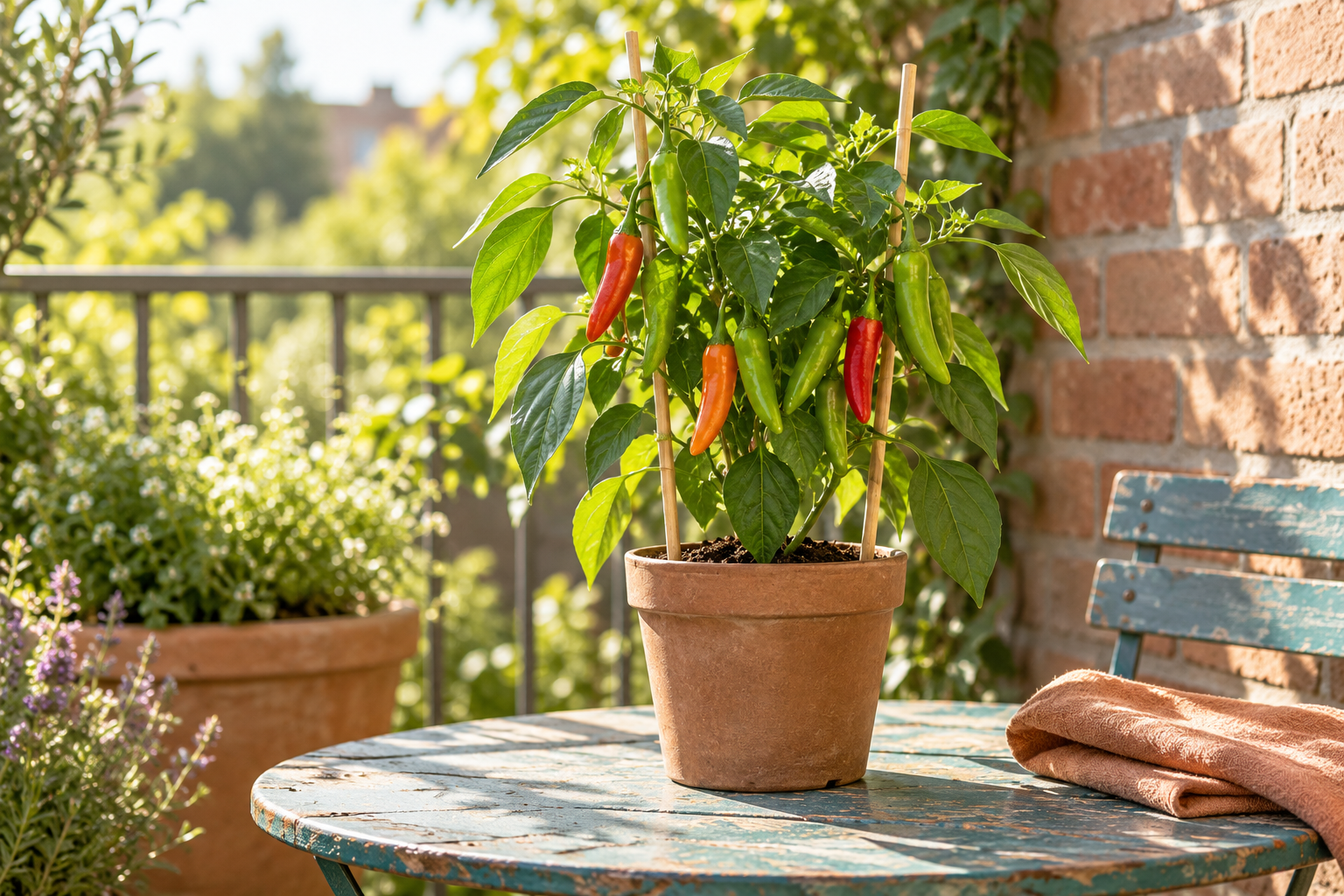
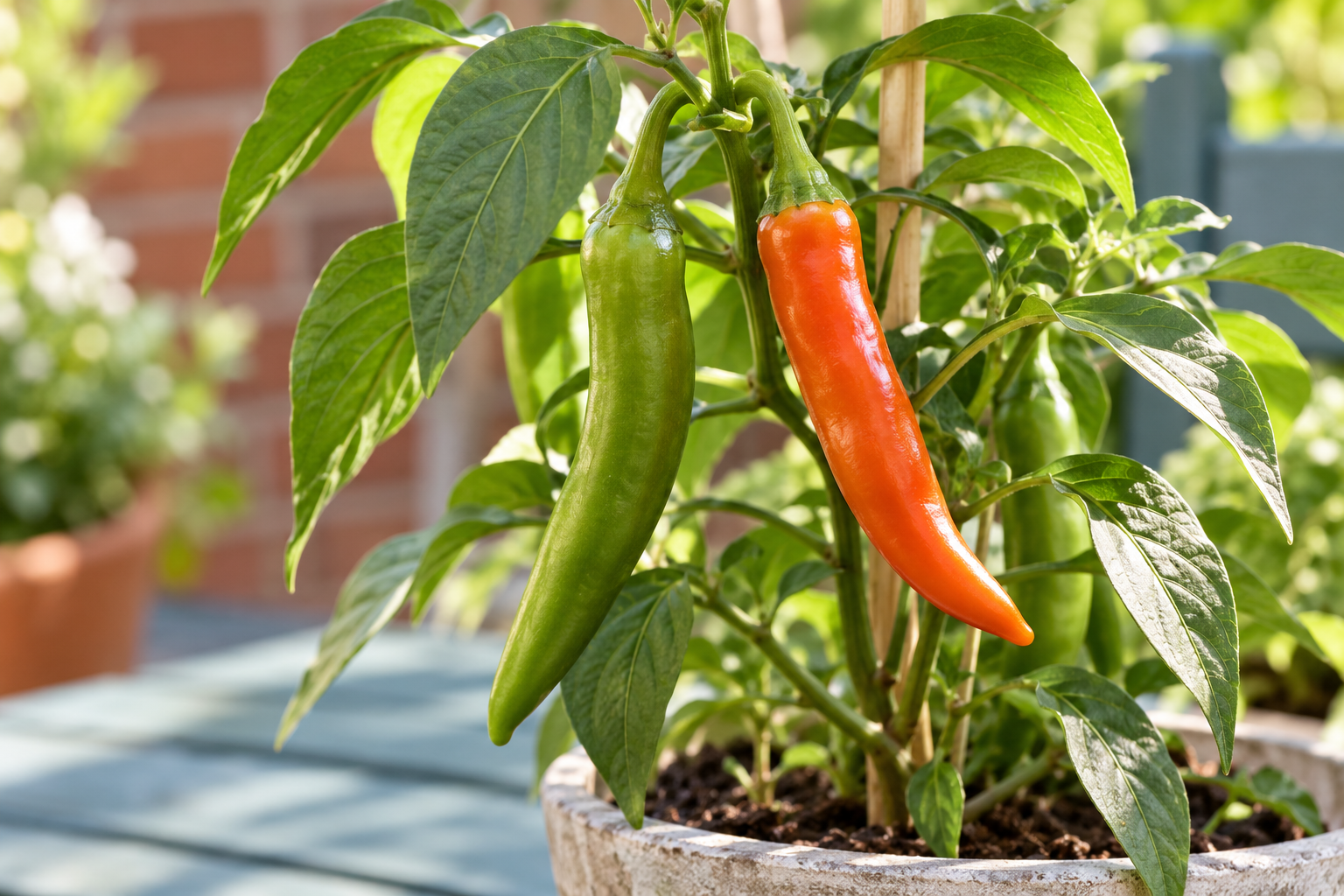
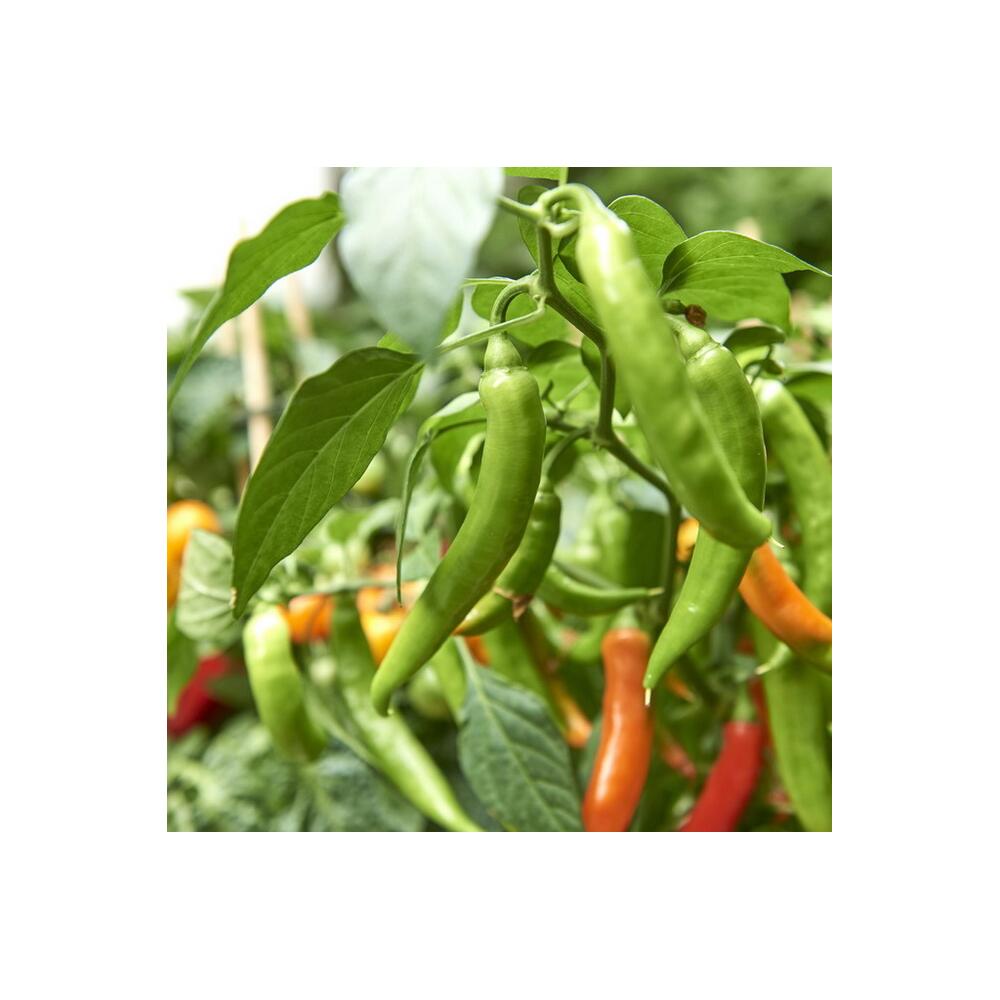
Strong elongated fruits hang among pointed green leaves. Some are almost straight, others curve clearly at their lower ends. Pick-&-Joy Mild Chili therefore resembles less a compact bunch of small ornamental fruits and more a branched vegetable plant whose branches carry individual large fruits. The clean shop views show smooth green, orange and red fruits on these shoots. These colours describe visible material; a photograph cannot reveal a particular timed colour sequence. The manufacturer explicitly lists Mild Chili as its own offer with large fruits. This named trade selection is the focus here, without assigning an unsupported species, ancestry or private cultivar identity.
A young container plant, not a completed harvest plan
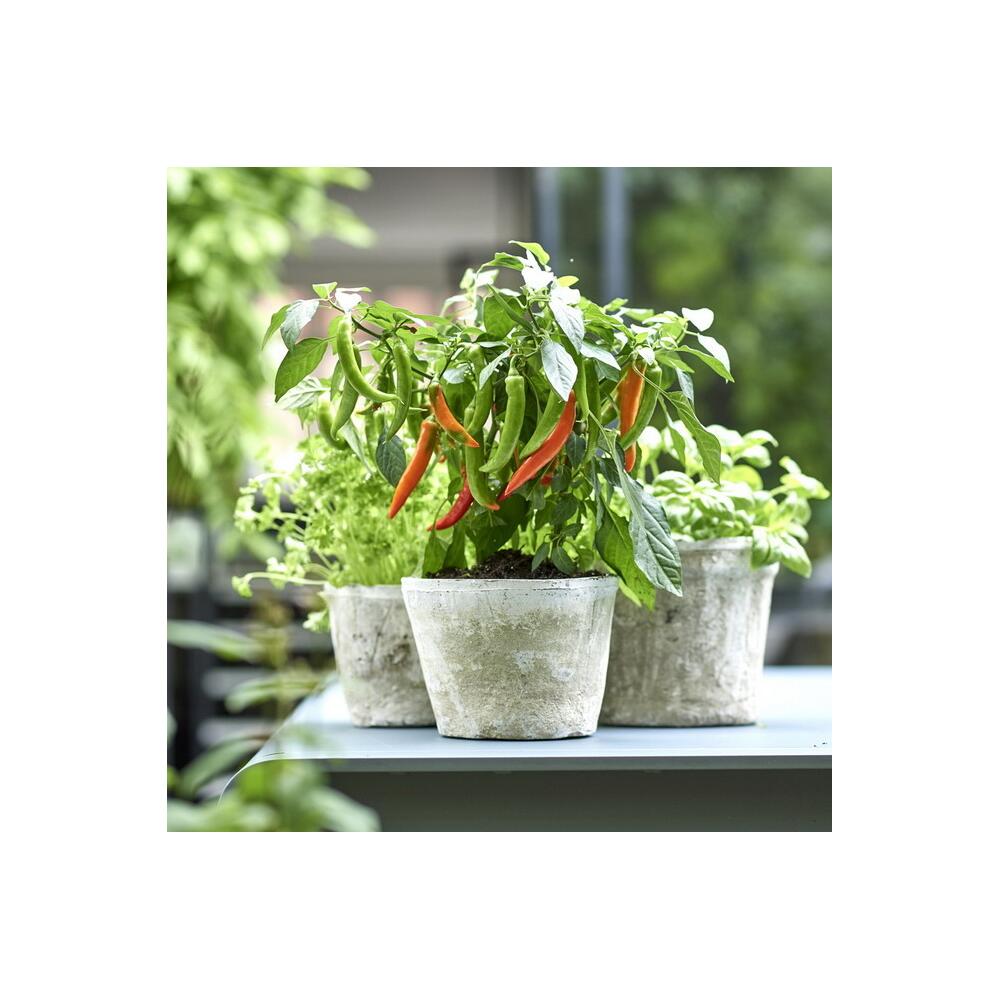
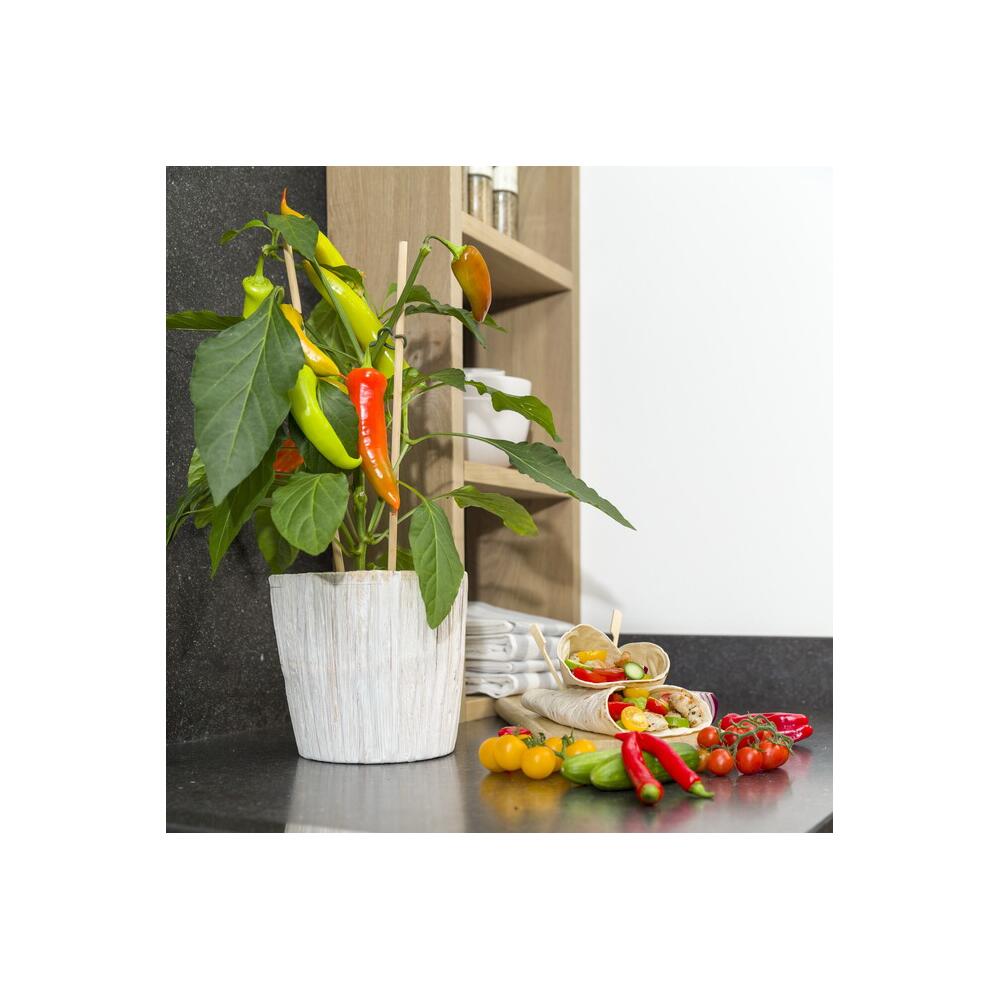
The linked offer describes one plant in a 14 cm pot with approximately 45 cm plant height and existing fruit set. Plant height here refers to the plant; container height is not added to present a total height. This description does not fix how many fruits a particular specimen carries or which colours appear on arrival. Home and garden photographs show design possibilities with containers, herbs and kitchen utensils. These surroundings are not automatically delivered. The small nursery pot is a starting point for further care. If roots become dense or water supply is hard to balance, a slightly larger draining container is more sensible than increasingly frequent small sips of water.
The best spot is sunny, warm and sheltered
A wind-sheltered balcony, warm terrace or well-ventilated bright greenhouse position may suit. The plant needs plenty of light; a dark indoor place is unsuitable for permanent vegetable cultivation. After protected cultivation, begin with a few days of less intense sun and increase exposure. Night temperature matters most when moving outdoors. The RHS recommends reliably at least 12 °C, preferably about 15 °C. A movable container therefore remains practical during changeable weeks. Excess heat is also unsuitable: temperatures above 30 °C in a closed greenhouse can affect fruit formation. Ventilation provides balance while the position stays protected from strong wind.
Keep moist while still draining water
With this chilli, the care question is not how long it can last without water but whether roots stay reliably supplied. Feel into the compost and lift the pot for comparison. A lighter root ball and diminishing moisture show need better than a calendar entry. Water so that the compost is reached evenly and let excess drain through the bottom holes. Remove water from the outer pot afterwards. Between checks, the surface may differ from the interior; alone it proves neither a dry nor wet whole root ball. Check more often in sun, wind and with fruit load, and be more restrained on cooler, darker days. The goal remains evenly moist root space without permanent standing water.
Think of root space, nutrition and support together
Suitable container compost should hold water while remaining loose and permeable. When repotting, retain planting depth and avoid tearing the root ball apart unnecessarily. The RHS recommends sufficient space for chilli containers; its general guidance of about 22 cm pot diameter is not an additional delivery measurement for this offer. Choose the next pot according to the actual root ball. During active flower and fruit formation, potassium-rich vegetable feed suits according to product instructions. Extra feed cannot replace missing light. Long fruits may load individual branches. Slim stakes and soft loose ties support without constricting shoots. When moving, carry the container rather than grasping the leafy crown.
Use fruits without guaranteeing heat
Mild Chili is the name of this Pick-&-Joy selection. It guarantees neither mildness for every fruit nor a binding heat value. When cooking with chilli, dose small amounts carefully, avoid touching your eyes while cutting, and clean hands and equipment afterwards. Gloves are practical for sensitive skin. To remove fruit, make a clean cut at its stalk while supporting the branch. Visible colour alone predicts neither a fixed harvest date nor uniform flavour. A sunny container may accompany the kitchen through the season, but weather, position and plant condition determine whether and for how long new fruits form. No year-round or quantitatively guaranteed yield is inferred.
Understand cool weeks and care problems
When nights become cold, decide on the next position in good time. Chillies are frost-sensitive. For possible overwintering the plant needs warmth, frost protection and brightness; slower growth also lowers water consumption. Continue checking the root ball without saturating it on a summer schedule. A new harvest the following year is not guaranteed. Hanging leaves in summer first call for looking at root ball, heat and drainage rather than immediately adding more feed. Check leaf undersides and young shoots for aphids, whiteflies and spider mites. In dense moist cultivation, consider air movement and grey mould. Observe a plant with suspicious areas separately and choose suitable action only after identifying the cause.
One plant, several views
Good to know
Is Mild Chili reliably mild with a fixed heat value?
Mild Chili is the documented trade name. No exact clone, botanical species or guaranteed heat value is inferred here. Dose fruits carefully when using them.
Does approximately 45 cm include the pot?
No. The shop gives approximately 45 cm plant height and separately a 14 cm pot. This supports neither a total height nor a fixed later mature height.
Can it go outdoors immediately?
Only in suitable weather. Gradually acclimatise to sun and wait for reliably mild nights; the RHS gives at least 12 °C, preferably about 15 °C.
How often must I water?
Follow the actual root-ball need. Keep evenly moist, check more often in warmth and wind and let excess drain. No fixed watering day suits every position.
Do different fruit colours show a fixed sequence?
The originals document green, orange and red fruits. These photographs do not establish a particular timed sequence for this selection.
Can the plant overwinter outdoors?
Not unprotected in frost. Protected warm, bright, frost-free overwintering is possible; water demand and growth decrease, while a new yield depends on cultivation conditions.
Sources and editorial note
- Exotenherz: complete own Mild Chili offer and associated original gallery
- Pick-&-Joy: complete manufacturer profile Mild Chili
- RHS: complete chilli cultivation guide
Sources as of 5 October 2026. The shop offer and associated original gallery, manufacturer profile and complete RHS cultivation guide were read. The shop’s approximately 45 cm describes plant height, not total height including pot. Mild Chili is presented as a named trade selection; no botanical species or private clone ancestry is inferred.