This plant at Exotenherz
Check the shop offer for current availability, price and what is included.
Check the shop for the current price, availability and offer contents.
Your care table
| Topic | What to do | Why it helps |
|---|---|---|
| Light | Very bright to sunny; increase direct sun gradually after shipping. | Enough light supports a compact rosette, though abrupt change may cause leaf spots. |
| Water | Water moderately during active growth after the small rootball dries well. | Leaves store water; roots need air again between waterings. |
| Leaf care | Do not rub, brush or polish the pale covering. | The uneven surface layer is characteristic and can be damaged by rubbing. |
| Substrate | Use well-drained succulent soil with granular mineral components. | A fine constantly wet rootball dries poorly and unpredictably in a small pot. |
| Container | Keep the drainage hole open and remove water from saucer or outer pot. | Decoration must not block drainage. |
| Feeding | Feed sparingly in bright growing conditions following instructions. | Nutrition should fit slow development; suspend during rest. |
| Repotting | When root space is tight, provide little extra space in spring and handle the rootball. | A large wet soil mantle and pressure on finger leaves do not help. |
| Winter | Choose a bright frost-free spot and adapt water to light and growth. | Low evaporation keeps the rootball damp longer; no general frost guarantee for the pot offer. |
Check the compost and pot weight. The care table explains how far the compost may dry.
Water only when needed. The water should reach the root ball without spilling over the rim.
Remove surplus water from the saucer or cachepot. Then return the plant to a suitable position.
Discover green beneath the silvery skin
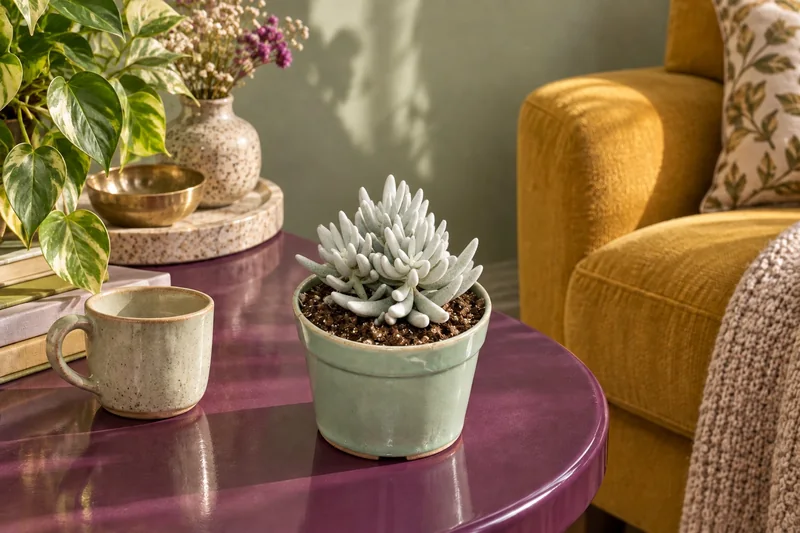
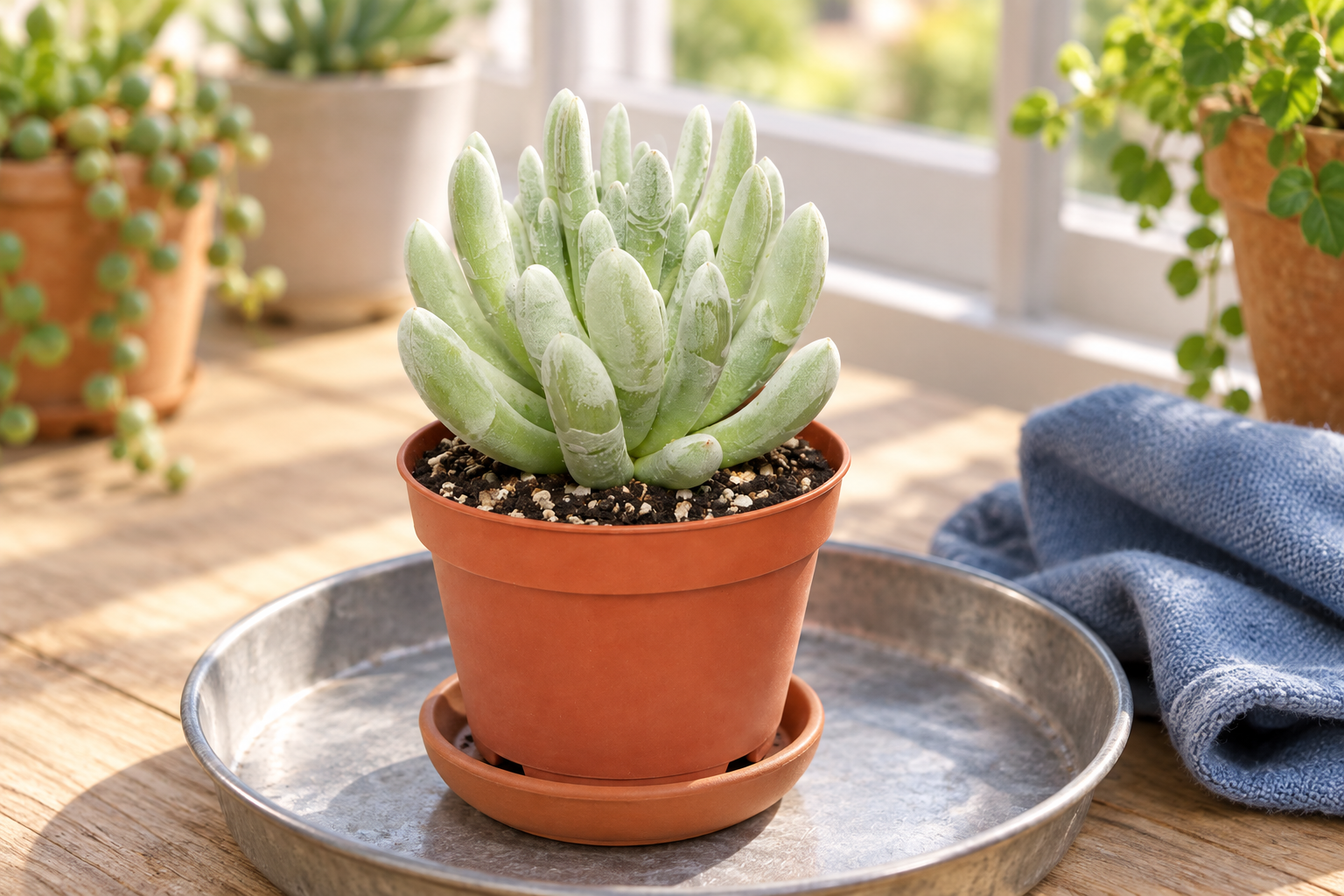
From the front this little plant almost looks like a bundle of pale fingers. Close up, the white surface is not continuous: green tissue shows between its patches and fine folds form in places. Leaves grow tightly around a very short centre, storing water in their fleshy interiors. A sunny plant table shows this low structure well. When unpacking, hold the pot, release packaging outwards and avoid pressure on leaf tips. Do not wipe the existing covering away as shipping dirt. Initially just check that the rootball sits firmly and the pot drains freely.
Senecio scaposus and Caputia scaposa are the same species
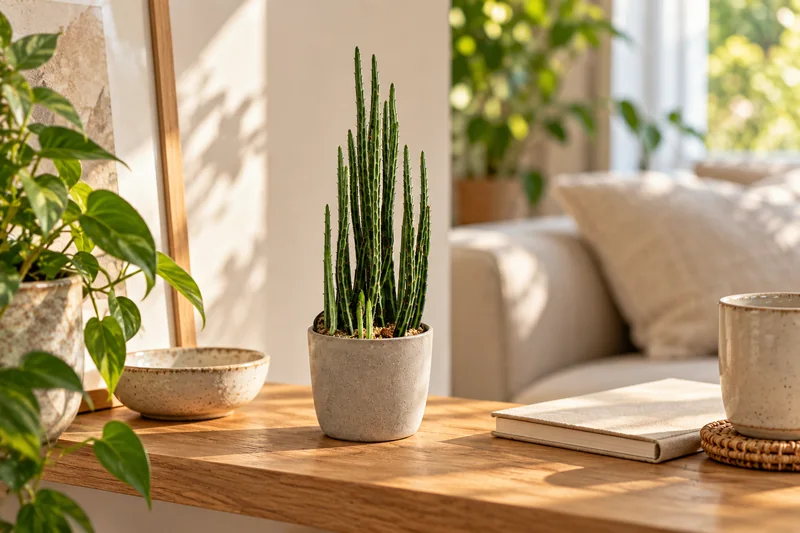
The offer bears the name Senecio scaposus compactum. The species is now listed as Caputia scaposa; Senecio scaposus is its older name. Compactum is repeated as the shop designation without inferring a proven separate cultivar. It belongs to the daisy family and comes from South Africa’s Cape region. Unlike the similarly silvery but more shrubby woolly ragwort, it has a very short stem with finger-like leaves. The offer specifies 6.5 cm pot diameter and about 15 cm total height. Later height and spread of a developed plant differ from delivery size; a low young specimen is not yet a mature stand.
The little pale centre needs a sunny spot
A bright south-facing window area or sunny conservatory suits this rosette. After shipping, start with filtered light and increase direct sun gradually. Its white covering does not automatically make sudden strong midday sun harmless. On a dark shelf the rosette may grow longer and looser; its special leaf structure needs a genuinely bright place. In warm summer a sheltered outdoor spot is possible if wet cold weather is not approaching. Position the small pot away from prolonged rain and move it frost-free again in time. Good air movement helps, but a cold draught at an open winter window is no suitable permanent place.
Water without treating the pale surface
Check pot weight and deeper rootball moisture before watering. In bright growing conditions water moderately after thorough drying and remove all surplus. Storage leaves allow pauses but do not replace root water throughout the warm half-year. Constant little sips moisten only part of the soil and complicate assessment. Water the substrate instead of spraying leaves daily. If accidentally wetted, the surface should dry again in airy surroundings. A fully or patchily white covering belongs to the plant; new sticky clusters between leaves still merit inspection.
Leave the rosette undisturbed when repotting
The small delivery rootball need not move straight into a larger pot. Wait until root space is tight or soil has lost its loose structure. In spring use a well-drained succulent mix with granular components. The new pot needs an open drainage hole and only a little more diameter. Handle old pot and rootball rather than using finger leaves as a grip. Keep the base at the same height without burying green leaves in damp soil. A few moderate feeds during visible growth suffice; more fertiliser cannot compensate for missing light or a wet root zone.
Less winter water, no frost experiment
As light and growth decrease, water needs fall too. Bright frost-free winter quarters help; check remaining pot moisture before every watering. The species should have neither a rigid months-long water stop unrelated to room warmth and condition nor summer watering during dormant growth. A shrinking leaf on an otherwise firm plant differs from a dark soft base in wet soil. The first calls for a rootball check, the second for root-damage inspection. Cold-tolerance information for planted specimens in mild areas is not made into a frost promise for this little nursery pot.
Patiently accompany side shoots and possible flowers
Over time further short shoots may form and the plant widen. Regular shaping is unnecessary. For later propagation, use a healthy suitable shoot and allow the cut to dry before setting in loose substrate; this is not the young delivery plant’s first care measure. Developed specimens may bear yellow flower heads on thin stalks. The original shows an unflowered rosette, so no date for first flowering is promised. Even without flowers it rewards close attention: firm new growth, an airy rootball and intact pale leaf patches indicate suitable cultivation.
One plant, several views


Good to know
Is the white layer mould?
The uneven white-woolly leaf surface is characteristic. New sticky or cottony clusters between leaves should still be examined.
Should I polish the leaves clean?
No. Rubbing, brushing and leaf polish may damage the characteristic surface.
Is compactum another species?
No. It appears in the shop name; the portrait treats the proven species Caputia scaposa, synonymous with Senecio scaposus.
How large does it arrive?
The offer specifies 6.5 cm pot diameter and about 15 cm total height. Later species size is not delivery size.
Can it overwinter outside?
Bright frost-free winter quarters are advised for this little pot. No general hardiness promise is given here.
What does a soft leaf base mean?
First check moisture and the root zone. With wet soil and a dark soft base, more water is not a suitable first response.
Sources and editorial note
- Exotenherz: specific variant, measurements, identifiers and availability (03.10.2026)
- Kew POWO: accepted species and Senecio scaposus synonym (03.10.2026)
- RHS: species features, habit and cultivation (03.10.2026)
- RHS: cactus and succulent care (03.10.2026)
Shop offer and directly read specialist sources compared on 03.10.2026. Identity, synonyms and SKU checked against Canon 642, central new and isolated parallel portraits. Kew accepts Caputia scaposa; compactum is not claimed as a proven separate cultivar or taxonomic unit. Complete RHS profile directly read; outdoor frost information not transferred to a pot frost guarantee. Clean Original 2 unchanged.