This plant at Exotenherz
Check the shop offer for current availability, price and what is included.
Product and delivery details are given in the individual offer.
Your care table
| Topic | What to do | Why it helps |
|---|---|---|
| Light | Bright filtered light under glass. | Do not force hot new sun abruptly. |
| Growth | Water moderately during active shoot growth. | Check the root ball before each watering. |
| Dormancy | Keep dry during dormancy. | Do not copy summer supply unchanged. |
| Drainage | Water onto soil and remove excess. | Avoid permanent wetness. |
| Substrate | Airy draining succulent mix. | Maintain mineral structure and open holes. |
| Fertiliser | Sparingly during growth with suitable low-nitrogen fertiliser. | Dose according to label and actual development. |
| Handling | Support the container and protect shoots. | Individual tips are not handles. |
| Checks | Check shoot bases, no routine pruning. | Preserve natural dark markings. |
Check the compost and pot weight. The care table explains how far the compost may dry.
Water only when needed. The water should reach the root ball without spilling over the rim.
Remove surplus water from the saucer or cachepot. Then return the plant to a suitable position.
Narrow rods with their own green markings
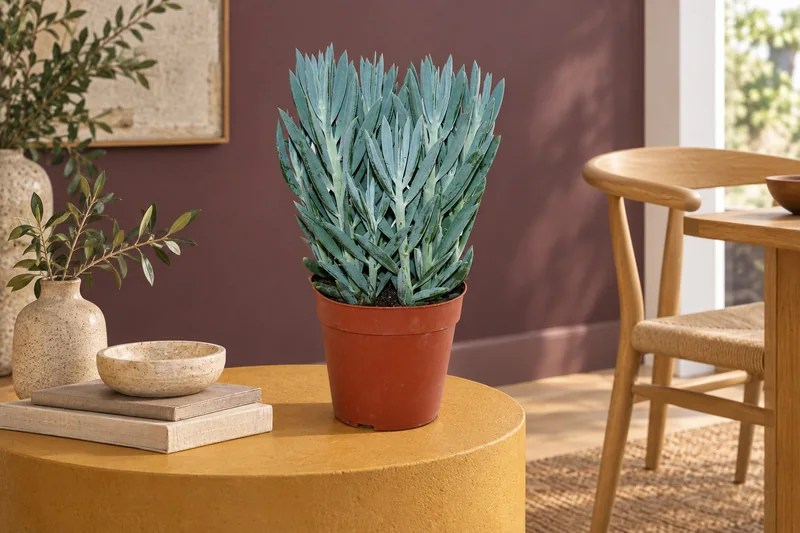
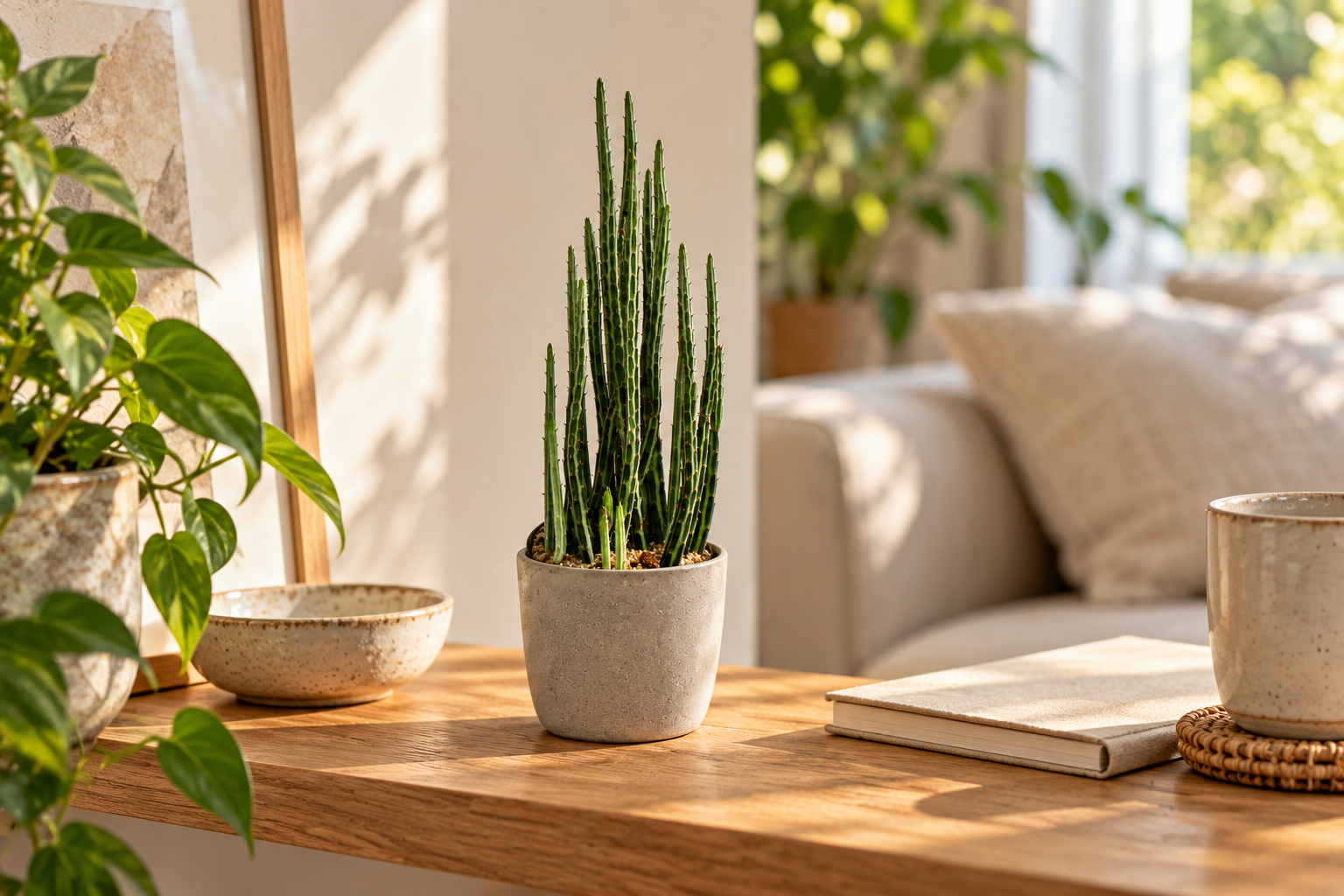
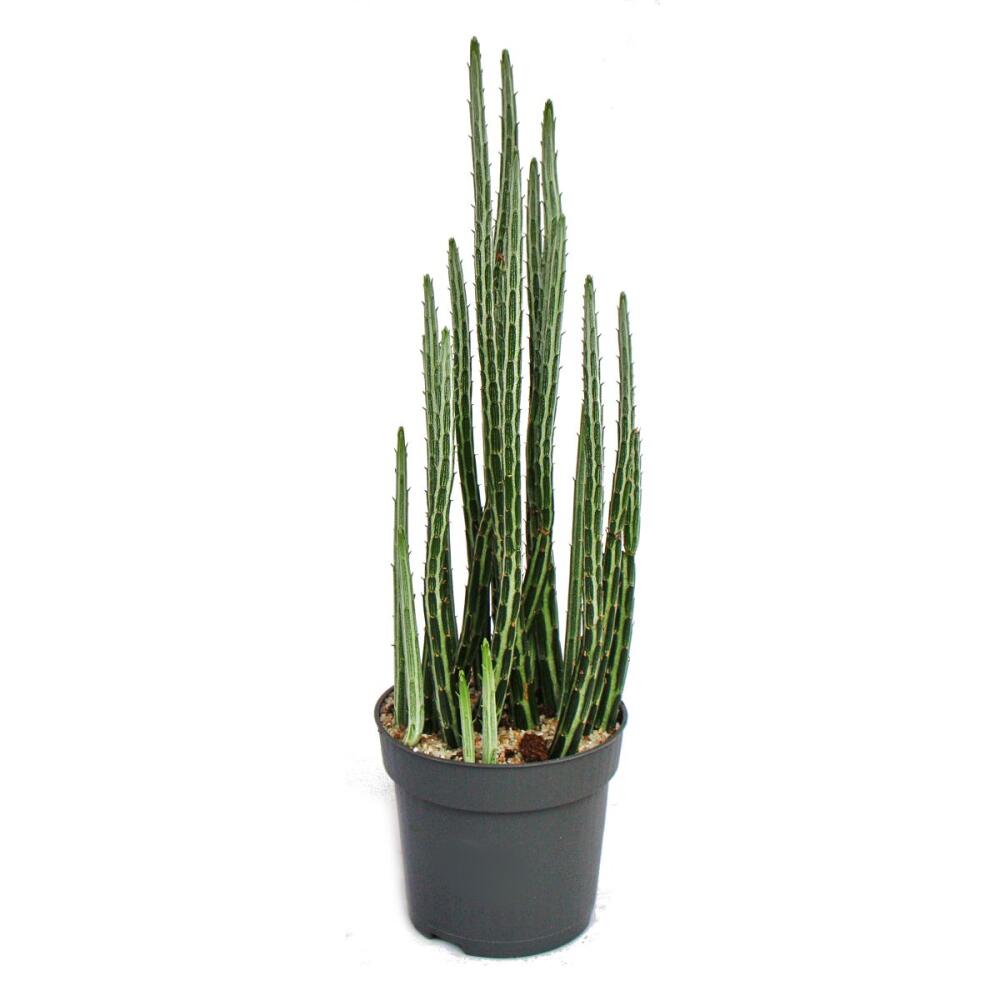
Many thin upright shoots form a small group above the container. Their angular surface shows short darker markings, and fresh tips differ from older lower sections. The plant initially recalls a cactus but belongs to the daisy family. The offer calls it Senecio stapeliformis. The RHS uses the spelling Senecio stapeliiformis and assigns the botanical reference to the genus Kleinia. The portrait makes that connection visible without confusing the narrow shoots with a completely different columnar cactus.
Carry the small group by its container
The offer specifies a 10-cm pot and roughly twenty centimetres total height. This describes the young assortment plant including the pot. A safe position is helpful for a slender body with many shoots: they should neither reach into a frequently used gripping area nor hit a hard shelf edge. Support the container when unpacking and do not pull individual tips. A small bright table or accessible shelf can show the markings. The container must remain liftable so soil can be checked and surplus water removed.
Cultivate brightly but with filtered light under glass
Bright filtered light is a good starting point indoors. Do not abruptly expose the young group to strong direct sun behind very hot glass. Observe upper fresh shoots and their form rather than merely an attractive decorative position. A deep dark corner does not offer the same cultivation value as a genuinely bright spot. After moving, first observe the response. New soil, extra fertiliser and a strong light increase need not happen simultaneously. This makes the rhythm of this unusual little succulent easier to understand.
Moderate during growth, dry during dormancy
The RHS describes moderate watering during growth and dry conditions in dormancy. Check the root ball before every watering and let soil dry between supplies. Water goes onto soil and excess drains freely; the shoot group does not stand permanently wet. Visible growth matters more than a rigid calendar. Little winter activity needs different supply from fresh growth in good light. A heavy moist pot is not refilled because the slender shape looks less water-storing than a broad rosette.
Soil combines structure with gentle handling
An airy draining succulent mix with mineral components supports the small root space. Container holes stay open. Repot when room is needed while the plant grows actively again; individual shoots are not used as holding aids. During growth, feed sparingly according to a suitable low-nitrogen fertiliser label. Routine pruning is unnecessary. Assess damaged parts specifically and inspect shoot bases regularly. Natural dark markings are not rubbed off as dirt. A quiet close-up helps compare a later change.
Flowers show the relationship more clearly than stems
The species can form red to orange thistle-like flower heads in summer. This explains its daisy-family relationship but does not promise current flowers on the young article. In winter, keep the frost-sensitive plant bright and protected, with dry dormancy according to development. A whole-plant image beside a photograph of angular markings is useful for the plant book. Note fresh shoots and genuinely visible buds. This lets you learn the particular plant without transferring care of any arbitrary cactus unchecked to the narrow green group.
One plant, several views

Good to know
Is the plant a cactus?
No. The botanical reference belongs to Asteraceae, the daisy family.
Why do I find stapeliiformis with two i letters?
The RHS uses that spelling; the portrait retains the shop name and explains the relationship.
What does Kleinia mean?
The RHS assigns the species to this succulent botanical relationship group.
Are red flowers already present?
The offer shows young shoots; red to orange summer flowers of the species are not a current delivery promise.
How is it watered during dormancy?
The RHS describes dry dormancy. Supply is adjusted to actual development.
Sources and editorial note
- Exotenherz: offer and original photographs (03.10.2026)
- RHS – Senecio stapeliiformis, growth, dormancy and flowering (03.10.2026)
Shop offer, article number, GTIN, availability and original images checked directly on 02.10.2026; specialist acceptance on 03.10.2026. Specialist sources read directly. SKU, original images, measurements and orderability checked directly in the shop on 03.10.2026. Relevant specialist passages read. Shop name and botanical reference remain distinguishable. Images checked against the original photographs; no Wawi, server or tool changes. Currently not orderable: knowledge portrait without a purchase link; social drafts are not authorised for sending.