This plant at Exotenherz
Check the shop offer for current availability, price and what is included.
Check the shop for the price, current availability and what is included.
Your care table
| Topic | What to do | Why it helps |
|---|---|---|
| Light | Very bright; introduce sun cautiously after acclimatisation. | Good brightness supports healthy pitchers and colouring. |
| Water | Keep evenly moist with low-mineral water. | Neither complete dryness nor airless saturation is favourable. |
| Water level | Provide only a small reserve and separation from the crown. | Pot height and compost determine tolerable conditions. |
| Compost | Low-nutrient, loose and structurally stable. | Roots need air despite moisture. |
| Traps | Do not fill with water or kitchen scraps. | Pitchers are specialised living leaves. |
| Fertiliser | No ordinary houseplant feeding as routine. | Do not transfer specialist grower methods unchecked. |
| Winter | Bright, frost-free and a little cooler; adjust moisture. | Less growth needs less supply. |
| Repotting | Only as needed, protecting roots and crown. | A slow grower benefits from stable conditions. |
The root ball stays moist. Check more often in warm or windy conditions and do not let it dry out completely.
A small, controlled water reserve can help during growth. The centre of the plant does not need to be deeply submerged.
In cool winter conditions, reduce the reserve while keeping the root ball moist. Keep the saucer clean and follow the frost protection in the care table.
A small pitcher with remarkable equipment
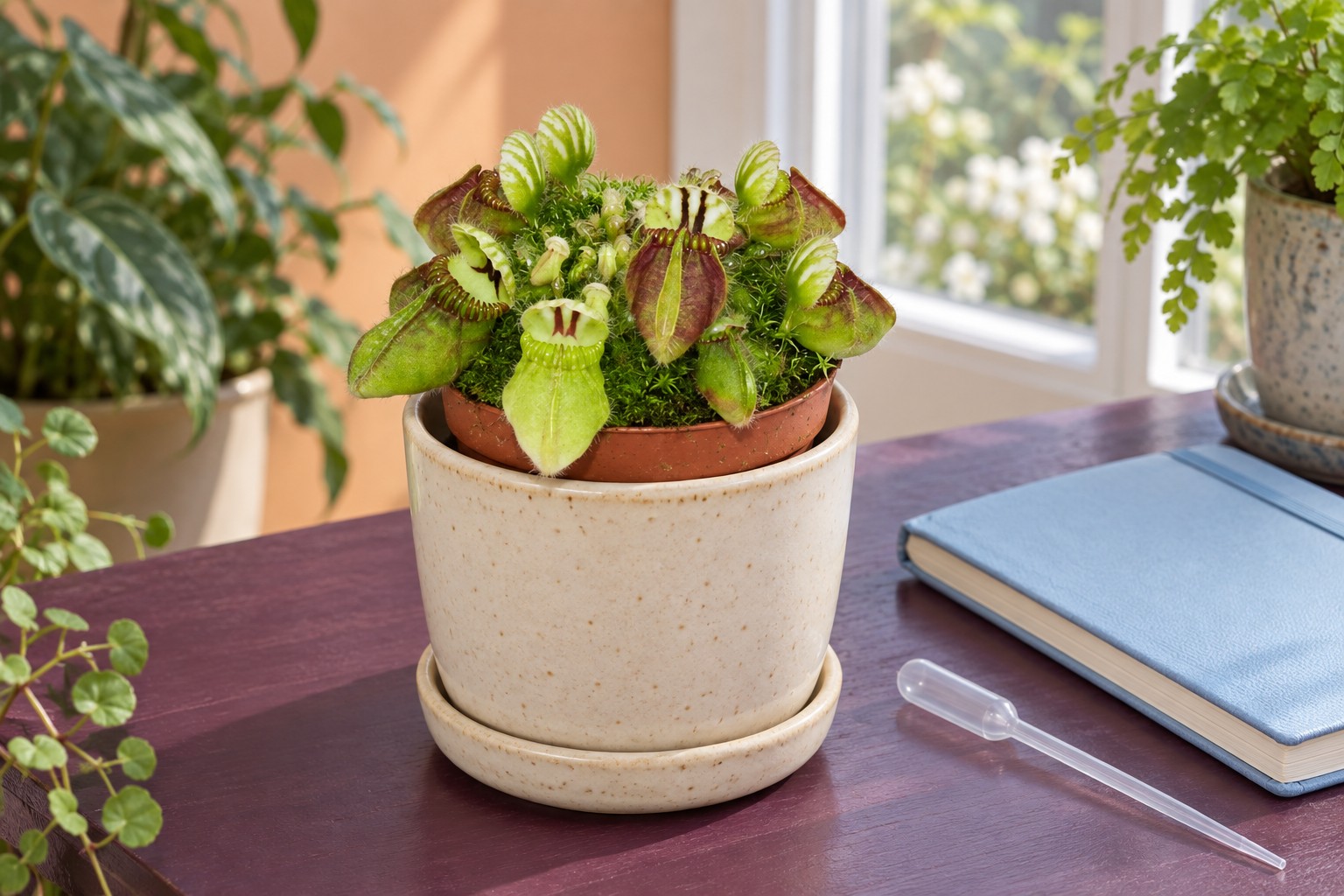
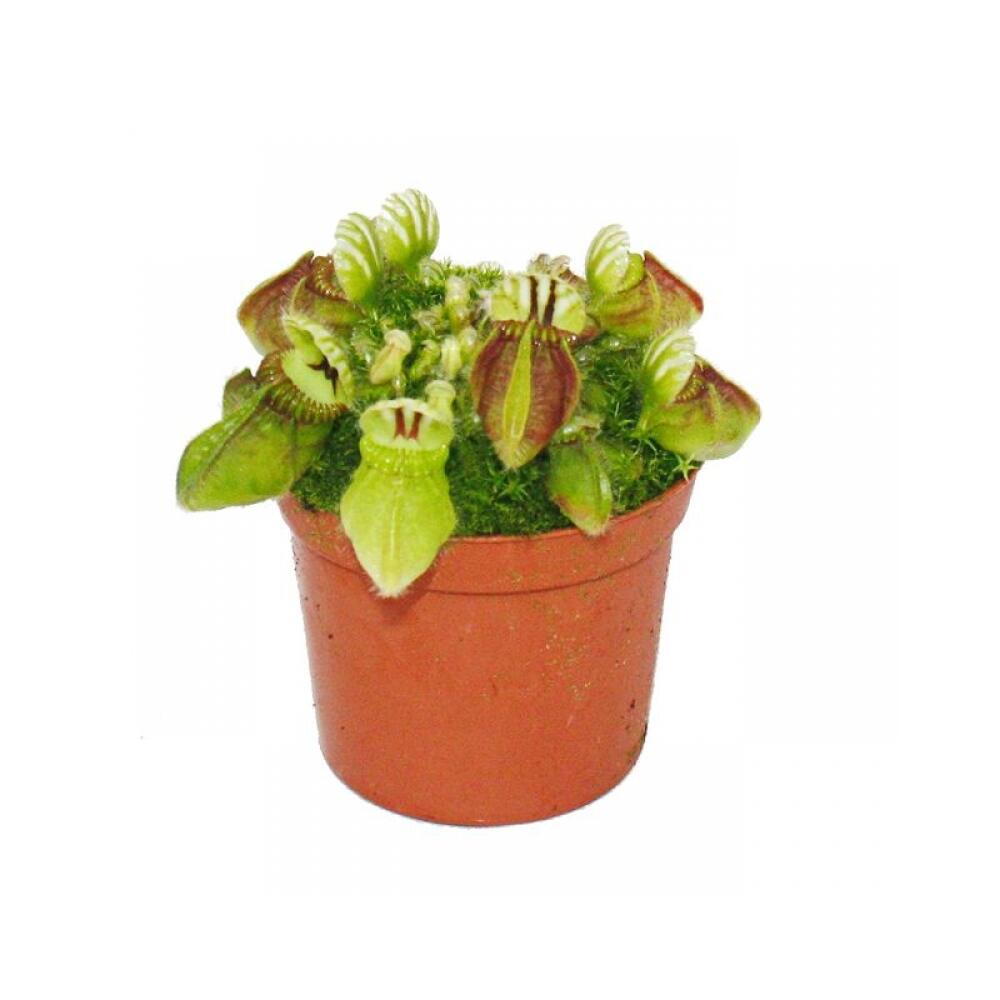
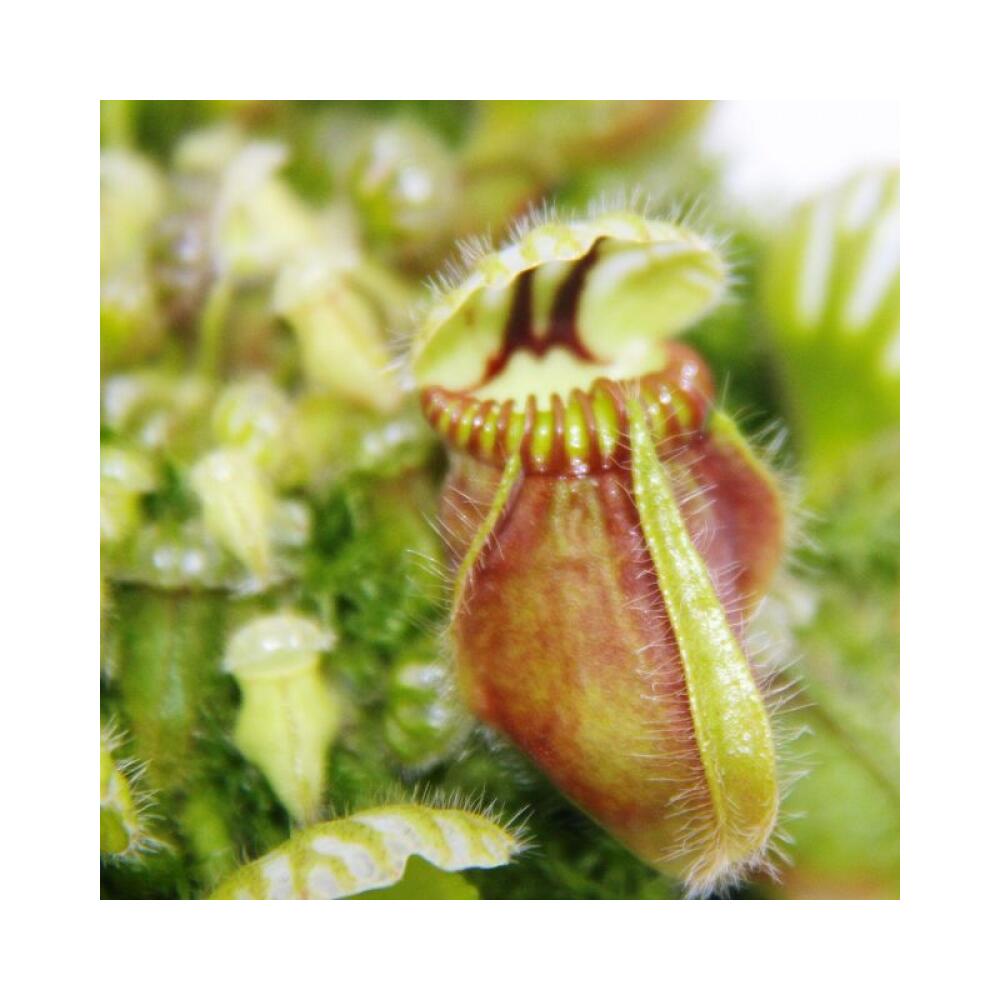
Cephalotus follicularis forms squat trapping pitchers with a prominent rim and a lid standing above. Pale areas in the lid belong to their distinctive structure. Traps sit near the ground, markedly differing from often hanging Nepenthes pitchers. Alongside trapping leaves, the plant makes ordinary flat leaves. It belongs to its own family Cephalotaceae and comes from southwestern Western Australia. Slow compact growth interests collectors but requires patience: new pitchers do not appear to order every week.
Recognise the small format
The shop offers it in a 9 cm pot with no specific delivery height. The original photograph shows a small low cluster. Neither guaranteed pitcher numbers nor a particular red colouring can be inferred. A bright place you can check without awkward reaching is sensible. After delivery, first check moisture and allow calm adjustment. Do not handle or open pitchers for play. Their lids and rims are living tissue, more sensitive than a decorative container.
Plenty of light and air without overheating
Very bright cultivation supports development and colouring. Acclimatise cautiously to more sun after transport. A greenhouse or plant light allows deliberate positioning; a closed hot glass container is no good replacement. Good air movement matters without exposing the plant to a cold draught. The shop states about 10 to 15 °C for a cooler winter phase. Keep bright and frost-free then too. Light, temperature and moisture must be considered together.
Moisture needs an airy partner
Use clean rainwater or suitable low-mineral water. Root space should stay moist but not turn boggy in dense airless compost. A small water reserve may work with a suitable sufficiently tall pot and loose mix. With heavy soil and very shallow containers, the same water height is not automatically suitable. Check actual moisture rather than blindly adopting another recipe. The crown remains well above water level. Water the compost and do not routinely fill small traps with water.
Cultivate low in nutrients and avoid unnecessary disturbance
A loose low-nutrient carnivore mix suits beginners. Avoid ordinary pre-fertilised potting compost and regular houseplant feeding. Specialist growers sometimes use particular nutrition and compost systems; these experiments are no necessary routine for a newly bought plant. Kitchen scraps definitely do not belong in pitchers. Do not repot continually; prepare carefully when needed. A suitably tall pot gives roots room and helps separate the plant base from the water reserve. That does not mean immediately putting a small plant into an enormous container.
Interpret ordinary leaves and changes correctly
If more flat leaves appear temporarily, that alone does not prove illness. Season and cultivation affect the ratio of leaf forms. Old pitchers do not live indefinitely either. Carefully remove entirely dead material and keep surroundings clean. New white deposits, softening bases or rapid collapse warrant targeted checking of ventilation and roots. Strong older clumps may be divided expertly; the young plant first needs undisturbed rooting. Observe fresh growth over several weeks rather than judging by every individual old pitcher.
One plant, several views
Good to know
Are normal flat leaves a bad sign?
No. Cephalotus forms both ordinary leaves and trapping pitchers. Their ratio may change.
Do pitchers hang as on Nepenthes?
No. Cephalotus pitchers grow close to the ground.
How tall is the plant offered?
The shop states a 9 cm pot but no fixed delivery height or pitcher number.
Should I put the pot as deeply as possible in water?
No. A small controlled reserve may suit; the crown stays above water and compost must be sufficiently airy.
Sources and editorial note
- Product and delivery contents: Exotenherz
- International Carnivorous Plant Society: care knowledge
- International Carnivorous Plant Society: cultivation experience
Sources checked: 15 September 2026. Product information and delivery contents follow the linked shop offer. Care has been checked against the stated specialist sources and remains subject to plant condition, position and season.