This plant at Exotenherz
Check the shop offer for current availability, price and what is included.
Check the shop for the price, current availability and what is included.
Your care table
| Topic | What to do | Why it helps |
|---|---|---|
| Light | Very bright; introduce direct sun gradually. | A young plant from sheltered cultivation may not tolerate sudden strong sun. |
| Water | During growth, water only after good root-ball drying. | Water reserves do not replace a healthy airy root space. |
| Drainage | Let all water drain and empty the outer pot. | Standing water may damage root and shoot bases. |
| Compost | Structurally stable freely draining cactus mix with mineral content. | Fine compacted compost stays wet too long in the small pot. |
| Feed | Moderately during active growth according to the product. | Pause during winter rest. |
| Winter | Bright and frost-free, watering considerably less often. | Cool wet roots are particularly at risk. |
| Spaces between shoots | Keep dry and free of coverings that remain wet. | The bases of the closely packed little columns need to dry well. |
| Checks | Watch for mealybugs, unusually thin new growth and soft dark patches. | Early checks distinguish insufficient light or root problems from normal ageing. |
Check the compost and pot weight. The care table explains how far the compost may dry.
Water only when needed. The water should reach the root ball without spilling over the rim.
Remove surplus water from the saucer or cachepot. Then return the plant to a suitable position.
Many small columns rather than one trunk
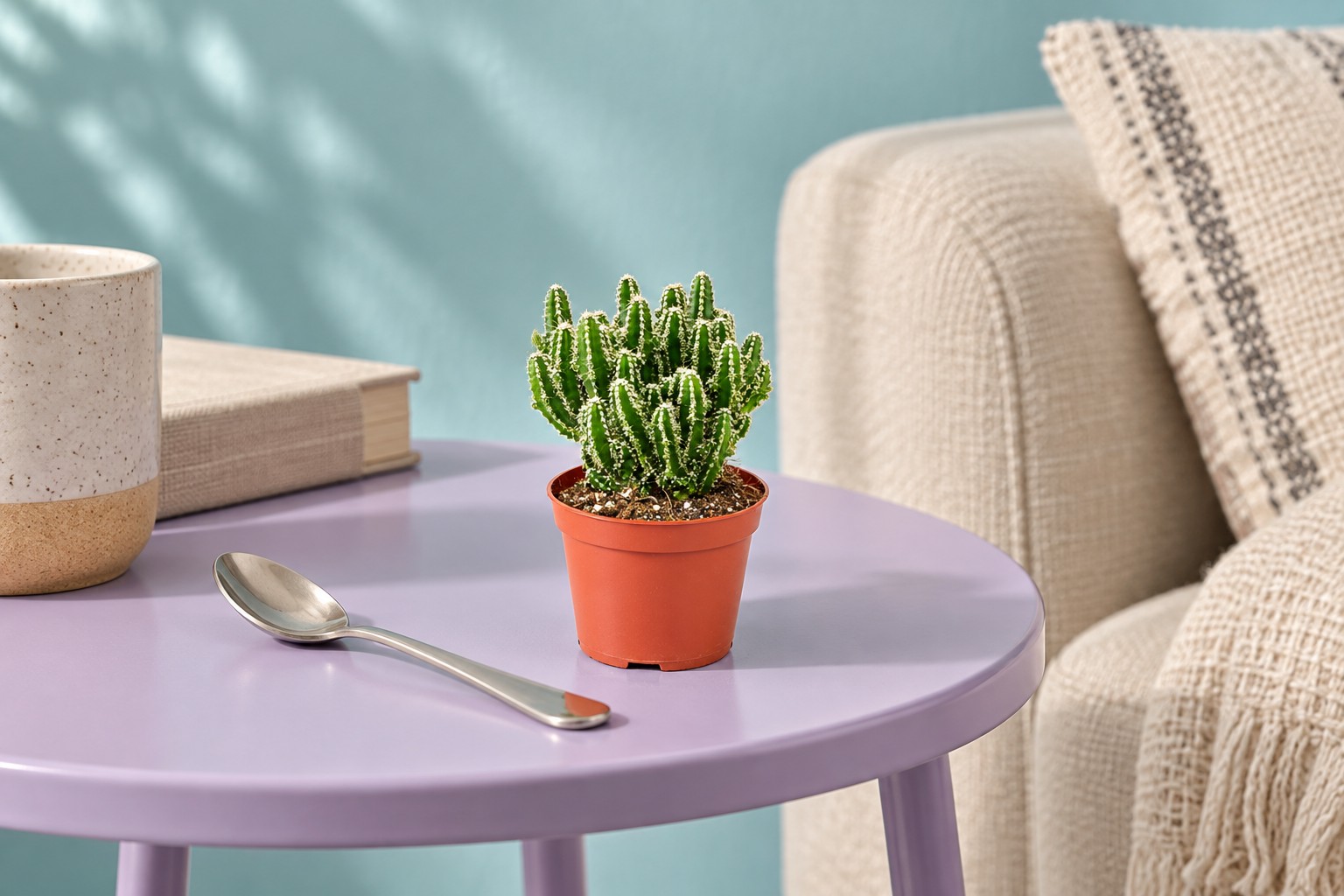
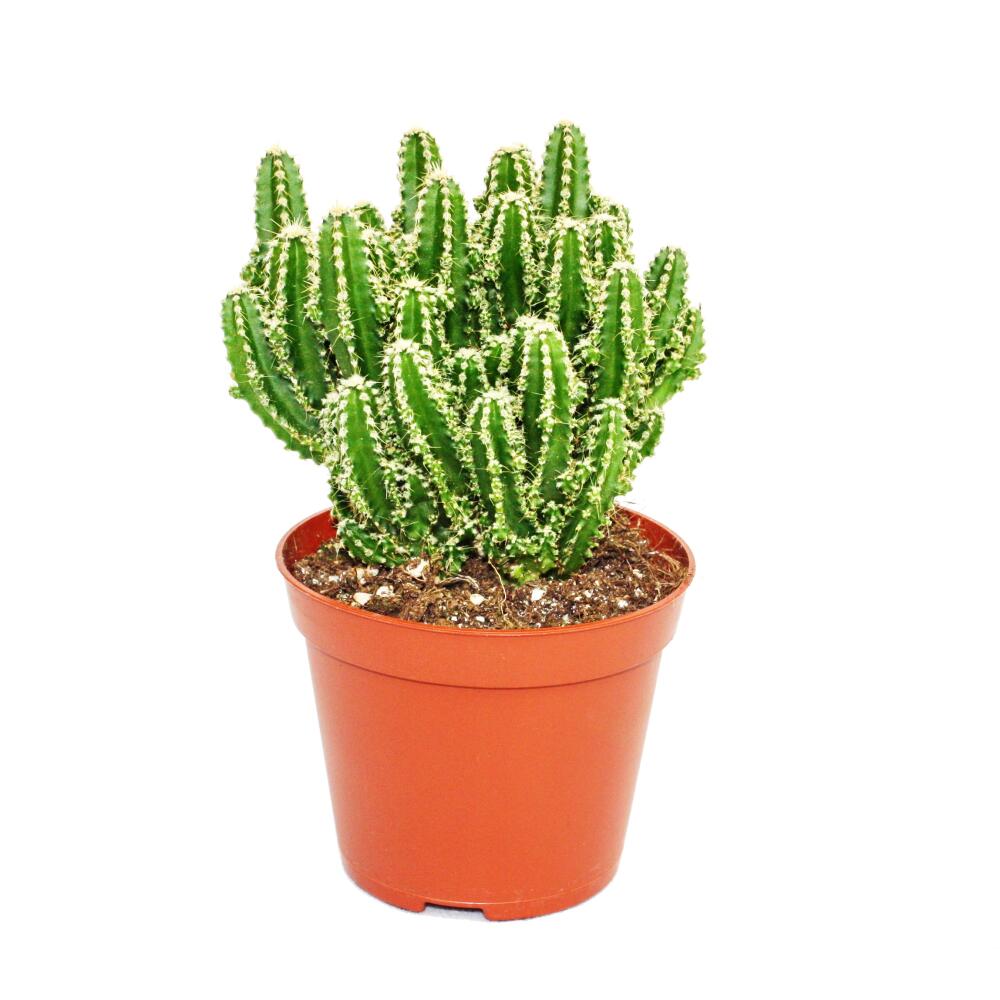
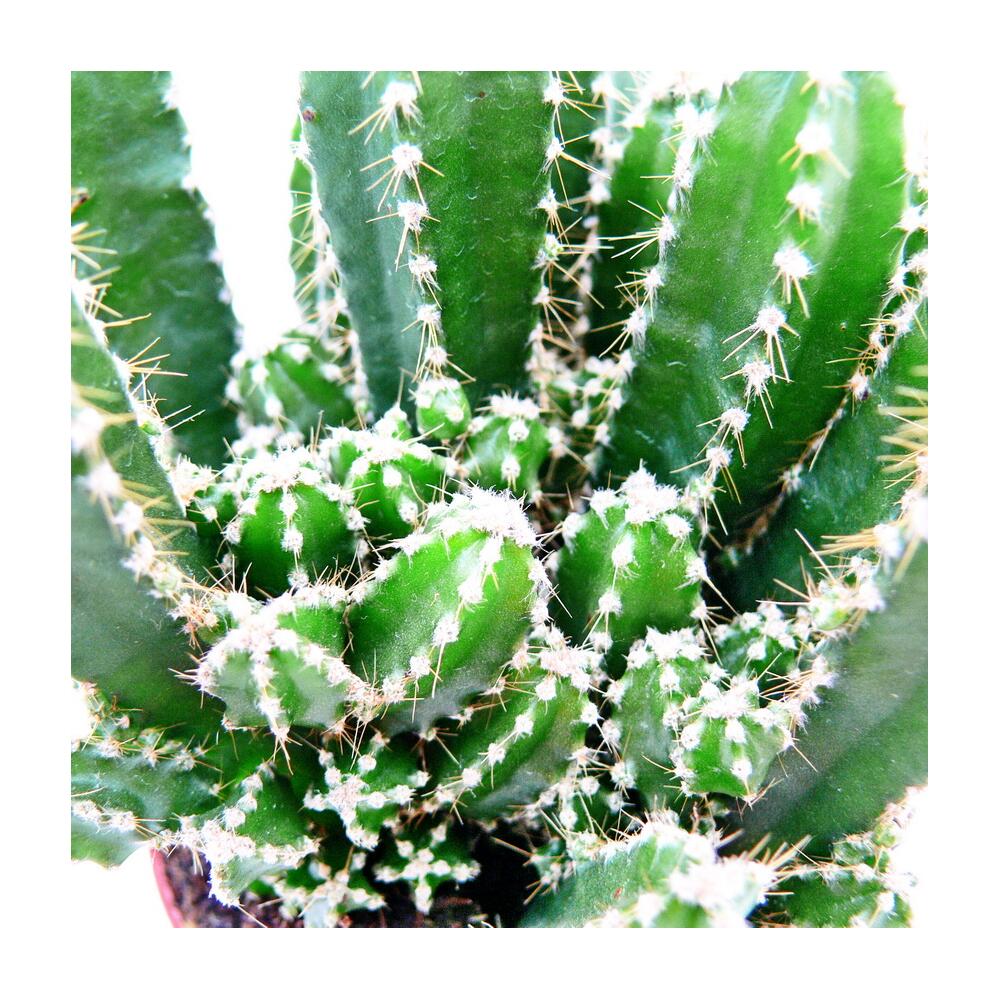
The original images show closely spaced short green shoots with longitudinal ribs. Pale areoles and small spines give the surfaces their fine markings. Shoots of different heights suggest a tiny forest of columns. The shop uses the name Cereus floridianus. However, this trade designation does not allow a secure identification with similarly named Acanthocereus species or other forms sold as Fairy Castle. The portrait therefore deliberately keeps the documented trade identification. It does not invent a precise wild origin or a particular botanical clone from it.
The offer remains a manageable size
The offer specifies a 5.5 cm pot and approximately 8 to 10 cm overall height for a young plant. This green-finger cactus is therefore genuinely small. Its many columns must not suggest a large mature cactus collection in the image. The number and arrangement of shoots can naturally vary. A small sunny shelf or a bright secure surface offers space, provided sufficient light actually reaches it. Decoration and outer pot are part of the scene styling. The linked current shop offer determines what is supplied.
Compact new growth needs sufficient light
Place the cactus in very bright light and gradually acclimatise it to direct sun after shipping. Closely spaced shoots can become longer, thinner and paler in insufficient light. More fertiliser does not solve this problem. Good ventilation helps on hot days behind glass; the small root zone should not overheat unnecessarily. A warm outdoor position sheltered from rain is possible in summer. Without secure species identification, no particular frost tolerance is assumed. Bring it indoors in time before cold nights and provide a bright frost-free winter position.
Check the whole root ball, not just the surface
During growth, water after thorough drying and let excess water drain completely. Organic material that remains damp should not sit between the many shoots. A dry upper layer can conceal a root ball still wet below. Pot weight helps assess the difference. In winter, with lower consumption, water much more cautiously. Frequent small sips may keep the base constantly damp without supplying the roots evenly. A suitable alternation of thorough watering and drying is easier to manage.
Make room for roots and air
Use a freely draining, structurally stable cactus mix and a pot with drainage holes. A mineral addition can improve aeration. Repot only when roots use the existing space or the substrate has lost its structure. The new pot need not be much larger. Work with suitable aids so small spines neither injure hands nor are pressed into the plant by strong pressure. Fertilise moderately during active growth and pause in dormancy. Do not cover the dense shoot cushion with wet moss for a lusher appearance.
Healthy growth rather than expectations of quick flowers
The young offer is interesting primarily for its structure. A particular future flower colour, edible fruit or fixed ultimate size cannot reliably be promised from its uncertain trade identification. Observe new shoots and inspect narrow spaces for mealybugs. Dry firm discolouration at older bases need not mean the same as dark shoots quickly becoming soft. If rot is suspected, check watering and roots. Healthy parts can be preserved vegetatively if necessary; the small plant need not be divided for normal care.
One plant, several views
Good to know
Is Cereus floridianus securely identified botanically?
No. This is the documented shop name. Similar-sounding names are not sufficient for a confirmed species identification.
Why are thin pale tips growing?
The position is often too dark. Check light and root condition before adding more fertiliser.
How large is it on delivery?
The shop specifies approximately 8 to 10 cm overall height in a 5.5 cm pot. Shoot numbers may vary.
Are fruits or flowers guaranteed?
No. This young ornamental plant offer is presented for its growth form.
Sources and editorial note
Sources checked: 15 September 2026. Product information and the contents of delivery follow the linked shop offer. Care advice was checked against the cited specialist sources and should still be adapted to the plant’s condition, position and season.