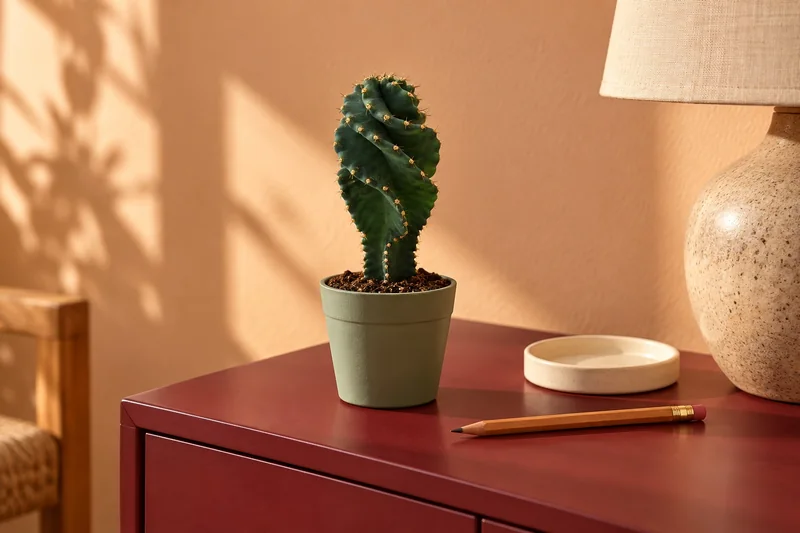
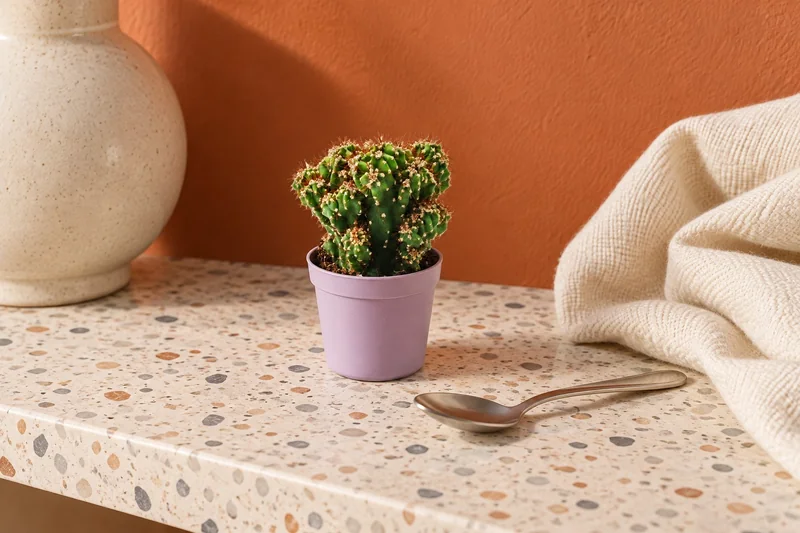
This plant at Exotenherz
Check the shop offer for current availability, price and what is included.
Check the shop for the current price, availability and offer contents.
Your care table
| Topic | What to do | Why it helps |
|---|---|---|
| Position | Place somewhere very bright and accessible. | A dark niche is not a permanent growing position. |
| Sun | Acclimatise gradually after transport. | Do not force new conditions abruptly. |
| Root ball | Let it dry noticeably before watering. | Check beneath a gravel layer too. |
| Watering | Water onto the soil and allow to drain. | Do not collect water in rib recesses. |
| Compost | Use free-draining cactus compost. | Maintain air and water drainage. |
| Container | Repot appropriately according to actual space needs. | Avoid an unnecessarily large volume of wet soil. |
| Nutrients | During growth follow the cactus fertiliser label. | Little growth does not call for a blanket extra dose. |
| Winter | Bright and frost-free, with reduced supply. | Continue observing condition and root ball. |
Check the compost and pot weight. The care table explains how far the compost may dry.
Water only when needed. The water should reach the root ball without spilling over the rim.
Remove surplus water from the saucer or cachepot. Then return the plant to a suitable position.
A broad rib leads the eye around the plant
The small spiral cactus looks slightly different from every angle. Its strong ribs do not simply run vertically upwards, but twist around the blue-green body. Small pale areoles and short spines follow that movement. Even a small young plant can look like a living sculpture on a bright table. In the shop it is called Cereus jamacaru Spiralis. The portrait retains this name and describes the actual pictured twisted form without turning a decorative impression into a new botanical species.
The young spiral stays easy to survey
The offer states an 11 cm pot, approximately fifteen to twenty centimetres total height and an approximate age of three to four years. Such an age statement does not guarantee a particular amount of growth next season. The size instead explains why just a few turns of the ribs define the whole portrait. Carry the plant by its container and choose a place where nobody constantly brushes past the spines. A bright reading table or open shelf can be attractive if the plant actually receives sufficient daylight there.
Brightness supports the shape of new growth
The permanent position should be very bright. After transport increase stronger direct sun slowly so the existing body is not abruptly exposed to different conditions. Behind hot glass, also consider temperature and air movement. The rib pattern does not replace this position check. Observe the fresh tip and record a move in your plant book. When several care steps change strongly at once, it becomes harder to tell afterwards what really helped the plant. Calm acclimatisation is particularly practical here.
The ribs store water; the soil decides the next watering
Allow the root ball to dry noticeably between waterings. During active growth, then water slowly onto the soil until the root zone is supplied; excess drains away. Do not collect water in body recesses. Check the pot, not just its decorative surface. A gravel layer can look dry while moisture remains underneath. Consumption often decreases in winter or weak light. The cactus therefore receives no extra water simply because a summer watering date appears in the calendar.
Choose the next pot according to the roots
Free-draining cactus compost and container holes help distinguish wet and dry phases. Repot when space is genuinely needed, preferably at the start of growth, into a suitably larger stable container. The spiral needs no huge unrooted soil volume. Treat the natural blue-green surface carefully and do not rub it to a shine. During growth, a suitable cactus fertiliser can be used according to its label. Check areoles and lower ribs without turning or holding the plant directly by its body for every inspection.
Even a sculptural cactus keeps an annual rhythm
In winter the spiral cactus stays bright and frost-free; water follows its actual rest and root-ball condition. No specific flowering time or later fixed height of the trade form is promised for the young article. A photograph from above is a particularly useful complement to the side view in your plant book: it reveals the path of the broad ribs. Repeat both angles after a growth phase. This lets you observe development without treating every small irregularity as a fault in a supposedly perfect screw.
One plant, several views

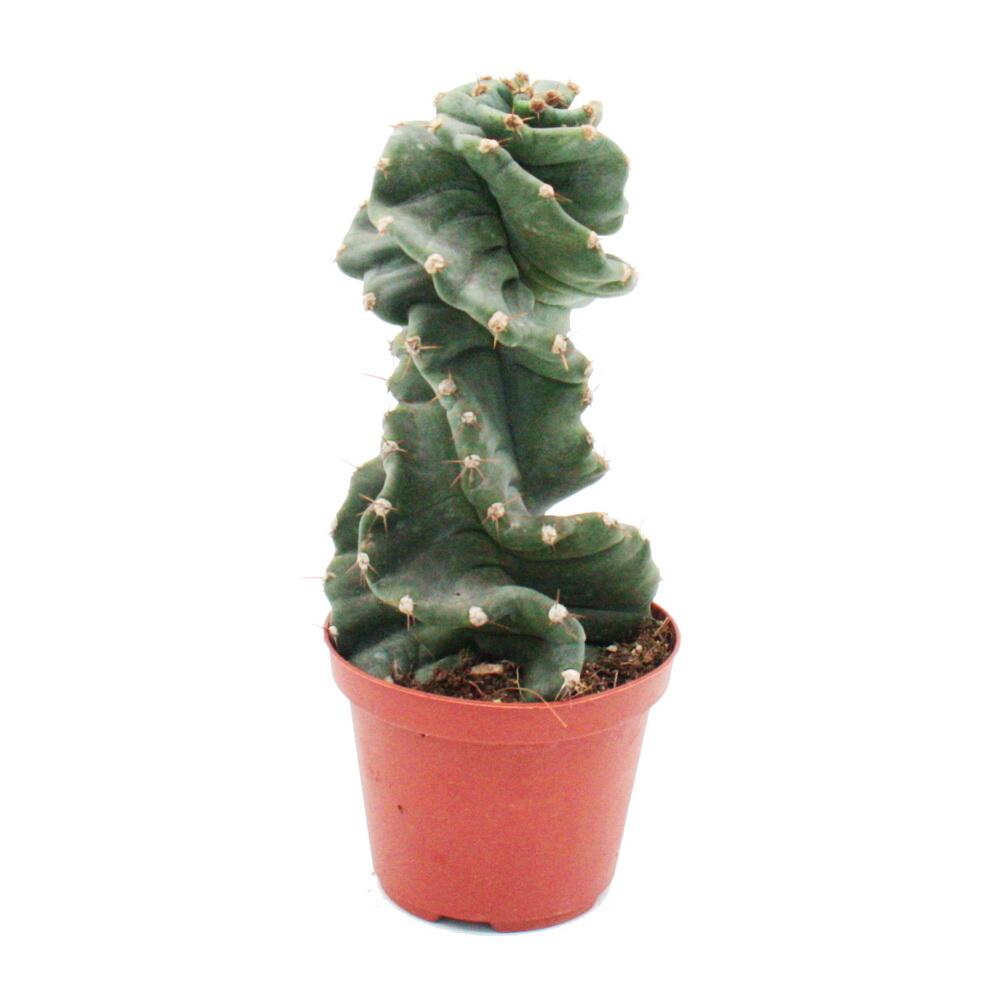

Good to know
What does Spiralis mean?
The trade name describes this form’s conspicuously twisted ribs.
Is 20 cm its eventual mature size?
No, the stated total height refers to the young assortment plant including its pot.
Does the age promise a growth speed?
The shop states an approximate age; future growth depends on growing conditions.
Can I water into the spiral?
Water onto the soil, then allow excess to drain freely.
Should I polish the surface?
Preserve the natural surface and handle it carefully.
Sources and editorial note
- Exotenherz: offer and original photographs (03.10.2026)
- RHS – container cacti, light and care according to need (03.10.2026)
- University of São Paulo – Cereus jamacaru, botanical context (03.10.2026)
Shop offer, article number, GTIN, availability and original images checked directly on 02.10.2026; specialist acceptance on 03.10.2026. Specialist sources read directly. SKU, original images, dimensions and orderability checked directly in the shop on 03.10.2026. Relevant specialist passages read. Shop name and botanical relationship remain separately identifiable. Images checked against the originals; no Wawi, server or tool changes.