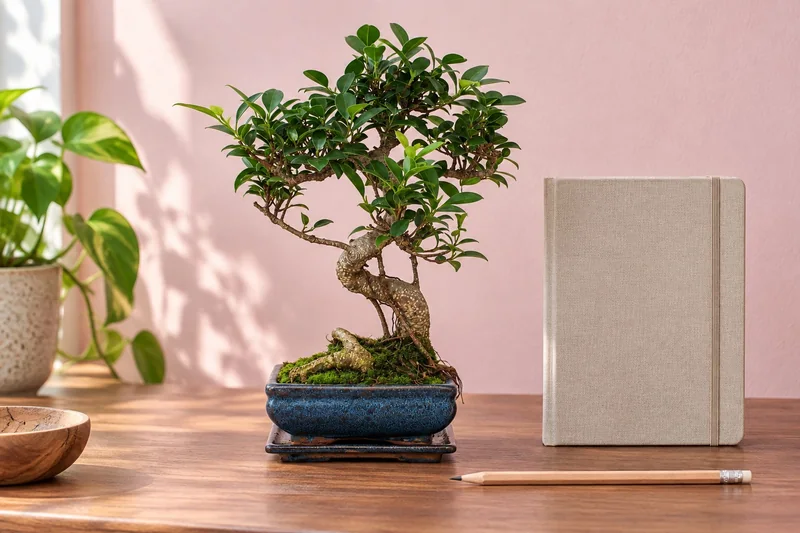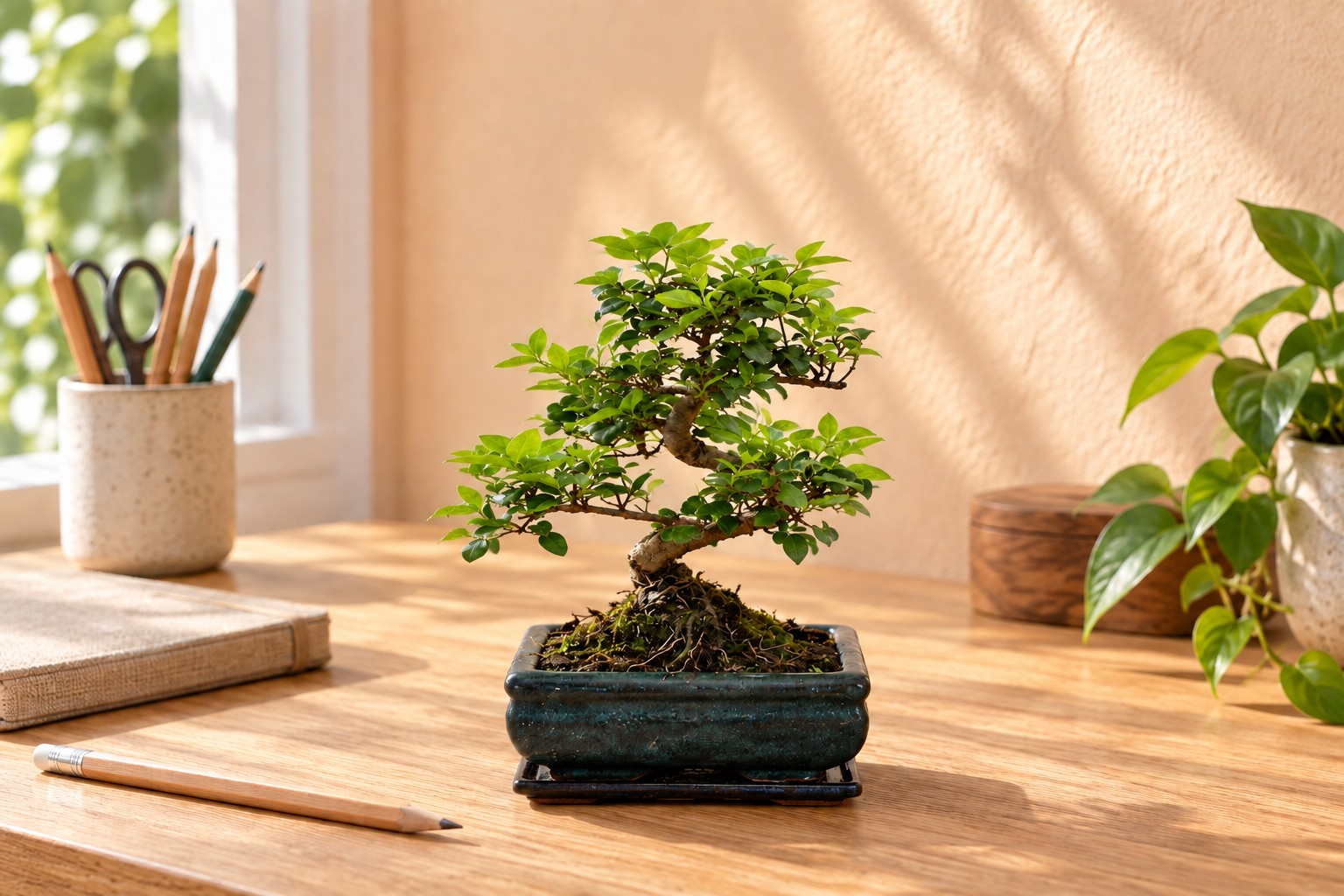
This plant at Exotenherz
Check the shop offer for current availability, price and what is included.
Product details, availability and delivery information in the shop.
Your care table
| Topic | What to do | Why it helps |
|---|---|---|
| Light | Very bright, with careful acclimatisation to direct sunshine. | Long weak shoots may indicate insufficient light. |
| Water | Water thoroughly as the surface starts to dry, then drain. | The shallow bowl has little reserve; avoid complete drying. |
| Compost | Loose, structurally stable bonsai mix and clear drainage holes. | Roots need both water and air. |
| Feeding | Moderately during active growth, following instructions, onto a moist root ball. | Do not initially feed when growth stops or roots are damaged. |
| Summer | After acclimatisation, a bright sheltered outdoor position is possible. | Warmth and wind increase water needs markedly. |
| Winter | Bright, rather cool and frost-free; keep checking moisture. | Less growth reduces water use but does not eliminate it. |
| Pruning | Selectively shorten healthy shoots; check wire for cutting in. | The crown shape develops through repeated small interventions. |
| Inspection | Look regularly at leaf undersides, root ball and saucer. | Pests and care mistakes are easier to narrow down early. |
Check the compost and pot weight. The care table explains how far the compost may dry.
Water only when needed. The water should reach the root ball without spilling over the rim.
Remove surplus water from the saucer or cachepot. Then return the plant to a suitable position.
A tree that responds to care
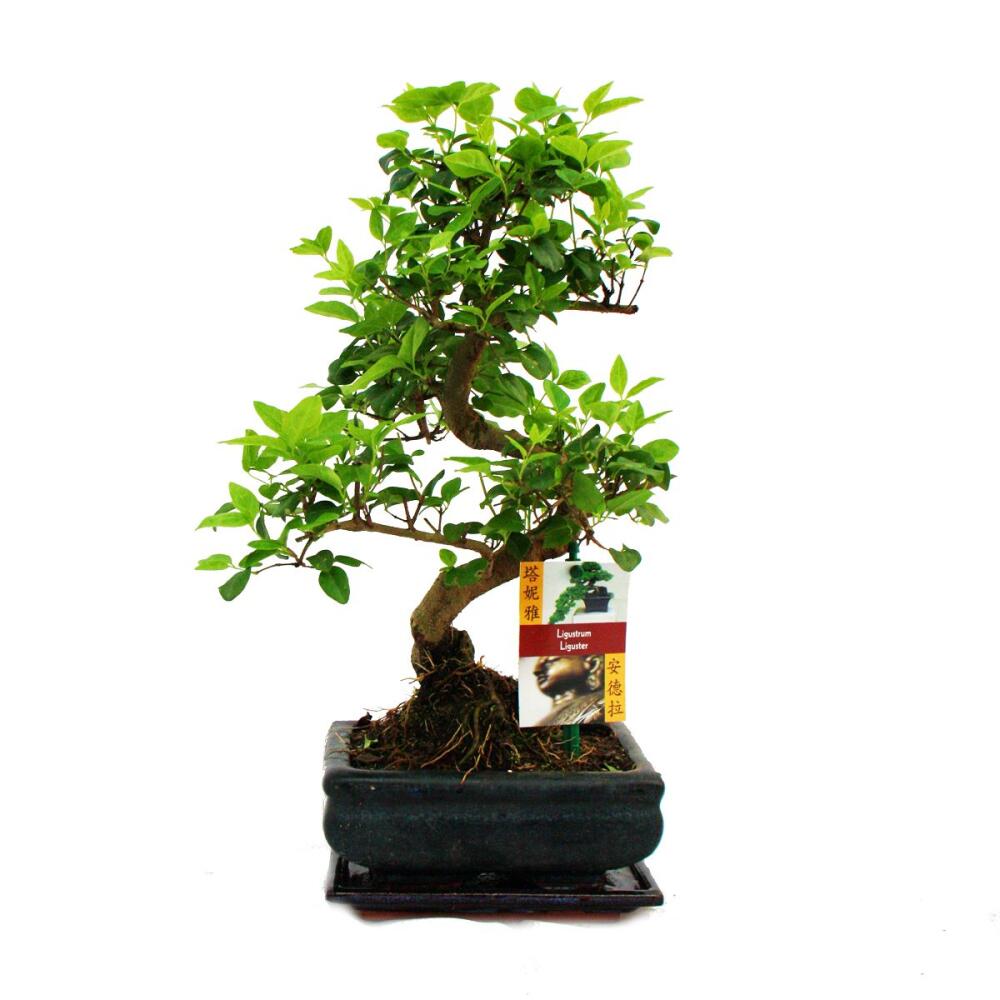
What we like about Chinese privet is the visible contrast between old, quiet trunk shapes and young, fresh shoot tips. The small opposite leaves suit bonsai shaping well. Botanically, the species is Ligustrum sinense; the spelling sinensis also occurs in the trade. Its small size results from cultivation, not a separate dwarf-tree species. Observing its growth quickly teaches when the tree has strength and when it first needs rest.
An individual specimen for a bright favourite position
The offer describes a bonsai approximately six years old, around 22 cm total height, in a bowl approximately 13 × 8 cm. Trunk line, crown structure and bowl colour may differ from the photograph. Its silhouette looks good on a bright desk or low plant stand, provided enough daylight actually reaches it. A dark decorative niche is unsuitable even if the small tree fits perfectly visually.
Consider light and seasons together
A bright position with some tolerable direct sun encourages short strong shoots. Acclimatise the tree gradually to summer outdoors, initially sheltered from wind and without hot midday sun. For this offered indoor bonsai specimen, we plan bright, rather cool, frost-free overwintering. The winter hardiness of other privet species is not a reliable measure for its small root ball. Above running heating, the bowl dries particularly quickly.
Water before shoot tips droop
Check the compost daily in warm weather. When the surface no longer feels moist, water slowly in several passes until water emerges below. Then empty the saucer. Hanging leaves are a warning, not a desired watering indicator: damaged wet roots can also cause wilting. Always check the root ball before watering again. A short immersion may help compost that wets poorly; a rigid weekly bath does not replace moisture checking.
Maintain shape with small cuts
Let a healthy privet grow first, then selectively shorten extended shoots rather than continually removing every new tip. This keeps branching understandable. Wire must be checked regularly for pressure marks because young bark is sensitive. A loose bonsai mix with reliable drainage and occasional root inspection are part of care. Schedule repotting and root pruning for a suitable growing phase; do not simultaneously reshape a recently weakened tree heavily.
Understand yellow leaves and unwelcome visitors
With unusual leaf loss, we first compare light, root-ball moisture and the latest position change. Very hard irrigation water can make nutrient supply harder. Nevertheless, fertiliser is not an immediate answer to every yellow leaf: a wet or dried-out root ball must function again first. Examine leaf undersides and branch bases for aphids or other sap-feeding pests, sticky coatings or fixed scales. A single controlled care step is easier to assess than simultaneously moving, repotting, pruning and feeding heavily.
One plant, several views
Good to know
Is this privet winter-hardy?
Frost-free overwintering is planned for the offered bonsai. A shallow bowl and previous cultivation make blanket hardiness statements unreliable.
Should I wait until its leaves droop?
No. Check the compost beforehand. Drooping leaves may indicate either drought or problems in an overly wet root ball.
Does it need a water bath every week?
No. Moisture and how readily the compost wets are decisive. Careful watering from above followed by drainage is normally sufficient.
Does the bonsai stay this small by itself?
Its shaped form needs ongoing care. Without targeted pruning, shoots lengthen; root space also needs occasional inspection.
Sources and editorial note
- Product and delivery contents: Exotenherz
- NC State Extension: plant profile
- Bonsai Empire: species-specific bonsai care
Sources checked: 16 September 2026. Product information and the contents of delivery follow the linked shop offer. Care advice was checked against the cited specialist sources and should still be adapted to the plant’s condition, position and season.