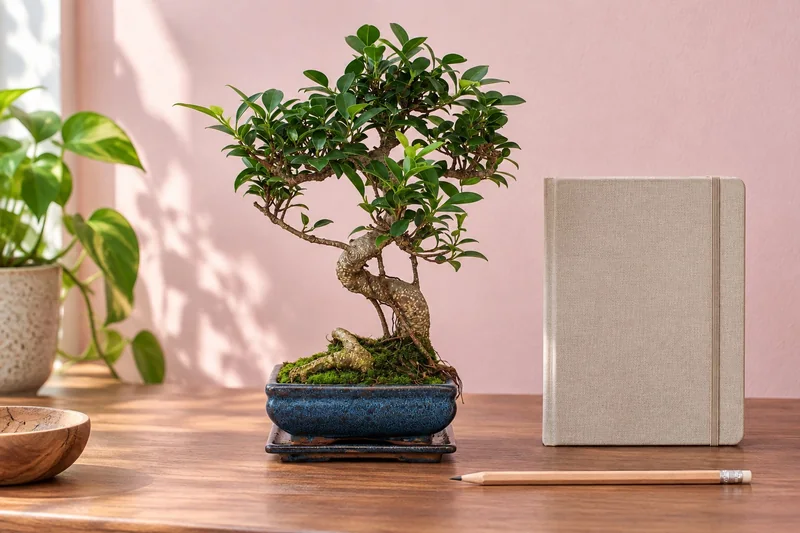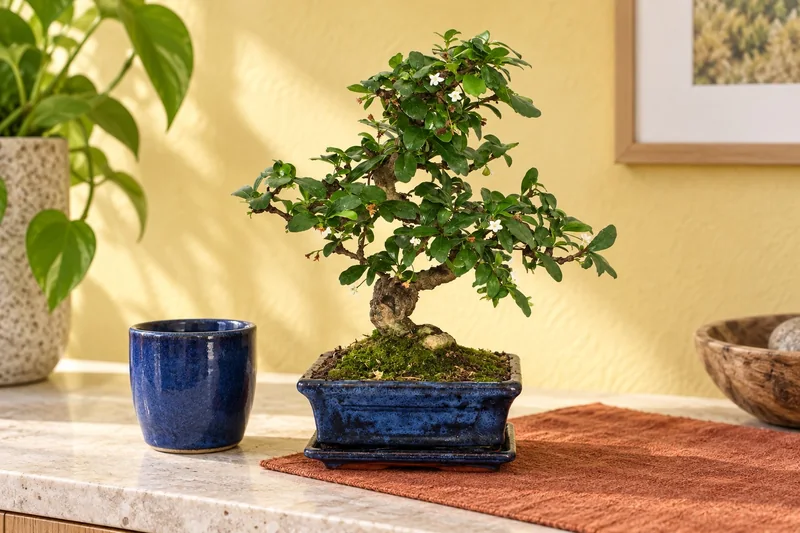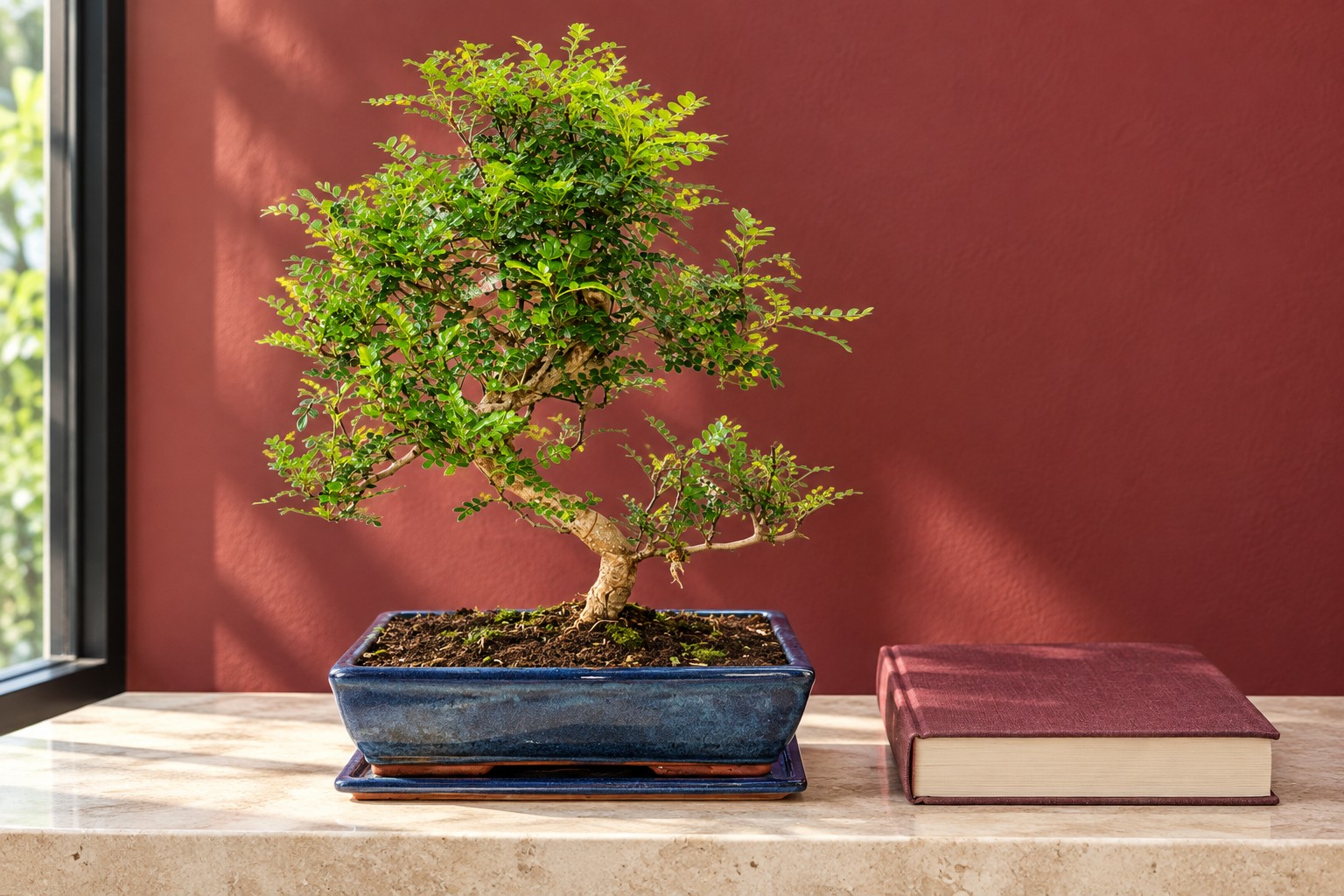
This plant at Exotenherz
Check the shop offer for current availability, price and what is included.
Check the shop for the price, current availability and what is included.
Your care table
| Topic | What to do | Why it helps |
|---|---|---|
| Light | Very bright; avoid cold draughts and radiator proximity. | Compact new growth needs daylight. |
| Water | Water thoroughly after slight surface drying. | Small bowls hold little reserve. |
| Saucer | Pour away excess. | Roots should not stand in water. |
| Winter | Keep bright and frost-free pending species clarification. | Trade name and sources describe different winter cultivation. |
| Feed | Dose only according to growth and label. | Accessory quantity does not determine actual need. |
| Pruning | Selectively shorten long new shoots, retain foliage. | The trained crown still needs energy. |
| Repotting | In spring according to root-ball condition; preserve roots. | Several strong interventions together weaken the tree. |
| Inspection | Regularly inspect wire, leaves and soil. | Constrictions and care mistakes show early. |
Check the compost and pot weight. The care table explains how far the compost may dry.
Water only when needed. The water should reach the root ball without spilling over the rim.
Remove surplus water from the saucer or cachepot. Then return the plant to a suitable position.
A tree with many small views
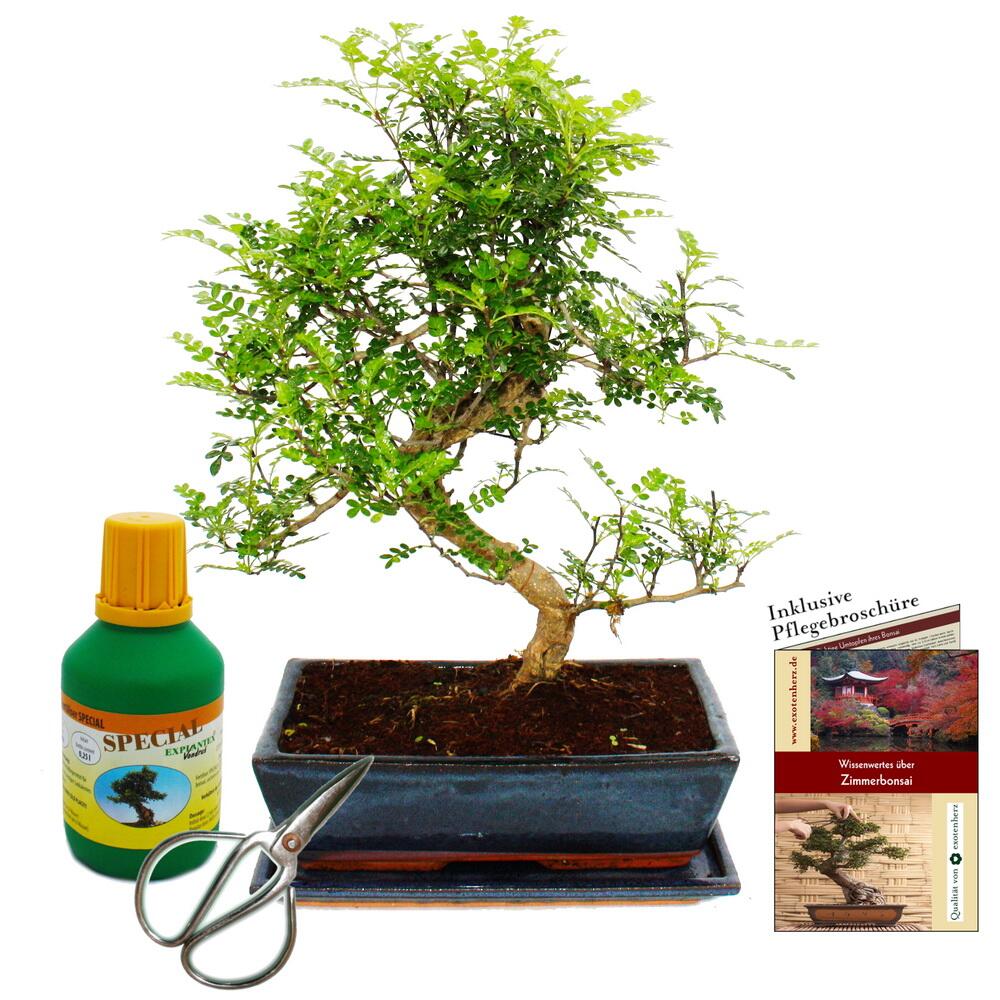
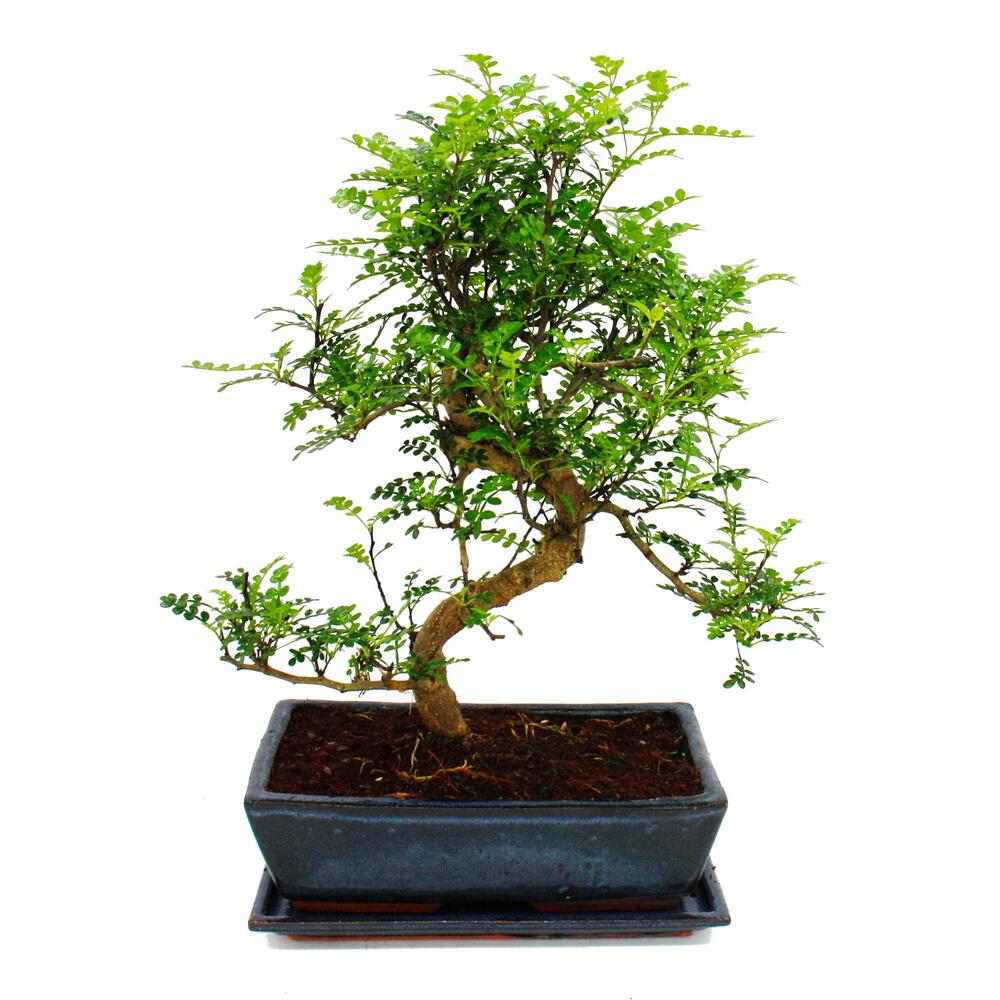
Finely pinnate leaves reveal the curved trunk well. This combination of foliage and open gaps is precisely what makes a pepper bonsai appealing. The offer describes an approximately twelve-to-fifteen-year-old tree with around 40 to 50 cm overall height. According to the shop, the gift set includes a matching saucer, 250 ml bonsai feed, bonsai scissors and a care brochure. Bowl width is given as approximately 28 to 30 cm; detailed dimensions vary within the product page. Trunk form and bowl colour can differ.
Why we treat the botanical name cautiously
The shop calls the tree Zanthoxylum piperitum. The RHS describes the true botanical species as a deciduous hardy shrub. In bonsai trade, however, plants requiring frost-free care are frequently offered as pepper bonsai; this offer’s instructions also describe a bright warm indoor position. A photo cannot reliably resolve these differences. This portrait therefore gives no general frost clearance. Until clearly identified, bright frost-free cultivation applies. The plant is not black pepper and is explicitly treated here as an ornamental bonsai.
A bright position is part of its design
A bonsai does not live on its small shape alone. New leaves need plentiful daylight, preferably near suitable bright glazing. A dark decorative table in the middle of a room may offer too little long term. After acclimatisation, a sheltered outdoor place is possible in the warm season. Avoid sudden sun after prolonged indoor cultivation. In winter pay particular attention to light and distance from radiators. For the offered indoor-bonsai form, a bright frost-free place around 16 to 23 °C is a cautious guide pending species clarification.
Regularly read the shallow root ball
Check moisture in the root area frequently, even daily in warm windy weather. Water thoroughly again only once the surface has dried slightly. Water must reach compost and drain through holes. It must not permanently remain in the saucer. A rigid rule such as twice a week does not fit every bowl and season. A dried root ball may initially take water poorly; then gently water in several passes and check penetration. Permanent weekly immersion without first checking moisture is not compulsory.
Small care steps preserve character
Allow new shoots to build strength first, then selectively shorten to the desired shape. Leave sufficient healthy foliage. Do not fully defoliate as a beginner’s measure. Regularly check existing wire for constriction and remove correctly when needed. Match feed to growth and label; included feed is no reason for a high dose. At spring repotting assess the root ball and work only moderately on healthy roots. A structurally stable bonsai mix with good drainage supports supply. Plan major styling work separately.
Observe leaf fall first, then act
Moving, lack of light, dry roots or wetness may cause leaf loss. Seasonal behaviour also depends on the actual species. Do not infer the same diagnosis from every falling leaf. Check moisture, light, pest traces and changes over several days. Do not immediately cut firm branches. Before relying on hardiness or choosing a garden place, clarify tree identity. Fragrant leaves and the name Szechuan pepper also do not mean this ornamental offer should be used as kitchen spice.
One plant, several views
Good to know
Is this pepper bonsai reliably hardy?
No, that cannot be inferred from the trade name. True Z. piperitum and commercial forms described as indoor bonsai are cultivated differently. Keep frost-free until identified.
Can I eat its leaves or fruits?
The offer is treated here as ornamental bonsai. No permission to consume this exact plant is given.
Is the pictured bowl colour guaranteed?
No. The shop notes different bowl colours and individual tree shapes. Detailed bowl dimensions are also not consistent on the product page.
Must I immerse the tree every week?
No. First check actual moisture. Thorough watering followed by drainage is a regular method.
Sources and editorial note
- Product and delivery contents: Exotenherz
- Bonsai Empire: species-specific bonsai care
- Royal Horticultural Society: plant and care knowledge
Sources checked: 15 September 2026. Product information and delivery contents follow the linked offer. Care has been checked against the stated specialist sources and remains subject to plant condition, position and season.