This plant at Exotenherz
Check the shop offer for current availability, price and what is included.
Check the shop for the current price, availability and offer contents.
Your care table
| Topic | What to do | Why it helps |
|---|---|---|
| Position | Choose sun or light partial shade and cool root space. | Flowering light and a sheltered base can be combined. |
| Arrival | Check rootball moisture and gently free thin stems. | Stems break more easily than the rootball. |
| Planting | Set rootball top about 5–8 cm below soil surface. | Large-flowered clematis can reshoot from underground. |
| Support | Provide fine trellis and distribute stems loosely. | Leaf stalks need something to grip. |
| Water | Check the root zone and water thoroughly when needed. | Small delivery pots and containers dry faster than beds. |
| Container | Plan at least about 45 cm deep and wide with open drainage. | Long-term root space exceeds the delivery pot. |
| Feeding | Care for bed soil; use suitable container fertiliser by label. | More feed does not replace even rootball moisture. |
| Pruning | Retain old framework in spring; trim some shoots after first flowering. | Group 2 flowers early on previous-year wood. |
| Winter | Protect containers from severe root frost and constant wetness. | A small pot is more exposed than garden soil. |
For young plants, feel the soil directly at the root ball. The surface and deeper soil may have different moisture levels.
Water thoroughly after planting; later, water according to the soil, weather and establishment rather than a fixed calendar.
Avoid standing water. For plants in containers, also check that water runs out of the drainage hole.
White stands out through its dark centre
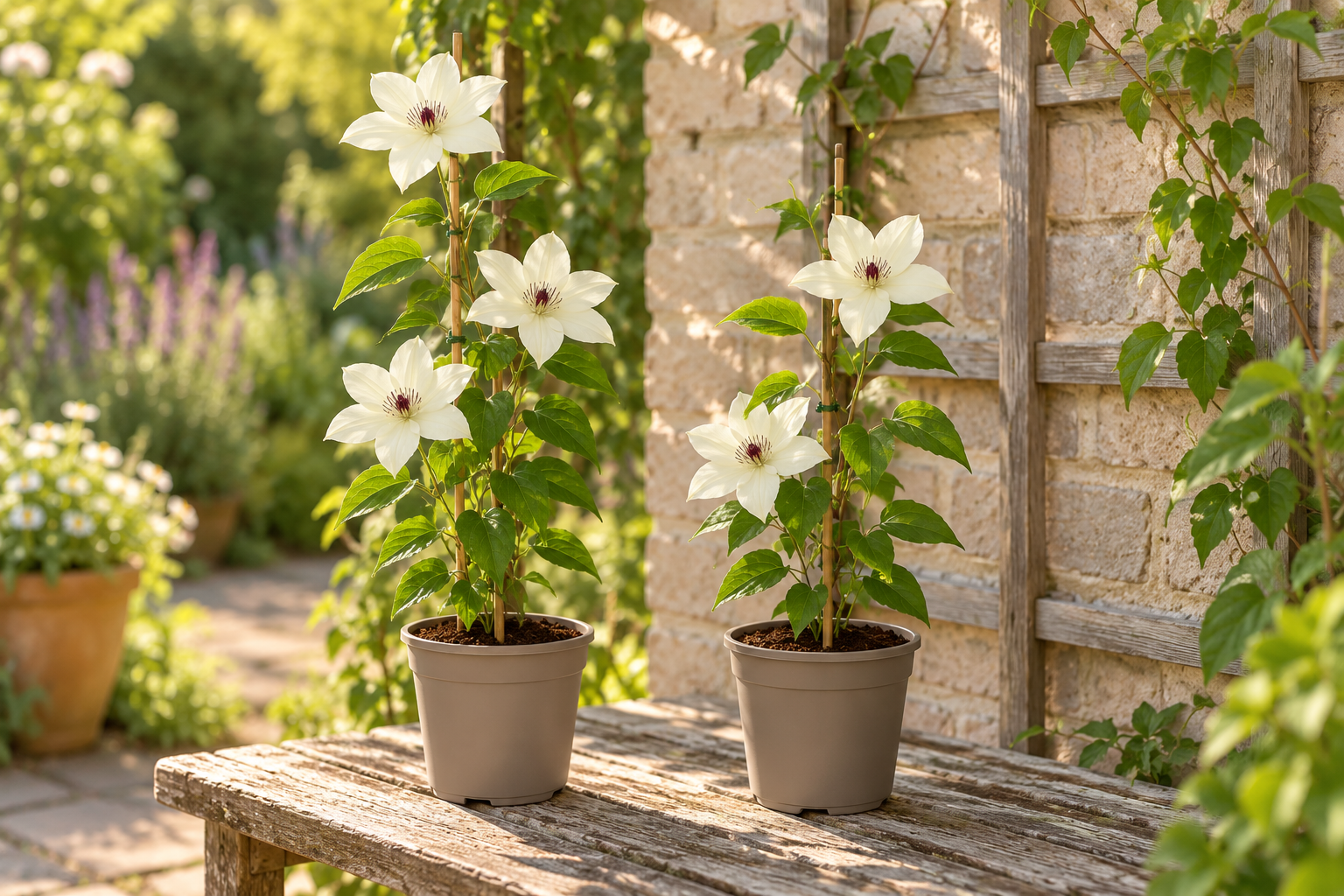
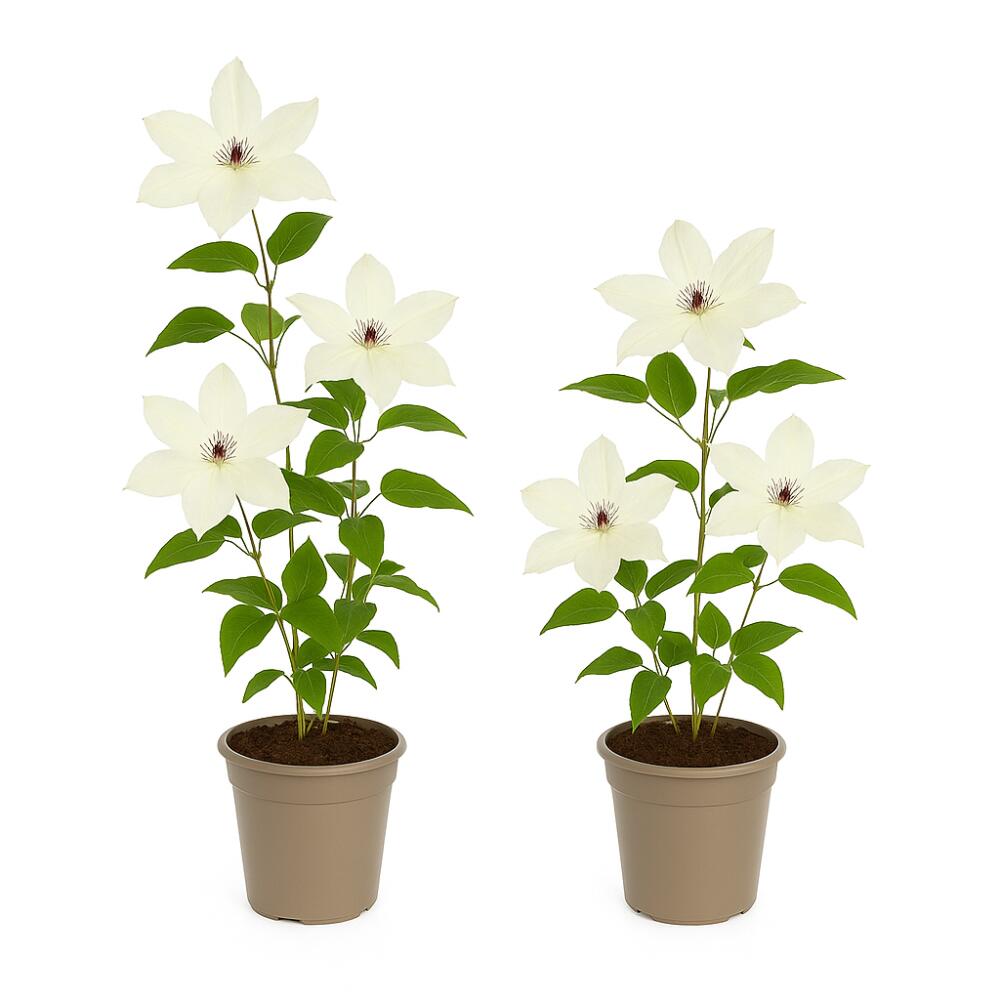
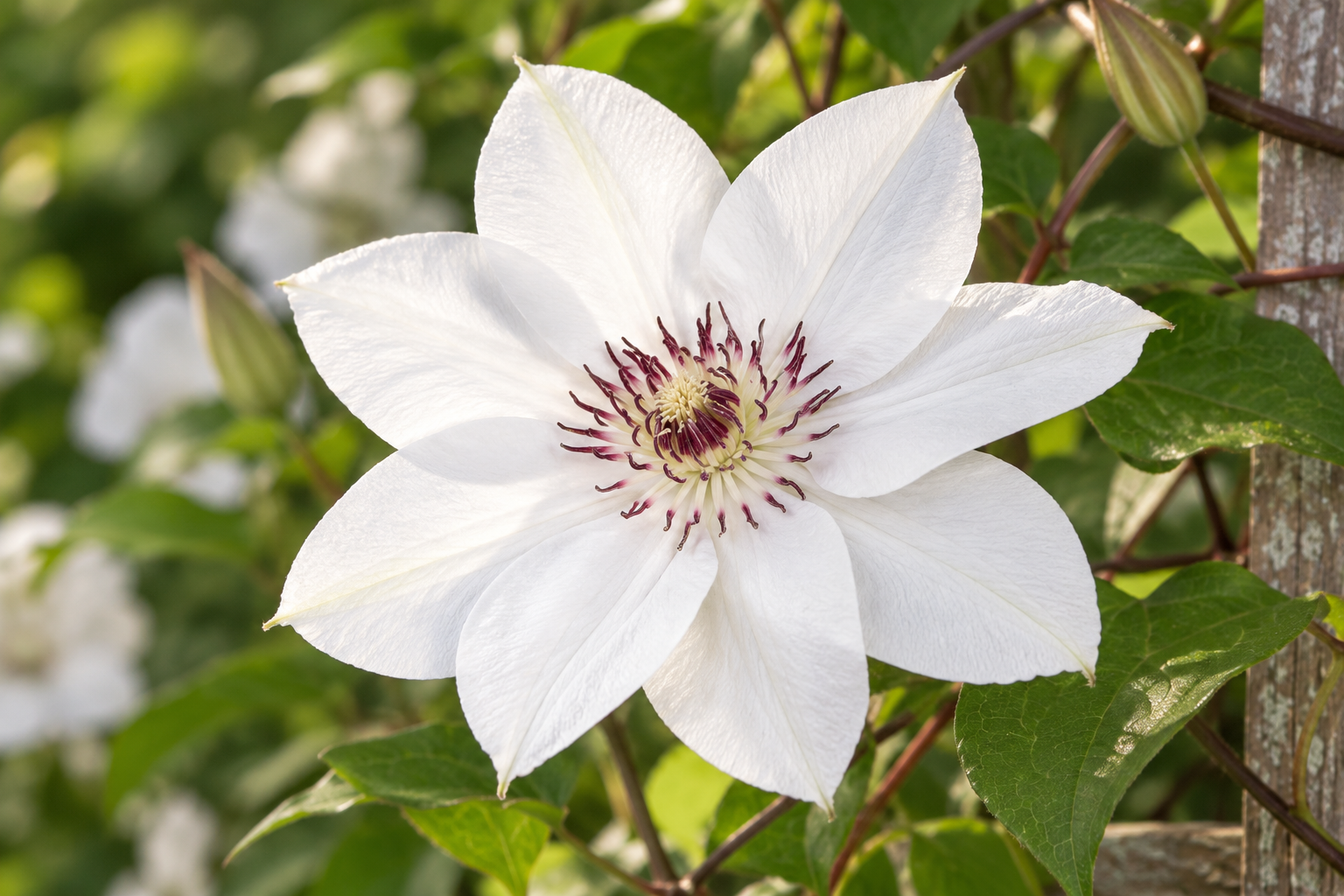
Miss Bateman flowers can reach about 15 cm across. Six to eight broad white flower segments surround cream filaments and dark-red anthers. A green central stripe may appear on the reverse. Against quiet timber or dark garden greenery this fine contrast shows well. Green leaves and thin shoots belong to a deciduous clematis. It grips support with leaf stalks; a smooth wall alone cannot carry it. Fine trellis or thin wires therefore belong in the planting plan before new shoots lengthen.
Two young clematis find their own places
The current set contains two plants in 11 cm pots at about 40 cm total height. The plant view is a size example, not a promise of a flower count on delivery. This cultivar belongs to early large-flowered garden clematis in Ranunculaceae. Its later framework is roughly 1.5–2.5 m high depending on care and support. You may separate the two into different positions, each with its own root zone. Two little delivery pots are not yet a fully covered screening wall; loose ties help them start.
Light for shoots, coolness for roots
Choose sun or light partial shade. Soil should be deep, sufficiently fertile and moisture-retentive while draining surplus water. Shade the lower planting area with low neighbours or suitable soil cover. This does not mean a dark position for the whole clematis. Beneath a roof edge, soil often stays dry despite rain; roughly 30–45 cm from a wall gives the rootball a better place. Even at a garden fence, avoid close competition with large woody roots. An open base makes later checks easier.
Protect delicate shoots when planting
Spring and early autumn suit planting in workable soil. Check rootball moisture and water a dry rootball first. Hold the rootball, not long stems, when unpotting. For this large-flowered clematis, set the rootball top about 5–8 cm below the eventual soil surface; buried buds can then make new shoots. Watering settles soil against roots. For container culture, at least about 45 cm depth and width is useful guidance. Open holes and stable soil structure remain essential even in a large container.
Moist soil through checking and thorough watering
Newly planted clematis need attention during dry weeks. Check the root zone and water beyond briefly darkening the surface. Wind and sun dry containers faster; daily moisture checks may be needed during growth. Water should pass through the rootball then drain. An established bed often needs less extra water but is checked during prolonged heat too. Good garden soil needs no constant fertilising. A spring covering of well-rotted compost and label-appropriate container feeding can accompany growth. Do not heap material against stems.
Pruning preserves wood for the first flowers
Miss Bateman belongs to pruning group 2. Early flowers form on short shoots from the previous year’s framework. On an established plant, examine each stem from top down in late winter or early spring. Remove dead and weak parts, trim damaged tips just above a healthy bud pair and retain strong old wood. Complete annual ground-level pruning would cost part of the early display. After the first flush, shorten individual flowered shoots to strong buds or a side shoot. Repeat flowering is possible but depends on development and position.
Guide the framework through the seasons
Train young shoots loosely and evenly; tight wire loops can constrict them. A very single-stemmed young plant can be cut harder to about 30 cm above ground in its first spring after planting to encourage branching. This is formative work, not standard annual pruning of the older cultivar. Autumn leaf loss is normal. Container roots need protection against severe freezing and prolonged winter wetness. Suddenly wilting shoots first call for checks of water, slug damage and visible stem injuries. Wear gloves: clematis can irritate skin and is not an edible plant.
One plant, several views
Good to know
Must Miss Bateman be cut to ground level every year?
Not once established. Group 2 retains strong previous-year wood for the first flowers.
How large are the supplied plants?
Two plants in 11 cm pots at about 40 cm total height. Later climbing height is considerably greater.
Can it grow in a container?
Yes, with enough root space. About 45 cm depth and width, free drainage and frequent moisture checks are a useful basis.
Why does it need trellis?
It grips with leaf stalks. A smooth wall gives them no hold.
Is second flowering certain in late summer?
Repeat flowering is possible. Position, growth and pruning influence it; it cannot be guaranteed.
What should I do about suddenly wilting shoots?
Check rootball moisture and stems for feeding damage or injuries. Not every wilt is the well-known fungal disease; investigate unclear damage specifically.
Sources and editorial note
- Exotenherz: current plant offer and original gallery (03.10.2026)
- Directly read specialist reference: bateman-rhs (03.10.2026)
- Directly read specialist reference: clematis-growing (03.10.2026)
- Directly read specialist reference: clematis-pruning (03.10.2026)
Public shop offer, originals and directly read specialist sources checked on 03.10.2026. Young delivery plants, later development and winter care separated. Joint page view and publication still require Root acceptance.