This plant at Exotenherz
Check the shop offer for current availability, price and what is included.
Check the shop for the current price, availability and offer contents.
Your care table
| Topic | What to do | Why it helps |
|---|---|---|
| Arrival | Check all three balls for moisture and shelter the small rosettes. | Flowers and fruit are not promised delivery stages. |
| Position | Sunny and sheltered, fertile drained soil. | Light and balanced water support later flowers and fruit. |
| Depth | Keep crown at soil level, cover roots and water the soil. | Buried crowns or exposed roots hinder establishment. |
| Room and support | Guide runners loosely, leave air and access between rosettes. | It does not climb itself; later dense growth must remain accessible. |
| Water | Check balls regularly, water the root zone as needed and allow drainage. | Sunny containers dry fast; small water quantities do not mean low care. |
| Feeding | Feed to need during flower and fruit development according to the label. | The longer season needs reliable roots, not automatic extra doses. |
| Fruit protection | Keep berries off wet soil and promptly remove rotten fruit. | Air and drier fruit contact make checks easier. |
| Runners | Root wanted daughters and remove unnecessary shoots. | Only their own roots allow safe separation. |
| Pruning and winter | Retain healthy leaves and crowns, remove diseased leaves and protect container roots. | Do not completely defoliate repeat-cropping plants midway through their season. |
For young plants, feel the soil directly at the root ball. The surface and deeper soil may have different moisture levels.
Water thoroughly after planting; later, water according to the soil, weather and establishment rather than a fixed calendar.
Avoid standing water. For plants in containers, also check that water runs out of the drainage hole.
A climbing strawberry needs help upwards
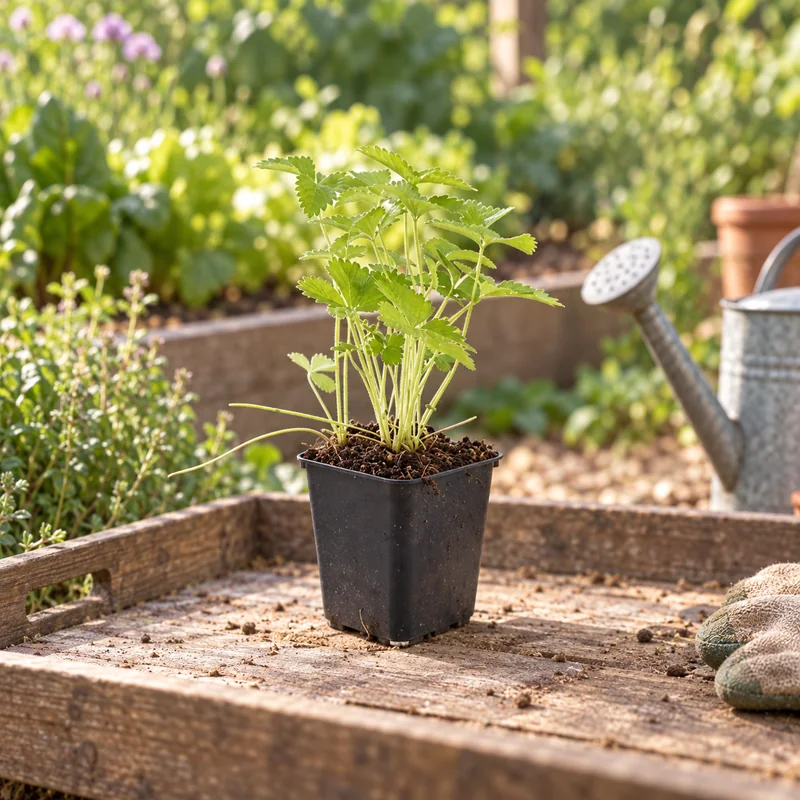
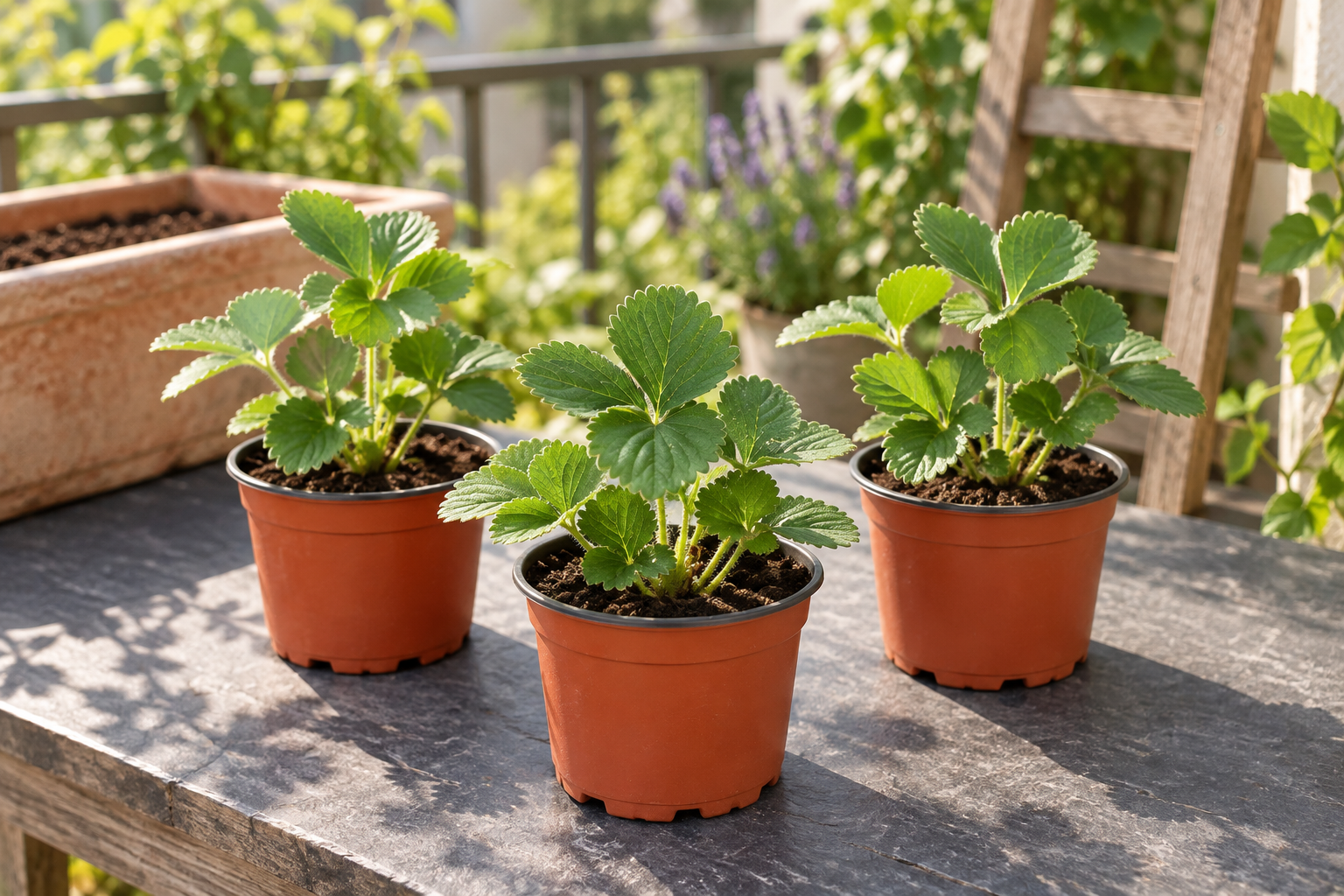
It starts as a low green rosette. Three toothed leaflets form each leaf, fine hairs occur on stalks and new foliage grows from the short crown. The name describes possible culture on support, not a self-clinging climber. Long runners can later be guided or trail over a container edge. The offer places it in Fragaria × ananassa, garden strawberry in Rosaceae, and describes an everbearing type with repeated flowers, without specifying an individual named cultivar. Young plants should establish first; white flowers and red fruit can develop later. The little fruit photograph on the original label illustrates the culture type, not fruit on the delivered rosette or an immediate harvest promise.
Three 9 cm pots but no delivery height
The offer includes three young plants in 9 cm nursery pots with no stated delivery height. The description’s 150 cm explicitly means later shoot length, not a young rosette that tall. Even on a climbing frame the crown stays below: long runners must first grow and be directed. Check every ball when unpacking and gently release loose packaging from stalks. Original young plants show green leaves without current flowers or fruit. Initially keep bright and sheltered, planning more root space soon. About 10–50 cm is a general specialist range for low garden-strawberry rosettes, not a precise eventual height for this unnamed selection or a replacement for the missing delivery measurement.
Sun and accessible runners
Choose a sunny sheltered position with fertile drained soil. Bright partial shade is also possible according to the offer, without becoming too dark for later fruiting. A trough, hanging pot or large tub can accommodate long shoots. Upright culture benefits from light stable support where runners can be tied loosely: they do not wrap themselves around a grid. Plan access for watering, picking and guiding before a dense leafy curtain develops. In beds, about 35–40 cm is general garden-strawberry guidance; about 20 cm may suit a sufficiently large container. The shop’s 15–25 cm therefore needs interpreting with container size and later leaf mass, not applying as a rule to every bed row.
Crown at soil level, roots covered
Spring and late summer to early autumn suit planting in frost-free workable soil. Dry warmth requires especially reliable moisture during the first weeks. Slowly moisten dry balls, remove pots and set rosettes with crowns at soil-surface level. Cover roots without burying crowns or raising them on exposed roots. Firm gently and water the soil. Containers need open drainage holes, stable nutrient-containing compost and enough space for the rosettes. Check settling after watering. Mulch and later fruit supports belong around plants, not as a wet bundle over the crown. Correct depth helps more than an extra handful of fertiliser on an incorrectly planted specimen.
Even moisture for leaves, flowers and fruit
Small nursery pots and sunny balcony containers dry much faster than deep garden soil. Check balls and water the root zone as needed so water enters soil and surplus drains away. A small amount per small pot does not mean little attention: more leaves and warmer weather increase demand. Constantly wet soil is as unsuitable as repeatedly dry roots. Avoid needless overhead wetting of leaves and ripening fruit. A suitable dry support can keep berries off damp soil; airy foliage and accessible fruit aid inspection. In containers, feed to need during flower and fruit development according to the label; in beds account for soil nutrition first. Remove rotten fruit promptly. If growth is weak, check drainage, crown level and light before repeatedly increasing feeding.
Repeated flowers mean an attended summer crop
Everbearing or remontant garden strawberries can flower and fruit in several flushes. The offer describes development from June towards autumn. Actual start and duration depend on age, weather, position and care: neither a sure harvest until first frost nor one immediately after purchase follows. Allow successive fruit to ripen and gently pick healthy ripe berries. Red fruit belongs to the described culture type; a precise cultivar name or fixed flavour is not assured. Late frost can damage early flowers, so observe open flowers and weather separately from green foliage. During this longer cropping culture, do not remove all leaves midway through flowering and fruiting as after a finished single summer harvest. Selectively remove damaged leaves and diseased fruit, retaining crowns and healthy new foliage.
Guide, root and renew runners
A runner is a long connecting shoot where daughter rosettes can develop. Guide wanted shoots loosely and check ties for cutting in. Each daughter is not a guaranteed extra harvest: framework, independent roots, light and nutrition determine development. For new plants, first root a healthy daughter in soil and only then sever the connection. Unneeded runners can be removed early when root space or visibility is limited. In winter maintain drainage, shelter container roots and check soil on frost-free days. Preserve perennial crowns and carefully remove damaged old leaves. After a few years many strawberry beds decline. Healthy young plants and fresh suitable growing positions help rather than trying indefinitely to drive old crowded rosettes with more fertiliser.
One plant, several views
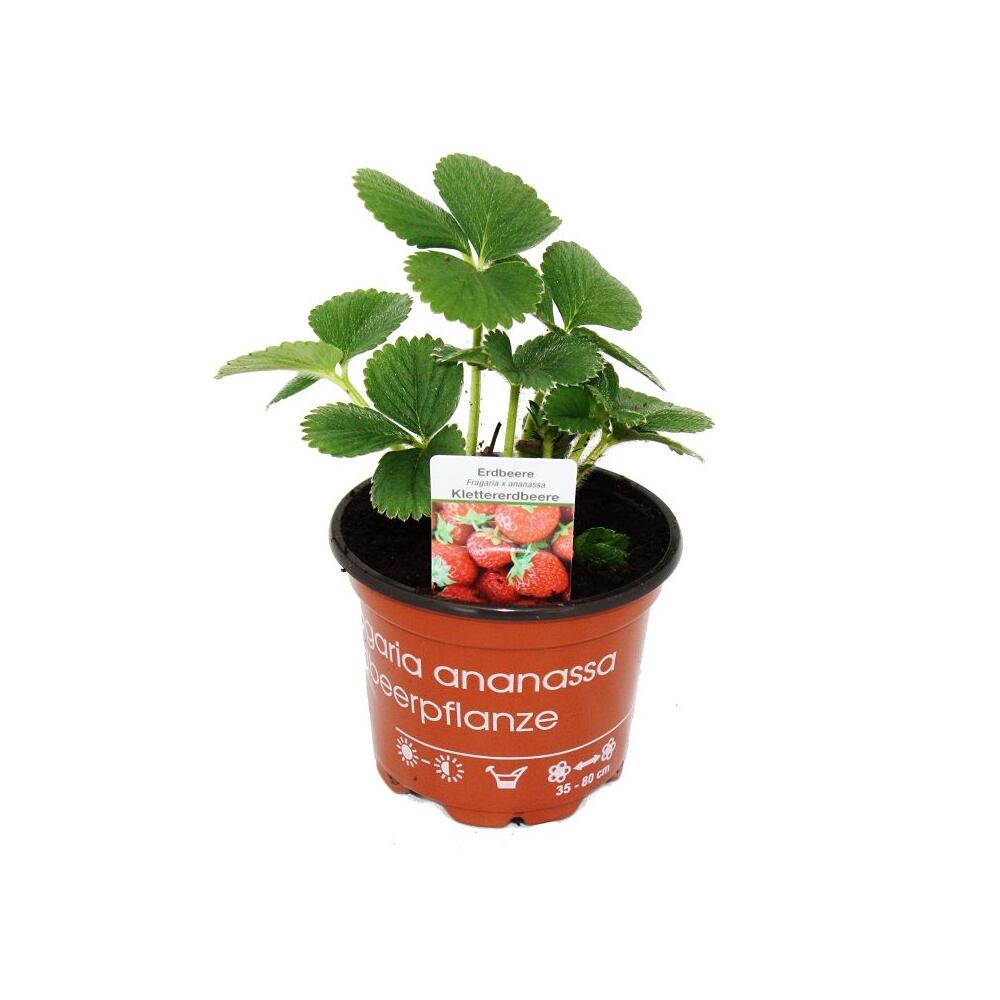
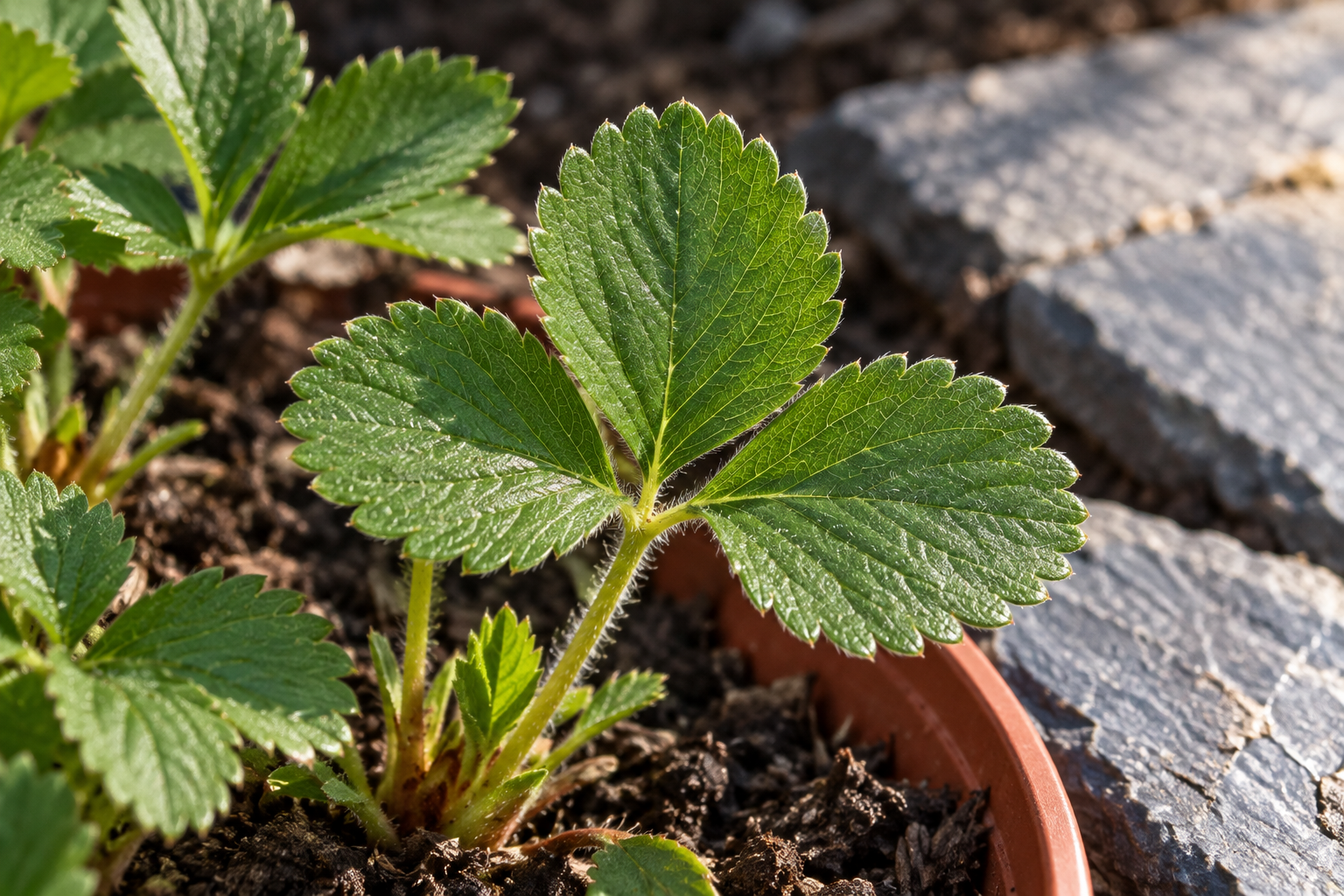
Good to know
Is the young plant already 150 cm tall?
No. The exact description specifies 150 cm later shoot length. Young plants arrive in 9 cm pots without stated delivery height.
Does it climb a grid unaided?
No. Long runners must be guided loosely. The crown remains a low rosette.
Is a full-summer harvest guaranteed?
It is a repeat-cropping type, but start, flushes and yield depend on development, weather and care. Harvest until frost is not guaranteed.
Where should the crown sit?
At soil-surface level, roots covered and crown free, including under mulch.
Why check small pots often?
Little soil dries quickly in sun and wind. More leaves and fruit raise demand; use ball moisture rather than a fixed weekday.
Can daughters be cut off immediately?
First let a wanted daughter make its own roots in soil, then sever from the mother. Extra runners may be removed early.
Should all leaves be cut after the first fruit?
Keep healthy foliage on a plant still flowering and fruiting. Selectively remove diseased or damaged leaves, protecting the crown.
Sources and editorial note
- Exotenherz: offer and original photographs
- RHS: everbearing strawberry culture on a climbing frame
- RHS: growing and caring for strawberries
Young starting plants and later garden development are described separately. Check shop availability.