This plant at Exotenherz
Check the shop offer for current availability, price and what is included.
Product and delivery details are given in the individual offer.
Your care table
| Topic | What to do | Why it helps |
|---|---|---|
| Light | Choose sun to bright partial shade. | Enough light helps good fruit set. |
| Soil | Provide humus-rich fresh soil with good drainage. | Fine roots need moisture and air together. |
| Planting | Leave the crown clear at previous height. | A deeply covered rosette base becomes wet more easily. |
| Water | Check the ball and water slowly at ground level as needed. | Moist leaves do not supply a dry ball. |
| Feeding | Supply moderately if needed, counting existing soil feeding. | More nutrients do not ensure larger harvests. |
| Runners | Remove unwanted daughter rosettes with their connection early. | Long runners gain space sideways. |
| Harvest | Use only securely identified healthy fully red fruits and rinse. | Small red garden fruits must not be identified by colour alone. |
| Winter | Mark planting places; shelter outdoor pot culture. | Leaves can recede in winter while the perennial lives on. |
Check the compost and pot weight. The care table explains how far the compost may dry.
Water only when needed. The water should reach the root ball without spilling over the rim.
Remove surplus water from the saucer or cachepot. Then return the plant to a suitable position.
Three leaflets and a small white flower
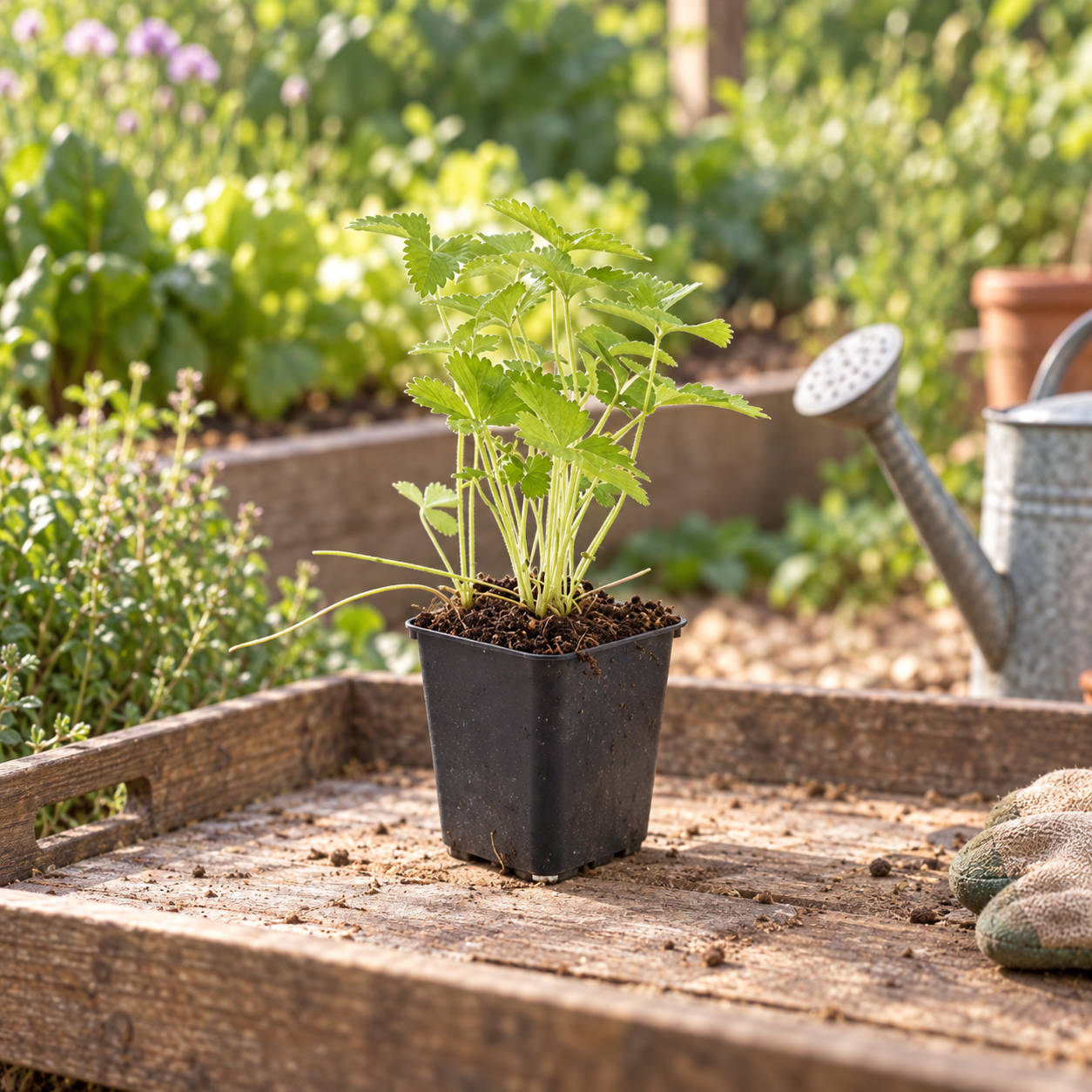
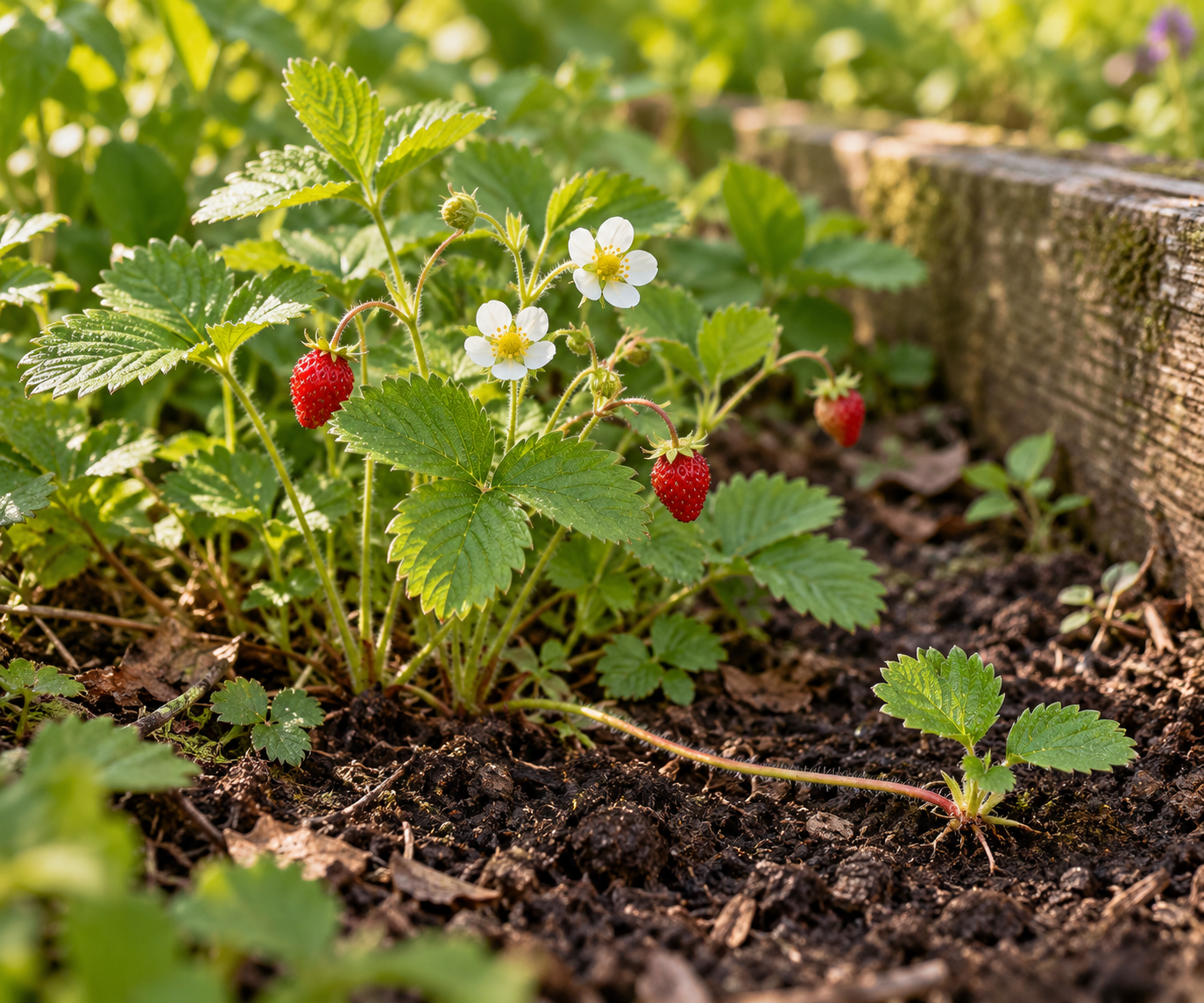
Wild strawberry shows its character close up. Green leaves with three toothed leaflets sit on long stalks; small white flowers with yellow centres later appear between them. Fruits stay much smaller than large garden strawberries on the fruit shelf. It is a different garden effect: low foliage cover with individual red dots, not a bowl of evenly large fruits. Fragaria vesca forms rosettes and connects new planting spots with runners. This allows a loose garden edge. The offered plant has no confirmed cultivar name; properties of special everbearing cultivars are therefore not attributed to it.
The small delivered plant needs an accessible place
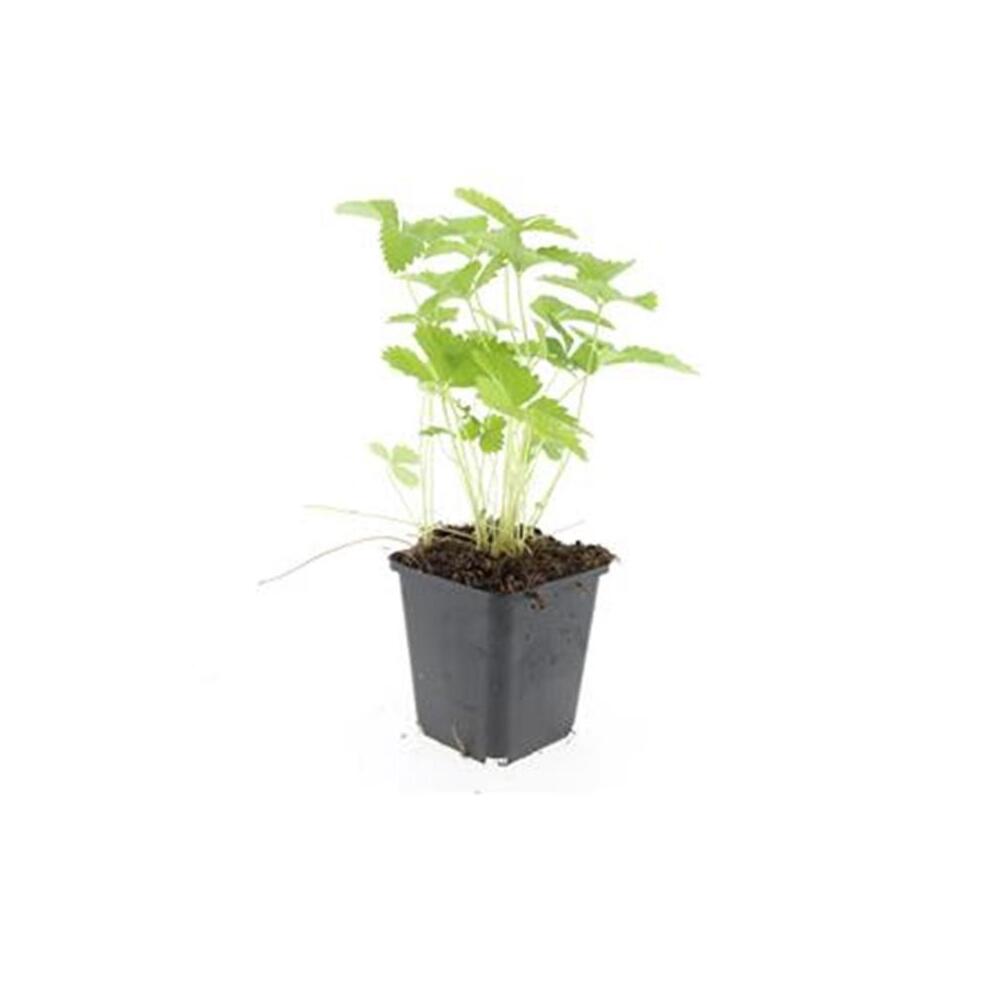
Set offers contain young plants in 9-cm pots at about 10 to 15 cm total height including pot. These dimensions describe the beginning. Older planting spreads sideways; the specialist height class of 10 to 50 cm is rough species guidance, not an exact figure for every leaf cover. Around 25 to 30 cm between plants gives horticultural starting guidance. This is not spacing promised in the offer: it leaves room for initial rosettes and care. Also plan access for picking and removing unwanted runners. Beneath dense shrubs an area can turn green while individual fruits remain hard to reach.
Allow partial shade while considering the harvest aim
Wild strawberries grow in sun and bright partial shade. Sufficient light helps good fruit set. A dark place must therefore not be considered ideal merely because the name includes woodland. Soil should be fresh and humus-rich but drain excess water. Check the actual planting point: beside hot stone it dries differently from a sheltered shrub edge. Older neighbouring roots can consume moisture. An accessible spot with loose soil makes young plants easier to observe. Decide before planting whether loose green surface texture or primarily possible fruit development matters most.
Do not bury the rosette crown
Starting is often easier in spring or early autumn than during a hot dry week. Ground must be frost-free and not waterlogged. Moisten the delivered ball, release the pot and plant at previous level. Leave the crown clear; extra soil over it does not help the perennial. Water slowly and then check directly at the ball. A small ball can dry even surrounded by damp garden soil. Water at ground level according to need. Roots gradually reach surrounding space. Rigid specified watering days would overlook different weather and soil types.
Flowers do not automatically become many fruits
The species flowers white in late spring. Small red fruits can follow; timing and quantity depend on development and conditions. A young plant need neither flower nor bear fruit on delivery. With weak growth check light, moisture and root space before planning extra feed. Excess supply cannot replace suitable position. Where fruits exist choose only securely identified healthy fully red specimens and rinse before eating. Do not use unknown red fruits from other plants among strawberries. Small scale remains part of their charm; a large harvest is not promised.
Daughter rosettes determine the edge
Long runners can form new rosettes. If all connections remain, wild strawberry grows into neighbouring areas. Remove unwanted daughters with their connection promptly without pulling the entire mother rosette. For expansion a well-rooted daughter can be deliberately moved to prepared ground. It again needs moisture and a clear rosette base. Regular edge checks suit among small perennials even if the plant remains low. Gently release old or damaged leaves. With damaged fruits or wilting look at the planting: lasting wetness and a dried ball need different responses.
A container reveals more of the small scale
A broad outdoor pot with open drainage holes can raise leaves and fruits to a pleasant height. It offers more controllable root room than the sales pot but dries faster than well-prepared garden soil. Remove saucer water and supply thoroughly at the ball in dry conditions. Keep sheltered outside in winter and do not accidentally work the planting spot deeply when fewer leaves show. Depending on weather the species can partially retain foliage or become sparser. Observe fresh rosettes in spring and gently remove old remains. Wild strawberry thus accompanies the garden for years without looking the same year-round.
One plant, several views
Good to know
Is this an everbearing strawberry cultivar?
The offer documents Fragaria vesca without a confirmed cultivar name. A particular cultivar’s recurring harvest over months is not promised.
How do I recognise the leaves?
Each leaf consists of three toothed green leaflets. The plant forms rosettes and long runners.
Should the crown be covered with soil?
No. Set at previous ball height and keep the rosette base clear.
What does 10–15 cm height mean?
It is delivery size including the 9-cm pot, not fixed later garden height.
Can it cover an area?
Yes, runners connect new rosettes. Check edges beside small neighbours regularly.
How much sun does it need?
Sun to bright partial shade suits. Enough light helps fruit set; the woodland name alone does not make darkness ideal.
Sources and editorial note
- Exotenherz: currently read parent offer (03.10.2026)
- Exotenherz: currently orderable child offer (03.10.2026)
- RHS: Fragaria vesca, identity, runners and cultivation (accessed 03.10.2026)
Identity, parent offer and selectable child offers publicly read on 03.10.2026. Specialist sources directly read; quantity variants belong to this one portrait. No documented cultivar name, monthly-strawberry or continuous-harvest claim. Initial 25–30 cm spacing editorially derived from rosette/runner culture, not presented as shop value.