This plant at Exotenherz
Check the shop offer for current availability, price and what is included.
Check the shop for the price, current availability and what is included.
Your care table
| Topic | What to do | Why it helps |
|---|---|---|
| Light | Bright and airy, protected from hot midday sun. | The plant needs light without overheated root space. |
| Water | Keep evenly moist with low-mineral water. | The root ball must not dry like succulents. |
| Cool roots | Shade the pot and renew warm water reserves. | Overheated roots may suffer despite moist soil. |
| Compost | Acidic, low-nutrient and loose; special carnivore mix. | Ordinary pre-fertilised potting compost is unsuitable. |
| Fertiliser | Give no ordinary houseplant fertiliser. | The plant is adapted to low-nutrient conditions. |
| Traps | Do not fill with meat, cheese or fertiliser. | Independent insect catching is enough as a natural supplement. |
| Winter | Bright and cool, frost-protected in the small pot. | Allow rest while keeping the root ball moist. |
| Checks | With wilting, first check water quality and root temperature. | Moist soil alone does not prove suitable cultivation conditions. |
The root ball stays moist. Check more often in warm or windy conditions and do not let it dry out completely.
A small, controlled water reserve can help during growth. The centre of the plant does not need to be deeply submerged.
In cool winter conditions, reduce the reserve while keeping the root ball moist. Keep the saucer clean and follow the frost protection in the care table.
A trapping leaf with many details
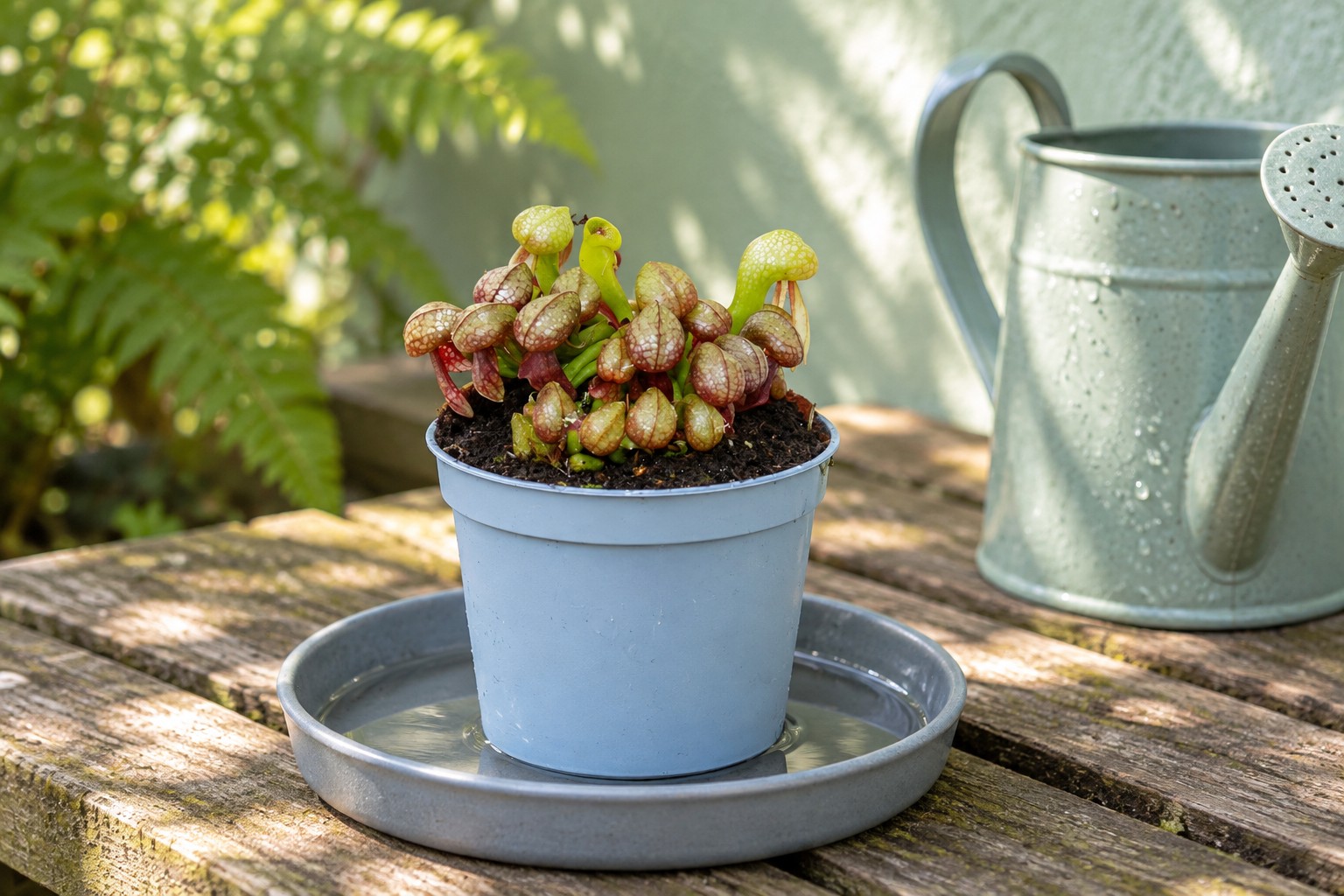
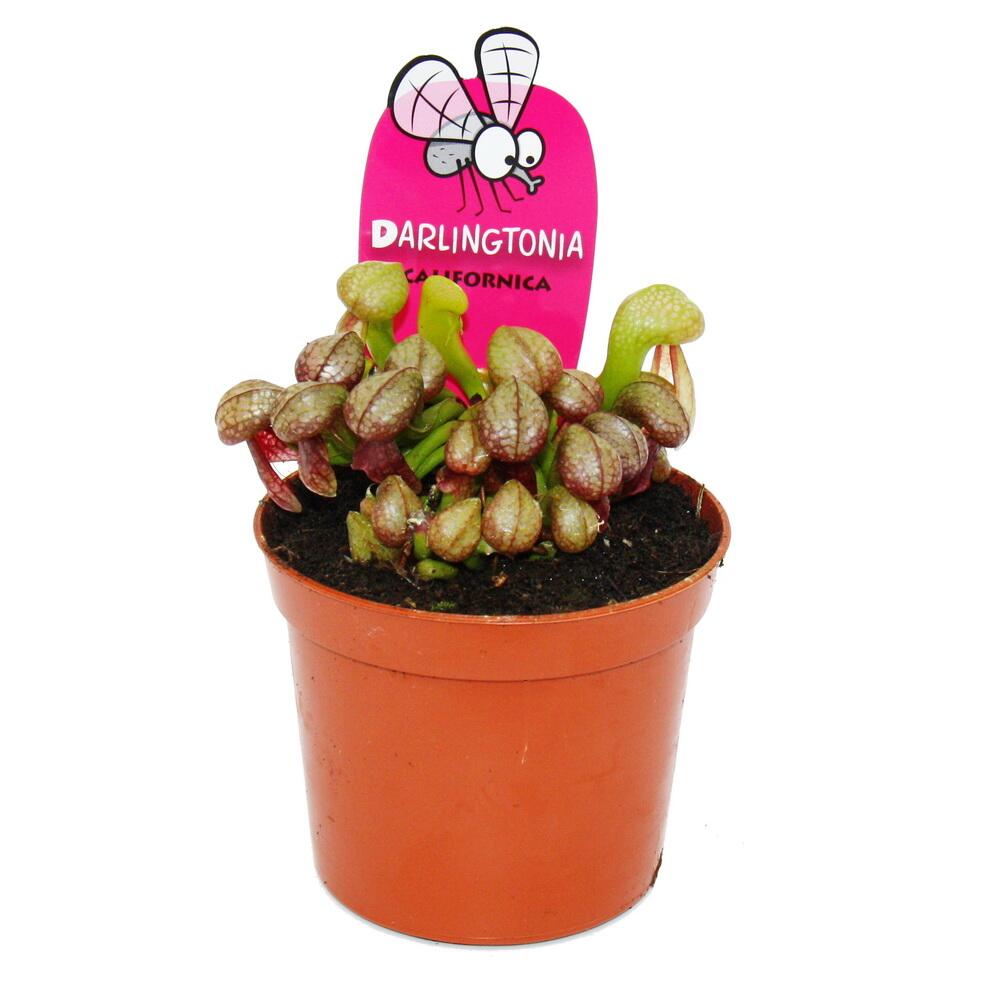
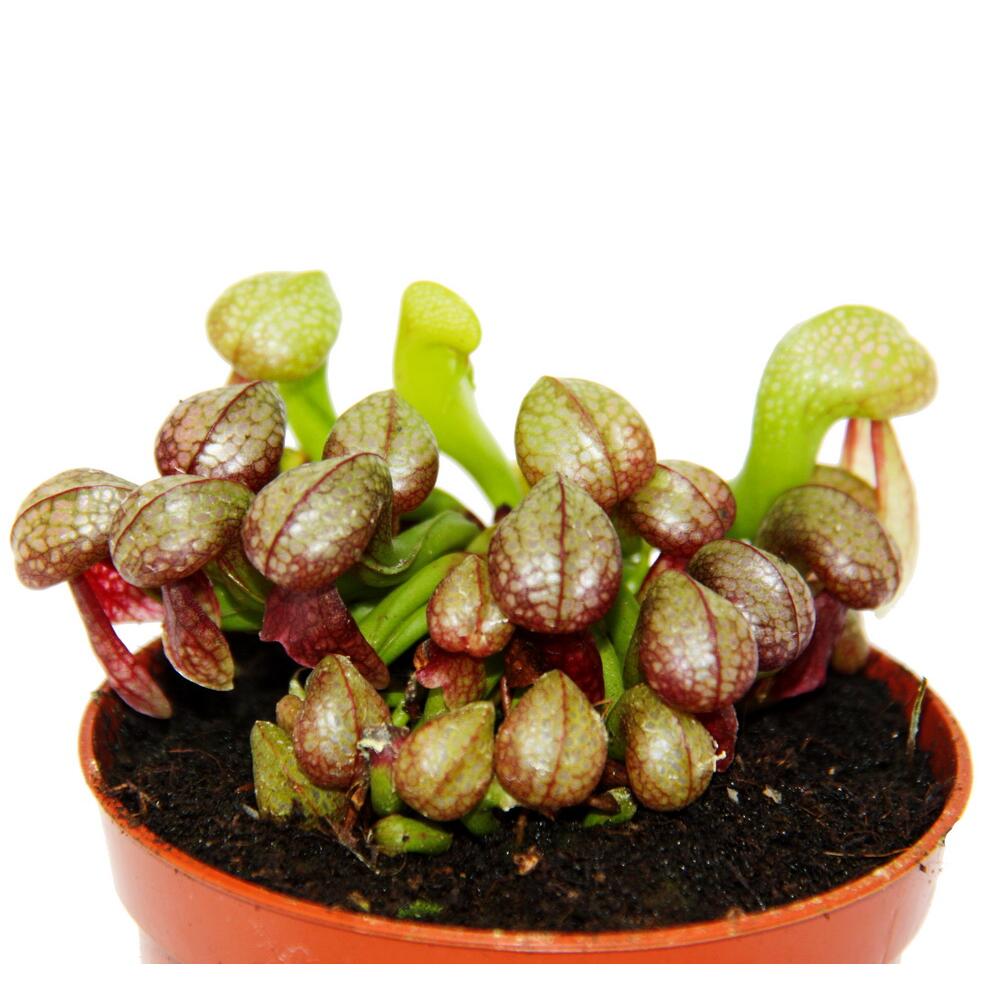
The cobra lily’s curved hood recalls a raised snake. Pale translucent patches look like small windows, with a forked appendage below. These specialised leaves catch insects. Darlingtonia californica belongs to the pitcher-plant family and comes from a limited area of western North America. It is not a tropical houseplant for dark warm rooms all year. Anyone enjoying close observation and able to provide a suitable cool root zone will find a particularly interesting carnivore.
Gently acclimatise a small plant
A 9 cm pot is offered. The shop gives no specific delivery height; the original photograph shows a small collection of young trapping leaves. Large mature pitchers are therefore not a guaranteed delivery condition. After unpacking, protect the root ball from drying and initially choose a bright airy position without heat buildup. Do not immediately cut every older or slightly discoloured trap. Their development also depends on age and season. Carefully remove only entirely dead material without injuring fresh shoots or rhizome.
Light above, cool conditions at the roots
Cobra lily needs brightness while its roots may react sensitively to overheating. A sheltered outdoor position with gentle sun and shading in hot hours often suits better than an overheated windowsill. Protect the pot itself from strong direct radiation and allow air movement. A dark pot in a hot standing-water tray is unfavourable. On warm days, check not only leaf position but also container and water-reserve temperature. Cooling cultivation measures matter more here than the greatest possible hours of sun.
Low-mineral water and an airy moist root ball
Use clean rainwater or suitable low-mineral water such as reverse-osmosis water. Hard tap water and water from an ordinary salt softener are unsuitable. The root ball remains moist and must not dry completely like a succulent. A small controlled reserve may help if it stays cool and clean. Check regularly and replace stale warm water. At the same time, compost should remain airy; the rhizome need not stand deep underwater. Low-nutrient acidic carnivore mixes with suitable loose ingredients are sensible; ordinary pre-fertilised potting compost is not.
No meat feeding and a real winter rest
The plant catches suitable small prey itself. Meat pieces, cheese or fertiliser added to traps do not belong to care. Ordinary houseplant fertiliser is not added to compost either. Cobra lily needs a cooler winter rest. For the small pot, a bright cool frost-protected position is more reliable than a general winter-hardiness guarantee. Reduce the water reserve then without allowing the root ball to dry. A warm living room without suitable rest or controllable root temperatures is difficult long-term.
Patiently support rhizome and new traps
Underground runners may later form new rosettes. A suitable new container may therefore offer some room sideways when needed. Repot and divide only strong plants gently, avoiding unnecessary root disturbance. A young plant first needs to establish roots. If traps suddenly wilt or brown, check water quality, heat and root condition instead of automatically flooding more. Watch fresh growth for pests too. Cobra lily suits careful observers; it is not a carefree replacement for an arbitrary green plant.
One plant, several views
Good to know
Can cobra lily stand on any sunny windowsill?
A windowsill that heats up is problematic. A bright airy position and cool roots matter.
Must I feed insects or meat?
No. The plant catches suitable small prey itself; meat pieces and fertiliser do not belong in traps.
How tall is the delivered plant?
The shop states a 9 cm pot but no specific delivery height. Original images show a young plant.
Is cobra lily certainly winter-hardy?
A blanket guarantee is unsuitable for the small pot. Overwinter bright, cool and frost-protected, keeping the root ball moist.
Sources and editorial note
- Product and delivery contents: Exotenherz
- Royal Horticultural Society: plant and care knowledge
- Royal Horticultural Society: plant and care knowledge
- International Carnivorous Plant Society: cultivation experience
Sources checked: 15 September 2026. Product information and delivery contents follow the linked shop offer. Care has been checked against the stated specialist sources and remains subject to plant condition, position and season.