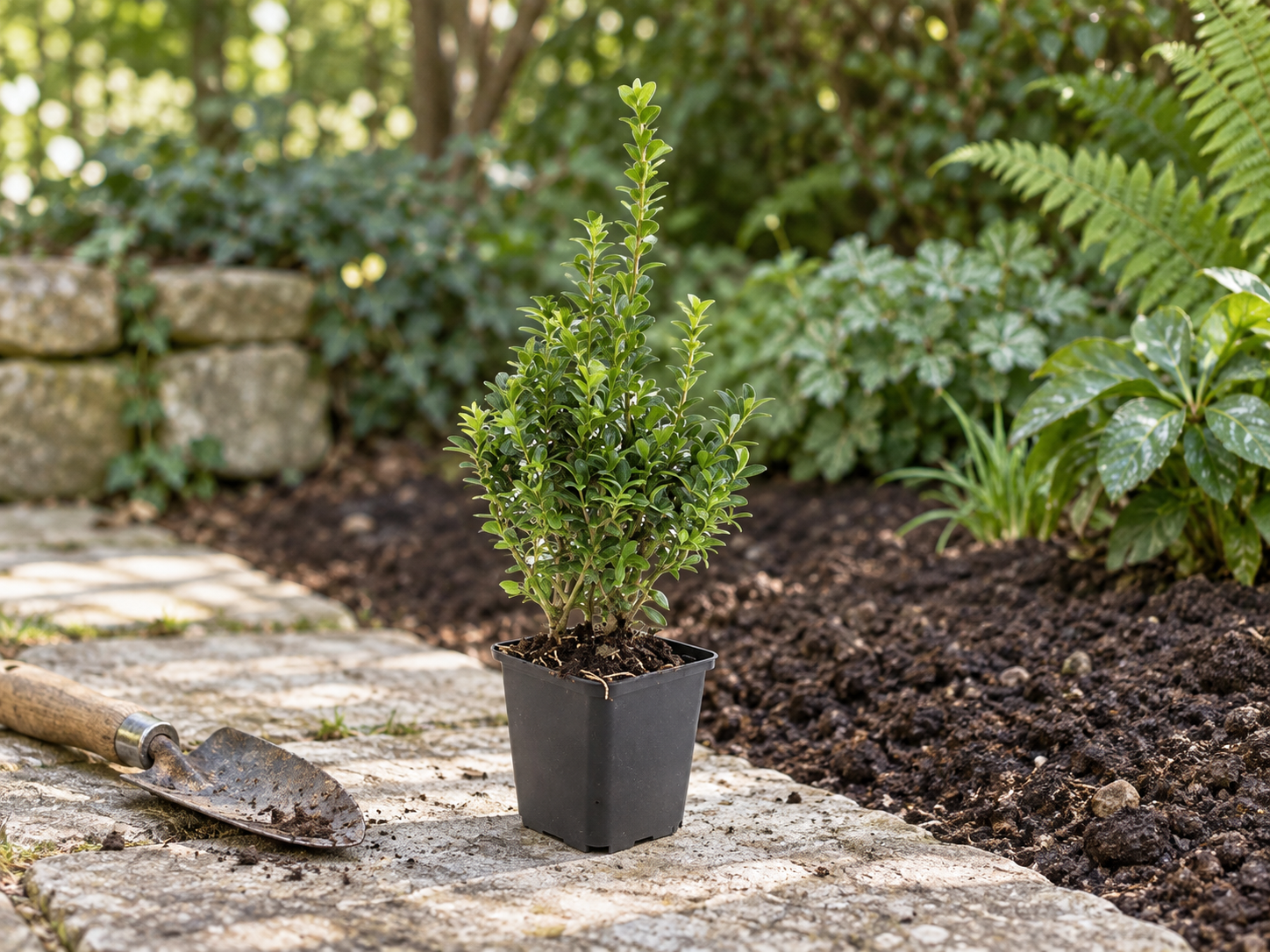
This plant at Exotenherz
Check the shop offer for current availability, price and what is included.
Check the selected shop offer for price, availability and delivery contents.
Your care table
| Topic | What to do | Why it helps |
|---|---|---|
| Arrival | Check moisture/healthy twigs, care until planting. | Small nursery pots dry fast. |
| Site | Partial shade/draining reliably supplied soil. | Sun possible, drought there stresses leaves. |
| Plant | Spring/autumn same ball level, water in. | Deep planting/compaction restrict roots. |
| Spacing | 20–25 cm shop guidance for small offered plants. | Closed line comes through growth/pruning. |
| Water | Dry soil, slowly at roots. | Wet leaves do not prove watered ball. |
| Feed | Good garden soil no blanket extra, pots per label. | Extras replace neither drainage nor healthy roots. |
| Shape | Build young gently, established shapes late-summer cut. | Firm new foliage less delicate than soft shoots. |
| Checks | Distinguish caterpillars/webs and black shoot lines. | Feeding damage/fungal injury need different assessment. |
| Winter | Protect pot roots, check frost-free days. | Evergreen leaves still lose water in winter. |
For young plants, feel the soil directly at the root ball. The surface and deeper soil may have different moisture levels.
Water thoroughly after planting; later, water according to the soil, weather and establishment rather than a fixed calendar.
Avoid standing water. For plants in containers, also check that water runs out of the drainage hole.
Small leaves enable shape
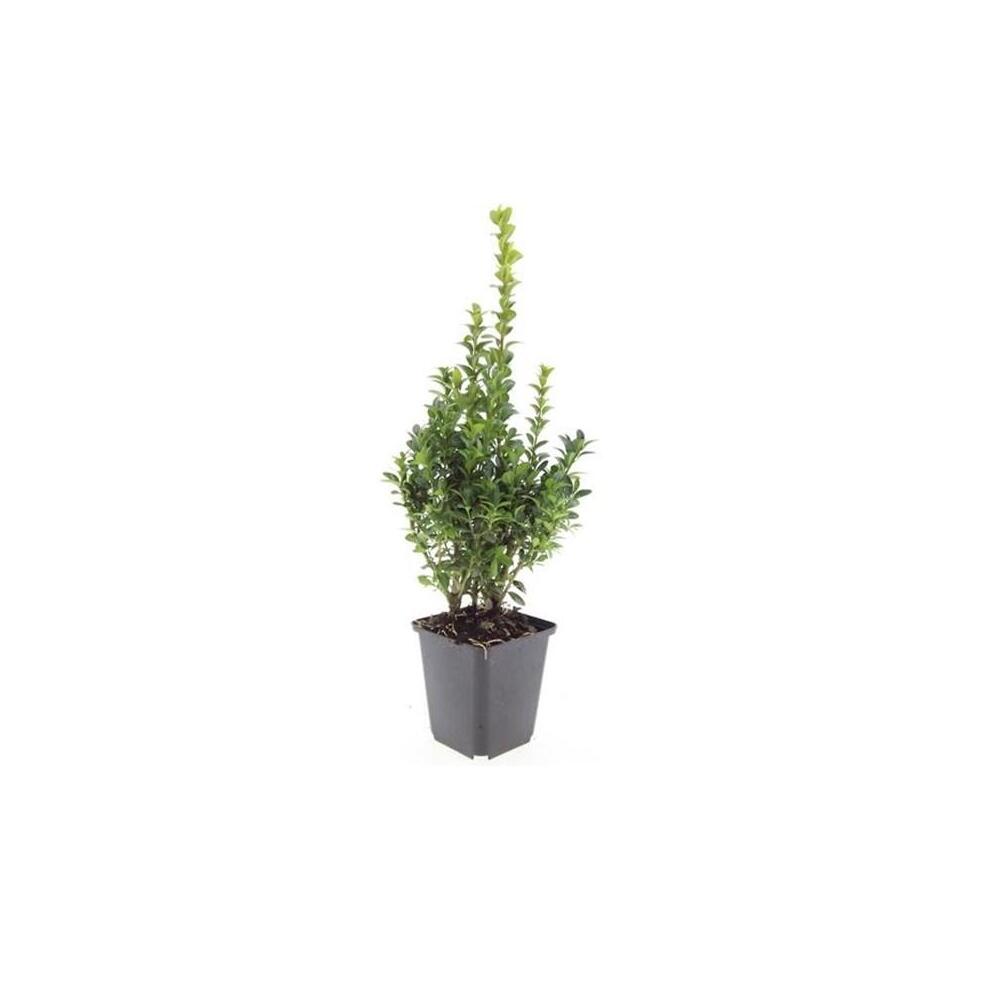
Far away continuous green surface, close up many short twigs carrying small leathery mostly opposite leaves. Dark upper green/dense branching visible winter. Woody shrub, green young growth later brown. Borders/hedges/shapes possible, ball built over years not assured trait of young plant. Species needs no particular shape for character.
Six youngsters start border
Offer 6 plants/9 cm pots/10–25 cm total including pot. Clean original small upright untrimmed plant. Check ball while unwrapping, protect drying until planted. Individuals may differ height/branch width. Set pots along planned line before digging. Shop 20–25 cm close start for small plants; later shape by growth/soil/pruning, not instant closed tall hedge.
Partial shade eases water balance
Box tolerates sun/shade. Bright partial shade manageable for young leaves/shallow roots with less heat. Full sun requires reliable soil moisture. Drying wind/strong winter sun can stress evergreen despite garden suitability. Ground drains without constantly drying completely. Under large tree shade/root competition separate: check earth, shady not automatically moist. No deeper than original root ball level.
Planting line is root space first
Spring/autumn favourable workable soil not wet smearing. Remove competing vegetation/loosen connected rooting space. Small holes in hard ground give future hedge little room. Same ball level, fill/water thoroughly. Loose mulch shields shallow roots, keep trunk base clear. Free-growing species needs much more space than border. RHS 30–40 cm for larger species hedges; both spacing guides for different starting sizes not cultivar identification.
A dry rootball needs water, not a calendar date
After planting check repeatedly inside/beside original ball. Rain may wet surrounds while densely rooted pot earth stays dry within. Slowly water ground as needed reaching roots. Constantly wet soil as poor as total drying. Established good-ground plants usually less supplementary water, help prolonged drought. Pots ongoing checks including frost-free winter days. Feed by ground/growth, fertile bed no automatic extra; summer pots per label.
Branch first, hold outline later
Young box gently shortened late spring for wide base; leave healthy foliage/build height gradually. Developed shape late summer once shoots firmer. Dry mild day/clean sharp tools; newly exposed inner leaves no immediate strong sun. Repeated very tight clipping thickens surface, check light/air inside. Neglected large plant may rejuvenate late spring, stronger intervention requiring subsequent care, not routine freshly planted youngster.
Chewing damage and dieback need different replies
Spring-autumn inspect twigs. Caterpillars/webs/eaten leaves suggest box-tree moth; reachable caterpillars can pick off. Brown falling leaves/black stripes young shoots suggest fungus needing specialist assessment. Colour alone proves neither moth nor deficiency; drought/wetness/winter stress possible. Water soil, prune dry foliage, clean tools between affected zones. Heavily damaged material not healthy cuttings. Not for human/animal eating. Recurrent severe harm may make another hedge sensible.
One plant, several views
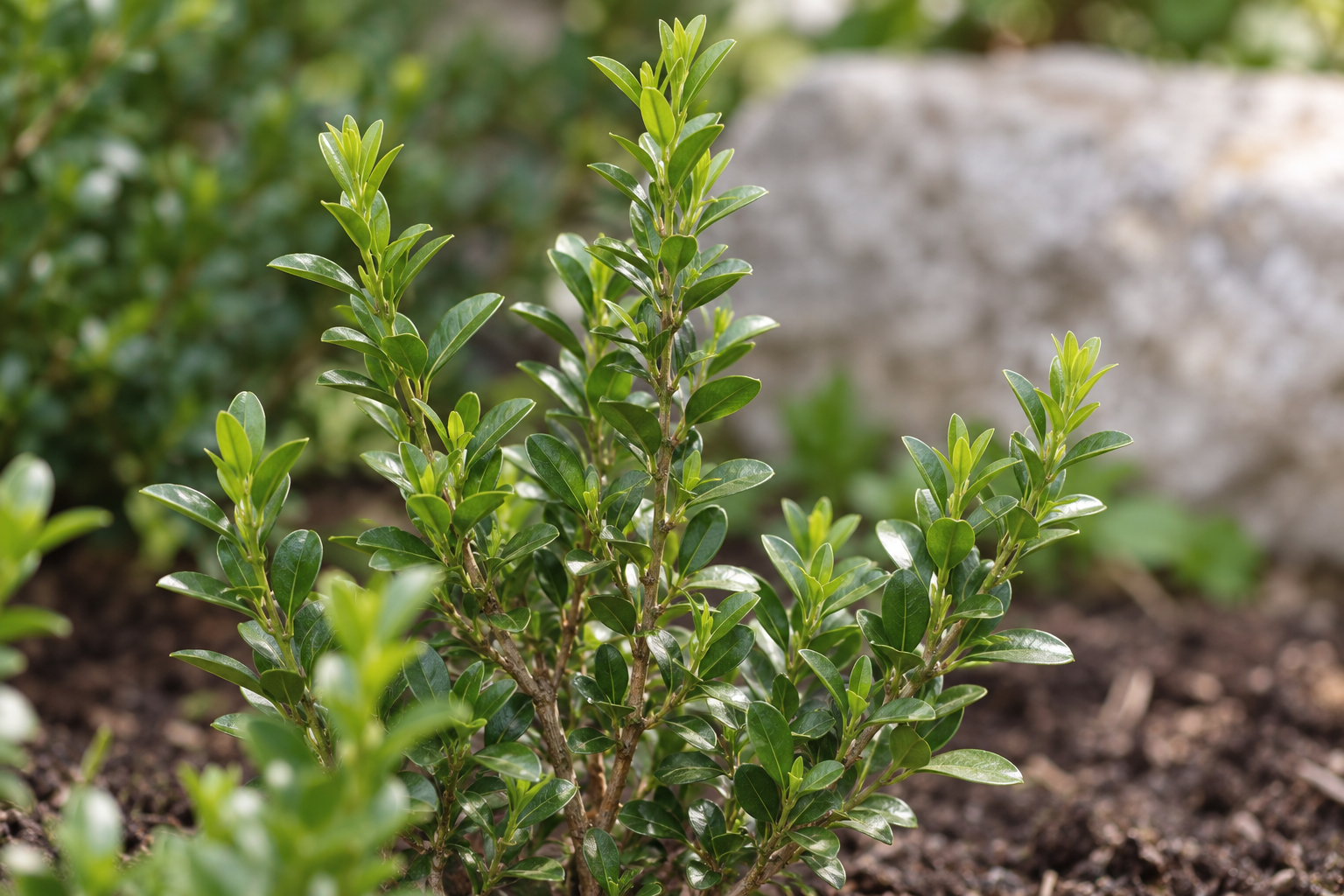
Good to know
Six plants finished hedge?
No, small9 cm pots, continuous border develops with time/suitable pruning.
Common box naturally low?
No, untrimmed metres over years; low shape maintained pruning.
Why spacing differs?
Shop 20–25 cm young plants/RHS 30–40 cm ordinary hedges. Starting size/shape matter.
Hard prune new hedge now?
No, establish first. Gentle shaping keeps healthy leaves; rejuvenation for old misshapen plants.
Brown always moth?
No, look for caterpillars/webs. Drought/wetness/fungi also discolour.
Why no fixed watering days?
Small balls/soil/wind/weather affect need. Actual moisture better than weekday.
Care like Harlandii bonsai?
Different species/culture. This garden Buxus sempervirens, frost-free Buxus harlandii bonsai winter not general instruction.
Sources and editorial note
- Exotenherz: delivery/original gallery (04.10.2026)
- RHS: common box
- RHS: box planting/care
- NC State: species/site
- RHS: identify box-tree caterpillar
- RHS: box blight
Shop/specialist sources checked04.10.2026. Common garden box; plant health/current availability in shop.