This plant at Exotenherz
Check the shop offer for current availability, price and what is included.
Product details, availability and delivery information are provided in the shop offer.
Your care table
| Topic | What to do | Why it helps |
|---|---|---|
| Light | Very bright to sunny after acclimatisation. | Young green shoots need to adapt to sunshine. |
| Water | Water after the root ball has dried noticeably. | The stems contain water reserves. |
| Compost | Free-draining cactus compost. | Persistently wet roots can rot. |
| Drainage | No residual water in the outer pot. | Wetness is particularly unsuitable in cool conditions. |
| Handling | Be aware of glochids; do not stroke the surface. | Fine bristles can irritate the skin. |
| Fertiliser | Moderately during growth. | Plenty of fertiliser does not replace missing light. |
| Winter | Bright and frost-free; water less. | Caribbean origins do not imply winter hardiness. |
| Repotting | When needed, choose a stable pot only moderately larger. | Excessive volumes of compost stay moist too long. |
Check the compost and pot weight. The care table explains how far the compost may dry.
Water only when needed. The water should reach the root ball without spilling over the rim.
Remove surplus water from the saucer or cachepot. Then return the plant to a suitable position.
Front and side views tell different stories
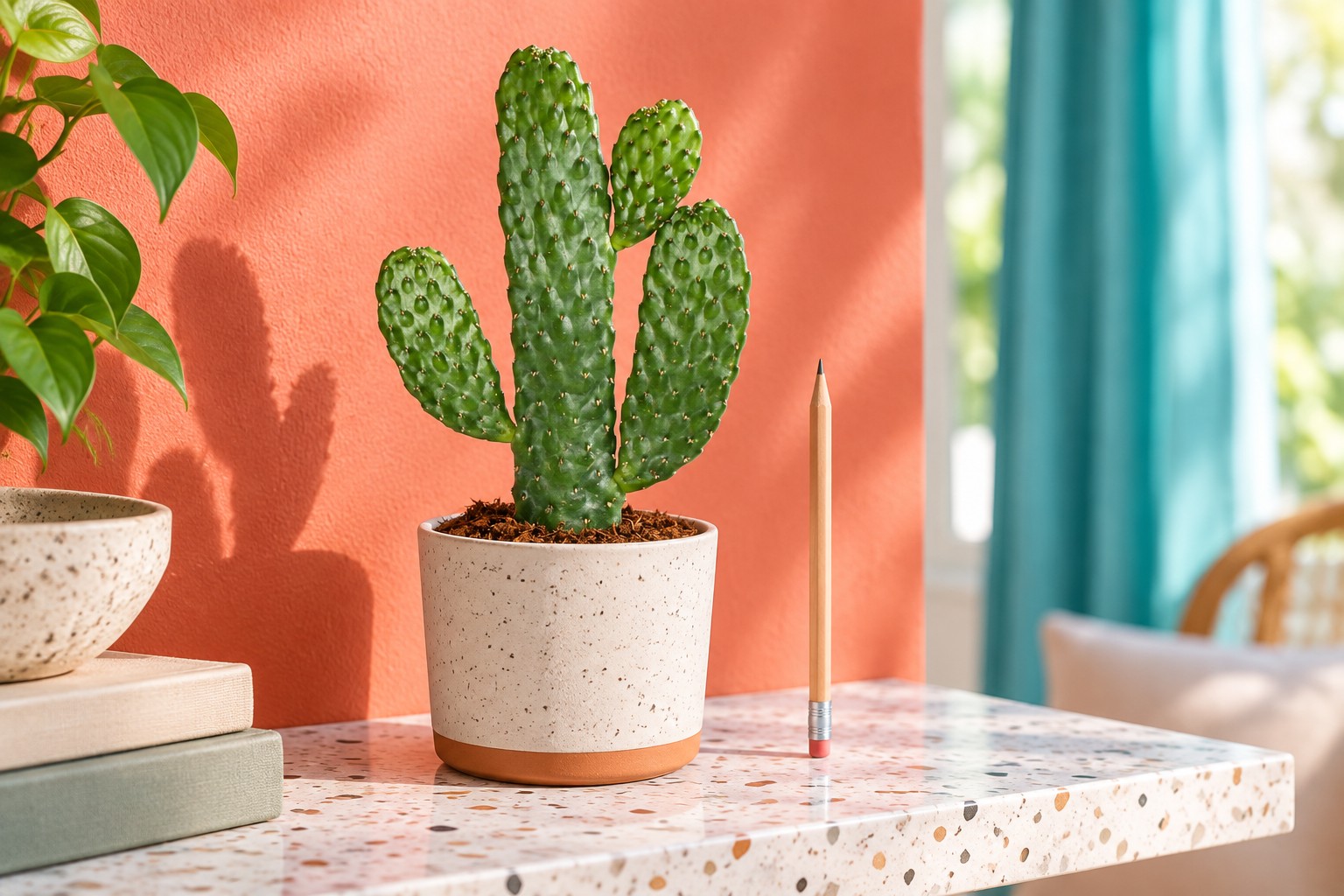
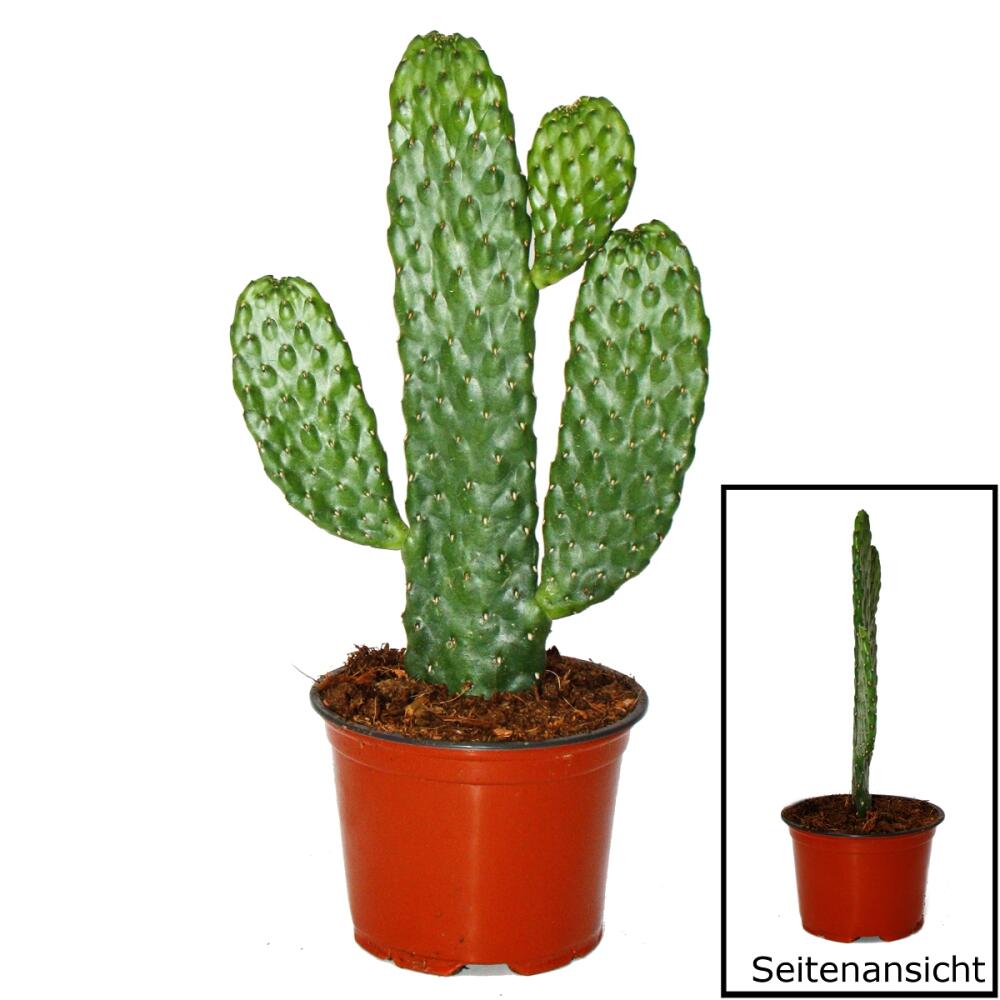
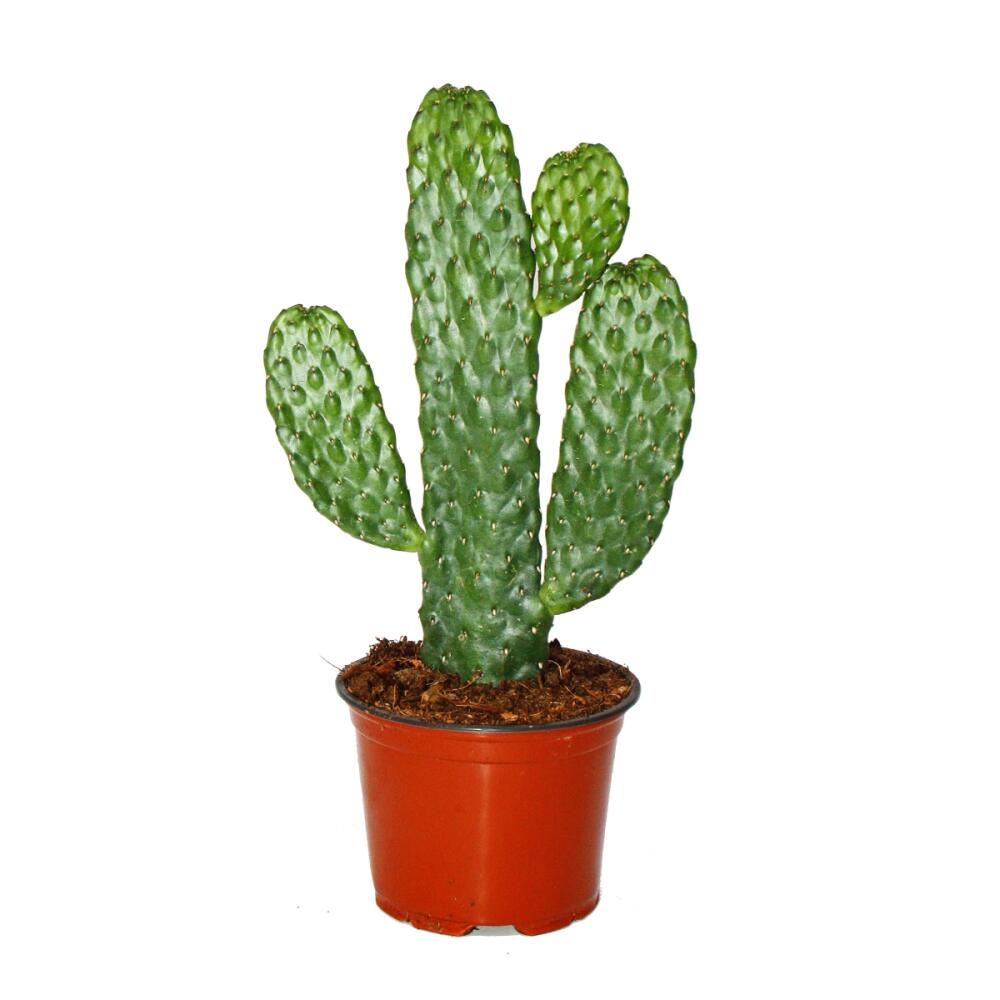
The broad green stems look like flat ears from the front. From the side, their true narrowness becomes apparent. Small depressions and areoles give the surface its own pattern. The offer lists a 12 cm pot and approximately 30 cm total height. The image shows a young plant with few side segments. A later tree-like structure is a possible development over a longer period, not part of this delivery size.
Caribbean origin rather than a generic desert backdrop
Consolea rubescens is a member of the cactus family related to the opuntias. Kew lists Puerto Rico and the Leeward Islands as its natural range. The shop’s general statement of the south-western USA is therefore corrected in this portrait. The flat green parts are stems, not large leaves. They store water and carry out photosynthesis. The unusual English trade name describes the flattened shape but says nothing about special care or resilience.
Build sunlight exposure gradually
Place it in very bright light and acclimatise gradually to direct sunlight. Hot midday sun can damage the green surfaces after darker shipping or winter conditions. In summer, a warm outdoor position protected from rain is possible. Turn the pot occasionally so that new growth does not develop one-sidedly towards the light. A narrow, secure position is useful as long as people do not constantly brush past the plant. The flat segments are not robust handles and can break at their joints.
Storing water does not mean standing wet constantly
Allow the root ball to dry well between waterings. Then water evenly and let all excess drain away. A drainage hole and structurally stable, free-draining cactus compost help with this. Water use may rise in summer and decreases markedly in winter. Fixed cupfuls and calendar dates are not a reliable basis. Check pot weight and internal moisture. Shrinking in dry compost and soft, dark areas in a wet root ball must be assessed differently.
Fine glochids deserve attention
Even a surface with few spines should not be tested with bare fingers. Small glochids can lodge in the skin. Use suitable tools and protection when repotting, and do not squeeze the body firmly. If needed, move it to a stable pot only moderately larger. Regular pruning is unnecessary for a young plant. A healthy detached stem segment can in principle root after its cut surface has dried completely, but needs airy compost and initially very restrained moisture.
Make winter bright and frost-free
As a Caribbean species, this plant receives frost-free winter quarters. A bright, moderately cool position with correspondingly little water is easy to monitor. Do not trap it between cold glass and a wet outer pot. Feed moderately during growth and stop during rest. A persistently soft stem base or blackening joints require inspection for rot. Small changes to older surfaces may instead be part of ageing. Flowers and fruit are not promised for this young indoor plant.
One plant, several views
Good to know
Are the flat ears leaves?
No. They are flattened green stem segments.
Is the cactus completely spineless?
Do not rely on that. Even areoles with few spines may carry fine glochids.
Does it come from the south-western USA?
Kew lists Puerto Rico and the Leeward Islands for this species.
Can it overwinter outside?
A frost-free winter position is recommended for our cultivation conditions.
Sources and editorial note
- Product and delivery contents: Exotenherz
- Royal Botanic Gardens, Kew: botanical classification
- Royal Horticultural Society: plant and care information
Sources checked: 15 September 2026. Product information and the contents of delivery follow the linked shop offer. Care advice was checked against the cited specialist sources and should still be adapted to the plant’s condition, position and season.