This plant at Exotenherz
Check the shop offer for current availability, price and what is included.
Check the shop for the price, current availability and what is included.
Your care table
| Topic | What to do | Why it helps |
|---|---|---|
| Light | Very bright; build stronger sun gradually. | Compact structure needs light without sudden heat stress. |
| Water | Water only after the root ball dries well. | The fleshy leaves help the plant through dry intervals. |
| Watering point | Apply water directly to the soil. | Wetness should not sit between tightly stacked leaves. |
| Compost | Well-drained succulent mix loosened with mineral components. | Air in root space supports healthy roots. |
| Fertiliser | Weakly dosed during growth following product instructions. | The small plant needs no heavy reserve feeding. |
| Winter | Bright and frost-free; much drier during rest. | Low light reduces water demand. |
| Repotting | Only when needed into a suitably larger container. | Too much unrooted soil stays wet for long. |
| Checks | Inspect leaf layers and base for pests or soft areas. | Early changes allow more targeted treatment. |
Check the compost and pot weight. The care table explains how far the compost may dry.
Water only when needed. The water should reach the root ball without spilling over the rim.
Remove surplus water from the saucer or cachepot. Then return the plant to a suitable position.
Leaf architecture in miniature
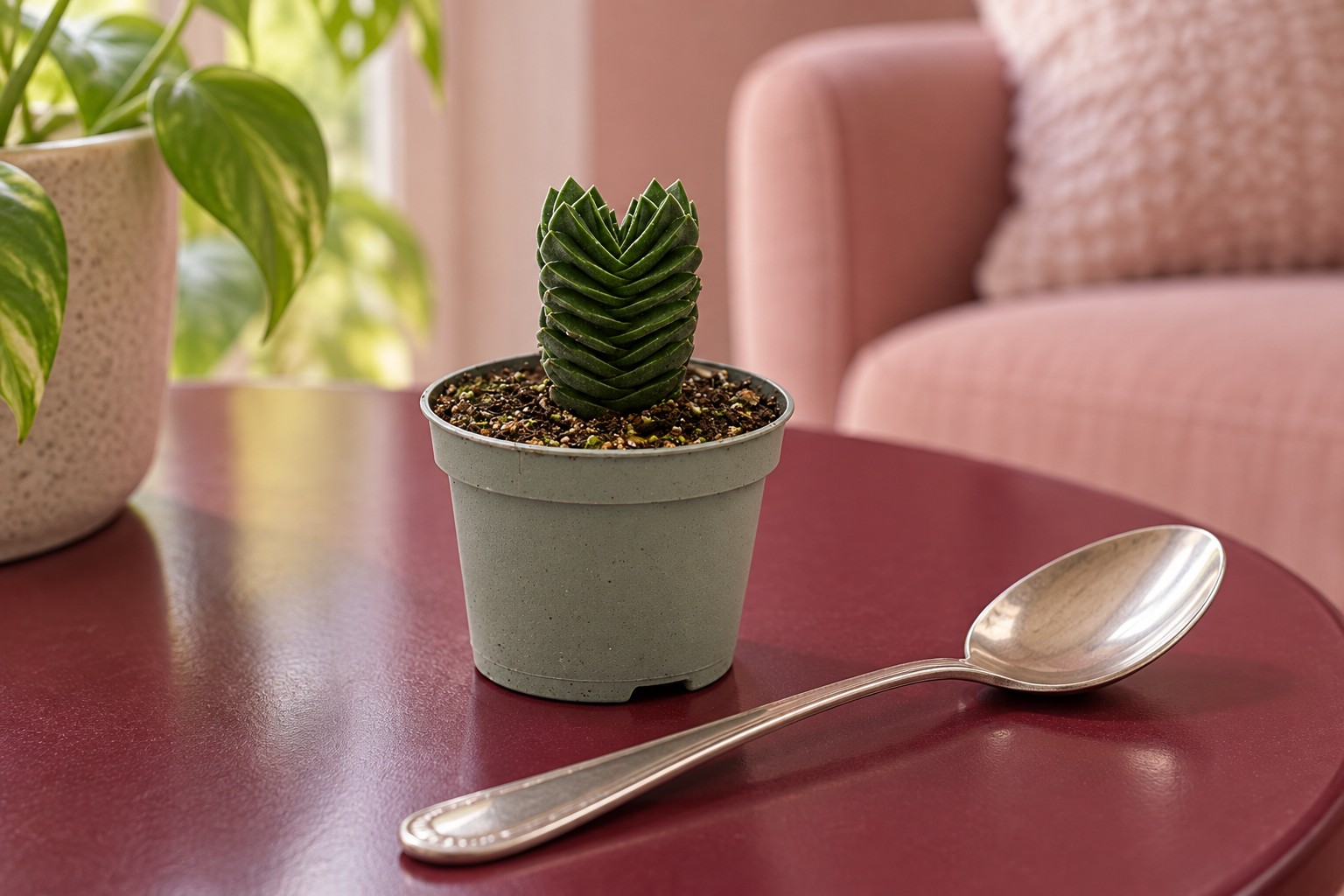
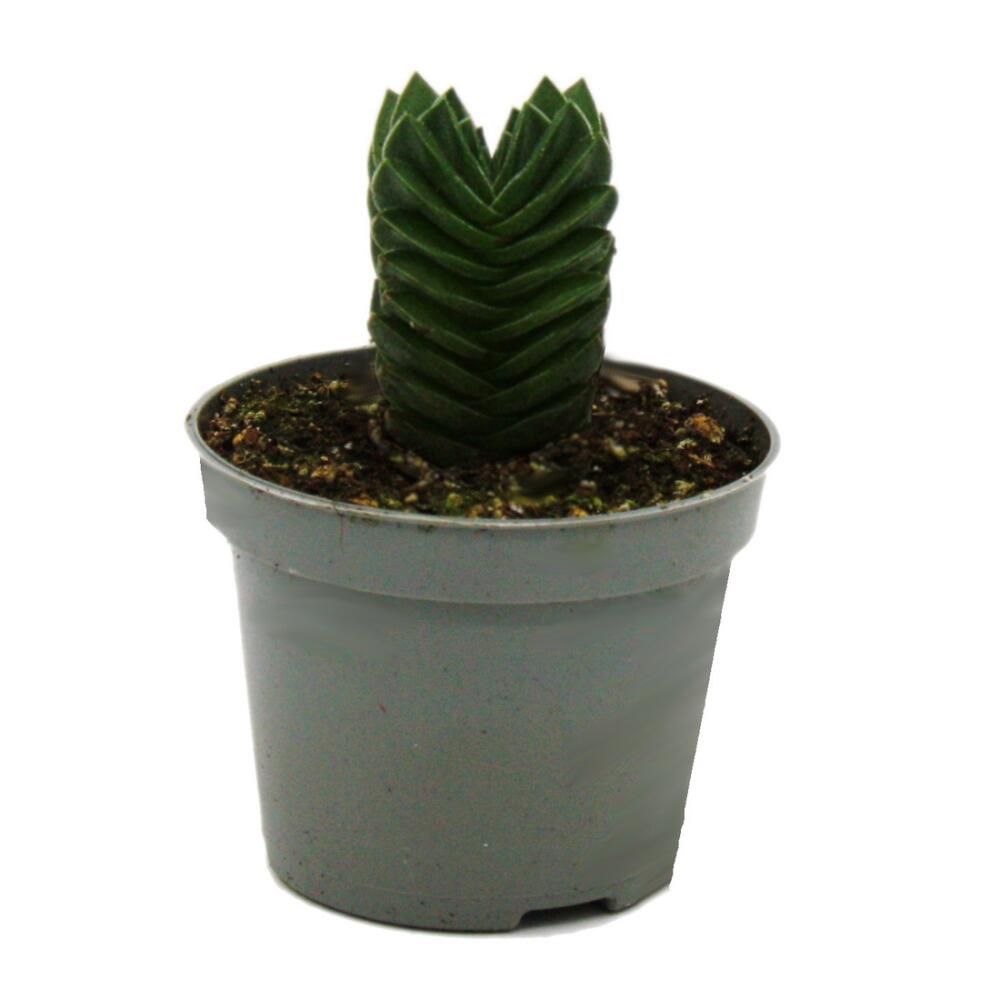
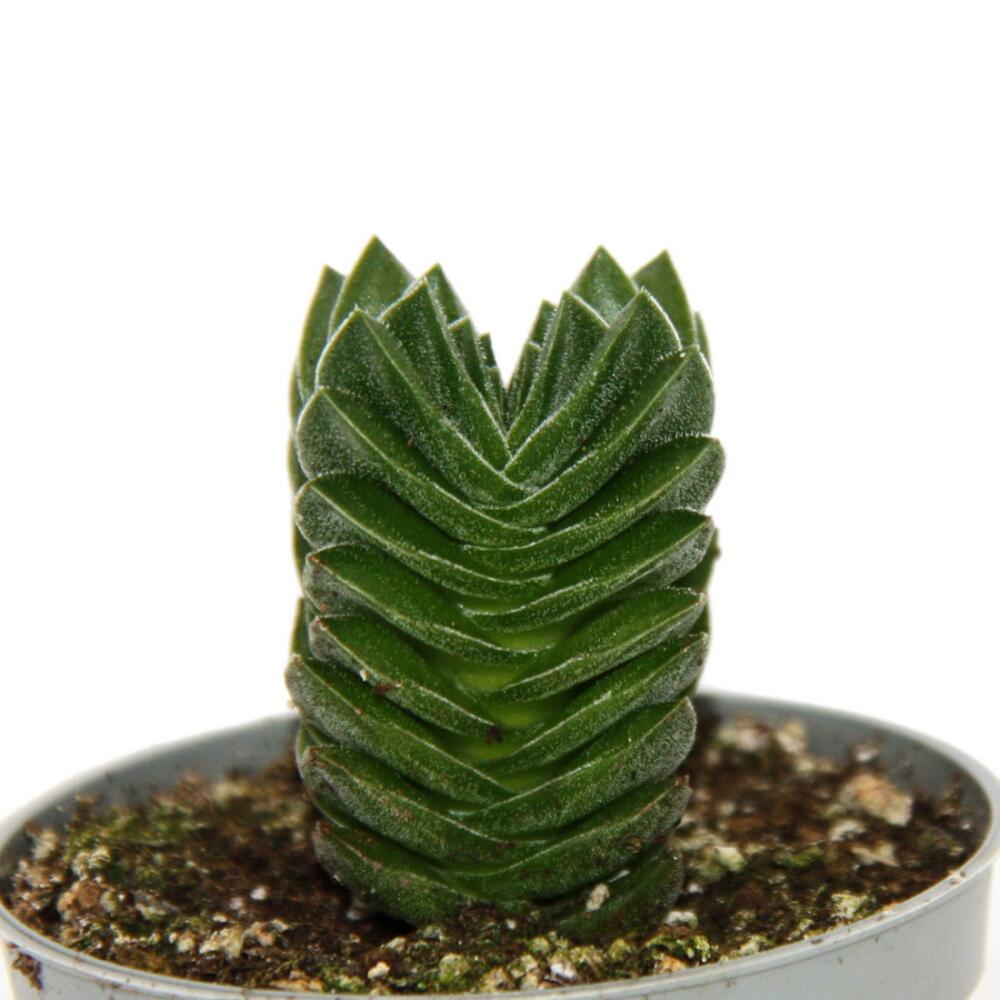
Opposite leaf pairs of Crassula Buddha’s Temple lie close together, forming a strikingly ordered column. Slightly raised margins make it resemble a tiny building. It belongs to the stonecrop family and is a horticultural hybrid. A country of origin of parent species is therefore not equivalent to a natural location for this cultivar. The plant may branch as it ages. Its typical form stays alive and changes; absolute symmetry is no quality measure for a grown plant.
What arrives in the small pot
The offer describes a 6 cm pot and about 6 to 8 cm overall height at roughly two to three years of age. It is genuinely a miniature. A low accessible shelf suits it better than a high cupboard where little light reaches it and nobody checks the root ball. After delivery, first inspect damaged leaves and moisture. Do not immediately repot, feed and change position repeatedly. A stable bright place eases adjustment.
Light for a compact temple
Choose a very bright position and gradually acclimatise to stronger sun. Behind glass, hot midday hours may stress the small plant more than gentle morning or evening sunlight. If new leaf spacing becomes markedly larger, check brightness. More fertiliser does not solve low light. A sheltered place outdoors is possible in summer provided rain does not repeatedly run between leaves. Bring inside before cool nights. Keep bright and frost-free in winter with much less water during limited growth.
Water the soil and protect the leaf stacks
Check the root ball before every watering. Once it has dried well, water may reach the roots and then drain completely. A narrow watering can helps aim at soil around the edge. Moisture must not remain between tightly packed leaf layers. Misting is no useful routine here. A pot with drainage and a succulent mix loosened with mineral components make care easier. The small root ball may dry quickly in warmth; this means more frequent checks, not a fixed daily or weekly watering appointment.
Feed sparingly and repot gently
During active growth, weakly dosed succulent fertiliser following product instructions is enough. Pause in winter rest. If compost becomes very dense or roots fill the pot, gentle repotting is sensible. Choose a suitably larger container rather than putting the miniature into a large moist soil reserve. Keep the base at its previous height. While working, hold the pot or root ball without squeezing the leaf stacks. Fresh injuries should heal dry; do not immediately water generously over the plant afterwards.
Recognise changes early
Carefully inspect between leaf layers for cotton-like mealybug nests. Soft dark tissue at the base is assessed differently from individual old dry leaves. If rot is suspected, first check moisture and roots and separate the plant from others. Shape pruning is normally unnecessary on a healthy small column. Later, suitable healthy side shoots may serve for propagation once cuts have dried. Small pink flowers are possible but neither assumed on a young plant nor promised as a delivery condition.
One plant, several views
Good to know
Is Buddha’s Temple a wild plant from Namibia?
It is a horticultural hybrid. Parent-species origins are not a natural location for the cultivar.
How large is the plant offered?
The shop states a 6 cm pot diameter and about 6 to 8 cm overall height.
May I mist the leaves?
It is unnecessary. Apply water to the soil instead so it does not remain between leaf layers.
Must the column grow perfectly straight?
Small differences are natural. Markedly looser new growth may indicate too little light and should be assessed together with position.
Sources and editorial note
Sources checked: 15 September 2026. Product information and delivery contents follow the linked shop offer. Care has been checked against the stated specialist sources and remains subject to plant condition, position and season.