This plant at Exotenherz
Check the shop offer for current availability, price and what is included.
Check the shop for the price, current availability and what is included.
Your care table
| Topic | What to do | Why it helps |
|---|---|---|
| Light | Bright to sunny; build stronger sun gradually. | Dense structure needs sufficient light. |
| Water | Water during growth after the root ball dries. | The plant is a succulent, not moss to keep moist. |
| Compost | Well-drained succulent mix with mineral components. | Roots need air between waterings. |
| Drainage | Remove surplus from the saucer or cover pot. | Constant wetness threatens shoot bases. |
| Fertiliser | A few weak feeds during growth. | Pause during rest and do not feed strongly on guesswork. |
| Pruning | Shape gently only as needed. | Initially preserve healthy young leaf mass. |
| Winter | Bright, frost-free and much drier at rest. | Cypress-like growth does not mean frost resistance. |
| Checks | Inspect dense junctions for mealybugs and soft areas. | Early changes are easier to interpret. |
Check the compost and pot weight. The care table explains how far the compost may dry.
Water only when needed. The water should reach the root ball without spilling over the rim.
Remove surplus water from the saucer or cachepot. Then return the plant to a suitable position.
Many small leaves create a distinctive form
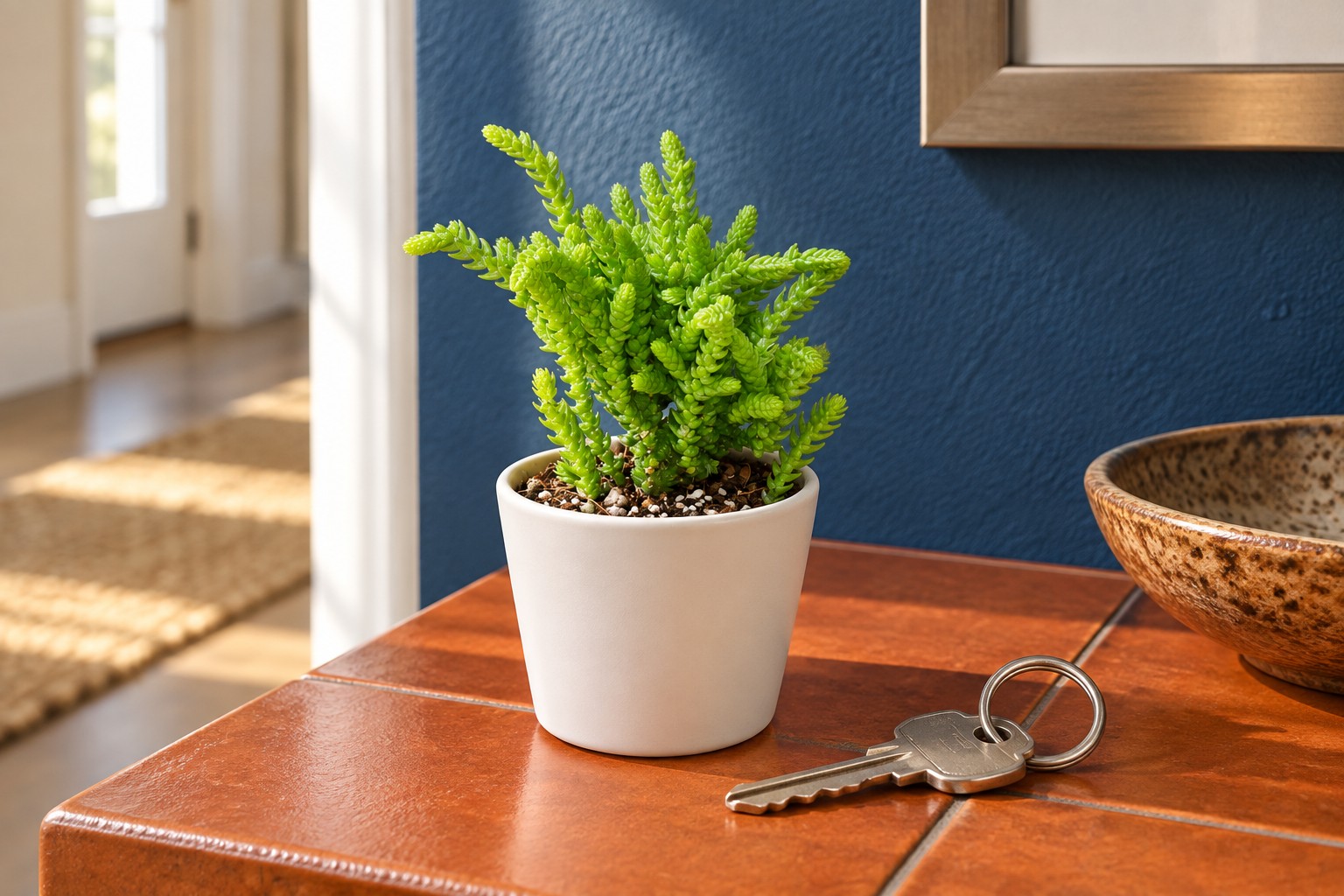
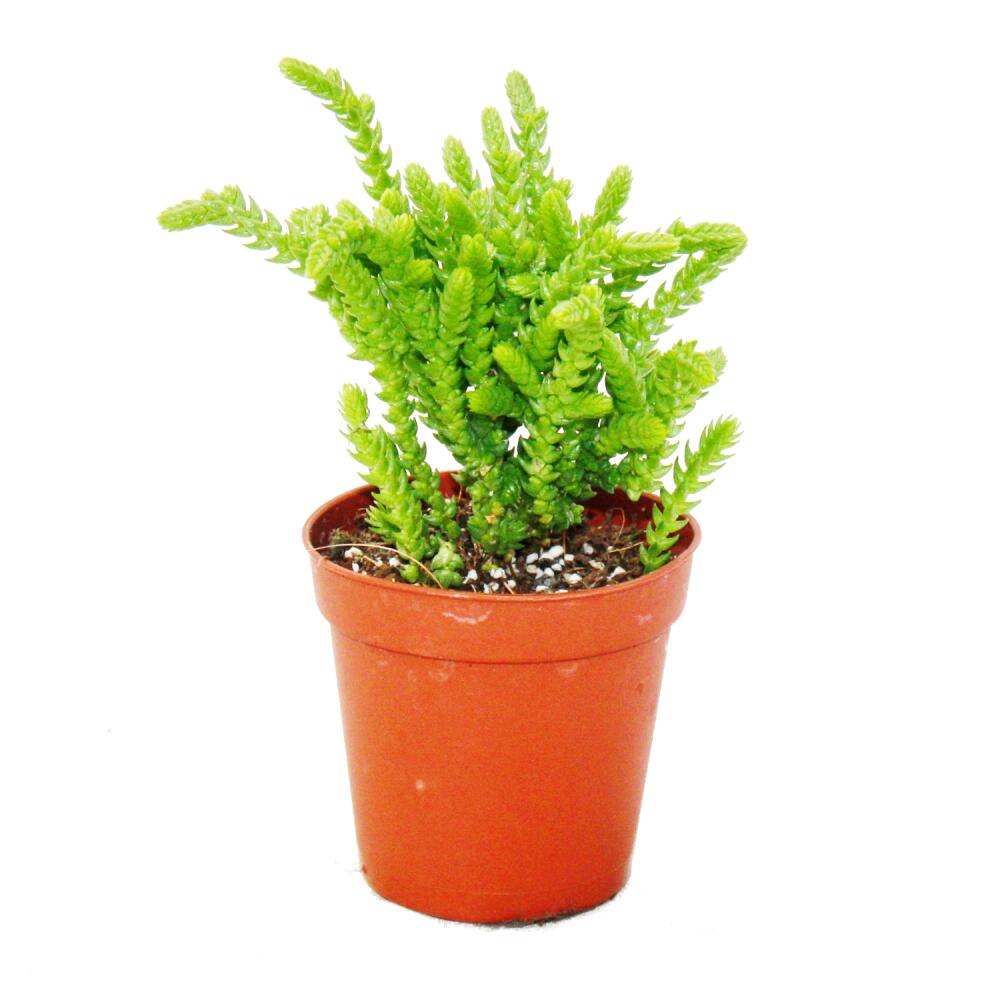
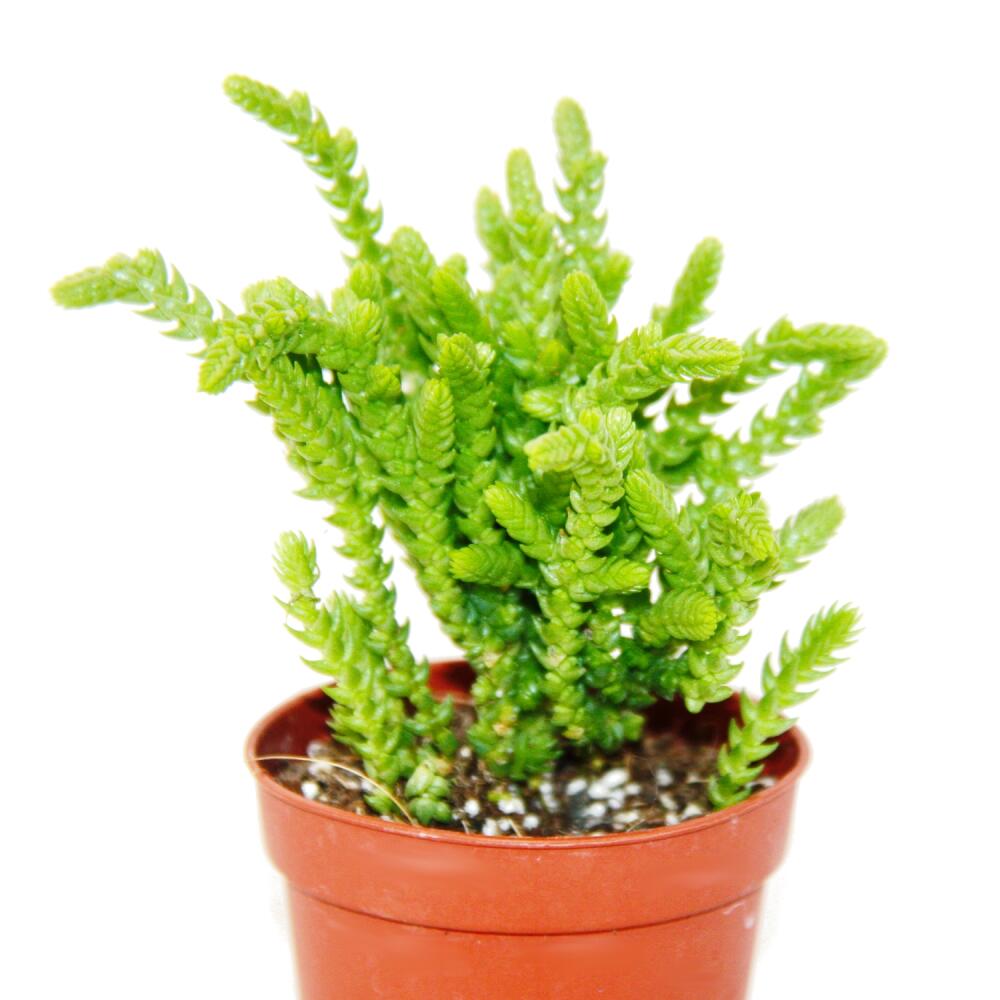
Crassula muscosa builds its fine shoots from close-fitting overlapping leaves. The effect recalls small green chains or miniature cypress branches. Botanically, however, it belongs to the stonecrop family. Crassula lycopodioides is a common synonym and also appears in the shop name. Its native home is South Africa and Namibia. Over time, the plant branches and may spread more loosely. Not every shoot needs to stand upright for the plant to look healthy and typical.
A small plant worth a close look
The offer states a 5.5 cm pot and about 8 to 10 cm overall height at roughly two years of age. The small format shows tiny leaf rows particularly well. A bright position on an accessible console or side table is sensible. The plant should not disappear so deeply among decoration that light and checks are missing. If individual branches have shifted in transport, do not immediately cut back hard. First set the pot securely, inspect damaged parts and give the plant time for new growth.
Brightness maintains dense structure
Plenty of light supports healthy compact branching. Acclimatise gradually to direct sun, particularly after protected conditions. Low light may cause looser weaker shoots. Extra fertiliser does not reverse this change. A sheltered summer position outdoors is possible as long as prolonged rain does not keep the small root ball wet. Bring it inside before cold. Keep bright and frost-free in winter. A cypress-like appearance does not mean the winter hardiness of some woody plants; equally, this plant is not cultivated like permanently moist moss.
Allow drying without forgetting the plant
During active growth, water after the soil dries. Water should reach the root space and surplus should drain. A pot with drainage is essential. Small daily sips keep the surface slightly moist but make judging the inner root ball harder. Check weight and soil condition instead. Very small pots may require frequent checks in warm weather without every check ending in watering. Supply much more sparingly in winter with little growth. Wet heavy compost remains unsuitable.
Use nutrients and pruning moderately
During growth, a few weakly dosed feeds following product instructions are enough. Do not continue feeding at rest. Shape pruning is not inherently necessary. If long shoots get in the way, strong plants can be shortened gently with clean tools. Do not remove a large part of a young plant at once. Healthy sections may be used for propagation in well-drained compost after cut surfaces dry. Supply cautiously until rooting. Strong fresh shoots indicate suitability for such interventions better than a fixed date.
Check between the fine shoots
Dense structure may hide mealybugs or other pests. Inspect sheltered junctions especially for new cotton-like nests and the base for soft dark areas. Old dry tissue is assessed differently from rapidly progressing rot. With problems, first check water balance, light and roots rather than treating visible tips alone. Small inconspicuous yellow-green flowers may appear along shoots. They are a possible detail, not a guaranteed delivery condition. Its lasting appeal lies mainly in fine leaf arrangement and healthy well-branched growth.
One plant, several views
Good to know
Is watch-chain crassula a small cypress?
No. Crassula muscosa belongs to the stonecrop family. The resemblance comes from densely overlapping small leaves.
Are Crassula muscosa and lycopodioides different plants?
Lycopodioides is a common synonym. Both names are included for searching.
Should I mist the fine shoots daily?
Water supply according to root-ball condition is decisive. Constantly damp shoots do not replace watering.
Must every outward-growing shoot be cut off?
No. The plant naturally branches and may spread. Shape gently only as needed.
Sources and editorial note
Sources checked: 15 September 2026. Product information and delivery contents follow the linked shop offer. Care has been checked against the stated specialist sources and remains subject to plant condition, position and season.