This plant at Exotenherz
Check the shop offer for current availability, price and what is included.
Product and delivery details are given in the individual offer.
Your care table
| Topic | What to do | Why it helps |
|---|---|---|
| Light | Grow close to a bright window and also light the top of the pot. | Not just the hanging shoots but also the densely leafy crown needs sufficient light. |
| Water | Water thoroughly after the root ball has dried appreciably, then let it drain. | Fleshy leaves store water; lasting wetness endangers the roots. |
| Checking | Check pot weight and soil beneath the leafy cushion. | Dense foliage can hide substrate that is still moist. |
| Compost | Use an airy gritty succulent mix and open drainage holes. | The root zone should be able to dry again after watering. |
| Feeding | During active growth, feed sparingly according to the succulent fertiliser label. | Fertiliser does not make thin long shoots caused by low light more compact. |
| Trailing stems | Let shoots hang freely and protect them from bending when moving. | Thin stems easily catch on shelf edges and other plants. |
| Propagation | Use healthy stem sections with several nodes as cuttings or layers. | Nodes can form roots and later fill sparse growth at the top of the pot. |
| Winter | Keep bright and frost-free; water much more sparingly during reduced growth. | Less light slows water use, and wet cool soil also dries slowly. |
Check the compost and pot weight. The care table explains how far the compost may dry.
Water only when needed. The water should reach the root ball without spilling over the rim.
Remove surplus water from the saucer or cachepot. Then return the plant to a suitable position.
A string of beads made from green drops
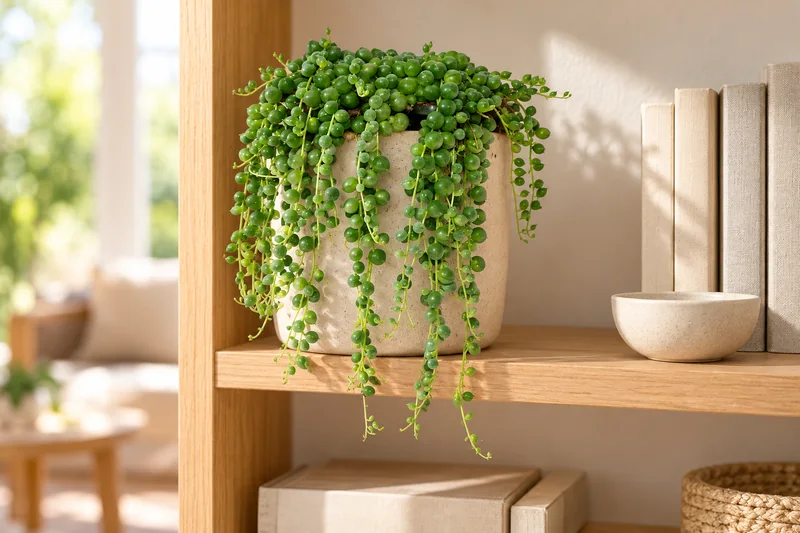
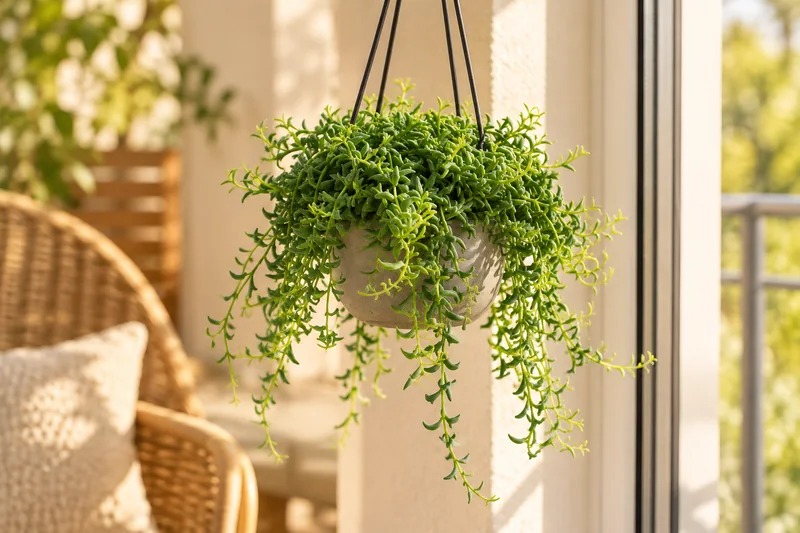
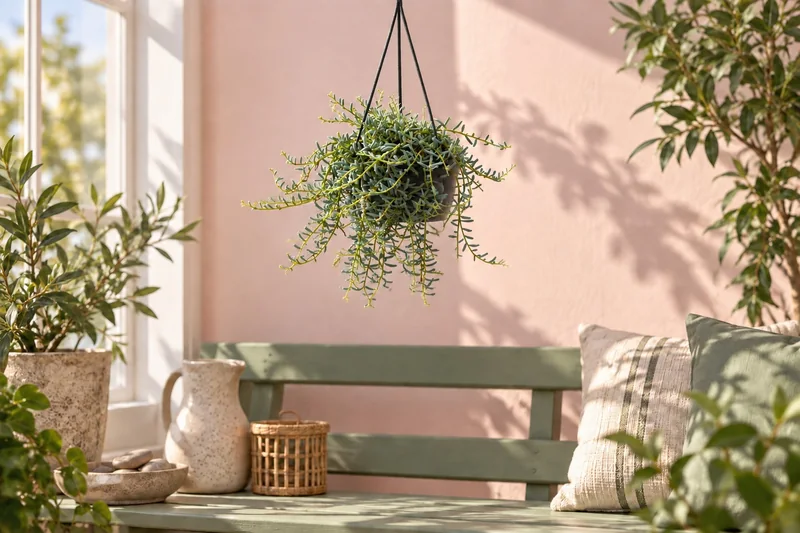
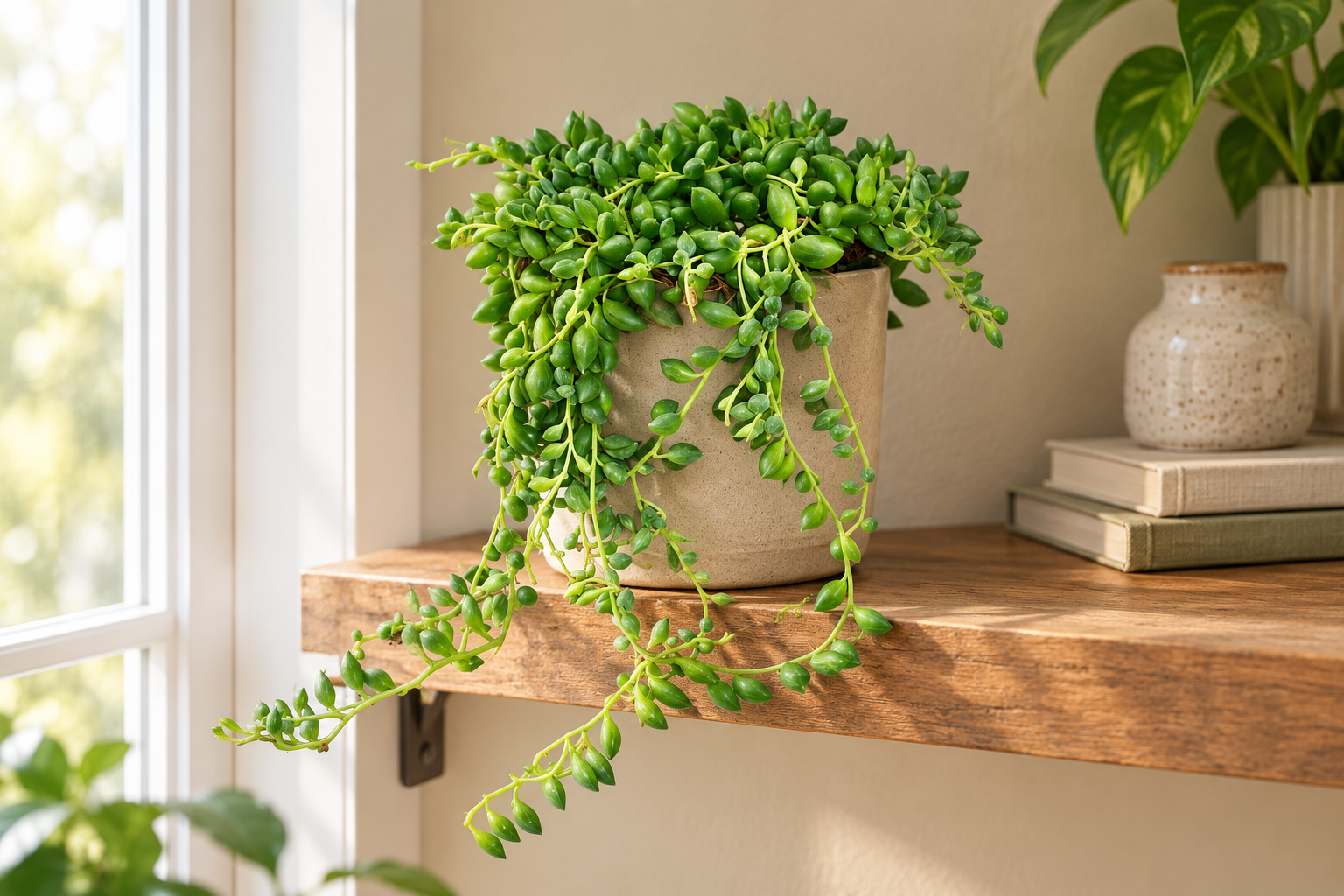
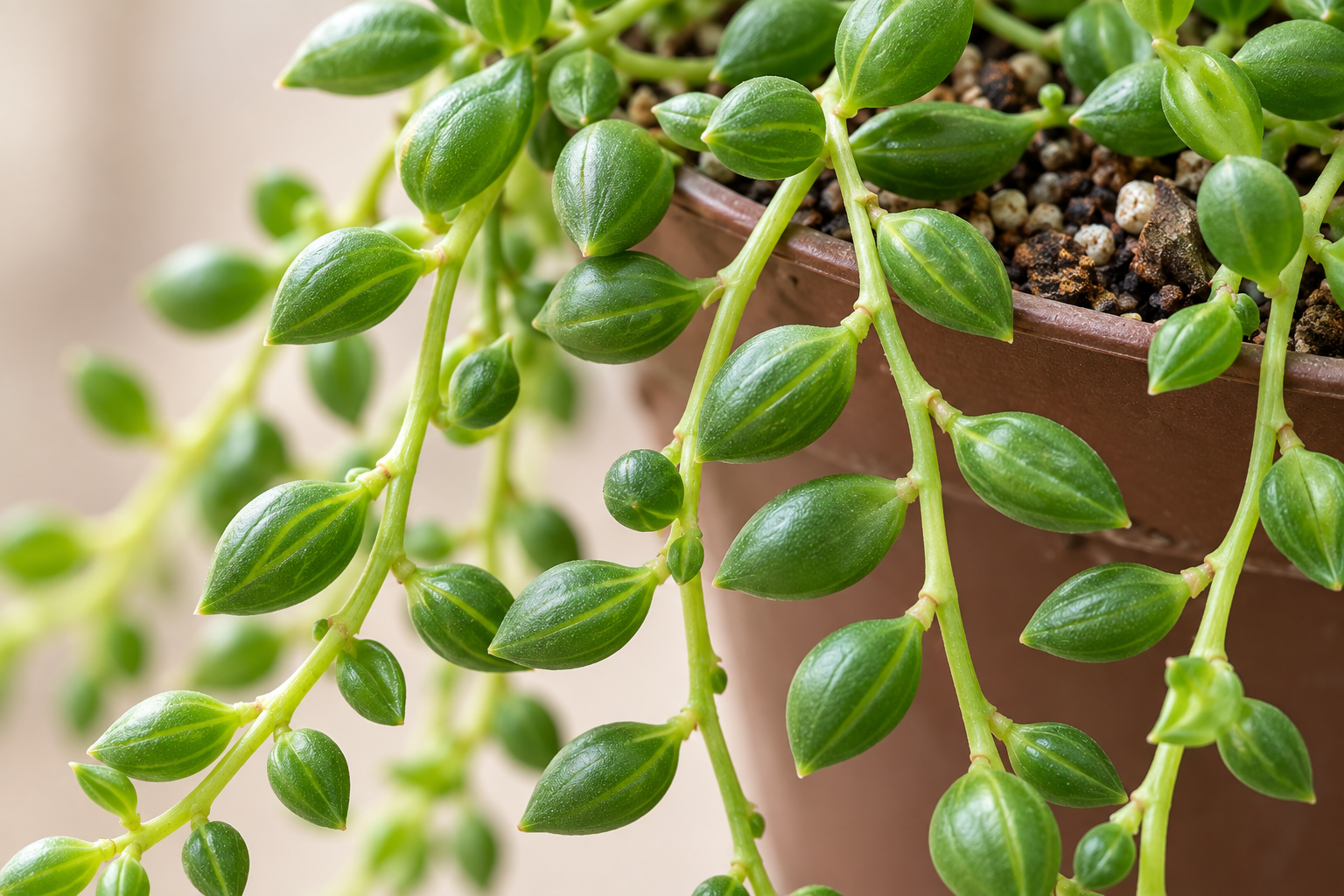
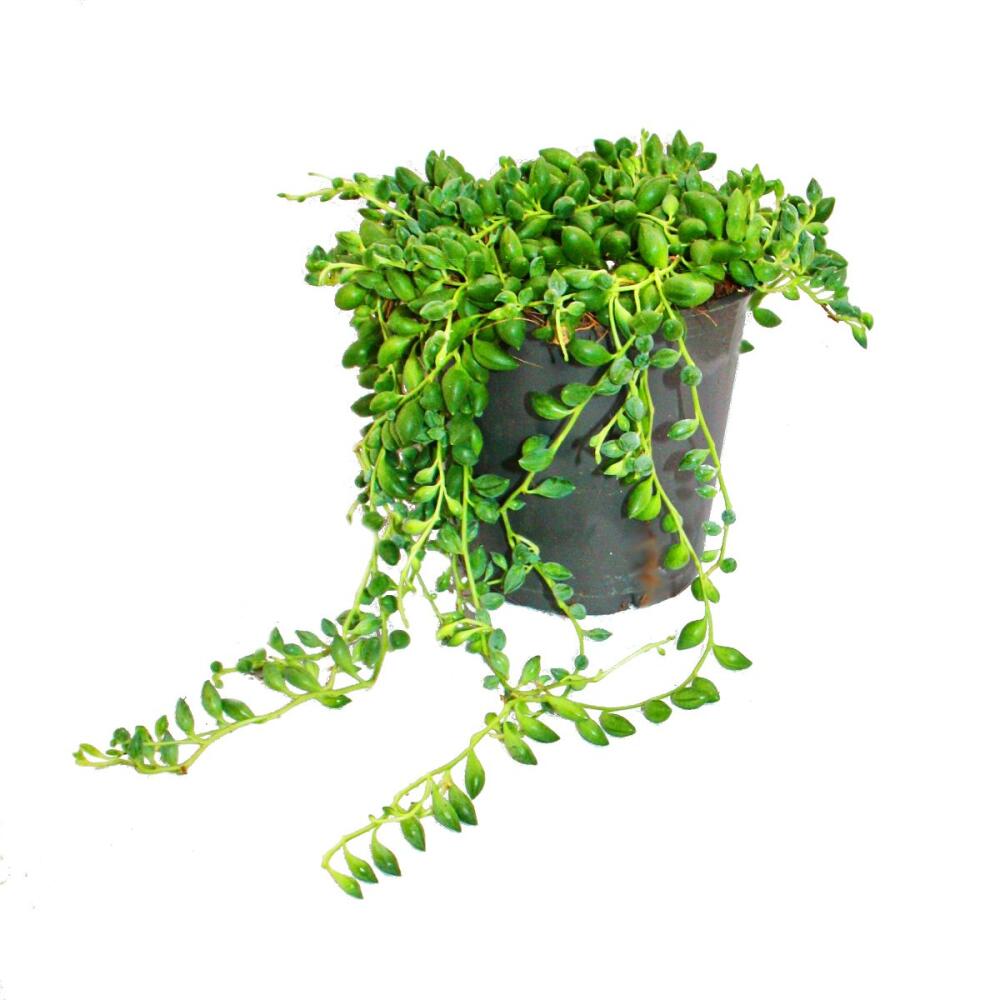
Curio herreanus shows its character in each individual leaf. Its green storage leaves are oval to drop-shaped and end in a small point. They have short attachments to thin stems that lie over the pot edge and hang down. Some leaf surfaces reveal fine darker lines running lengthwise. The markings are not equally conspicuous on every leaf and become visible differently depending on the viewing angle. Together they form a dense green crown with loose short strings underneath. A tall stable pot or bright shelf edge makes this movement clearly visible. However, the whole plant matters for light: a trailing stem may look pretty against a pale wall while the top of the pot stands in the shade of a shelf above. Give the upper foliage light and air too. Do not stroke the fleshy leaves or roll them out between your fingers to examine their shape more closely.
A succulent species from Namibia, not an edible pea
The accepted botanical name is Curio herreanus. The shop uses Senecio herreanus; this older name is a documented synonym. The species belongs to the daisy family and comes from Namibia, where it grows in dry habitats. Its small leaves store water and allow dry intervals in cultivation. It is not related to an edible garden pea and its leaves are not meant for consumption. The similar green string Curio rowleyanus has round ball-shaped leaves; here the leaves are distinctly oval and pointed. The linked offer states a 12 cm pot and approximately 15 to 25 cm length of trailing stems. This measurement describes the hanging shoots, not total height including the container. New shoots can lengthen over time. A free edge with enough space below prevents young tips continually lying on a table or rubbing against objects.
Light for the crown and the next nodes
A very bright window position with indirect light suits pot cultivation. Introduce stronger sunlight gradually, especially after shipping or a darker winter. A sudden move to a hot south-facing pane can damage leaves. Observe newly developing shoot sections: if they become unusually long, thin and sparsely spaced with leaves, check brightness. Extra fertiliser is no substitute for light. On a shelf, the pot should be close to the window and not under a deep shading surface. A mild bright period outside in summer is possible after acclimatisation if the pot is protected from prolonged rain and does not become chilled at night. In autumn it needs a bright frost-free indoor position again. Coming from a dry climate does not promise that it will tolerate a wet German winter outdoors.
Dry intervals in the root ball rather than mandatory weekly watering
Before watering, check the soil underneath the leaf cushion and the weight of the pot. Let the root ball dry appreciably between waterings. Afterwards water evenly and thoroughly until water comes through the drainage holes. If necessary, remove the nursery pot from the outer pot, let it drain and only then put it back. The root ball must not stand in residual water. Aim water at the soil rather than constantly showering dense shoots. A fixed weekly rhythm accounts for neither winter light nor pot material or growth. Very shrivelled leaves with an actually dry root ball can indicate too long a pause. Soft translucent leaves on wet or dark shoots, however, require a root and wetness check. More water would not then be a sensible first step. Fine lines on healthy leaves are part of the leaf form and are not, by themselves, a sign of disease.
Gritty compost and a pot only suitably larger
An airy succulent mix with suitable mineral components supports a root zone that can dry again after watering. Heavy permanently moist soil and a closed planting container are less suitable for water-storing leaves. A decorative outer pot is possible if it merely surrounds the drained nursery pot and stays free of residual water. Once the root space is well filled, repotting can be done in spring. Choose the next container only moderately larger; a lot of unrooted soil stays moist longer. Lay out the trailing stems during the work so they do not go beneath the root ball or catch on the table. Grasp the pot and support the root ball rather than lifting the whole plant by its thin stems. During active shoot development, restrained feeding according to the label of a suitable succulent fertiliser is sufficient. Do not force new growth with extra nutrients in a quiet, lower-light winter phase.
Gently shorten trailing stems and fill sparse areas
Thin shoots may grow over the rim as long as the space is free. When moved, they easily catch on shelf brackets, other plants or clothing. Lift the container calmly and release caught sections individually without pulling. If a trailing stem is too long or the crown becomes sparse, healthy stem sections with several nodes can be used for propagation. Such pieces can be rooted as cuttings or gently laid onto suitable substrate in a sparse area, bringing a node into contact with the soil. Keep the propagation area controllable instead of making the whole mother root ball constantly wet. A single broken-off leaf is not a reliable promise of a complete new plant. Clean tools protect shoots when cutting; gloves are sensible because of possible skin irritation. If you enjoy its loose structure, you do not need to cut the shoots back constantly for purely decorative reasons.
A bright winter and a careful look beneath the cushion
Overwinter Curio herreanus bright and frost-free, preferably at temperatures above ten degrees. With reduced growth, water correspondingly more sparingly without leaving the plant unobserved for months. Cold draughts and a wet root ball are an unfavourable combination. A warm dark position is also no shortcut for winter care, as weak long shoots can develop there. Occasionally look into the dense crown and beneath the hanging leaves. White cottony deposits, small fixed scales or fine webs may indicate pests. Soft dark shoot parts need a different inspection from individual old leaves that have dried out. Keep a conspicuous plant away from others until clarified. A strong new shoot tip and firm green drop-shaped leaves then show whether conditions suit better than an already damaged old section. Hang the plant so small children and animals cannot reach its tempting leaf chains.
One plant, several views
Good to know
What is the botanical name?
Curio herreanus is the accepted name. Senecio herreanus is listed as a botanical synonym.
Are the leaves round peas?
They are fleshy and oval to drop-shaped with a small point. The similar-looking Curio rowleyanus carries rounder ball-shaped leaves.
What does 15–25 cm in the offer mean?
It means the length of the trailing stems, not total height with the pot or an eventual mature size.
Must I water once a week?
No. Check the root ball and water after appreciable drying; light, warmth and pot change the demand.
Can I use a long trailing stem for propagation?
Healthy stem sections with several nodes can be used as cuttings or layers. One leaf is not a reliable promise of a new plant.
Can it remain outside in winter?
A bright frost-free place is intended for pot cultivation, preferably above ten degrees. Wet cold open ground is not safe winter cultivation.
Sources and editorial note
- Exotenherz: complete own offer and unchanged original gallery
- Kew POWO: accepted name Curio herreanus, synonyms and Namibia
- RHS: Senecio herreanus, leaf shape and cultivation
- RHS: string of beads, complete growing guide
Sources compared: 4 October 2026. The complete own shop offer and clean original gallery were read and viewed. Offer measurements describe the young plant offered and are not its eventual mature size.