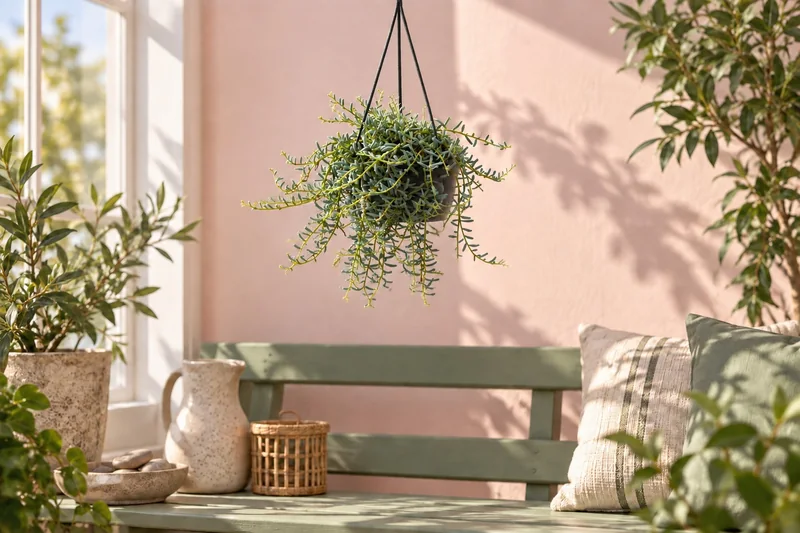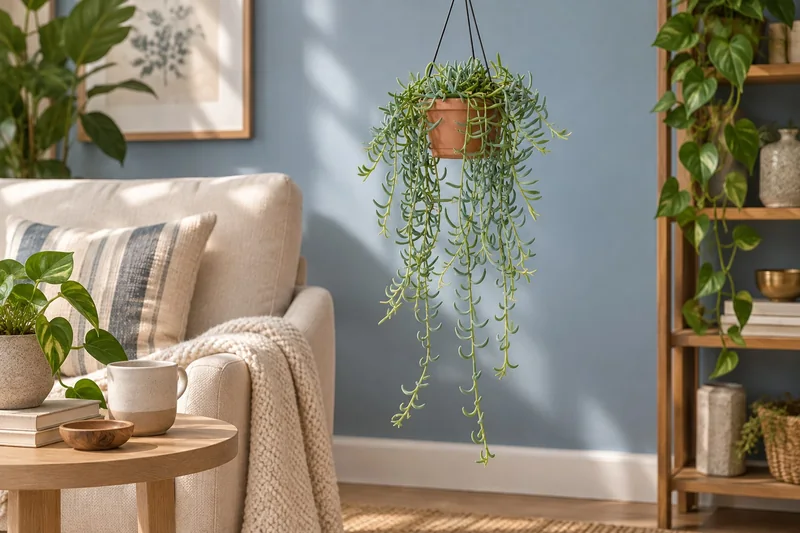
This plant at Exotenherz
Check the shop offer for current availability, price and what is included.
Check the selected shop offer for price, availability and delivery contents.
Your care table
| Topic | What to do | Why it helps |
|---|---|---|
| Light | Very bright; light the top of the pot too. | Shoot bases should not become bare in the shade of a shelf. |
| Water | Let the rootball dry well between waterings. | The round leaves store water. |
| Drainage | Remove excess water after thorough watering. | Persistently damp pockets threaten the fine roots. |
| Soil | Loose succulent compost opened up with mineral components. | Air and drainage support dry phases. |
| Pot | Repot into only a moderately larger pot; lay shoots out carefully. | Too much extra soil dries slowly. |
| Winter | Bright and frost-free; water according to growth and moisture. | Water demand falls with light and temperature. |
| Pruning | Gently shorten healthy shoots when needed. | The fine chains should not tear while working. |
| Checking | Assess leaf firmness together with the rootball. | Wrinkled leaves may have different causes. |
Check the compost and pot weight. The care table explains how far the compost may dry.
Water only when needed. The water should reach the root ball without spilling over the rim.
Remove surplus water from the saucer or cachepot. Then return the plant to a suitable position.
Small spheres with a special role
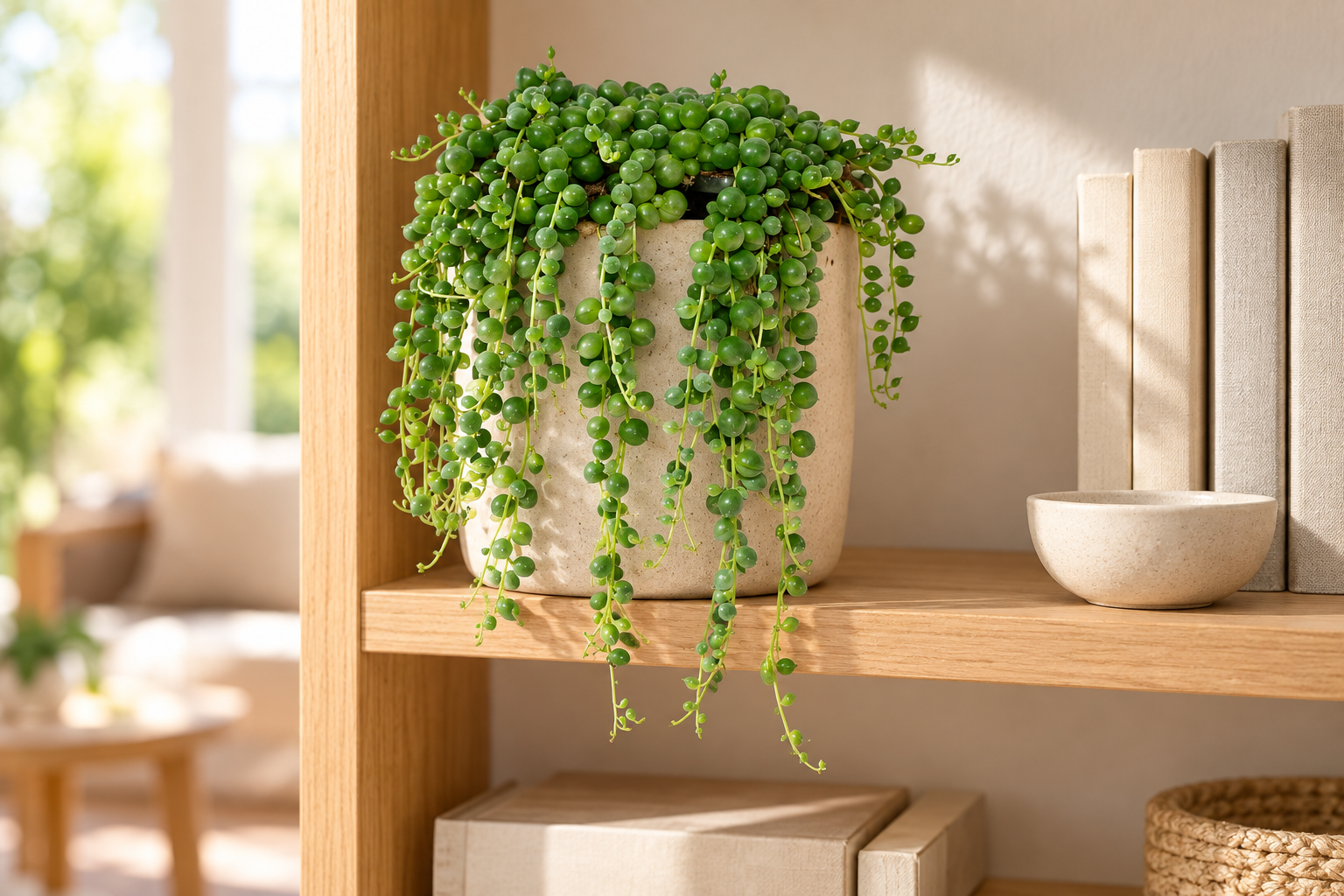
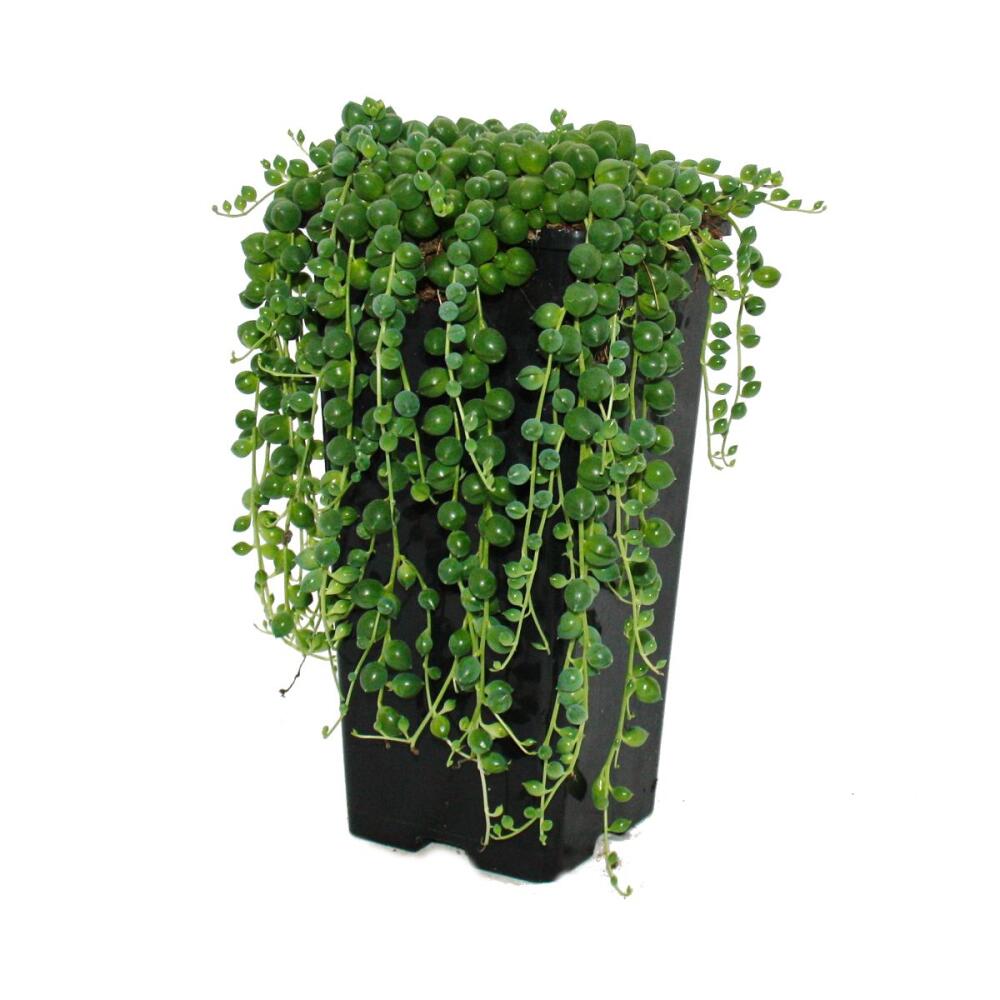
Each string-of-pearls leaf looks like a small green pearl. Thin shoots connect them into chains that soon settle over the edge of the pot. Curio rowleyanus is often still offered as Senecio rowleyanus. The spherical shape is not merely attractive: it helps this succulent plant store water. Our offer in a 14 cm pot is approximately 25 cm in total height. We therefore start with a manageable trailing plant whose chains can continue developing. A bright position and carefully monitored dry pauses suit it better than a hidden spot above a dark shelf.
The top needs light too
Many hanging plants receive enough light below while the top of their pot almost disappears beneath the ceiling. This is unsuitable for string of pearls: the shoot bases should stay healthy and leafy. Choose a position where light also reaches the top of the plant. Some sunshine is possible after acclimatisation; do not put a just-unpacked plant straight against the hottest window. On a bright shelf, it can grow over the edge. Books and decoration must neither shade the surface nor trap the delicate shoots.
The rootball needs air between waterings
Let the soil dry well between waterings and check the pot’s weight. Then water thoroughly until water emerges underneath. Let the excess drain before returning the pot to its container. This supplies the roots without keeping them constantly in damp soil. A small daily sip is often harder to assess than a complete watering followed by a pause. Intervals change with season, room temperature and substrate. In winter, a hanging basket in a cool, bright spot becomes thirsty much more slowly than in warm summer sunshine.
Wrinkled pearls are not a clear thirst indicator
If individual leaves shrivel, inspect the rootball first. If it is dry and the rest of the plant is firm, watering may be right. If the soil has remained wet for a long time, however, damaged roots may no longer supply the leaves sufficiently. More water would then move in precisely the wrong direction. Soft, translucent leaves and a darkening base are particularly serious. Check the plant gently and separate it from others if needed. A single old leaf at a shoot base, on the other hand, may simply have reached the end of its life.
Repot without tearing the chains
When repotting, lay the long shoots loosely on a clean surface rather than using them as handles. An only moderately larger pot and airy succulent compost are usually enough. Mineral components improve drainage, while an excessive volume of heavy soil remains wet for a long time. Do not plant unnecessarily deeper, so the shoot bases stay exposed. Repotting makes most sense during visible growth and when root space is cramped. A newly arrived plant need not be changed immediately if its existing pot drains and the soil is easy to check.
Gently accompany the long shoots
Over time, longer chains develop that frame a hanging basket or shelf attractively. Give them room and avoid a position where people constantly brush against them. Healthy shoots can be shortened when needed; use clean tools and cut only where genuinely necessary. Restrained feeding according to product instructions is enough during active growth. If growth stops, first check light and roots. Nutrients do not replace a suitable position. Small pale flowers may appear, but the main effect of this plant remains its special leaf shape, not a guaranteed flowering date.
A bright winter place for the pearls
String of pearls remains frost-free and as bright as possible. With cooler temperatures and short days, reduce water and fertiliser to match growth. The dry pause becomes longer, but do not lose sight of the plant. Occasionally check shoot bases, leaf firmness and moisture deeper in the pot. We enjoy this delicate network most when its cultivation is easy to monitor. An accessible basket is therefore often better than the highest spot in the room. With little disturbance and suitable light, the small pearls become living chains.
One plant, several views
Good to know
Is Senecio rowleyanus the same name?
Yes. Curio rowleyanus is the currently used botanical placement of string of pearls.
Why is the plant bare at the top?
Check light at the top of the pot as well as moisture and roots; a dark basket base is unsuitable.
Do shrivelled pearls always mean drought?
No. Check the rootball first; damaged roots in wet soil can also cause water-supply problems.
Can it go on a dark shelf?
Not permanently. The plant needs plenty of light, including at shoot bases.
Should I mist it?
That is not necessary for normal water supply. Water the substrate in a controlled way.
How do I repot without damage?
Lay shoots loosely down and hold the plant by the rootball; do not pull the chains.
Can it overwinter in the garden?
No. A bright, frost-free winter position is needed.
Sources and editorial note
- Exotenherz: offer and original photographs (01.10.2026)
- RHS: String of beads (01.10.2026)
- Kew: Curio rowleyanus (01.10.2026)
- RHS: caring for succulents (01.10.2026)
Shop offer, SKU, GTIN and availability checked live on 01.10.2026. Original photograph unchanged. Independently researched horticultural texts and an individually reviewed scene.