This plant at Exotenherz
Check the shop offer for current availability, price and what is included.
Check the selected shop offer for price, availability and delivery contents.
Your care table
| Topic | What to do | Why it helps |
|---|---|---|
| Light | Very bright; introduce direct sunshine gradually. | New growth needs light for a distinct leaf shape. |
| Watering | Let the rootball dry well, then water thoroughly. | The fleshy leaves contain water reserves. |
| Hanging basket | Ensure free drainage and a reachable pot. | Hidden waterlogging otherwise goes unnoticed for a long time. |
| Soil | Free-draining succulent compost with mineral content. | Fine roots should grow with good aeration. |
| Feeding | Sparingly during active growth, following the product label. | Heavy feeding does not help a poorly lit plant. |
| Winter | Frost-free and bright; adjust moisture to cooler conditions. | With less growth, the pot dries more slowly. |
| Pruning | Shorten individual healthy shoots when needed. | This preserves the natural chain-like form. |
| Checking | Examine new leaves, shoot bases and rootball together. | Changes of shape may indicate unsuitable growing conditions. |
Check the compost and pot weight. The care table explains how far the compost may dry.
Water only when needed. The water should reach the root ball without spilling over the rim.
Remove surplus water from the saucer or cachepot. Then return the plant to a suitable position.
A leaf that suggests a leap
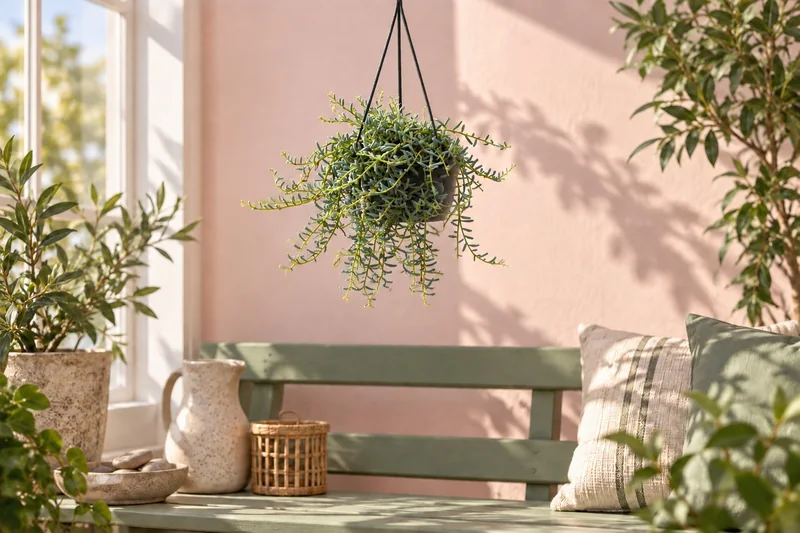
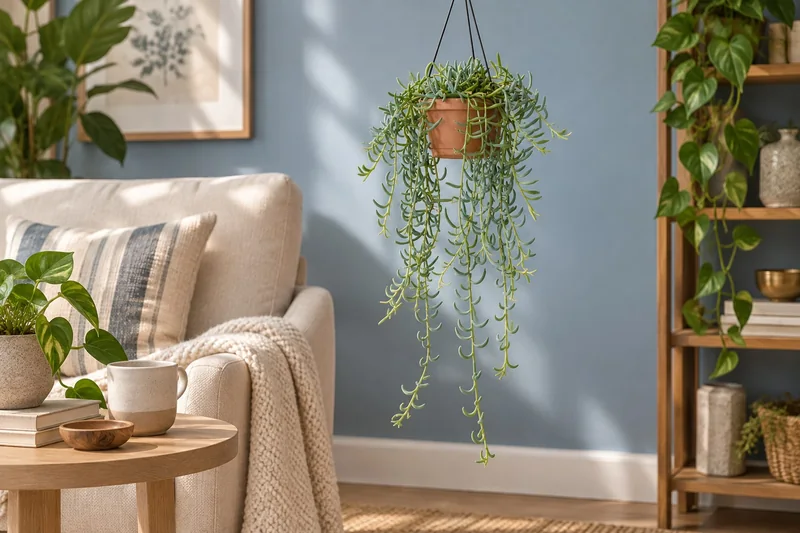
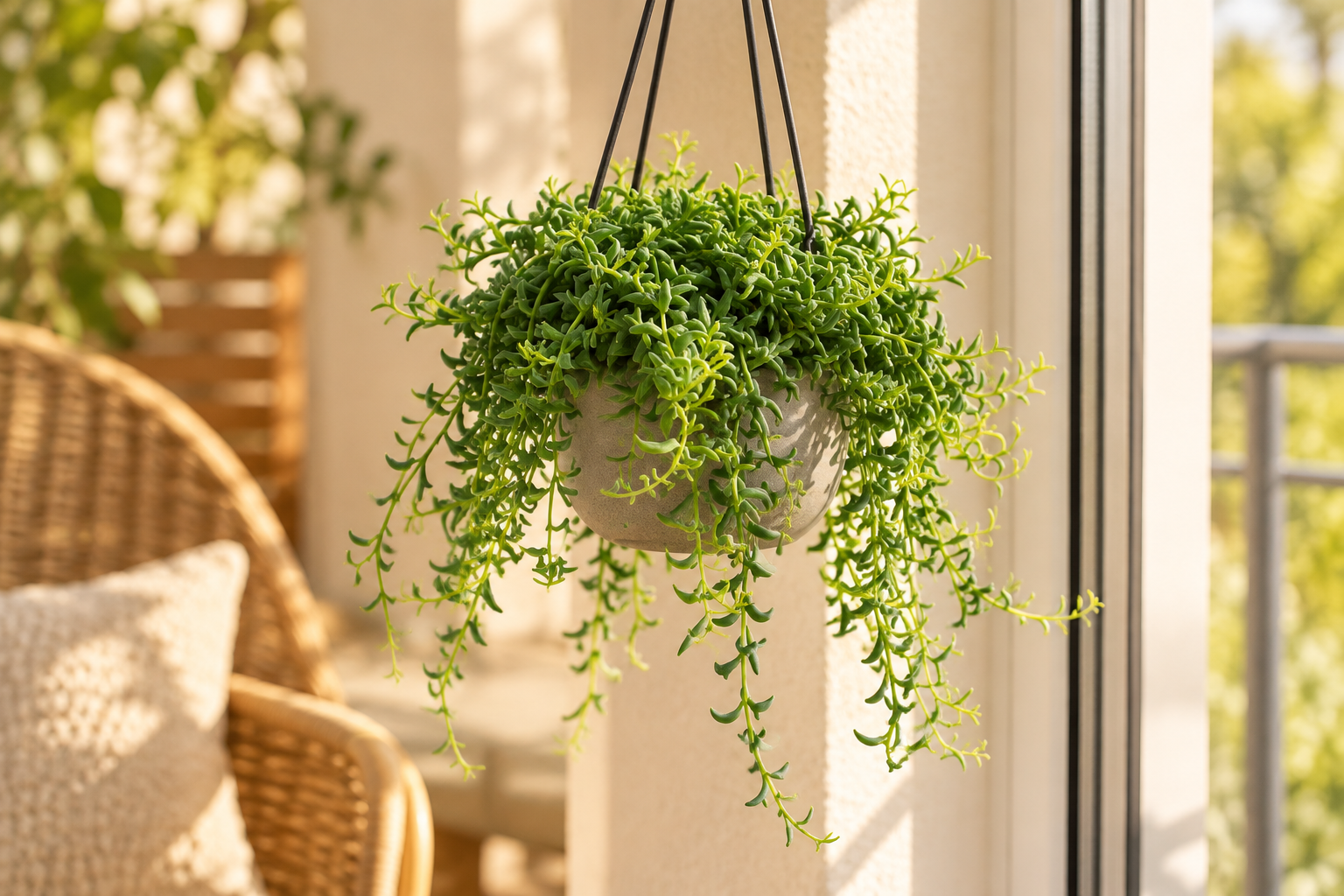
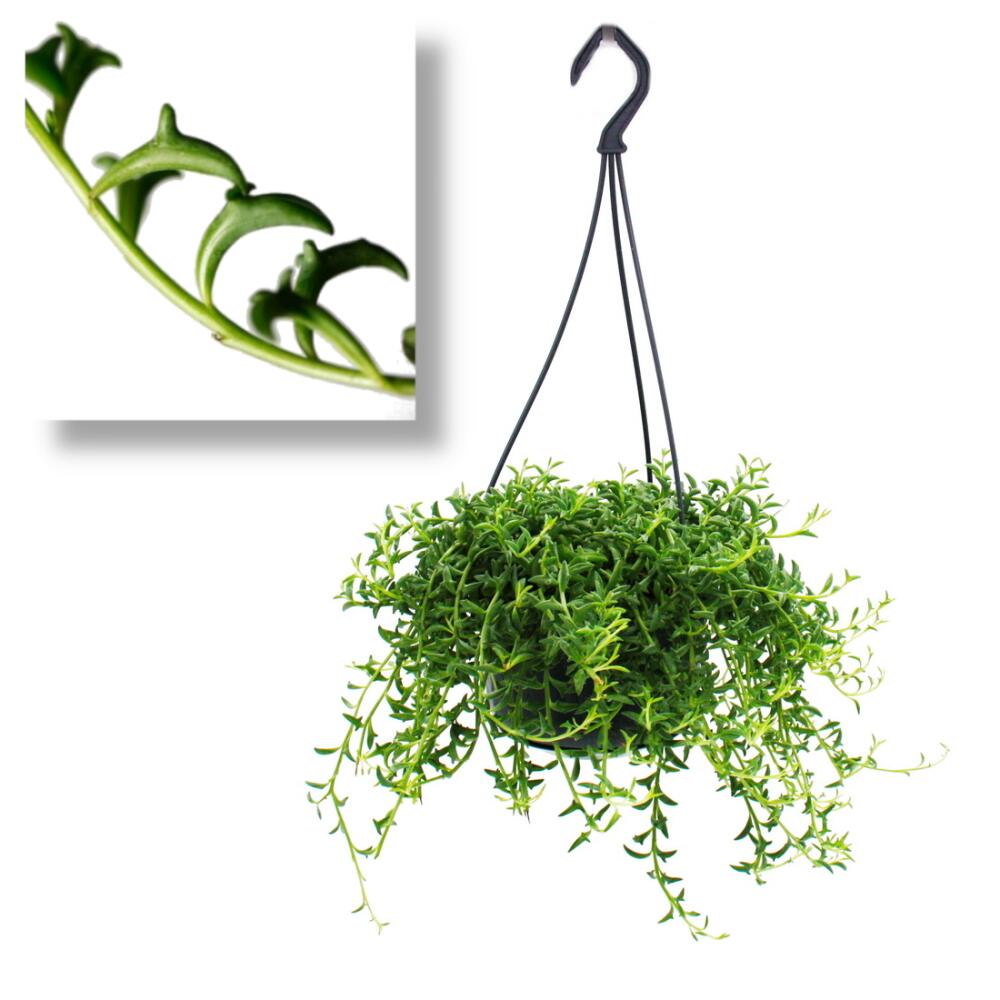
String of dolphins owes its name not to a flower but to its small fleshy leaves. Their curved shape and side projections suggest dolphins jumping over a green line. Curio × peregrinus is also known as Senecio peregrinus. Our offer in a 14 cm hanging pot carries shoots approximately 30 to 40 cm long. The distinctive leaf shape is best discovered close up when the chains hang freely and do not disappear into other decoration. The beauty here is very small. A good light position helps new leaves show their characteristic structure too.
Light reaches the pot edge too
Look for a very bright position where the basket does not hang immediately beneath a dark ceiling. Light should reach the shoot bases and upper leaves. Gentle sunshine is possible after acclimatisation; do not try the full heat behind glass on the very first day. In too dark a position, new growth may become longer and less convincingly shaped. A sun-filled room does not mean every far corner is bright enough. Observe shade directly at the pot and the development of the youngest leaves, not only the overall lighting of the living room.
Unpack with calm hands
The fine chains easily catch together during transport. Free them slowly without pulling on an individual shoot. Then give the basket a secure hook and enough distance from doors or walkways. Make sure the hanger also carries the wet pot’s weight. For the first few days, checking moisture and growth is enough. A small broken tip does not call for a complete cutback. Delay repotting until a suitable later time if the existing soil drains and the roots have enough space. Acclimatisation therefore begins with as few extra changes as possible.
It can become dry between waterings
The fleshy leaves store water. Let the rootball dry noticeably before watering thoroughly. Also check pot weight, as a dry surface may hide a still-damp core. Remove excess water after watering; a closed hanging container requires particular attention. Firm, well-shaped leaves above a dry rootball must be assessed differently from soft leaves above permanently wet soil. A rigid weekly interval cannot suit both situations. Light, temperature, pot material and season together determine how quickly the plant uses its reserves.
Airy soil for delicate roots
A free-draining succulent mix with mineral components makes the change between taking up water and a dry pause easier. Choose a pot only slightly larger once roots have filled the previous one. An oversized container contains much soil not yet explored by roots and consequently stays damp for a long time. Shoot bases should sit no deeper than before. Lay the chains loosely aside while working. Light feeding according to the product used is possible during active growth. More frequent nutrient supplies are no solution when light or drainage is what is actually missing.
Leaf shape as a conversation with the plant
Occasionally look at how new leaves differ from older ones. Small differences are normal in living plants. But if shoots become very thin and leaves strikingly flat or less characteristic, check light and provision. Do not change everything at once: improve the most obvious position-related factor first. Gently remove individual dry old leaves when they come loose. Healthy long chains can keep growing or be selectively shortened. Leave enough leafy parts in place. String of dolphins should retain its natural hanging character rather than regularly being forced into a rigid shape.
The winter spot stays bright
Shorter days often reduce growth and therefore water demand. A bright, frost-free spot is important; cooler cultivation lengthens dry pauses. Warm heating air alone is no reason to water more while the rootball remains damp. Check shoot bases and roots if the plant suddenly looks worse. Hanging the basket where it stays accessible makes this small check easy. The attractive green chains benefit more from a sensible rhythm than from many interventions. And when passing by, there is almost always another small fin to discover.
One plant, several views
Good to know
Are the little dolphins really leaves?
Yes. They are fleshy leaves with characteristic projections, not flowers or attached shapes.
Is Senecio peregrinus the same trade name?
Yes, string of dolphins is also listed as Curio × peregrinus.
Why do new leaves look different?
Check sufficient light and how moisture changes. Natural differences are possible, but strongly changed growth deserves a position check.
Can it go directly behind a south-facing window?
Only with gradual acclimatisation and heat monitoring; a bright, protected spot is a good start.
How do I avoid waterlogging in the basket?
Let it drain after watering and check the collecting tray.
May I shorten long shoots?
Yes, selectively with clean tools; support the delicate chains while doing so.
How should I care for it in winter?
Keep it bright and frost-free; with slower growth, water more sparingly according to rootball moisture.
Sources and editorial note
- Exotenherz: offer and original photographs (01.10.2026)
- RHS: String of beads and related trailing plants (01.10.2026)
- RHS: caring for succulents (01.10.2026)
Shop offer, SKU, GTIN and availability checked live on 01.10.2026. Original photograph unchanged. Independently researched horticultural texts and an individually reviewed scene.