This plant at Exotenherz
Check the shop offer for current availability, price and what is included.
Check the shop for the current price, availability and offer contents.
Your care table
| Topic | What to do | Why it helps |
|---|---|---|
| Light | Place brightly with filtered daylight. | The pattern remains clearly visible; hot direct sun can damage foliage. |
| Water | Let the top soil layer dry, then supply each root ball thoroughly. | Large leaf area uses water, while roots remain sensitive to permanent wetness. |
| Drainage | Remove excess water from outer pots. | No pot should remain in standing water after watering. |
| Warmth | Keep warm and protect from cold draughts. | These tropical plants are sensitive to cold root balls. |
| Soil | Use loose, humus-rich, well-draining potting soil. | Moisture and air must reach the roots together. |
| Feeding | Feed during active growth according to the fertiliser label. | Account for existing fertiliser; more feed does not restore lost leaf patterns. |
| Shape care | Remove old leaves cleanly; wear gloves for necessary cuts. | Sap must not reach skin, eyes or mouth. |
| Winter | Keep bright and warm; usually water more sparingly as growth slows. | Heating air and cold ventilation change the requirements. |
Check the compost and pot weight. The care table explains how far the compost may dry.
Water only when needed. The water should reach the root ball without spilling over the rim.
Remove surplus water from the saucer or cachepot. Then return the plant to a suitable position.
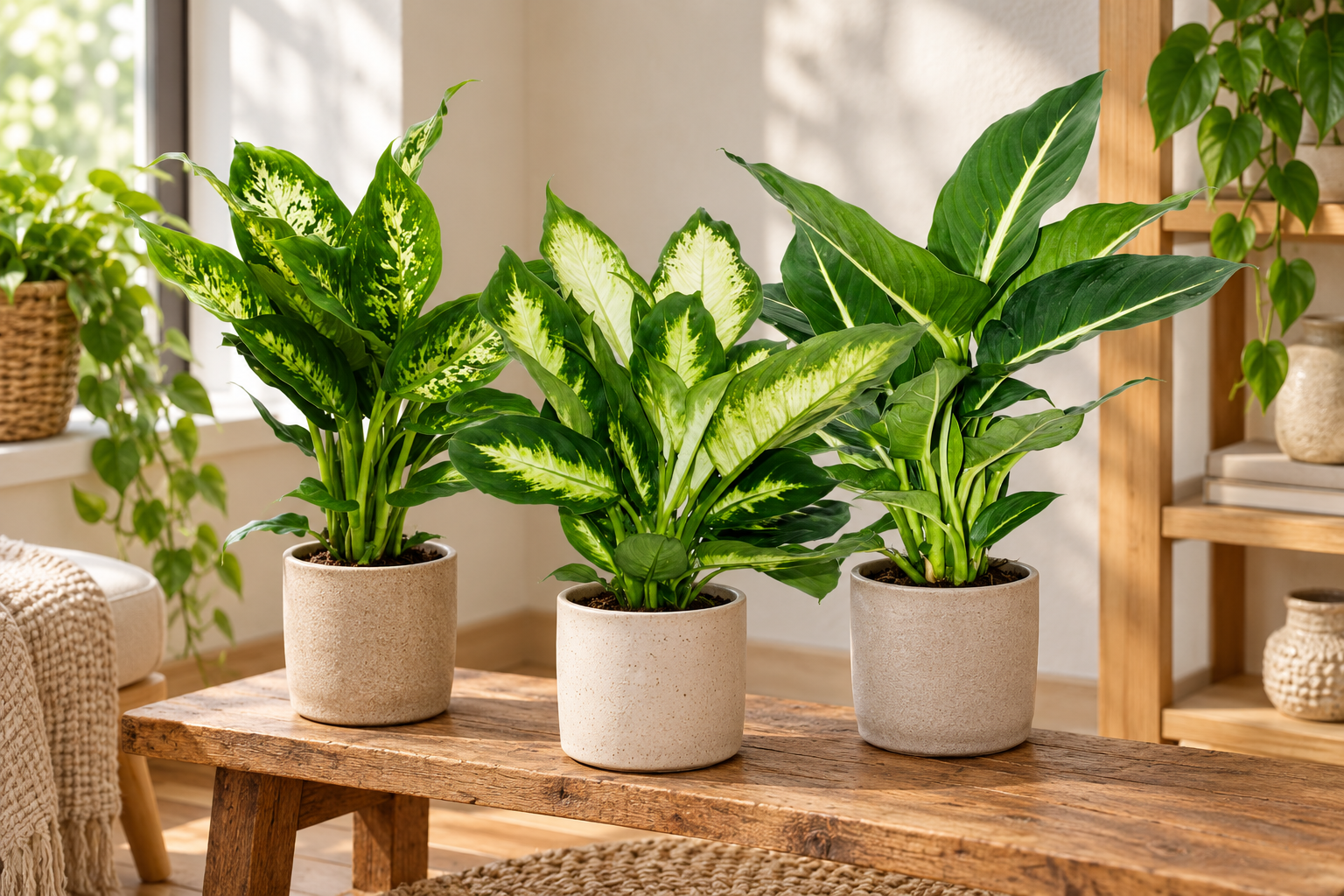
Three leaf patterns on a plant bench
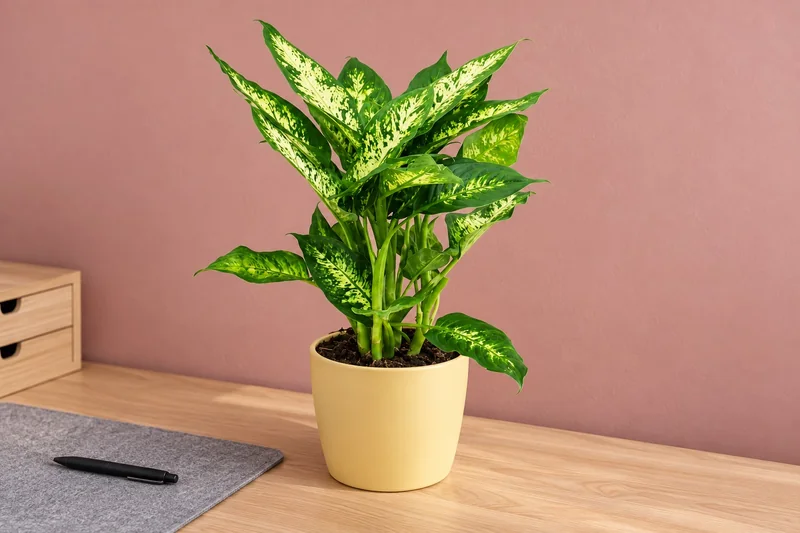
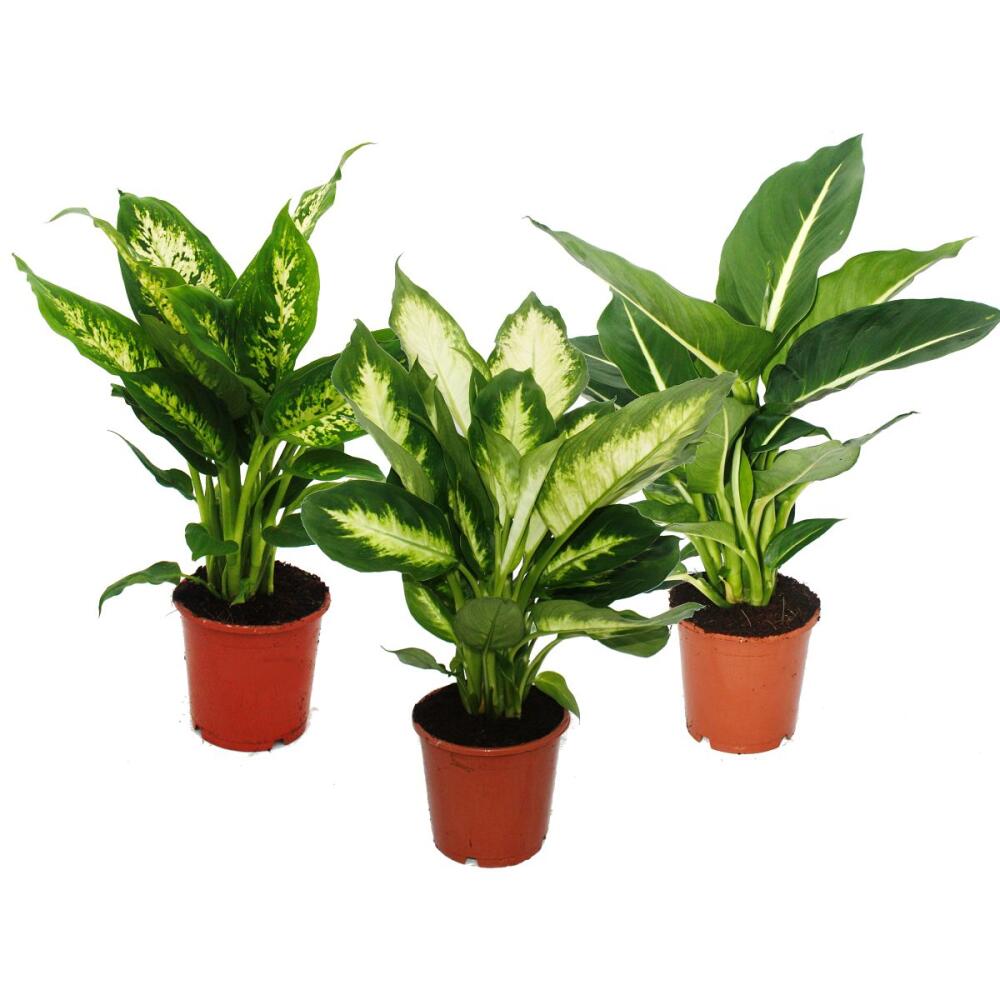
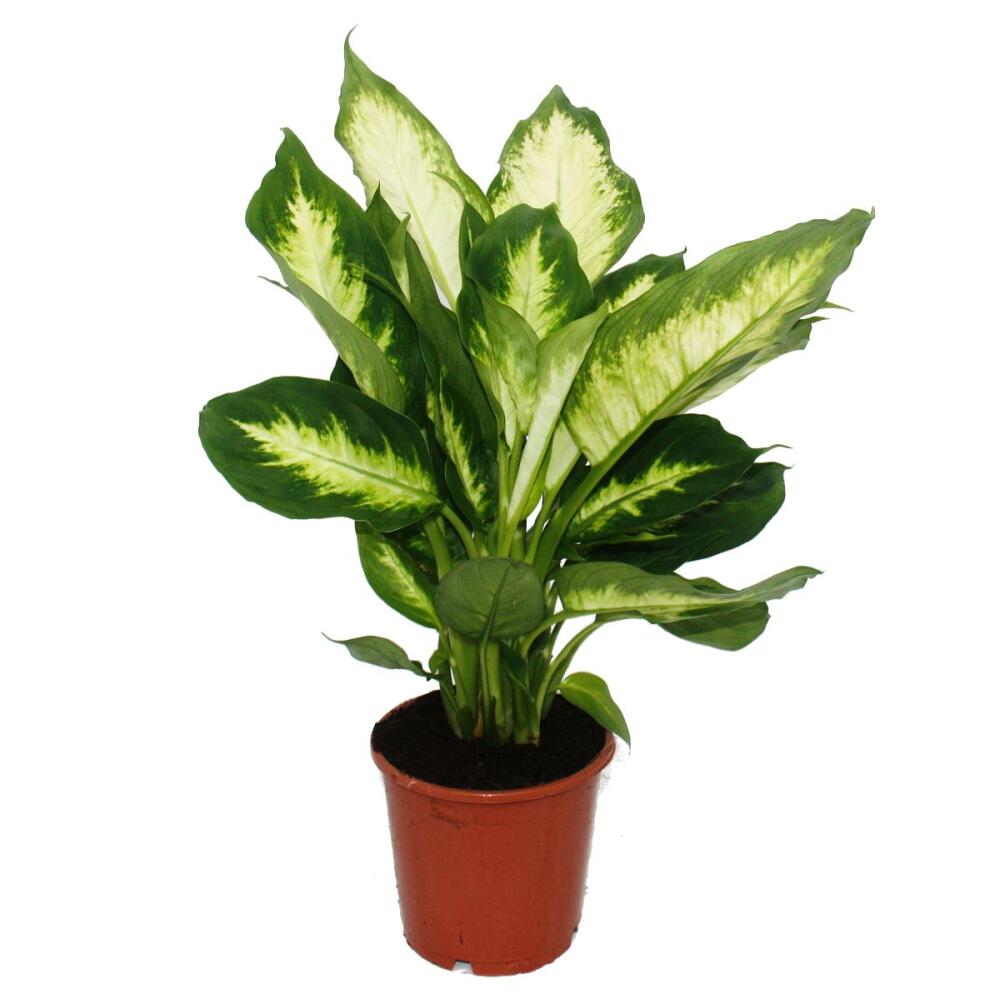
Together, the dieffenbachias make an interesting little foliage group. Compacta shows pale spots among green, Camilla a broad cream centre, and Magic Green adds a stronger green shade with pale veins. On a simple bright plant bench, these differences are easy to see. Leaves can stand freely without being pressed tightly together. The original photograph shows the offered combination. We retain the shop name Camilla rather than giving the plant another cultivar name without further supplier evidence. Comparing them together is precisely what brings the trio to life.
Delivery height describes young plants
The offer includes three separate plants, each in a twelve-centimetre pot and approximately forty centimetres total height. The height includes the container. As they grow, larger leaf surfaces and more clearly visible stems develop; young plants do not remain at their selling size. Decorative outer pots and furnishings in the scene are not part of the set. After unpacking, inspect every pot, leaf bases and any labels. An individual inner pot for each plant makes later watering easier. An attractively even group needs no simultaneous repotting session.
Light and warmth belong to leaf development
A warm position with plenty of indirect daylight suits them well. Hot midday sun through glass can damage pale leaf areas. A dark display position is no lasting solution, even if the patterns initially stand out there. Choose the plant bench according to available light. Avoid cold draughts during ventilation and very cold root balls. After moving, we especially check new growth. Existing leaves retain old damage; fresh leaves show more clearly whether conditions have improved. Overly warm dry heating air can make leaf care harder.
Do not distribute water by the group’s size
Before watering, feel the surface and lift each inner pot. When the upper soil has dried, supply the relevant root ball thoroughly and let it drain. Then empty the outer pots. Even similarly sized plants may need different amounts of water, for example because of differing leaf area and rooting. Limp foliage is therefore no reason to automatically water all three again. First check for dryness or roots that have been wet too long. A bright accessible position helps with that decision. When lifting out and watering, do not use long leaves as handles.
Develop soil and root space gradually
Loose humus-rich soil with good drainage suits the strong foliage framework. When a pot is densely rooted, carefully choose a suitable next size. A very large reserve pot stays wet for a long time and can overwhelm the small amount of roots. The three plants can move at different times. During active growth, follow the fertiliser label and account for existing fertiliser. Additional food replaces neither daylight nor warm roots. Particularly heavy doses do not produce pale patterns. Healthy new leaves and steady development are better comparison points.
Combine shaping with safe handling
Remove old dry leaves cleanly without damaging fresh leaf bases. If a stem later grows too long, targeted cutting is possible, but not on a fixed monthly date. Use gloves and clean tools. Dieffenbachias contain irritating substances; keep hands away from eyes and mouth during handling and clean them afterwards. Clear away cut remains immediately. Plants belong beyond the reach of children and pets that might chew plant parts. A shelf that looks high is safe only if animals genuinely cannot reach it. Position the attractive foliage group deliberately with that in mind.
Observe the three plants individually in winter
The position remains bright, warm and draught-protected. Usually water more cautiously with less growth without letting root balls dry out constantly. Occasionally inspect leaf undersides and shoot bases for unusual animals. Yellow leaves, brown edges and limp new growth do not necessarily share one cause. First consider light, moisture and temperature together instead of heavily cutting and feeding at the same time. Short notes for each plant help comparison. The trio thus accompanies everyday life with three different leaf patterns and care that continues to take each plant seriously.
One plant, several views
Good to know
Which forms does the offer name?
Compacta, Camilla and Magic Green according to the shop names.
Are all three in one container?
No. Three plants are offered, each in its own 12 cm pot.
Do they stay forty centimetres tall?
That is the approximate total delivery height including the pot. The plants continue growing.
Why do leaves become limp?
Check root-ball moisture and roots. Dryness and damaged wet roots can cause similar signals.
Can pets nibble the leaves?
No. Dieffenbachias are poisonous if eaten; keep them out of reach.
How do I remove old leaves?
Use clean tools and gloves, clear cut remains and clean your hands.
Sources and editorial note
- Exotenherz: offer and original images (02/10/2026)
- NC State Extension: dieffenbachia cultivation and safety (02/10/2026)
- RHS: houseplant cultivation (02/10/2026)
Shop offer, article number, GTIN, availability and original images checked directly on 02/10/2026. Specialist sources read directly. No air-purification or health promises adopted; toxicity directly supported and shop names retained.