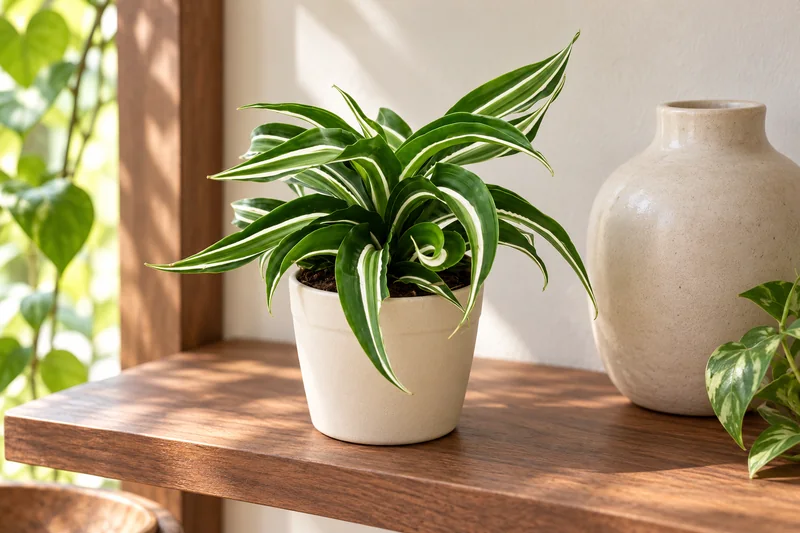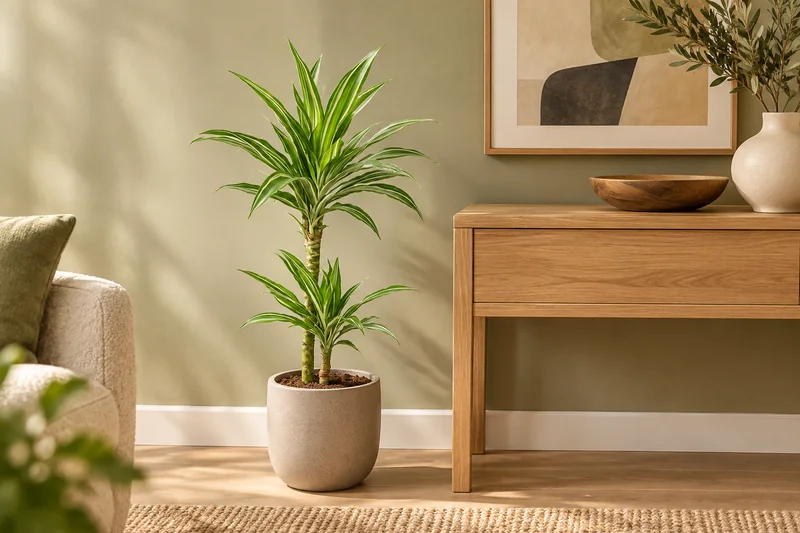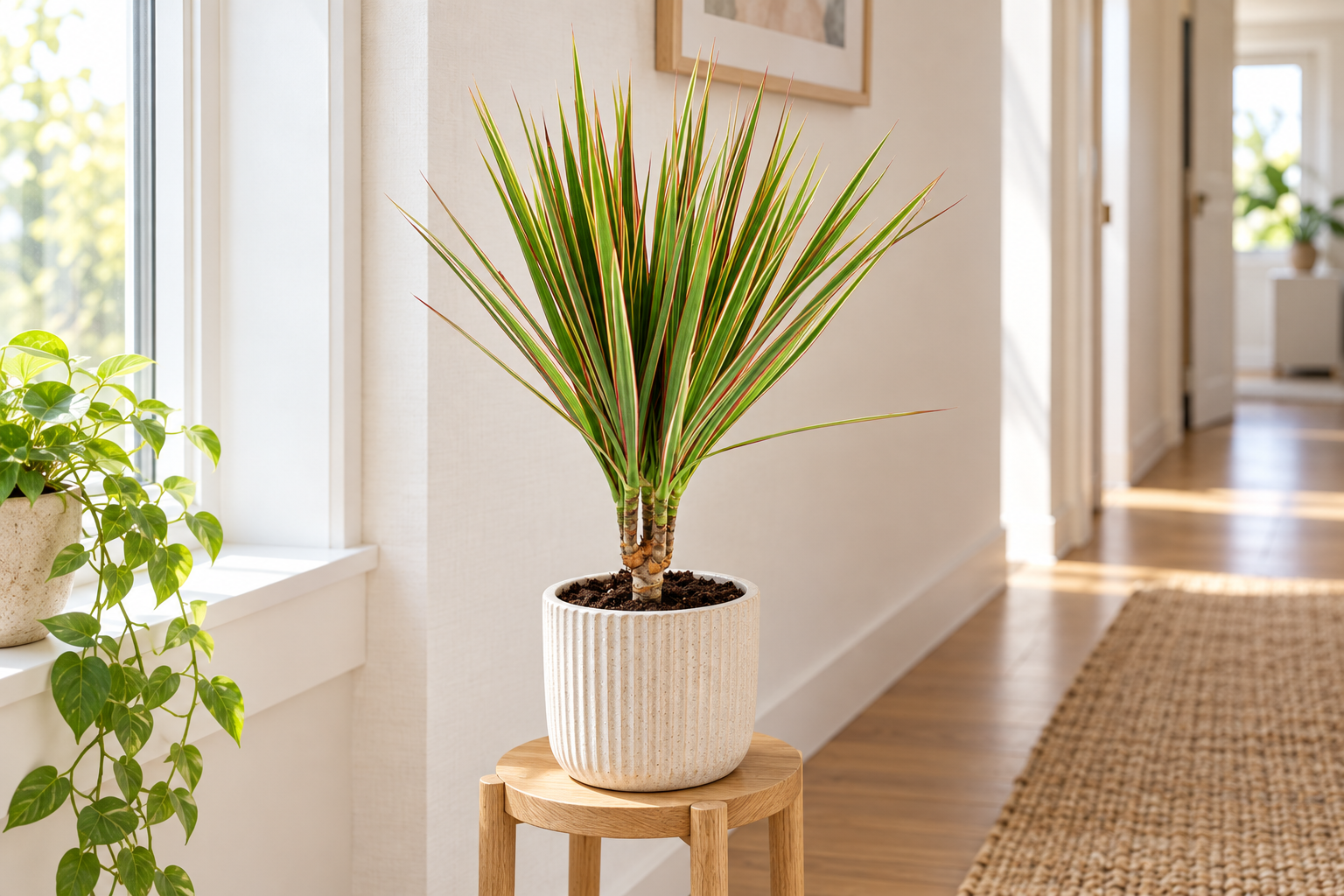
This plant at Exotenherz
Check the shop offer for current availability, price and what is included.
Check the selected shop offer for price, availability and delivery contents.
Your care table
| Topic | What to do | Why it helps |
|---|---|---|
| Position | Provide bright indirect daylight and protection from hot sun. | The pale striping is easier to appreciate in a well-lit position. |
| Watering | Let soil dry noticeably between waterings without leaving the plant completely parched. | The narrow-leaved dragon tree cannot tolerate a permanently saturated root zone. |
| Drainage | Keep pot holes clear and remove water from the cachepot. | Prolonged wetness may affect roots and stem base. |
| Water quality | Use low-salt room-temperature water where possible. | Dracaena may respond to fluoride and accumulated salts with leaf changes. |
| Soil | Choose loose, structurally stable peat-free houseplant compost. | The rootball still needs air after watering. |
| Feeding | During growth feed sparingly according to a suitable fertiliser label. | This slower plant does not need concentrated continuous feeding. |
| Leaf care | Remove dust gently and keep the long tips free. | Scuffed leaf tips are not repaired by extra watering. |
| Pruning | Only shorten an overlong structure selectively during growth. | A stem may branch again after pruning; a small young crown needs no obligatory cut. |
Check the compost and pot weight. The care table explains how far the compost may dry.
Water only when needed. The water should reach the root ball without spilling over the rim.
Remove surplus water from the saucer or cachepot. Then return the plant to a suitable position.
A fine crown rather than broad leaf surfaces
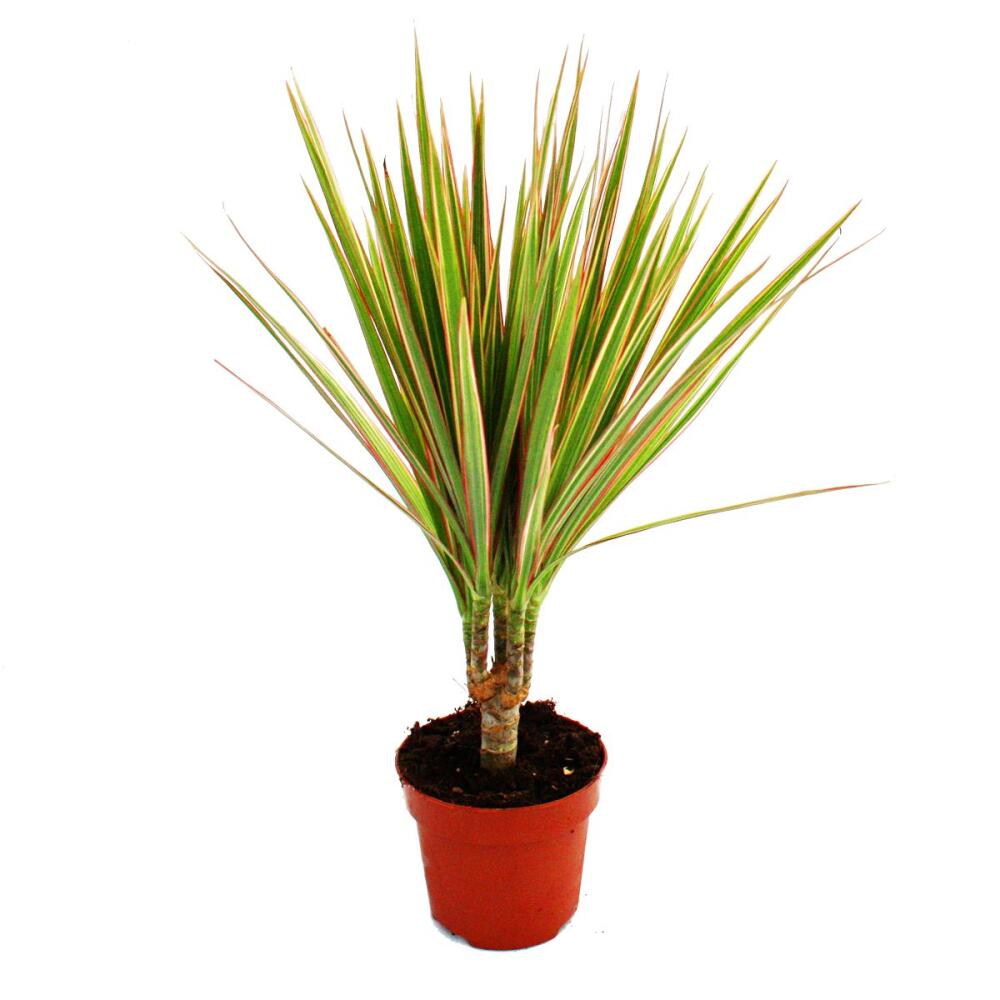
Bicolor draws the room in narrow lines. Many long pointed leaves extend outwards from a little crown to form a loose radiating tuft. Green, pale lengthwise areas and fine reddish edges lie close together. The original photograph shows a young plant with a short stem and an already well-filled crown. This structure looks light on a small plant stand without long trailers falling over the edge. The tips need free space. If the pot is pushed into a tight shelf corner, leaves touch walls and furniture and may suffer at their ends. A little clearance reveals the entire silhouette.
Marginata and the current classification
The shop name is Dracaena marginata Bicolor. North Carolina Extension lists the species as Dracaena reflexa var. angustifolia and gives marginata as an older name. Bicolor is also listed there as a named selection; RHS uses the familiar marginata name. The differing botanical wording does not count as a second plant. The species comes from Madagascar and neighbouring islands and belongs to Asparagaceae, the asparagus family. It is a woody shrub and not a true palm, although its stem crown may recall one. Development in a pot depends on light, temperature and root space. The cultivar name does not promise that every leaf will retain exactly the same stripe widths.
Delivered small and developing slowly
Bicolor is offered in a 12 cm pot at approximately 30 cm total height. This delivery guide describes the beginning in its new indoor position. An older dragon tree forms longer stems, and lower leaves may fall with time. This creates the characteristic visible stem beneath a higher crown. That is a different developmental stage from the young shop photograph, not a promise for a fixed date. When unpacking, do not trap long tips between wrapping and stem. Open the packaging, lift out the pot and check the rootball. A little plant first needs an accessible spot where its moisture can be checked rather than an especially deep decorative cachepot.
Daylight for a slender structure
Bright indirect light is a good starting point. Light shading protects against very hot sun behind glass, especially after transport. A hallway far from the window remains dark even if the room lamp is on daily. Bicolor is kept for its leaf pattern and should receive sufficient daylight. Also provide even warmth without cold draughts. Move the small pot out of the direct airflow when airing in winter. Very dry heated air is also unfavourable, as the fine leaf tips are more sensitive than the sturdy stem suggests. A normally sheltered indoor spot suits it better than a hot position directly over a radiator.
Drying allows air into the rootball
Between waterings soil may dry noticeably without the plant constantly drying out completely. Check beneath the surface too and learn the pot’s weight. Then water slowly and let all surplus drain away. A narrow-leaved dragon tree often uses less water in low light than a regular watering day suggests. Remove leftover water from the cachepot. With brown tips, consider rootball moisture and room air together. More water does not solve a salt burden in already wet soil. Dracaena may be sensitive to fluoride and accumulated salts; low-salt room-temperature water where possible and moderate feeding help reduce unnecessary stress.
Care for stem and crown selectively
A young Bicolor needs no regular heavy cutback. If an older specimen later grows too tall, a stem can be shortened selectively during active growth. New shoots may develop below the cut; suitable warmth and light support this response. Tip or stem cuttings are rooted in warm conditions without guaranteeing success. Loose, structurally stable soil matters for the existing plant. Repot only when distinctly well rooted and into moderately more space. Feed sparingly during the growth period following the fertiliser label. Pre-fertilised compost counts too. Stronger feeding does not turn a very dark or unsuitable spot into a good plant position.
Check tips and leaf undersides attentively
Dust can be removed carefully from the narrow foliage. Do not bend leaves sharply or pull them through a cloth with heavy pressure. Occasionally check between leaves and at their bases for scale insects, mealybugs or webs. Individual dry tips have various possible causes and are not a definite diagnosis. Consider water supply, salt load, air and mechanical damage together. Winter watering continues to follow the more slowly drying rootball. An intentionally cold rest period is not intended for this houseplant. Flowers appear rarely in ordinary indoor culture. The dragon tree should not be accessible to children or pets that chew plants; its parts are not intended for eating.
One plant, several views
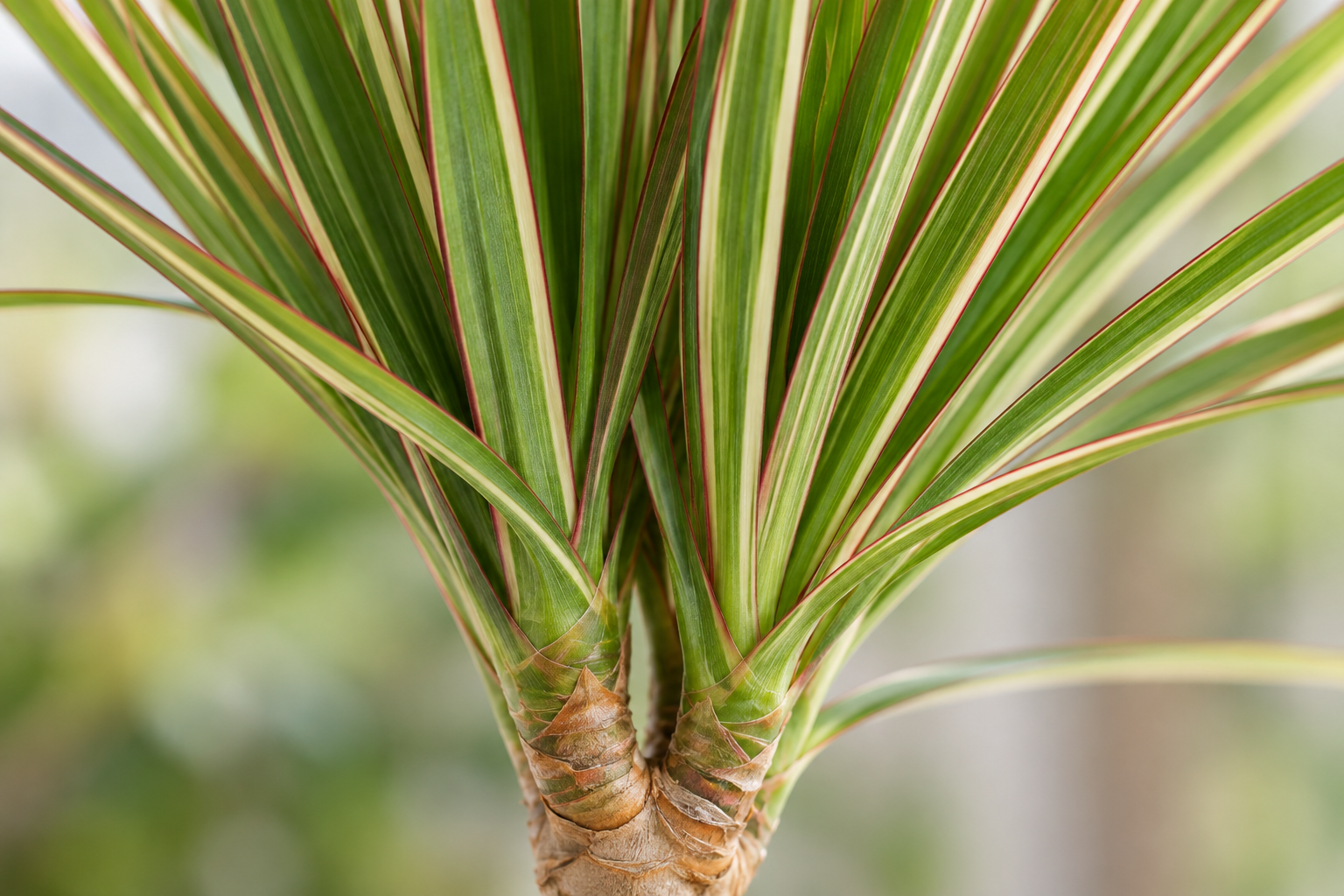
Good to know
Why are two botanical names shown in the portrait?
Dracaena marginata is the familiar shop name; NC State lists the same species as Dracaena reflexa var. angustifolia.
Is Bicolor a palm?
No. The dragon tree belongs to the asparagus family and forms a woody stem.
Does the crown stay just above the pot?
With further development the stem may become longer and more visible. Delivery height is not a fixed final size.
How dry may the soil become?
Let it dry noticeably between waterings, but not completely for prolonged periods.
Why do the tips turn brown?
Dry air, water quality, salt accumulation and mechanical damage are possible causes. Check rootball and surroundings together.
Does Bicolor need pruning?
Not a young specimen. Later, targeted pruning can shorten overlong stems and encourage branching.
Can the pot stand in water?
No. Let it drain after watering and empty the cachepot.
What changes in winter?
With slower growth soil generally takes longer to dry. Keep warm and bright and water less often as needed.
Sources and editorial note
- Exotenherz: offer and original images (03.10.2026)
- RHS: Bicolor and cultivation (03.10.2026)
- NC State: current species name, Bicolor and care (03.10.2026)
Shop offer, article number, GTIN, availability and original images checked directly on 03.10.2026. Specialist sources read directly. Bicolor has its own cultivar name, not a Magenta quantity variant. Marginata/angustifolia species assignment transparent; original shows a pale-striped narrow leaf crown.