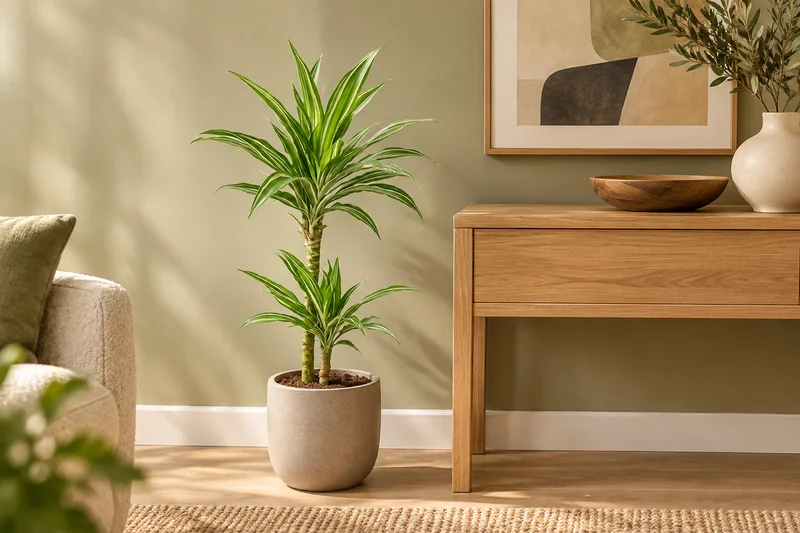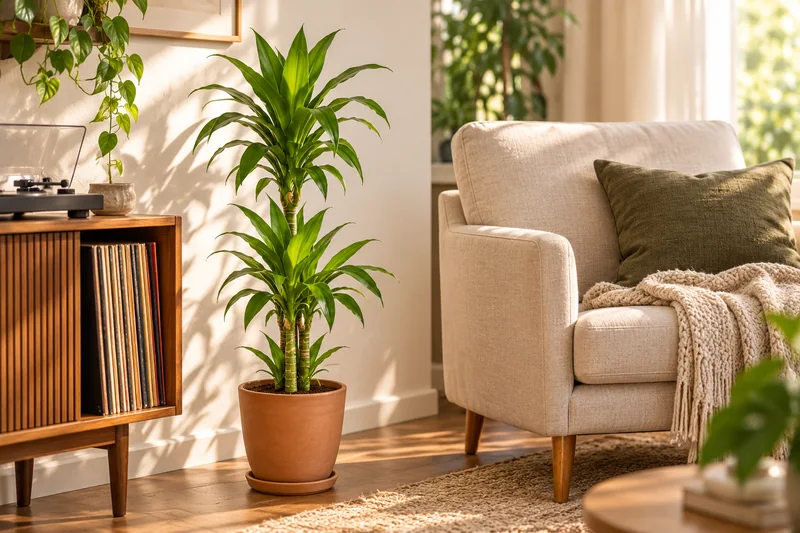
This plant at Exotenherz
Check the shop offer for current availability, price and what is included.
Check the selected shop offer for price, availability and delivery contents.
Your care table
| Topic | What to do | Why it helps |
|---|---|---|
| Light | Position brightly with filtered light. | White stripes should actually receive daylight. |
| Shape | Leave curved leaves without pulling or shape correction. | The young crown shows natural movement. |
| Water | Check upper soil and pot weight before each watering. | Leaf curvature alone is no watering signal. |
| Drainage | Let drip and empty the cover. | Roots must not stay permanently wet. |
| Soil | Use free-draining houseplant soil. | A little root ball needs air and moisture. |
| Pot | Move only slightly larger when truly needed. | Large unrooted soil volumes stay wet longer. |
| Fertiliser | Dose moderately according to label during growth. | Do not increase salt load through extra feeding. |
| Winter | Keep frost-free and reassess use. | Less light changes needs. |
Check the compost and pot weight. The care table explains how far the compost may dry.
Water only when needed. The water should reach the root ball without spilling over the rim.
Remove surplus water from the saucer or cachepot. Then return the plant to a suitable position.
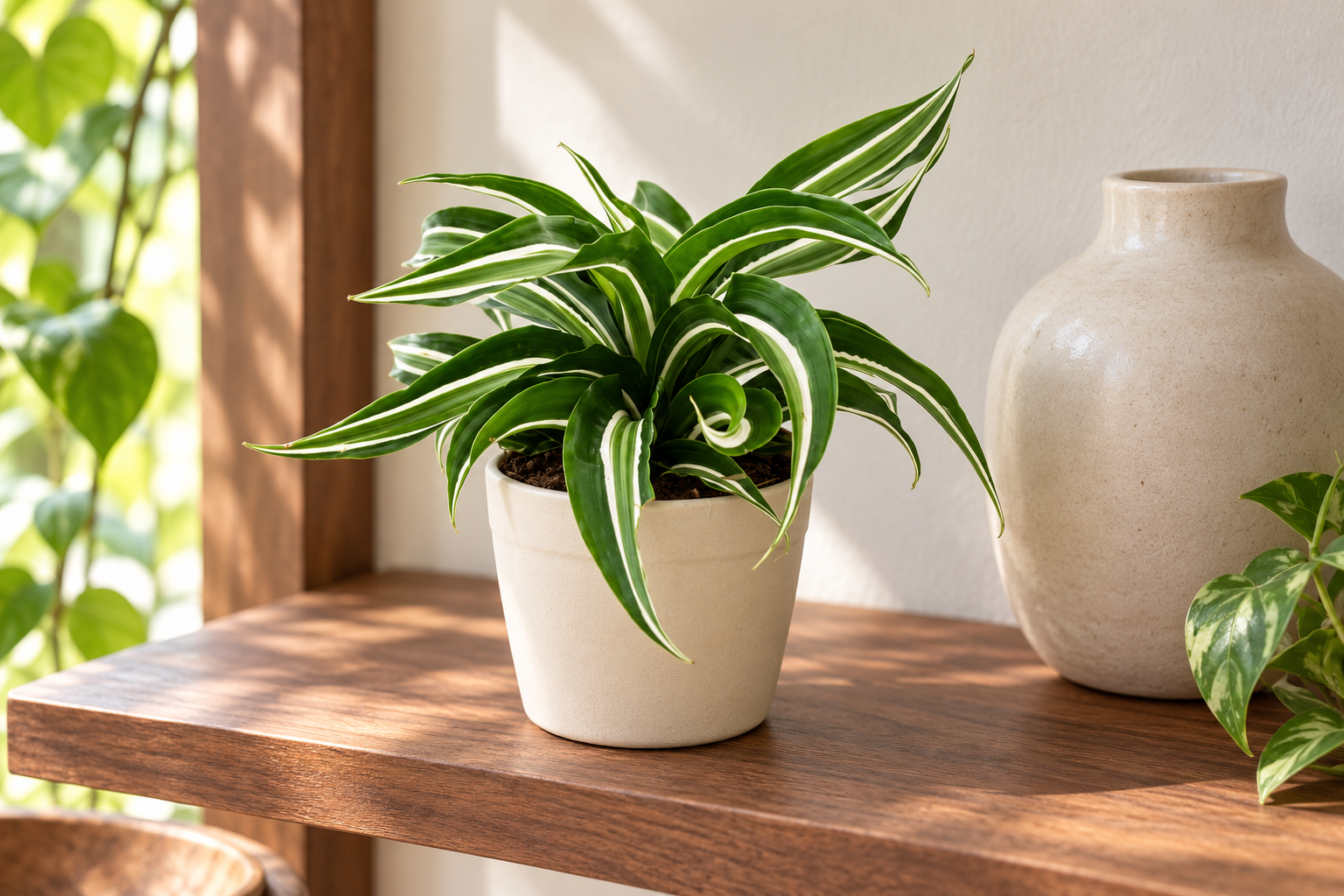
Curly Malaika shows movement without a tall trunk
Narrow green leaves carry pale lengthwise stripes and bend in different directions. Wavy edges and some curled areas give the little crown movement. The original plant stands low above its pot; it is not a large trunk-forming dracaena. On a bright open shelf the markings are appreciated close up. A simple vase beside it must not crowd leaf tips. The appeal lies in the interplay of surfaces, not in pulling every curved leaf as straight as possible.
Fifteen centimetres describe the young offer
The assortment lists a 12 cm pot and about 15 cm overall height including container. This small height is deliberately preserved; a later tall trunk form is not shown or promised as the delivery plant. The shop name includes Dracaena deremensis and fragrans. Specialist sources list deremensis as a synonym associated with Dracaena fragrans. When unpacking we hold the pot and carefully release packaging at leaf tips. A photo from above records how the young crown actually distributes stripes and curves.
A bright position makes the pattern readable
Filtered daylight and even warmth suit indoor culture. An open shelf suits if leaves are not shaded deep within the compartment. Avoid hot direct sun after shipping. Cold draughts when airing and directly rising heating air also belong to the position check. A white-patterned area does not turn green through an extra fertiliser course. Observe healthy new foliage and actual development. Natural leaf curvature alone does not mean dry soil or a need to repot immediately.
Check moisture beneath a compact crown
Before watering we check upper soil and container weight. After some drying, supply according to need; excess can then drain. The root ball is neither constantly saturated nor completely dried for a long time. A brown leaf edge can relate to several conditions. Check moisture, warmth and water quality rather than deriving a fixed nutrient deficiency from one tip alone. Low-salt water can help sensitive dracaenas. Check a decorative cover for residual water after watering.
Loose soil keeps the little root ball manageable
Free-draining houseplant soil and a nursery pot with clear holes are the foundation. Move only slightly larger when space is actually needed. Feed moderately according to fertiliser label during active growth and account for pre-fertilisation. The young crown needs no regular shape pruning. Entirely dead leaves can be carefully removed without tearing healthy leaves out of the centre. Wipe dust gently from supported surfaces. Dracaena fragrans is unsuitable for consumption and may harm pets; therefore position the plant suitably out of reach.
Accompany new stripes through the darker season
Curly Malaika stays frost-free indoors. Less daylight can reduce growth and water use. Reassess the root ball and do not continue a summer rhythm unchecked. While cleaning we also inspect stalk bases and undersides for shields or other deposits. In the plant book, a picture from the same direction helps recognise new leaves. Individual curves, pale stripes and overhanging tips may change with leaf age. Care follows the whole plant and position, not a wish for a perfectly symmetrical crown.
One plant, several views
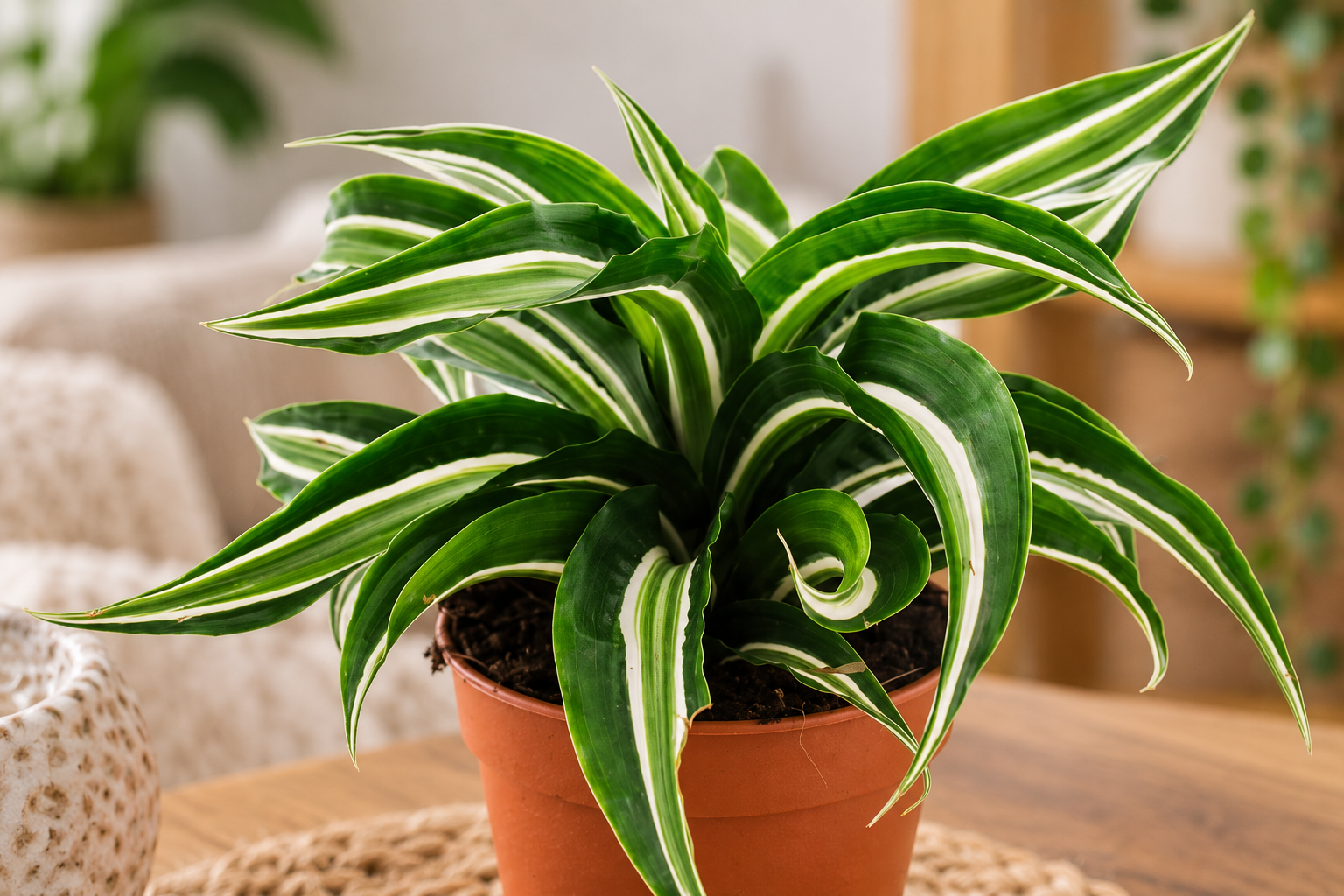
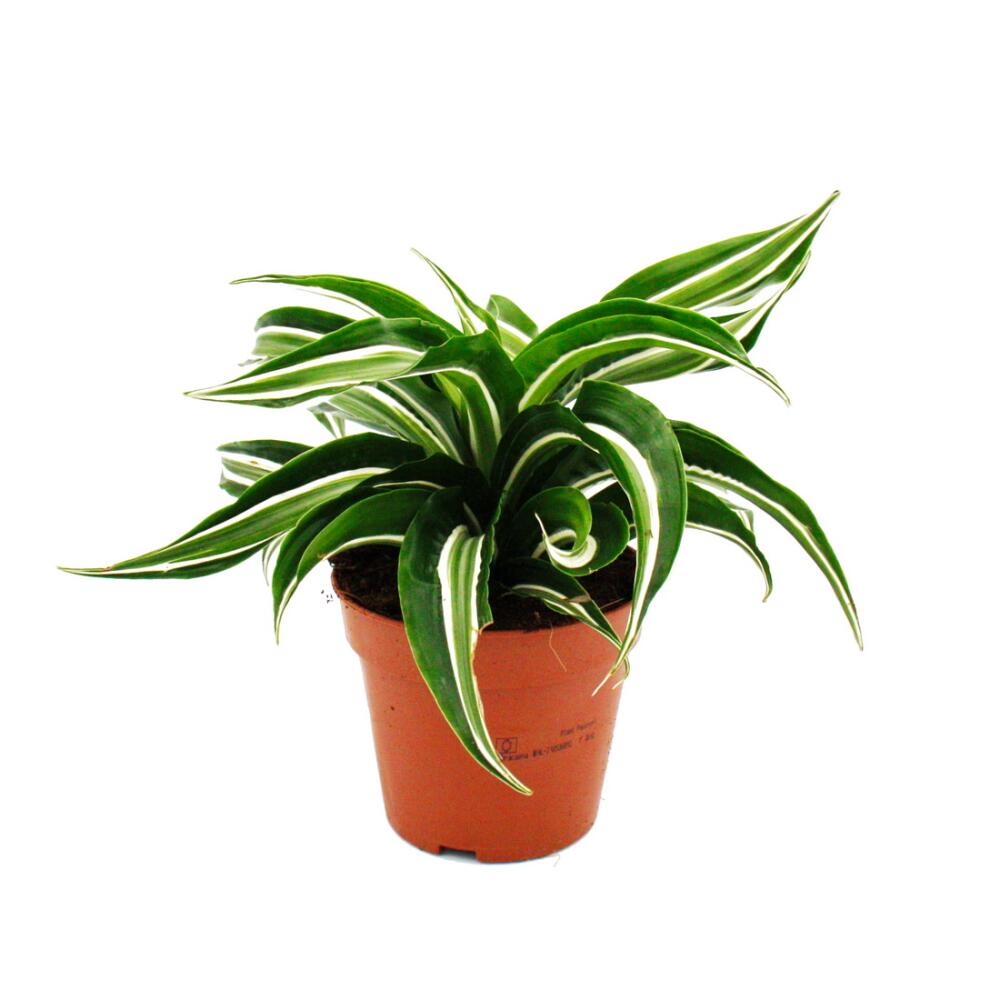
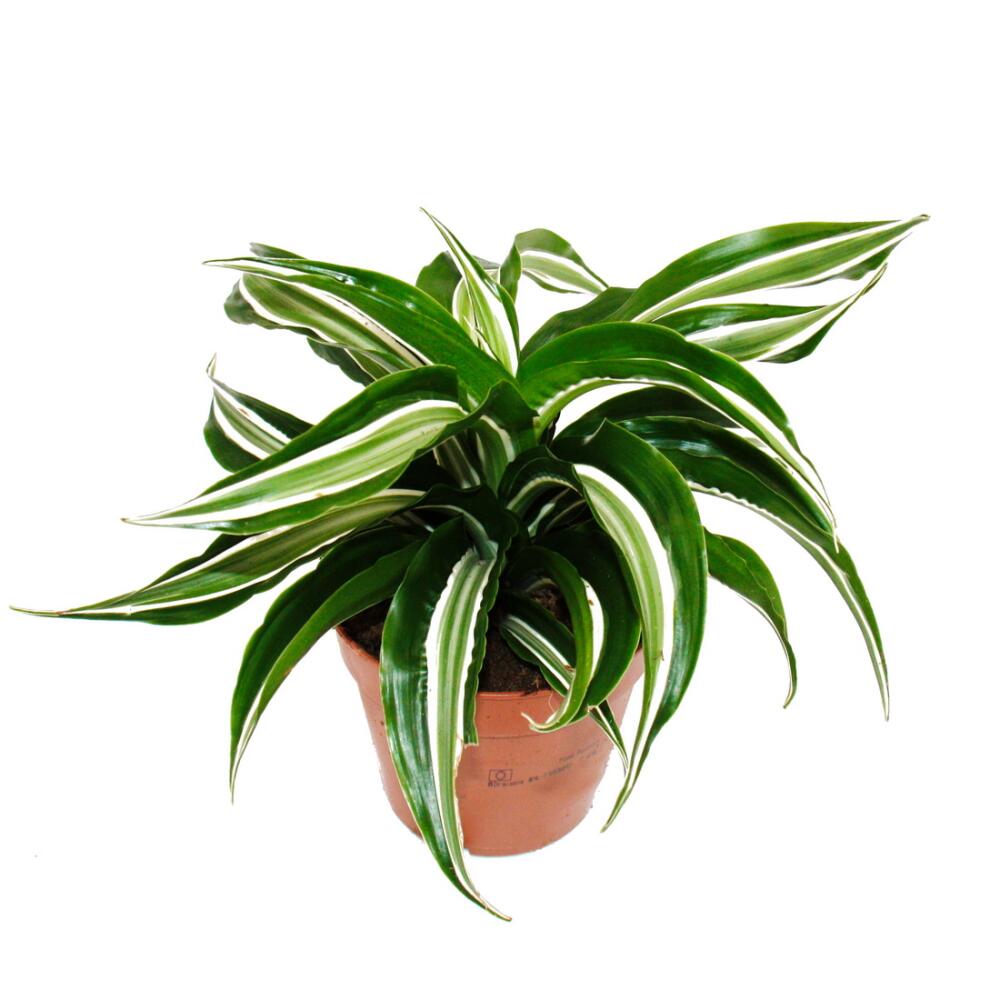
Good to know
Is a tall dracaena delivered?
No. This offer lists about 15 cm overall height in a 12 cm pot.
What does deremensis in the shop name mean?
It is a botanical synonym designation associated with Dracaena fragrans.
Should I pull curved leaves straight?
No. Leave the wavy crown without reshaping.
Do brown tips always mean fertiliser deficiency?
No. Moisture, warmth and water quality are checked too.
May a pet eat the leaves?
Dracaena fragrans may harm when consumed and is positioned out of reach.
Sources and editorial note
- Exotenherz: offer and original images (03.10.2026)
- NC State Extension – Dracaena fragrans, synonym and culture (03.10.2026)
Shop offer, article number, GTIN, availability and original images checked directly on 02.10.2026; specialist acceptance 03.10.2026. Specialist sources read directly. SKU, delivery dimensions, orderability and original photographs checked directly in the assigned shop article on 03.10.2026; specialist sources read. Trade names remain recognisable. Currently not orderable: knowledge portrait without purchase link, no approval for social sending. No changes to Wawi, server or tool data. Currently not orderable: knowledge portrait without purchase link; social drafts not approved for sending.