This plant at Exotenherz
Check the shop offer for current availability, price and what is included.
Check the shop for the current price, availability and offer contents.
Your care table
| Topic | What to do | Why it helps |
|---|---|---|
| Light | Place brightly with filtered daylight and protection from hot midday sun. | Spotted leaf surfaces need light without suddenly becoming intensely heated. |
| Water | Water thoroughly after the upper soil dries slightly. | The root ball should be supplied without staying constantly wet. |
| Water quality | Use suitable soft water where possible, such as clean rainwater. | Dracaenas are sensitive to unfavourable water and salt loads. |
| Drainage | Let excess drain and empty the cachepot. | Standing water can damage roots. |
| Soil | Use structurally stable loose potting soil with good drainage. | Thin shoots need reliably functioning root space. |
| Nutrients | Feed moderately during fresh growth according to the fertiliser label. | Slow bushy growth needs no heavy continuous feeding. |
| Repotting | Give a little more pot space in spring when densely rooted. | An oversized damp pot makes moisture checks harder. |
| Winter | Keep warm and bright without cold draughts or direct radiator proximity. | Less light reduces consumption, while dry heating air strains leaves. |
Check the compost and pot weight. The care table explains how far the compost may dry.
Water only when needed. The water should reach the root ball without spilling over the rim.
Remove surplus water from the saucer or cachepot. Then return the plant to a suitable position.
A dracaena with a different leaf picture
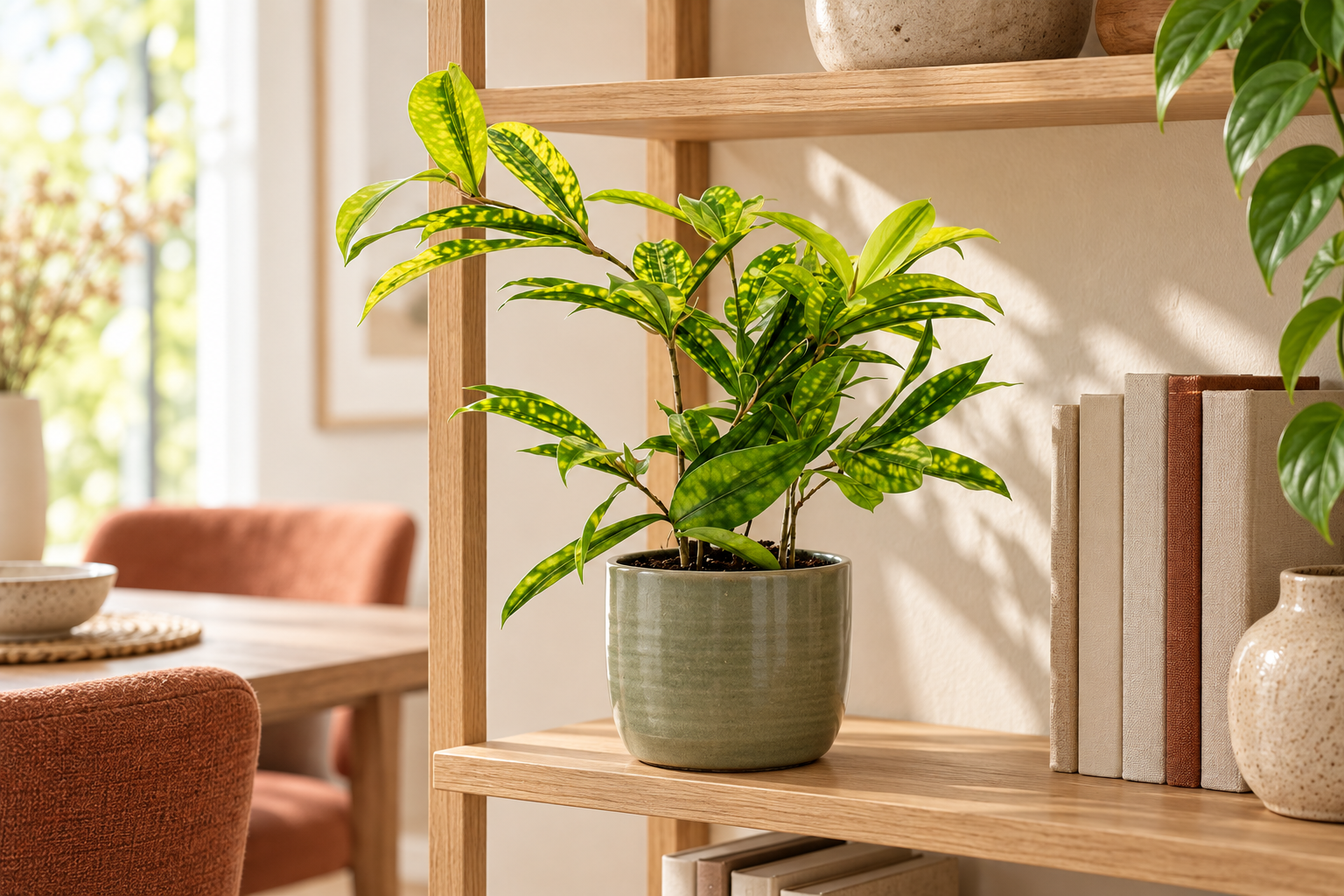
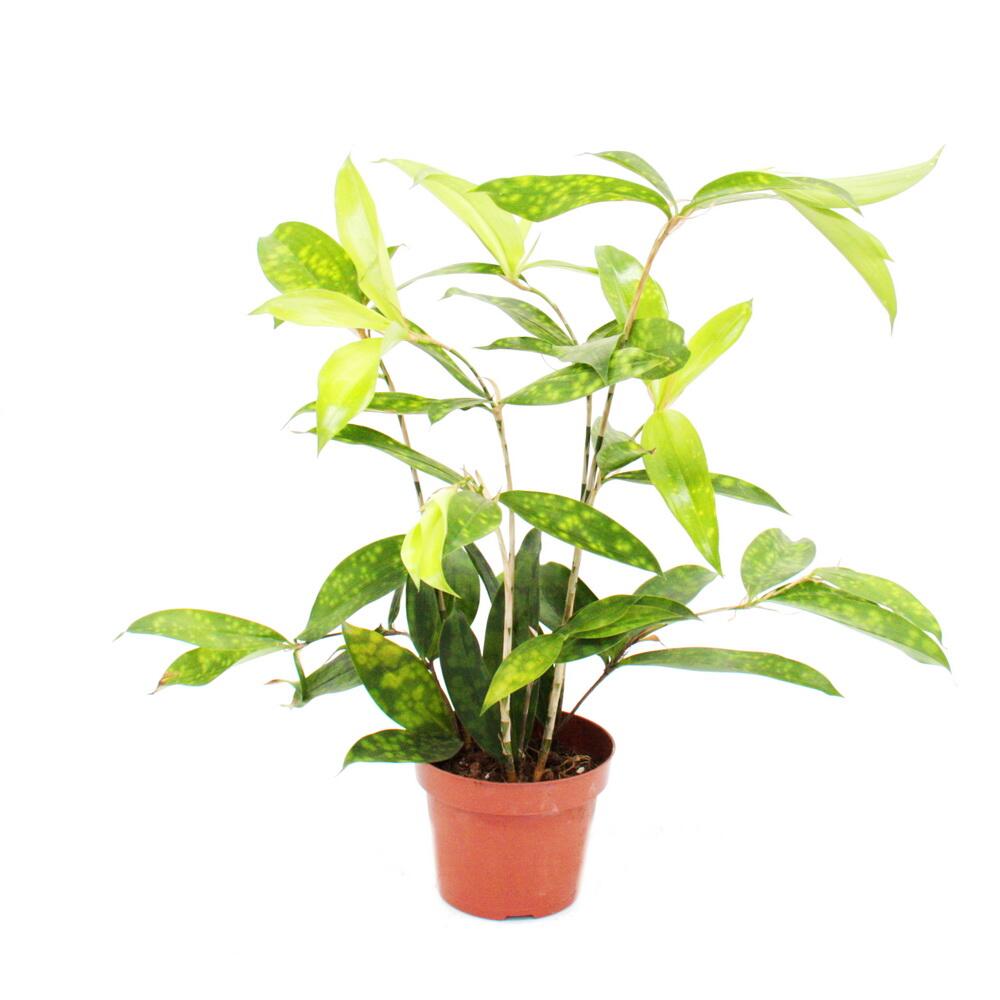
Dracaena surculosa looks different from familiar dracaenas with long leaf ribbons on thick stems. Thin upright shoots branch, with oval leaves tapering to a point at their nodes. Pale spots spread over green foliage according to the offer form, giving each leaf its own pattern. The bushy framework looks delicate yet clear. A bright open bookshelf can provide an attractive setting when branches have enough room and daylight. Do not place the plant among tightly packed book spines. Side branches should develop freely rather than being bent whenever someone reaches into the shelf.
Discover colour variants in the assortment
The offer describes a 12 cm pot with about 30 to 40 cm total height. A form with light-green spots and the form called “Mike” with yellow spots are also linked in the assortment. Choose the specific version from its shop offer and original photograph. The botanical species name remains Dracaena surculosa; the leaf pattern is not used to derive an additional unsupported cultivar name. Delivery height including the pot and later development must be considered separately. The species comes from tropical West Africa and continues growing as a branching companion. Regularly looking at new leaf tips is more rewarding than expecting every following leaf to have exactly the same spots.
Filtered light right into the little bush
Choose a bright warm spot protected from hot direct sun. Outer and inner leaf surfaces should receive daylight. A deep dark shelf compartment is therefore less favourable than an open position lit from the side. After shipping, increase brightness slowly and do not immediately change several cultivation conditions together. New leaves first appear tightly rolled and unfold later. They need not be opened by hand. With noticeably loose new growth or changed leaf appearance, check the position first. Extra fertiliser does not compensate for missing light. During ventilation, move the plant away from direct cold draughts even if the rest of the room stays warm.
Assess water and water quality together
Check upper soil and the inner pot’s weight. After slight drying, water slowly and thoroughly, then remove excess. Where possible, use suitable soft water such as clean rainwater. Dracaenas may be sensitive to unfavourable constituents and salt loads; brown leaf tips alone are not proof of a particular water-related cause. Consider moisture, fertiliser, heating air and progression together. Small daily sips make root-ball condition harder to assess. If soil is already wet, do not add water because of a drooping leaf. Clear drainage is part of the supply and remains important even in a beautiful cachepot.
Give fine shoots suitable root space
Loose structurally stable potting soil supports an evenly supplied root ball. It should retain moisture without remaining wet and airless for a long time. When densely rooted, choose a slightly larger pot in spring or during new development. Support the root ball rather than gripping the thin stems tightly. A large damp soil volume offers no immediate advantage to a small plant. During visible growth, feed moderately according to the label, account for nutrients in fresh soil and do not keep increasing feed with slow growth. The bushy form grows at its own pace. New branches are easier to guide when pot, light and water work together.
Observe leaves and retain branching
Dust can be gently removed with a soft slightly damp cloth while supporting the leaves. The pale pattern needs no leaf-shine product. Remove damaged or dead parts selectively with clean tools; regular heavy shaping is unnecessary. Individual overlong shoots can be shortened if required. Suitable healthy shoot sections can be used for a cutting trial during a growing phase. While cleaning, also inspect leaf undersides and nodes where scale insects or mealybugs are easily overlooked. Natural pale spots on a firm leaf surface differ from newly developed removable deposits or progressive damage.
A bright winter spot and household distance
Keep warm and bright in winter. Directly above a radiator, foliage can dry while soil remains moist; beside an open window, cold draughts also threaten. When fewer new leaves appear, check water use again and reduce feeding. Possible flowering in older plants is no guaranteed delivery condition and is not the focus of this foliage portrait. Dracaena surculosa is not intended for eating and can harm pets when ingested. Choose a position beyond their reach. A clear safe plant position makes your own care easier too: you see new leaves, reach the soil and can assess changes together early.
One plant, several views

Good to know
Is it really a dracaena?
Yes. Dracaena surculosa has thin branching shoots and oval leaves. It looks different from common forms with long leaf ribbons.
Which spot colour will I receive?
That depends on the selected shop version. The main offer, the light-green-spotted form and Mike with yellow spots are linked; their original images show each selection.
Is 30 to 40 cm the later final height?
No. That is the stated delivery height including the pot. The branching plant continues growing with time and suitable cultivation.
Why should I use soft water?
Dracaenas are sensitive to unfavourable water and salt loads. Suitable soft water can help; leaf tips are nevertheless assessed within the whole care context.
Should I open rolled young leaves?
No. Young leaves unfold themselves. Strong pulling or pressing can injure them.
Can my pet nibble the plant?
No. Dracaena surculosa can harm pets when eaten. Keep the plant and fallen pieces out of reach.
Sources and editorial note
- Exotenherz: offer and original images (02/10/2026)
- RHS: Dracaena surculosa, species and cultivation (02/10/2026)
- NC State Extension: Dracaena surculosa (02/10/2026)
- Exotenherz: confirmed offer variant
- Exotenherz: confirmed offer variant
Shop offer, article number, GTIN, availability and original images checked directly on 02/10/2026. Specialist sources read directly. Three current offers checked and linked separately; no additional Florida Beauty attribution from the leaf photograph. Species sources read directly; mature outdoor dimensions not adopted as a certain final indoor height.