This plant at Exotenherz
Check the shop offer for current availability, price and what is included.
Check the shop for the price, current availability and what is included.
Your care table
| Topic | What to do | Why it helps |
|---|---|---|
| Light | Very bright; gradually acclimatise to direct sun. | Too little light can stretch the rosette. |
| Water | Let the root ball dry well between waterings. | Leaves store moisture. |
| Watering point | Water the compost and protect the rosette centre. | Continually standing water may encourage damage. |
| Drainage | Remove excess from the outer pot. | Wet roots need air again. |
| Compost | Free-draining mineral-structured mix. | A quickly drying root ball suits the succulent. |
| Winter | Bright, frost-free and very dry at rest. | Little growth means little consumption. |
| Leaves | Gently remove completely dry old leaves. | Healthy leaf bases should remain uninjured. |
| Feed | Sparingly during active growth according to the label. | A small rosette does not need heavy feeding. |
Check the compost and pot weight. The care table explains how far the compost may dry.
Water only when needed. The water should reach the root ball without spilling over the rim.
Remove surplus water from the saucer or cachepot. Then return the plant to a suitable position.
A rosette whose beauty needs no artificial colour
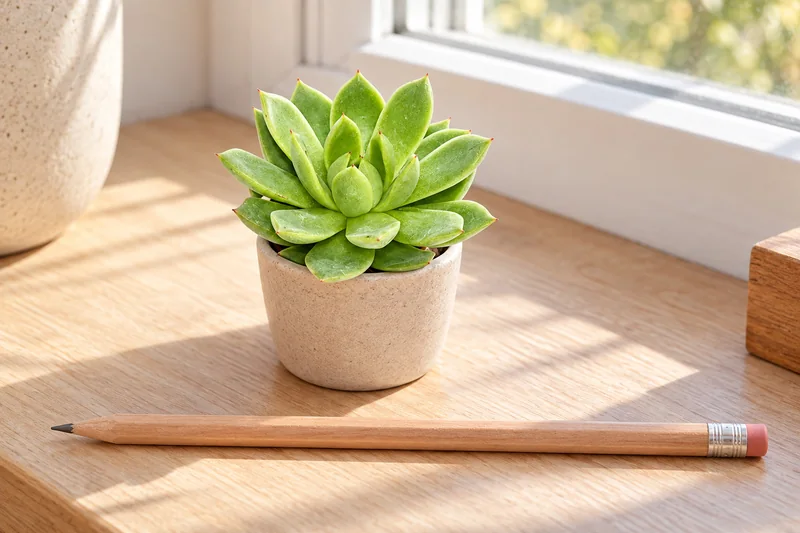
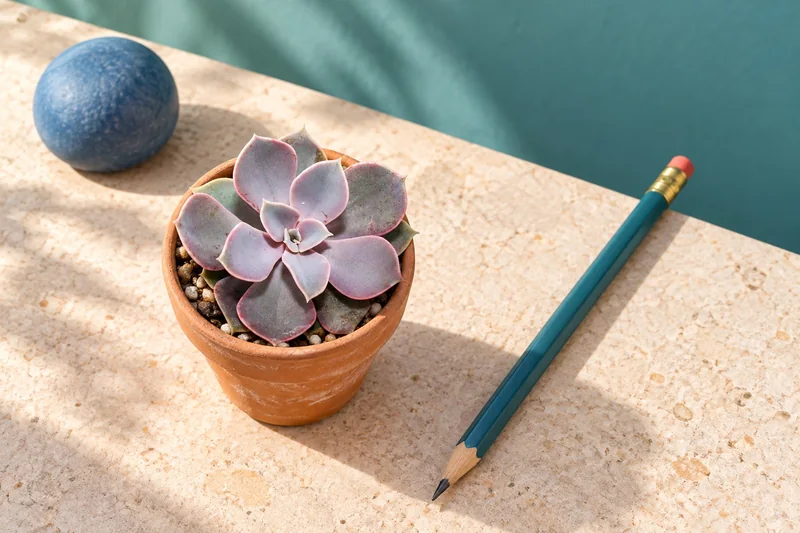
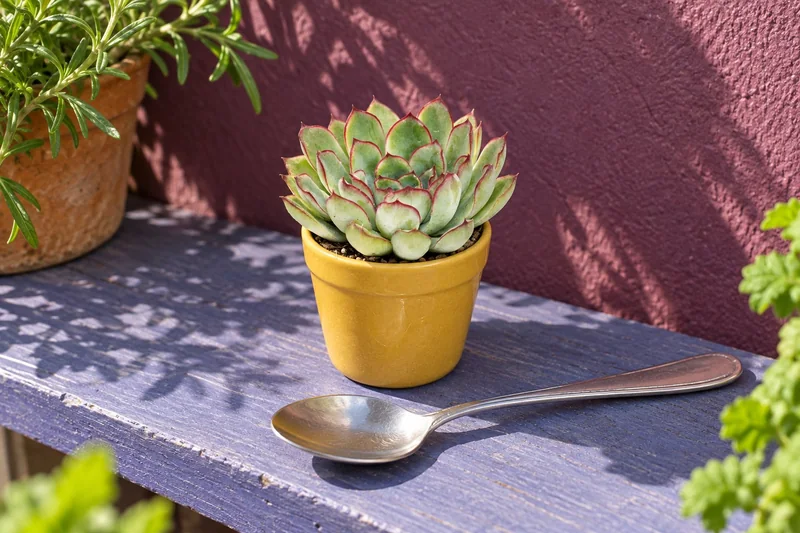
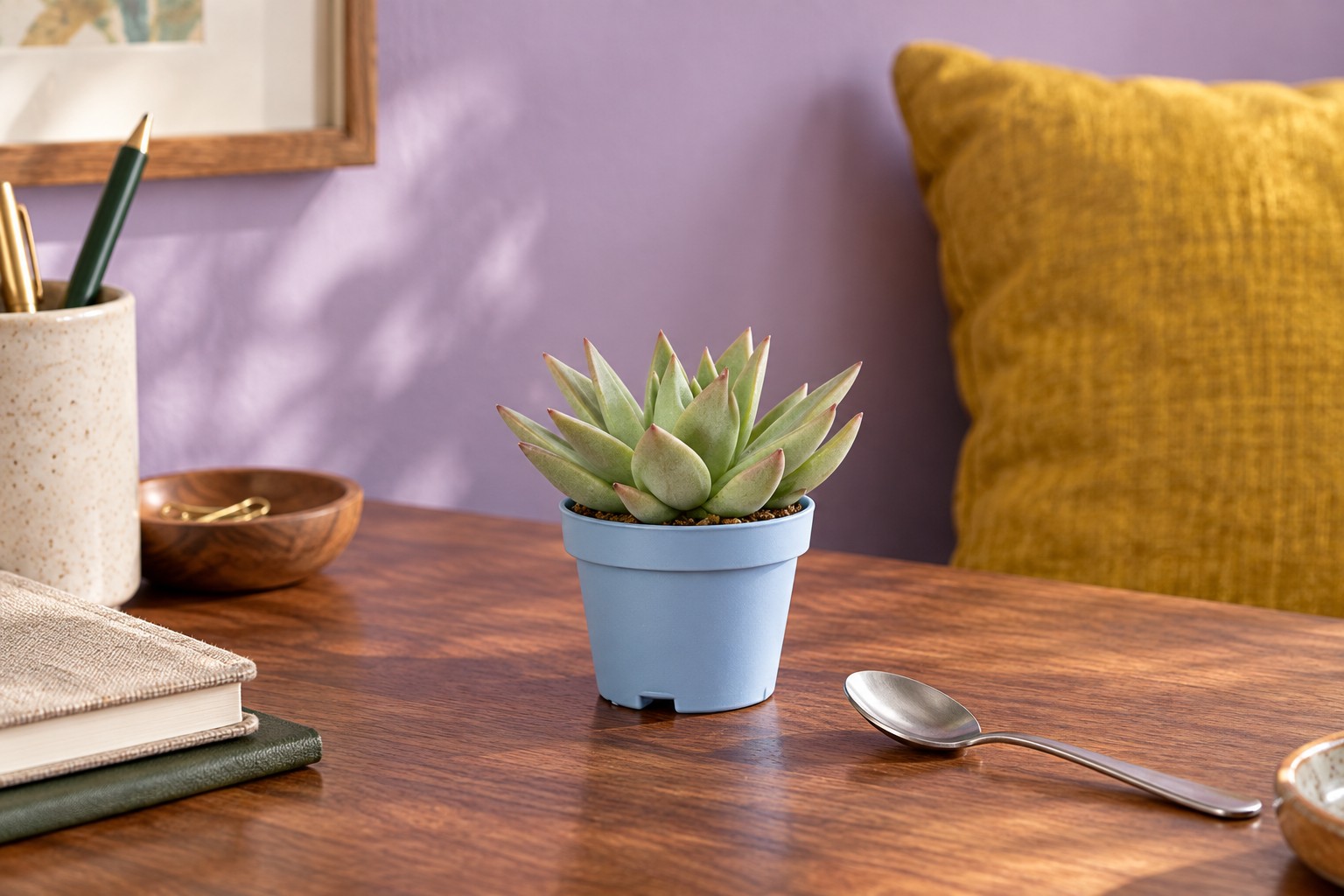
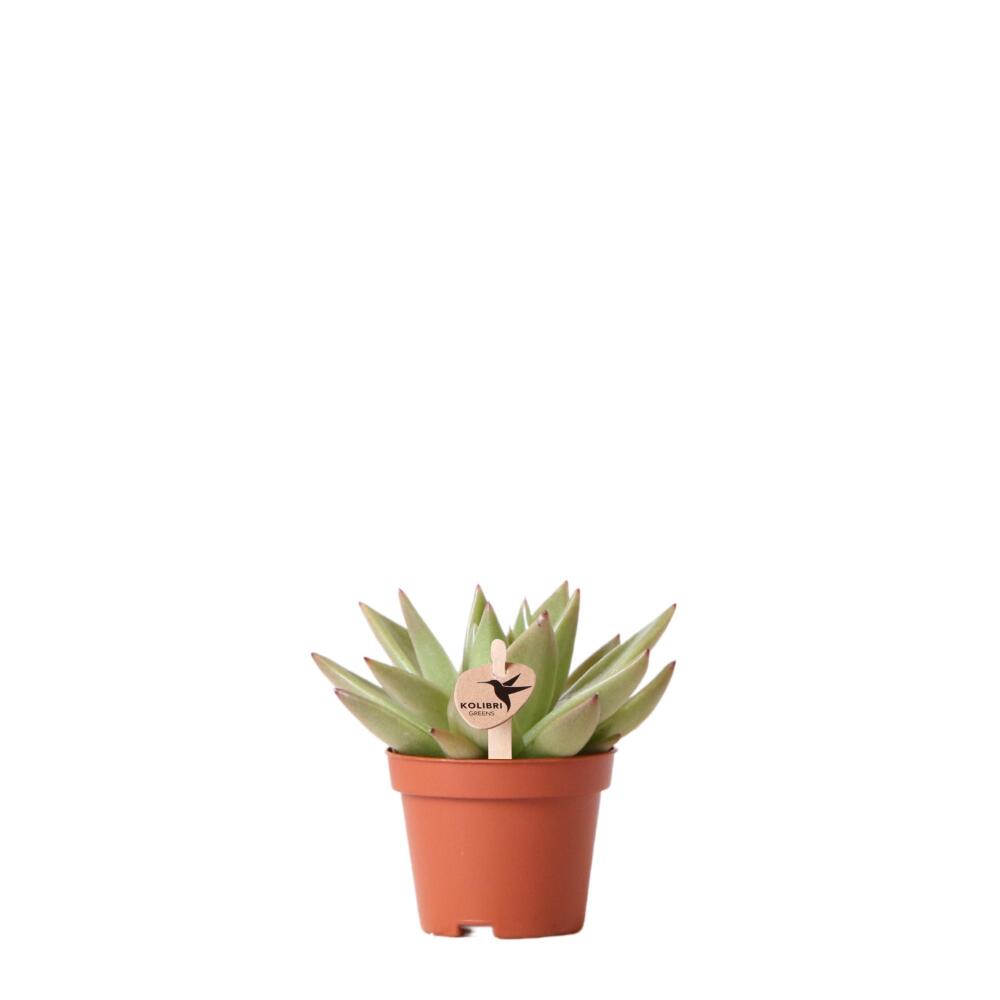
Fleshy pointed leaves sit densely around the centre. Their natural grey- to pale-green surface and possible lightly reddish tips shape the impression. Miranda is listed as an Echeveria commercial form; the RHS marks the name as unresolved. No unconfirmed species or cross is therefore added here. The plant belongs to the Crassulaceae. The pictured natural rosette is neither artificially coloured nor enhanced with exaggerated vivid colour.
The 6 cm pot is a small beginning
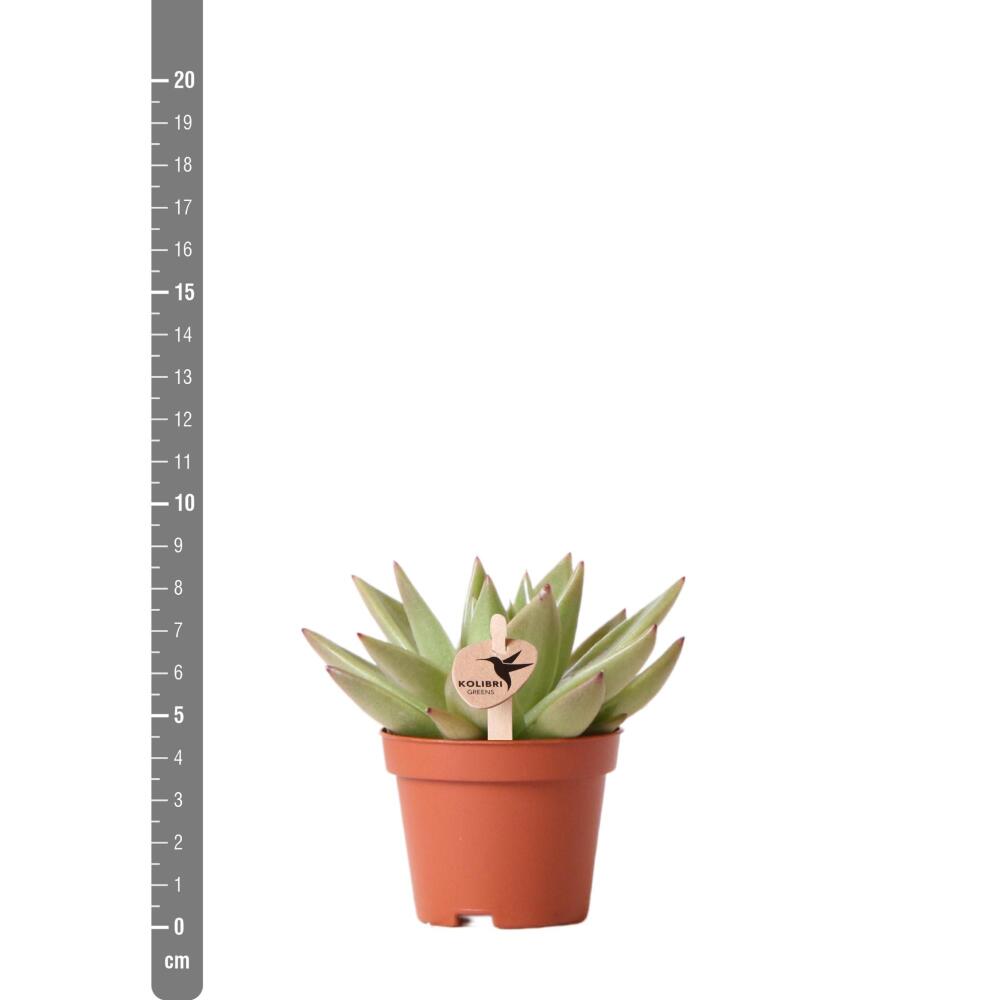
The shop offer states a 6 cm pot but no definitive delivery height. The scene retains the original’s compact proportions. A young plant may later need more room, but should not already look like a large mature bowl in the image. Leave enough space from other objects so leaf tips do not continually bump them. Hold the plant by its pot, not its leaves. Decorative pot, furniture and accessories are not automatically included in plant delivery.
Brightness keeps growth compact
Echeverias need plenty of light. After shipping or shaded cultivation, introduce direct sun slowly; a sudden move to hot midday sun may scorch. For lasting compact growth, a very bright position matters more than a decoratively dark room corner. If the rosette stretches or gaps between leaves clearly increase, check light levels. Already stretched older areas will not become short simply with a new position, but new growth can develop more favourably.
The root ball sets the rhythm
Let compost dry well between waterings. Then water directly onto the compost and allow drainage. The shop’s general three-week interval is not adopted as a fixed care calendar: warmth, light, pot and season alter demand. Continual little sips keep the surface unnecessarily moist. Avoid water in the rosette centre and a constantly filled outer pot. In winter at a cooler frost-free position and at rest, keep very dry.
Gently remove dry old leaves
A loose mineral-structured succulent mix suits well. Repot only slightly larger when needed. Do not treat the natural leaf surface with shine products or continually rub it. Carefully remove completely dry lower leaves without tearing healthy bases. Such old leaves may be part of normal growth. However, examine soft translucent or rapidly discolouring leaves in wet compost more closely. Feed very sparingly during active growth according to the label.
Give flowers and offspring time
Taller flower stems may develop under suitable conditions. The young delivered plant therefore need not already flower. Suitable leaf or stem cuttings can serve for propagation after wounded surfaces dry. A healthy leaf should be detached as completely as possible without crushing; success is not guaranteed for every part. Inspect the dense rosette for mealybugs. For a young plant, undisturbed rooting is often more valuable than early dismantling for many new offspring.
One plant, several views
Good to know
Is the plant artificially coloured?
This portrait and scene show the natural grey- to pale-green form with subtle tips.
Must I water exactly every three weeks?
No. Check compost and adapt intervals to actual conditions.
Why is my rosette suddenly stretching?
Too little light is a common possible cause. Improve brightness gradually.
What delivery height is stated?
No definitive height is given. A 6 cm pot is offered; the image shows the compact young plant.
Sources and editorial note
- Product and delivery contents: Exotenherz
- Royal Horticultural Society: plant and care knowledge
- Royal Horticultural Society: plant and care knowledge
Sources checked: 15 September 2026. Product information and delivery contents follow the linked shop offer. Care has been checked against the stated specialist sources and remains subject to plant condition, position and season.