This plant at Exotenherz
Check the shop offer for current availability, price and what is included.
Check the selected shop offer for price, availability and delivery contents.
Your care table
| Topic | What to do | Why it helps |
|---|---|---|
| Light | Position very brightly and increase sun gently. | Observe smaller side shoots too. |
| Root ball | Let dry distinctly between waterings. | Check before each watering. |
| Watering | Slowly onto soil beside the group. | Do not shower the tight gaps daily. |
| Drainage | Remove excess and keep holes open. | No lasting wetness at the base. |
| Soil | Use free-draining cactus substrate. | Maintain air at roots. |
| Repotting | Carefully support group and root ball together. | Do not unnecessarily break off little heads. |
| Nutrients | Sparingly according to label during growth. | No extra dose for each new side shoot. |
| Winter | Bright and frost-free, less water during rest. | Continue observing development. |
Check the compost and pot weight. The care table explains how far the compost may dry.
Water only when needed. The water should reach the root ball without spilling over the rim.
Remove surplus water from the saucer or cachepot. Then return the plant to a suitable position.
A little centre with a whole circle of companions
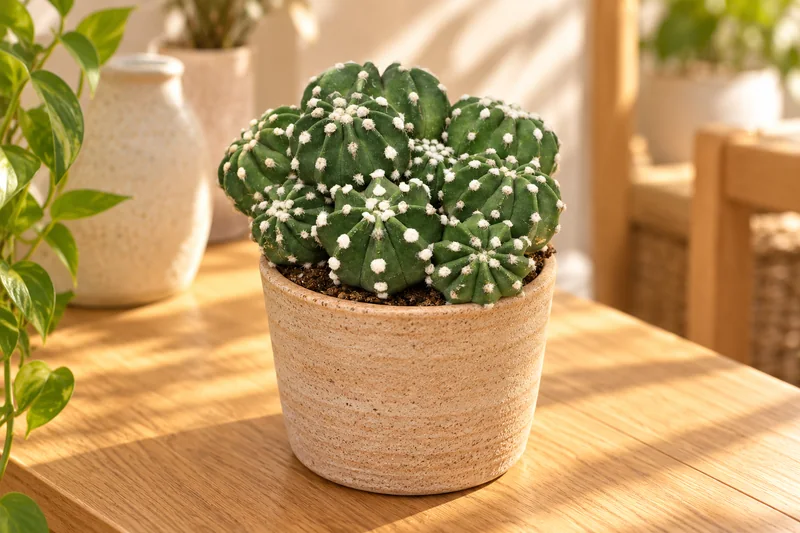
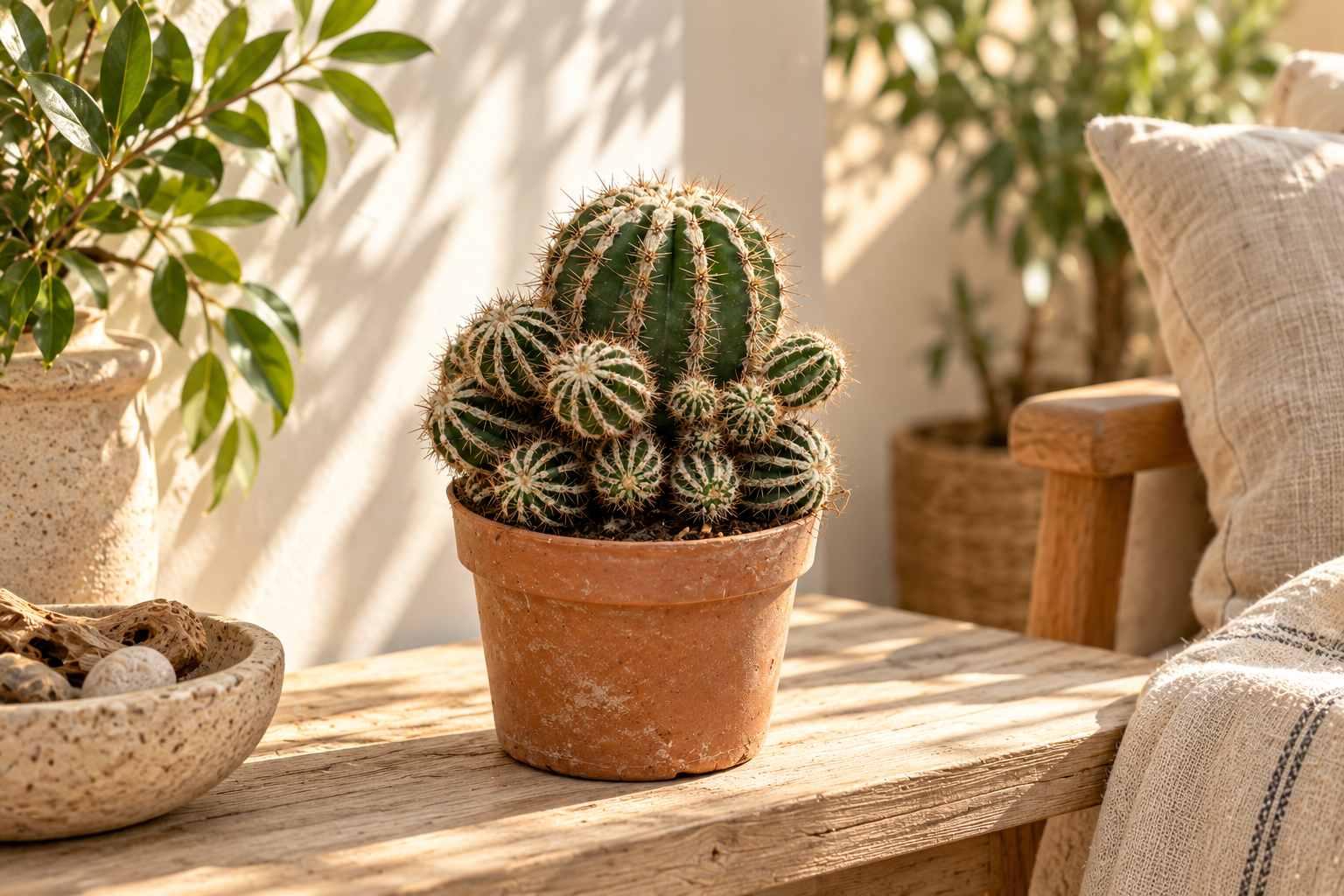
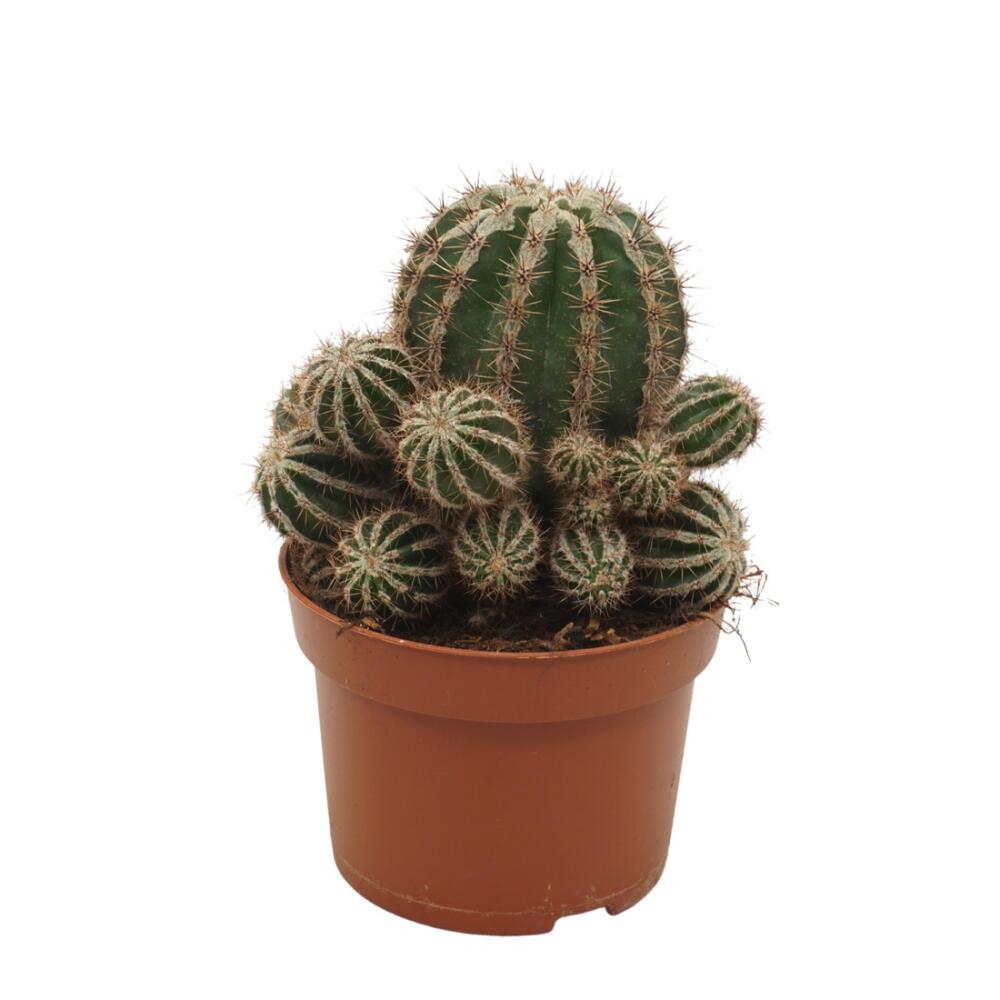
The larger rounded body forms the centre. Smaller globular shoots sit around its base, repeating ribs, pale areoles and fine radiating spines. The original shows this layering clearly. It gives Haku-jo maru more movement than one smooth ball would have. The offer names an Echinopsis cultivated form. No additional precise species assignment is invented from it. The genus contains very different growth forms; the pictured globular group remains the specific starting point for this portrait.
A pot with a group is not a multi-pot set
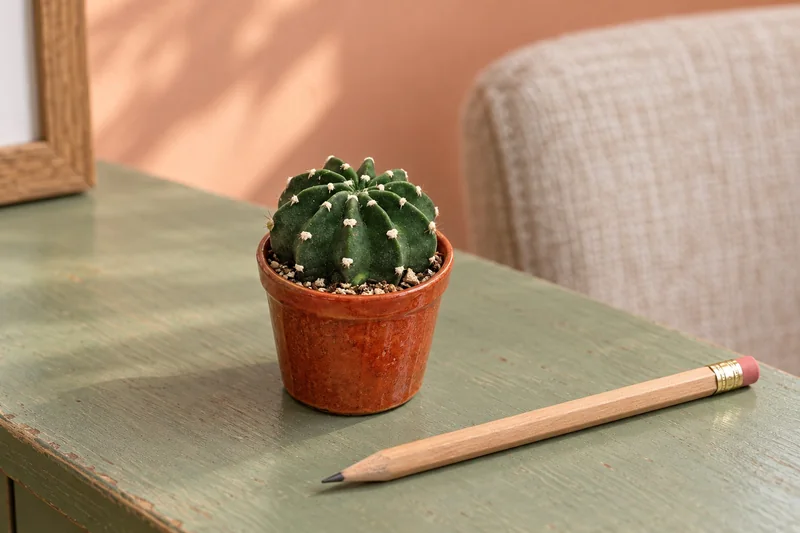
The assortment plant stands in a 10.5 cm pot and is described at about fifteen centimetres overall height. Several small shoots belong to the shown group in the container. They do not mean several separate pots are delivered. Support the pot when unpacking. Fingers do not reach between closely neighbouring bodies even if a seemingly free little gap appears there. A simple bright table position can display the globe pattern and also offer enough room for safe checking.
The globe group needs more than a pretty shady position
Choose a very bright position. Introduce stronger sun gradually, especially after transport or when moving outdoors during frost-free warm weather. Not each little side head receives equally much light; therefore inspect the whole group from different directions. Do not constantly turn the plant by handling its body directly. Observe fresh green and overall form. A dark position cannot be compensated with more frequent watering even if young side shoots look particularly tender.
Water reaches the soil beside the globes
The root ball may dry distinctly before watering. During active growth, then water slowly onto soil and remove excess. Closely spaced heads are not showered from above daily to keep the pot moist. Watch actual access to the root zone: a few free spots suffice for cautious watering if soil beneath is actually supplied. Judge a dry surface together with weight and position conditions. This creates a needs-based sequence of drier and supplied phases.
The group is not pulled apart during repotting
Free-draining cactus soil and a suitable container with drainage holes keep growing manageable. Repot carefully at the start of growth when space is truly needed. Small side bodies need not be broken off to create a neat form. Use suitable handling aids and support the root ball. During active growth, feed sparingly according to cactus fertiliser label. Inspect base and protected gaps regularly. Changes may stay hidden there longer than on the bright visible upper side of the largest body.
Observe flowers rather than promising a date
Echinopsis is also valued for its possible flowers. Genus diversity does not replace evidence of an exact flower colour or fixed flowering month for this specific trade form, however. The portrait therefore promises no current flowers. In winter the group stays bright and frost-free with restrained supply adapted to dormancy. A view from above alongside a side view suits the plant book. Record new side shoots and any actual buds. This says more about your specific plant than a general flowering calendar that does not yet correspond to it.
One plant, several views

Good to know
Are the little globes extra delivery pots?
No. The portrait describes the group in the single assigned pot.
Is the precise species named?
The shop lists Echinopsis cv. haku-jo maru; no further species is added.
When does this exact form flower?
No fixed variety-specific flowering date is established for the offer.
May I pull the group apart?
It remains protected during repotting; little shoots are not broken off to correct shape.
Is 15 cm the mature height?
The figure is an approximate overall height of the young article.
Sources and editorial note
- Exotenherz: offer and original images (03.10.2026)
- RHS – Container cacti, light and needs-based care (03.10.2026)
- NC State Extension – Echinopsis, genus and culture (03.10.2026)
Shop offer, article number, GTIN, availability and original images checked directly on 02.10.2026; specialist acceptance 03.10.2026. Specialist sources read directly. SKU, original images, dimensions and orderability checked directly in the shop on 03.10.2026. Relevant specialist sections read. Shop name and botanical reference remain separately recognisable. Pictures checked against original photographs; no Wawi, server or tool changes. Currently not orderable: knowledge portrait without purchase link; social drafts not approved for sending.