This plant at Exotenherz
Check the shop offer for current availability, price and what is included.
Product and delivery details are given in the individual offer.
Your care table
| Topic | What to do | Why it helps |
|---|---|---|
| Light | Very bright; introduce sun gradually after transport. | Compact new growth needs light without abrupt scorching. |
| Water | During growth, thoroughly, then let it dry well. | Heads store water; roots should not stay wet constantly. |
| Growing medium | Draining cactus compost with mineral ingredients. | The base needs free drainage. |
| Pot | Keep holes clear and remove water from the decorative pot. | Even a group of small heads cannot tolerate a bathtub. |
| Feeding | During active growth, moderately according to product instructions. | Overfeeding produces no reliable flowering date. |
| Winter | Bright, cool and frost-free; reduce water strongly. | Rest supports a healthy yearly rhythm. |
| Offsets | Do not detach automatically; allow natural clustered growth. | The small side shoots belong to the offered appearance. |
| Handling | Hold the pot and protect against spines. | The pale areole effect does not mean an absence of spines. |
Check the compost and pot weight. The care table explains how far the compost may dry.
Water only when needed. The water should reach the root ball without spilling over the rim.
Remove surplus water from the saucer or cachepot. Then return the plant to a suitable position.
A small group rather than a single globe
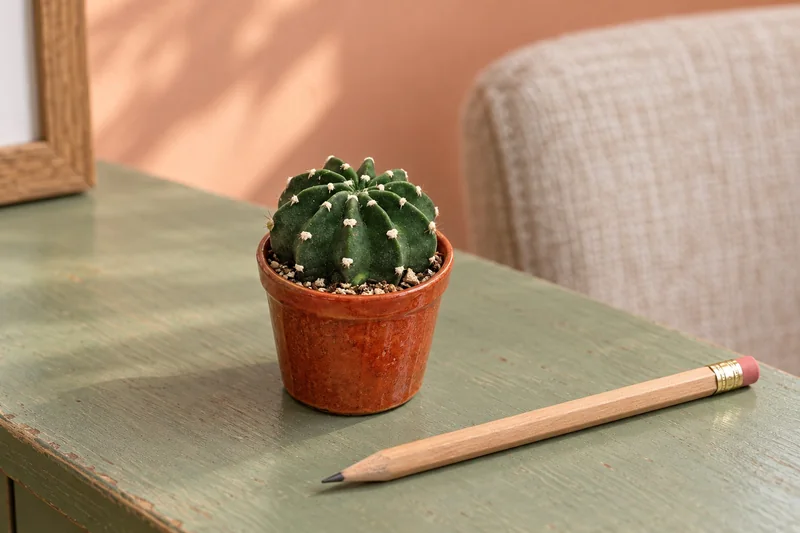
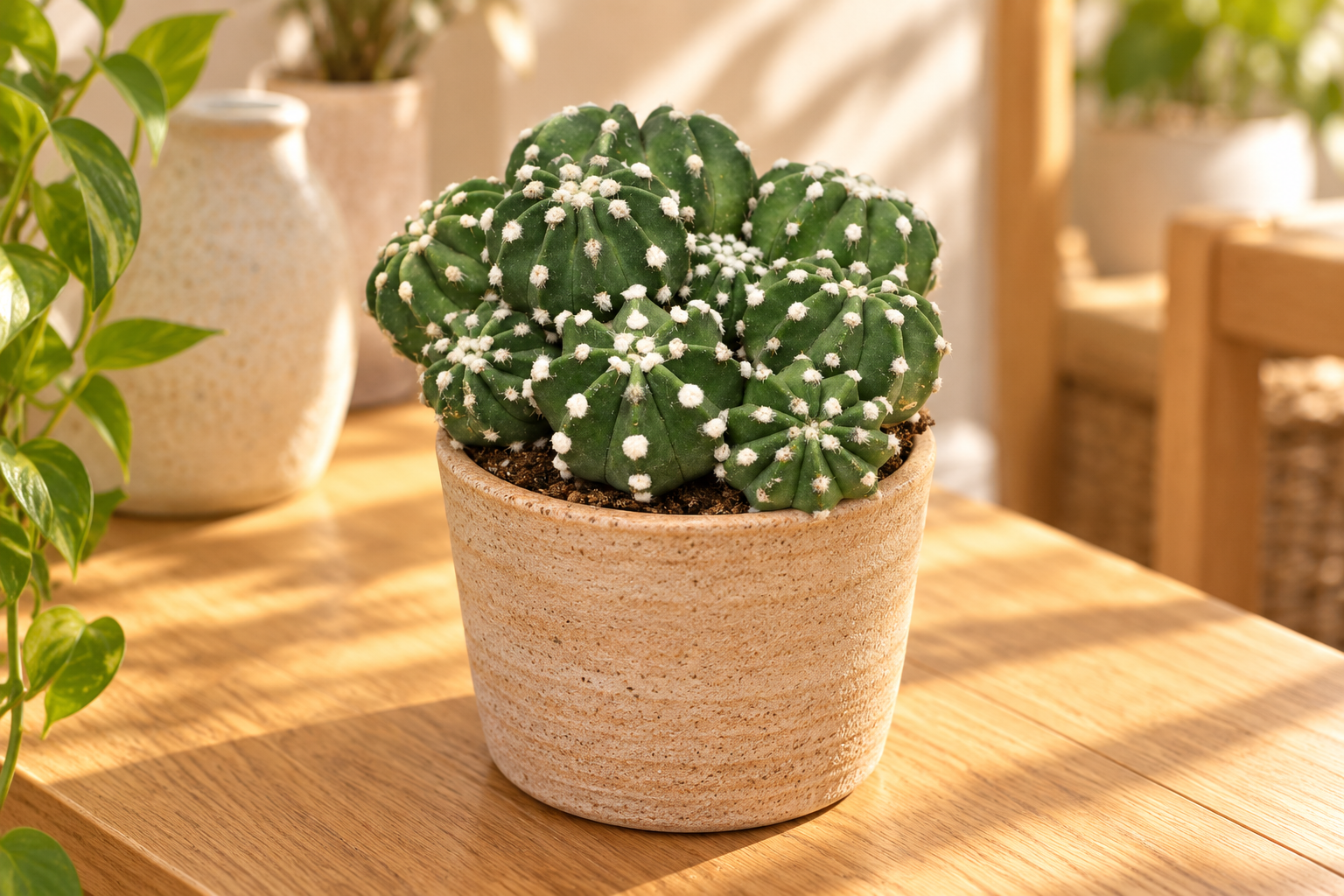
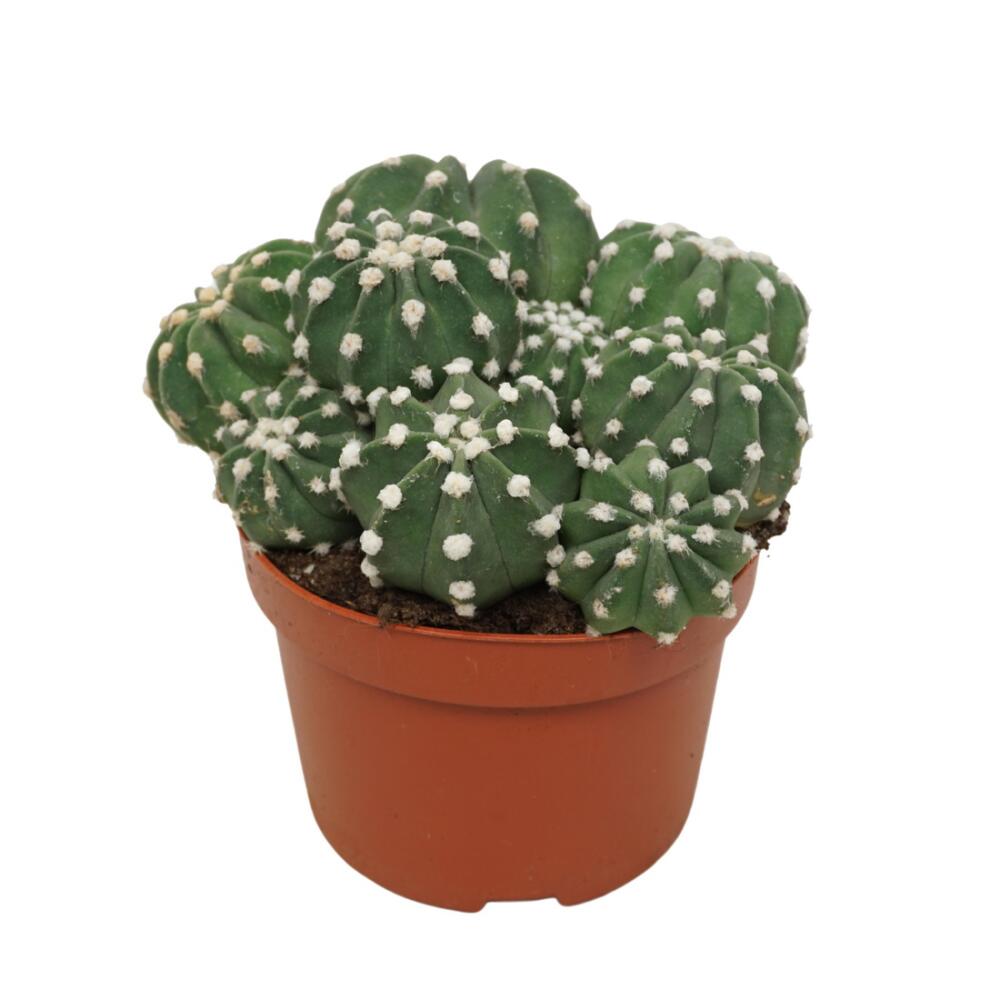
The offered cactus forms a lively group of ribbed green heads. Pale areoles dot the surface, while young side shoots develop between the larger globes. Echinopsis multiplex is the commercial name of the specific offer. The 12 cm pot contains a plant about 15 cm high overall; the original shows this young clustered growth. A reference to flowering potential is appealing but does not replace examining its current stage. We initially view the cactus as it arrives: with its ribs, short spines and small heads, already interesting without flowers.
Ribs, areoles and small neighbours
A rib is more than an attractive line: it gives the cactus body its segmented shape and may change slightly with its water reserves. Areoles sit on the ribs and can produce spines and later buds. The pale dots are neither wiped away nor treated with leaf shine. Offsets grow between the larger heads and gradually need more space. When watering, also look at the group's centre and the pot rim. This shows whether new shoots grow freely or already rub against a narrow container. A healthy network of small and large heads may develop quite naturally.
A bright place for strong heads
The cactus suits a very bright position. Direct sun is introduced gradually after transport so the surface adjusts to stronger exposure. Behind hot glass, watch air movement and temperature. A dark shelf is no good permanent solution, even if the round heads look decorative there. If new growth becomes noticeably thin and long, first check the light supply. Additional water does not turn a dark position into a suitable cactus place. A sheltered outdoor position may suit in summer if weather, rain protection and safe frost-free conditions are considered.
A water pause between complete applications
During active growth, moisten the root ball after good drying. Excess water must then drain from both pot and decorative pot. The heads store reserves but need healthy roots capable of absorbing water when required. A small daily sip may keep the base constantly moist. Therefore check pot weight and the inner root ball. If a head turns soft or the base dark, examine more closely before watering again. Slightly altered firmness above a dry root ball is assessed differently from soft tissue over soil that has been wet for a long time.
Offsets may remain part of the group
The small side shoots are called offsets. They need not be removed just to leave a single large head. The group is precisely part of this offered plant's appearance. When repotting later, hold the root ball carefully and protect hands from spines. Draining cactus compost and a reasonably larger pot make cultivation easier. Do not set the heads deeper than before and keep their bases clear. Division is a separate intervention, not a regular duty. As long as the group grows healthily with enough root space, it may continue developing its natural shape.
Do not confuse rest and flowering
Echinopsis can develop impressive flowers. Whether and when a young plant flowers depends partly on development and cultivation. A bright cool frost-free winter position with strongly reduced water suits a quiet yearly rhythm. In a warm room, light and moisture control are especially important. Feeding stops during resting growth; during active growth, it stays moderate and follows the product label. More fertiliser does not force a bud. If you find one, keep the cactus in its accustomed light position and protect the bud from contact when moving it.
Look regularly, disturb rarely
Check the areoles, spaces between shoots and base occasionally. Pests or moisture problems may become apparent there earlier than if you view only the most attractive front. Unclear abnormalities are investigated first and the plant separated from others when needed. An old individual mark stays visible after improvement; healthy new growth shows more clearly whether cultivation suits again. The group is not constantly turned, divided and moved. With enough light, draining soil and understandable water pauses, its slow development can be as enjoyable as a later surprising flower.
One plant, several views
Good to know
Why are several heads in the pot?
The offered Echinopsis shows clustered growth with offsets; the small side shoots belong to the plant.
Must I remove the offsets?
No. A healthy group may stay together as long as pot and cultivation suit.
Does every young Echinopsis flower immediately?
No. The species group can flower; development and conditions determine when.
Which flower colour is guaranteed?
No additional colour is promised here for the commercial form that is not more precisely designated.
How often do I water?
During growth, thoroughly after good drying; much less in a cool winter.
Can it stand in frost?
Overwinter this young potted plant brightly and frost-free.
Why does new growth become thin?
Check light and cultivation. A dark position cannot be compensated with more water or fertiliser.
Sources and editorial note
- Exotenherz: offer and original images (01.10.2026)
- RHS: Echinopsis multiplex – commercial name and genus (01.10.2026)
- RHS: cactus care (01.10.2026)
Shop offer, SKU, GTIN and availability checked live on 01.10.2026. Original photograph unchanged. Our own researched gardening texts and individually approved scene. Unresolved RHS name status documented as a taxonomic note; shop name retained, no unconfirmed alternative species or specific flower colour promised.