This plant at Exotenherz
Check the shop offer for current availability, price and what is included.
Check the shop for the current price, availability and offer contents.
Your care table
| Topic | What to do | Why it helps |
|---|---|---|
| Light | Hang brightly in filtered light, without hot midday sun. | Forest cacti are adapted to sheltered light. |
| Water | During growth, water thoroughly when drying begins. | The root ball should stay slightly moist without being enclosed in wetness. |
| Drainage | Let the hanging pot drain; remove standing water. | Even a hanging pot needs air in its root space. |
| Soil | Use loose, quickly draining compost for epiphytic cacti. | Flat shoots do not mean a preference for heavy wet soil. |
| Feeding | Feed sparingly during fresh growth according to the fertiliser label. | Overly strong feeding does not help sensitive roots. |
| Winter | Keep bright at about 12–15 °C and water more sparingly. | The quieter phase needs less water; do not let it dry completely. |
| Repotting | Choose a slightly larger pot only when needed. | Unrooted additional soil stays moist unnecessarily long. |
| Pruning | Selectively remove damaged or overlong shoots that get in the way. | A few clean cuts preserve the natural trailing shape. |
Check the compost and pot weight. The care table explains how far the compost may dry.
Water only when needed. The water should reach the root ball without spilling over the rim.
Remove surplus water from the saucer or cachepot. Then return the plant to a suitable position.
A cactus with soft outlines
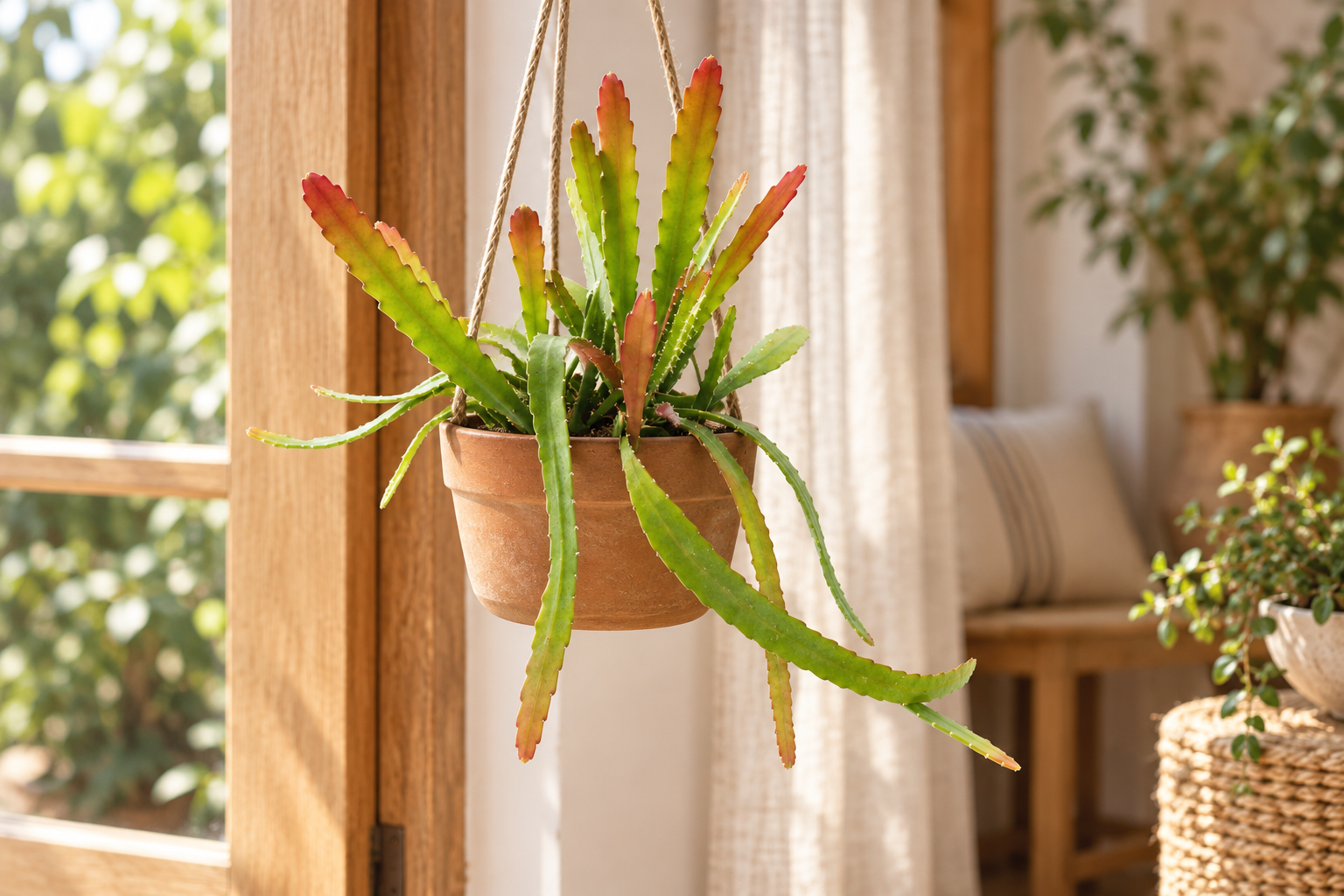
What we first like about Red Tip is the change between older green shoots and warmly tinted tips. Its flat sections look like elongated leaves, but botanically they are stems. The edges are gently notched. In the original photograph, part of the young framework still stands upright while other sections already lean over the pot rim. A hanging pot makes this transition clearly visible. A quiet background lets the outlines work without further decoration. Simply passing by changes the view of the individual green and reddish surfaces.
The supplied plant still has growing to do
The offer lists Red Tip in a 14 cm hanging pot. The mentioned 60 to 80 cm describes a possible later shoot length, not a guaranteed delivery size. Allow some free space below and sideways. On a narrow shelf, shoots could otherwise rub against edges. The scene shows a possible home position; its furnishings are not included. Before hanging, check the fastening and the weight of the freshly watered pot. For watering, remove or support the hanging pot so water can drain safely without reaching walls or furniture.
Forest light rather than hot cactus sun
The suitable spot is bright but protected from strong midday sun. Red Tip belongs to forest cacti, whose cultivation differs from sun-loving desert cacti. After transport, acclimatise slowly to a brighter location. Light shading behind hot glass helps on summer days. Reddish shoot tips are no instruction to expose the entire plant as intensely as possible. We also look at firmness and pale or dry patches. A sheltered partly shaded outdoor spot is an option in warm weather. Before cool nights, the plant returns to protected indoor space.
Check the hanging root ball deliberately
A hanging pot is easily overlooked in daily checks. Feel its upper soil too and compare pot weight. When the root ball starts drying during growth, water thoroughly and let it drain fully. It should neither remain wet for days nor stay completely dry for a long time. Actual growth determines the water amount. A warm bright day calls for a different check from a cool winter week. If shoots become thin or limp, first check whether the root ball is dry or already too wet. Both conditions can cause similar visible effects.
Airy root space supports the shoots
Use loose, quickly draining compost for epiphytic cacti. The mix should absorb moisture while allowing air to reach the root ball. Do not pre-emptively choose a very large pot when repotting. If existing roots need more space, a small size increase is usually enough. Support long sections when lifting out so they do not break at the pot edge. During new shoot growth, feed sparingly according to the fertiliser label. Account for soil already containing fertiliser. We do not expect faster attractive growth from strong extra portions, but accompany the plant with a suitable balance of light, water and feeding.
Adjust the supply together in winter
A bright position at about twelve to fifteen degrees matches the winter cultivation described in the offer. As warmth and growth decrease, water more sparingly. The root ball must not dry out completely, however. A position above a radiator combines dry air and heat and poorly suits a quiet phase. Flowers can be a lovely addition in well-developed forest cacti; a young plant need not form buds yet. We do not judge its value by that. Flat shoots remain an unusual subject even without flowers and show through new growth how well the position suits it.
Gently care for long shoots and small problems
Damaged or overlong sections that get in the way can be removed selectively with clean tools. After heavier pruning, account for reduced water needs. Healthy shoot sections can be used for a cutting trial; allow cut surfaces to dry before planting. During checks, also inspect shoot bases and pot edges where small pests hide more easily. A brown spot does not automatically require a complete change of location. Consider root-ball moisture, strong sun and mechanical damage together. Care remains manageable, and Red Tip gets time to develop new trailing lines from its young hanging shape.
One plant, several views
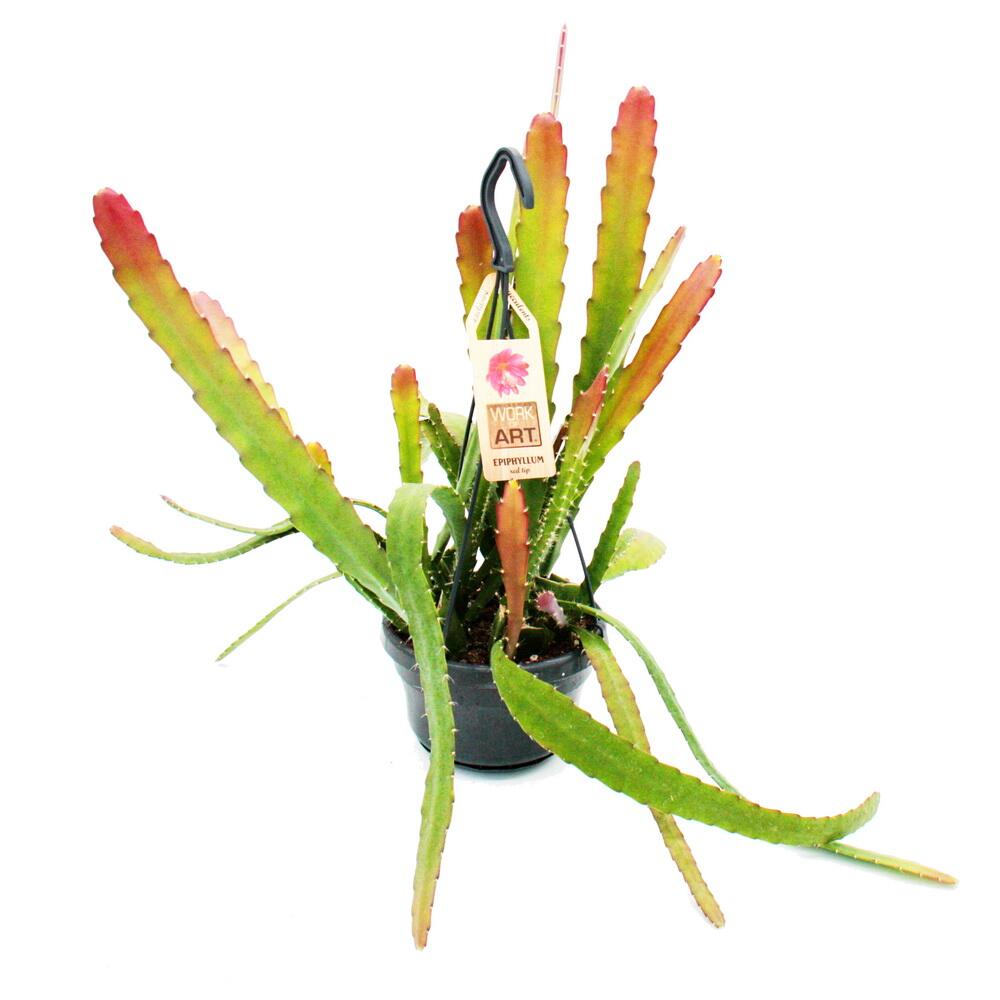
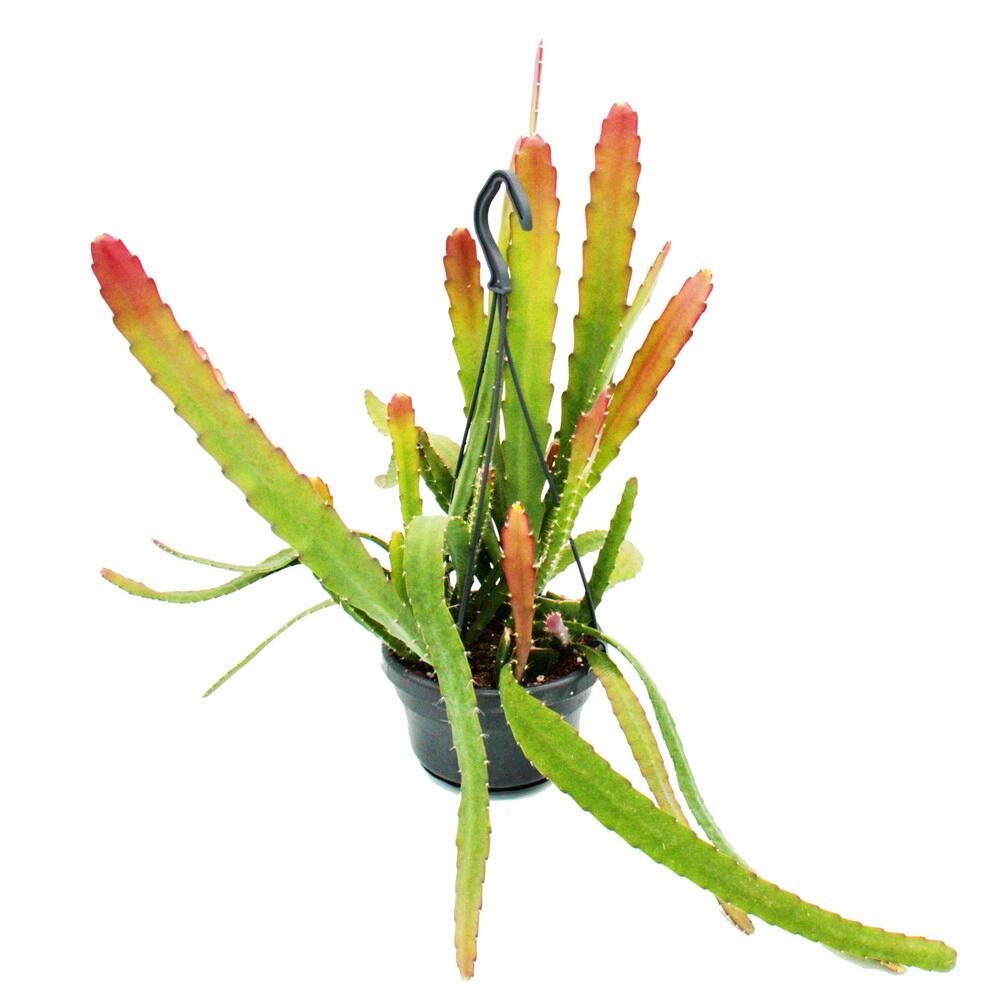
Good to know
Are the flat parts leaves?
No. They are flattened leaf-like cactus stems.
Is the plant supplied 60 to 80 cm long?
No. That shop specification describes a possible later shoot length. The offer is for the 14 cm hanging pot.
Does Red Tip need full sun?
Bright filtered light suits it better. Carefully shade hot midday sun.
Can the root ball stay dry for a long time?
That does not suit forest-cactus cultivation. Supply water when drying begins and let excess drain.
How do I overwinter it?
Brightly and protected at about 12–15 °C. Water more sparingly without letting the root ball dry completely.
Can I shorten long shoots?
Yes, selectively with clean tools. Healthy sections can be used for propagation.
Sources and editorial note
- Exotenherz: offer and original images (02/10/2026)
- RHS: Epiphyllum and forest-cactus cultivation (02/10/2026)
Shop offer, article number, GTIN, availability and original images checked directly on 02/10/2026. Specialist sources read directly. Shop name retained; later shoot length separated from delivery size. No deeply cut fishbone form or fixed flowering promised.