This plant at Exotenherz
Check the shop offer for current availability, price and what is included.
Check the selected shop offer for price, availability and delivery contents.
Your care table
| Topic | What to do | Why it helps |
|---|---|---|
| Light | Place very brightly, initially filtering strong sun. | The pale crown is not suited to sudden overheating. |
| Water | Let compost dry considerably between waterings. | Rootstock and crown need no constant wetness. |
| Drainage | Reliably remove remaining water. | A wet root area endangers the entire plant. |
| Compost | Well-drained mixture suitable for succulents. | Air and drainage support firm, healthy bases. |
| Nutrition | During growth, feed sparingly according to dosage. | Overfeeding does not improve the crested form. |
| Graft union | Keep dry and undamaged; do not pull on it. | The connection carries the special crown. |
| Handling | Wear gloves and avoid eye contact. | Latex can cause strong irritation. |
| Winter | Bright and frost-free, water more sparingly. | Lower activity makes the rootball dry more slowly. |
Check the compost and pot weight. The care table explains how far the compost may dry.
Water only when needed. The water should reach the root ball without spilling over the rim.
Remove surplus water from the saucer or cachepot. Then return the plant to a suitable position.
A fan folded by the plant itself
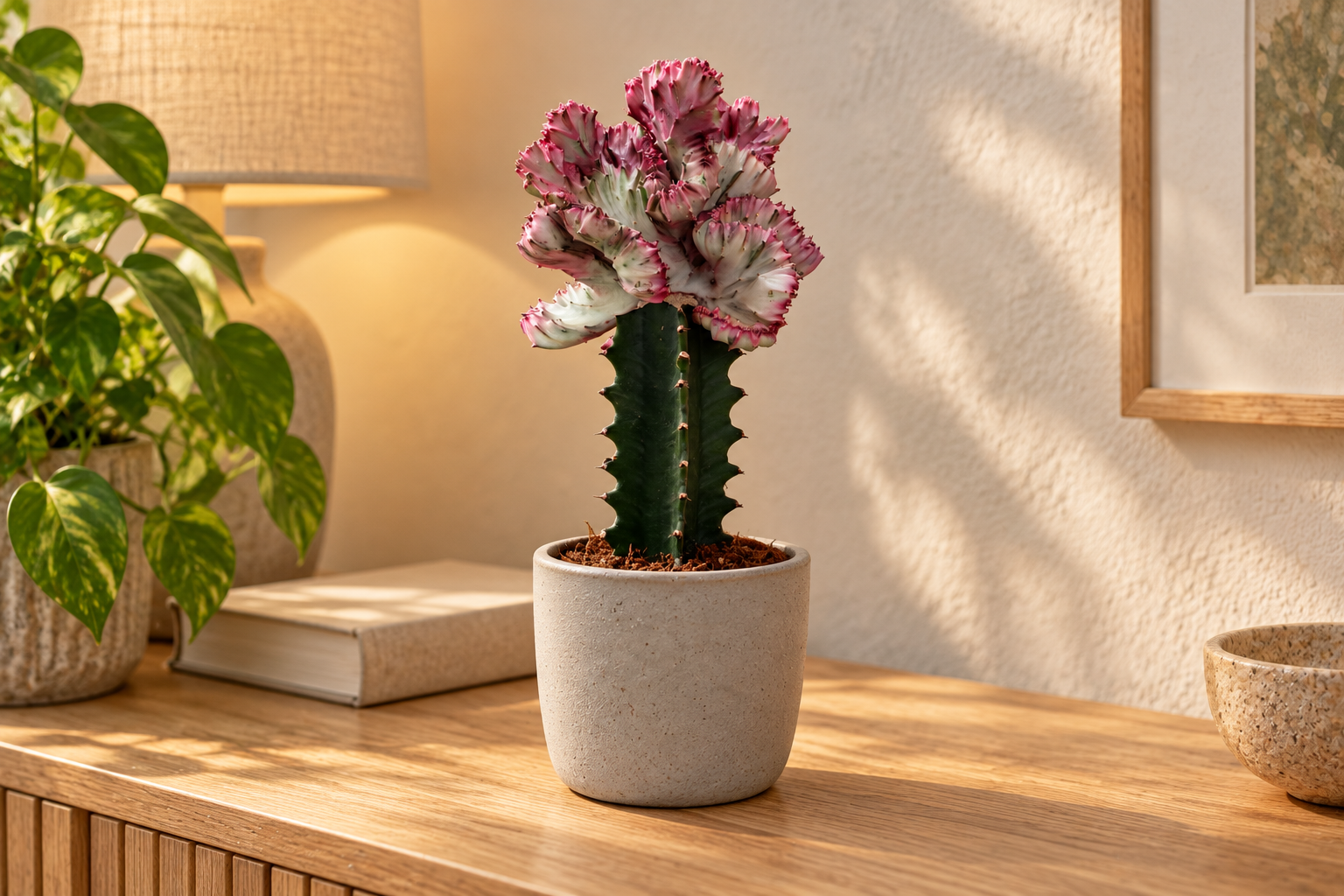
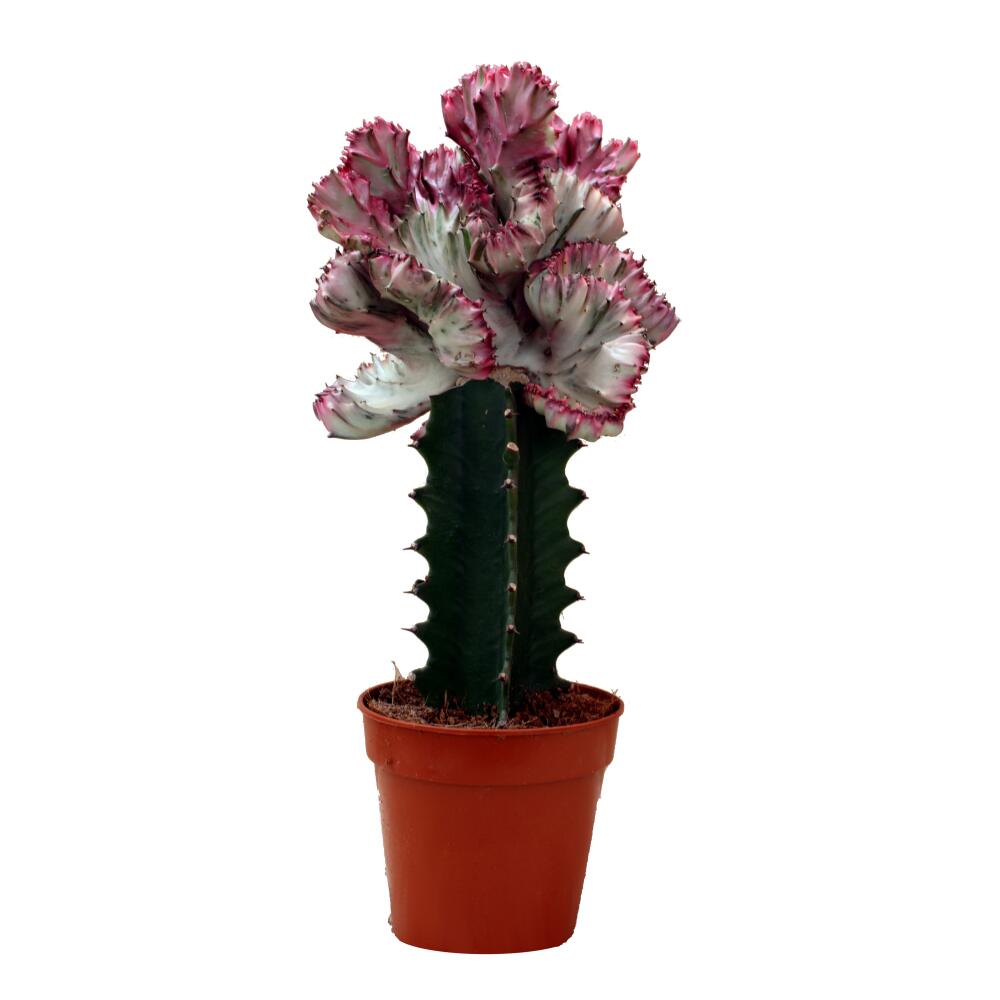
Euphorbia lactea Cristata carries an unusual folded crown above a green rootstock. Its pale surfaces and pink edges recall a small sculptural form but remain living plant parts. The fan can run differently from specimen to specimen and need not be symmetrical. The offer states approximately twenty-five to thirty centimetres of height and a twelve-centimetre pot. I like placing this manageable form on bright, low furniture where the entire structure remains visible. The scene follows the original photograph. An enormous coral mass or an extra leaf crown would suit neither the plant nor its offered delivered form.
The crown and its rootstock belong together
Cristata describes the crested growth of the upper plant parts. The offered euphorbia is grafted onto a green rootstock; both parts together form the cultivated plant. The rootstock’s precise species is not invented here if the offer does not reliably identify it. Botanically, the striking fan belongs to Euphorbia lactea. Despite a frequently used coral comparison, it is neither an animal nor a true cactus. I therefore assess the connection between rootstock and crown as attentively as the fan itself. It should remain firm and is not used as a handle during movement.
A light position without a sudden change to sun
Bright daylight is a good starting point for care. The pale crown is not abruptly placed in hot midday sun behind glass. Gentle acclimatisation to more brightness is better than trying to force pink tones through an extreme position. I observe whether surfaces remain firm and whether new dry or bleached damage appears. A dark shelf is no good permanent alternative to strong sunshine. A warm, bright area without cold draughts suits the entire plant. A pot directly beside a frequently opened winter door may be less suitable than a protected table position in the same room.
Water according to actual dryness
Before the next watering, I check whether the compost has dried considerably. The rootball is then moistened evenly without constantly pouring water into folds or onto the graft union. Excess must drain and is removed from the outer pot. A strong green rootstock cannot tolerate unlimited permanent wetness. At the same time, it remains a living root carrier whose supply cannot simply be forgotten forever. I follow warmth, light and activity. If the rootball is heavy and wet, I do not water again. Soft areas at the base or crown demand careful examination rather than being hastily treated as signs of thirst.
A manageable amount of compost with good drainage
A well-drained succulent mixture keeps roots easier to monitor than compacted heavy compost. Clear drainage holes are important. If the rootball is well rooted or the structure exhausted, repotting into a modestly larger pot can take place in a suitable growth phase. I support the rootball and rootstock rather than pull on the fan. An oversized container holds wet compost for a long time and gives the special form no immediate advantage. Sparse nutrition according to suitable dosage suffices during visible growth. Fertiliser is no means of making the crest more regular or repairing a weakened graft connection. Root condition, light and moisture must be right first.
The graft union remains undisturbed
A small shoot may occasionally arise from the green rootstock. It then belongs to the rootstock, not automatically to the folded crown. A possible intervention is planned deliberately with suitable tools and protection rather than carried out in passing. Euphorbias’ irritating latex must reach neither eyes nor unprotected skin. I wear gloves for such work and keep cut remnants away from children and pets. Normal care generally requires no pruning. Folds are not bent apart or brushed vigorously either. Their natural form remains most attractive when standing securely without constant mechanical correction.
Watch attentively through the quieter period
In winter, the plant stays bright and frost-free. With reduced activity, watering is considerably lower; a cold, moist rootball is avoided. I occasionally check firmness of the rootstock, graft union and crown. Naturally irregular folds differ from new soft discolouration. The position should be secure enough that no passing arm strikes the fan. These few deliberate actions make the special euphorbia understandable: a living connection between a strong green base and a pale folded crown. Its appeal lies in individual structure rather than expecting it to look like an unchanging decorative object.
One plant, several views
Good to know
What does Cristata mean?
It describes crested development of the crown with its folded, fan-like structure.
Is the plant grafted?
Yes. The offered pale crown sits on a green rootstock; the precise rootstock species is not named here without reliable evidence.
Is it coral or a cactus?
No. Euphorbia lactea belongs to the spurge family.
How should I water?
After considerable compost drying, moisten and remove excess. Do not constantly pour water into folds or onto the graft union.
May I hold and pull on the fan?
No. Support rootball and rootstock during movement and repotting; leave the graft connection undisturbed.
What does a green shoot below mean?
It may originate from the rootstock. Plan any possible pruning deliberately with suitable protection and tools.
Why is protection needed when pruning?
Euphorbias release irritating latex. Protect skin and especially eyes; do not allow plant parts to be eaten.
Sources and editorial note
- Exotenherz: offer and original photographs (01.10.2026)
- NC State: Euphorbia lactea (01.10.2026)
- Arcadia Garden Products: Cristata cultivation guidance (01.10.2026)
Shop offer, SKU, GTIN and availability checked live on 01.10.2026. Original photograph unchanged. Independently researched gardening texts and an individually reviewed scene.