This plant at Exotenherz
Check the shop offer for current availability, price and what is included.
Check the selected shop offer for price, availability and delivery contents.
Your care table
| Topic | What to do | Why it helps |
|---|---|---|
| Light | Very bright, increase stronger sun slowly. | Introduce pale variegation gently. |
| Water | Only after good drying and root-ball checks. | Globular shoots store water. |
| Drainage | Remove excess from pot cover. | Avoid constantly wet roots. |
| Substrate | Free-draining minerally structured mix. | Combine drying with air at roots. |
| Nutrients | Sparingly according to label during healthy growth. | Slow growth requires no strong doses. |
| Handling | Avoid milky sap contact, gloves when working. | Sap irritates skin and eyes. |
| Inspection | Look closely at ribs and soft dark spots. | Do not automatically water after changes. |
| Winter | Very bright and frost-free; reassess use. | The plant is not treated as frost-hardy. |
Check the compost and pot weight. The care table explains how far the compost may dry.
Water only when needed. The water should reach the root ball without spilling over the rim.
Remove surplus water from the saucer or cachepot. Then return the plant to a suitable position.
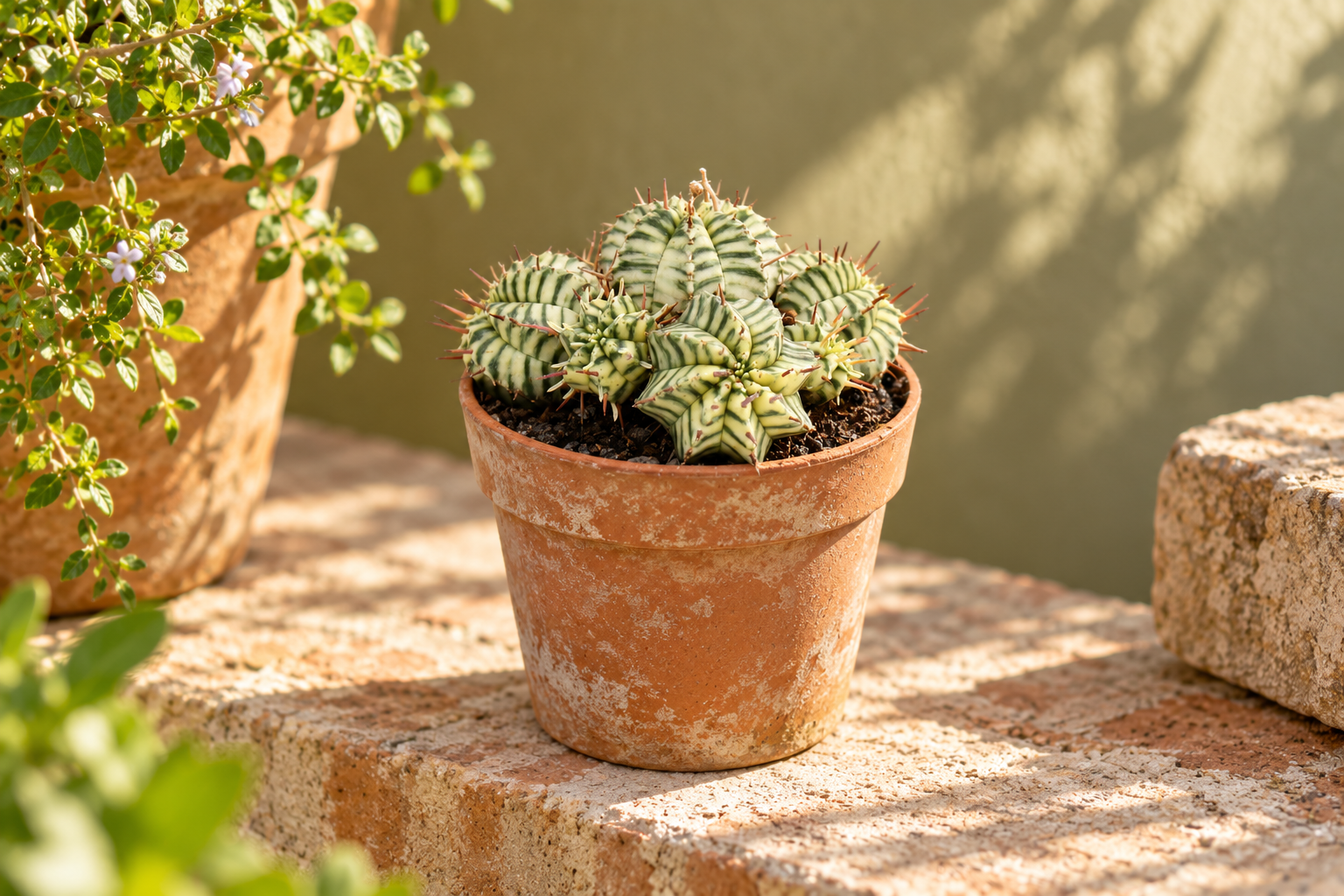
Little globes carry fine markings
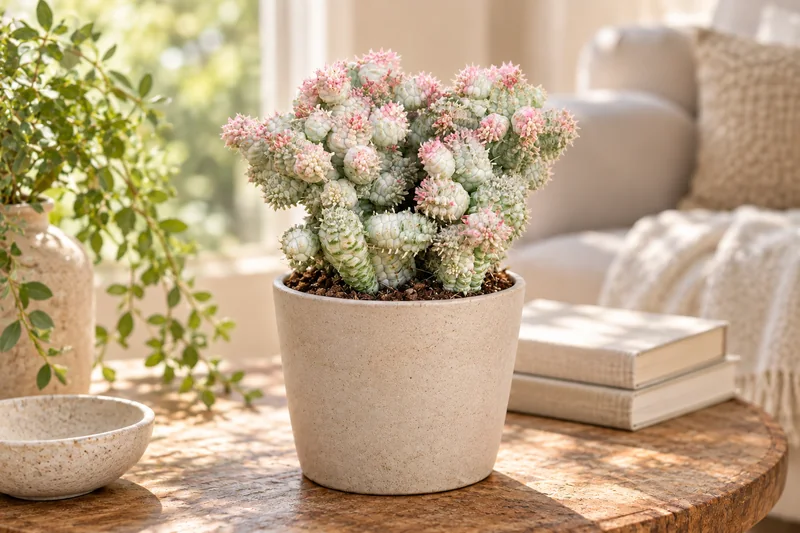
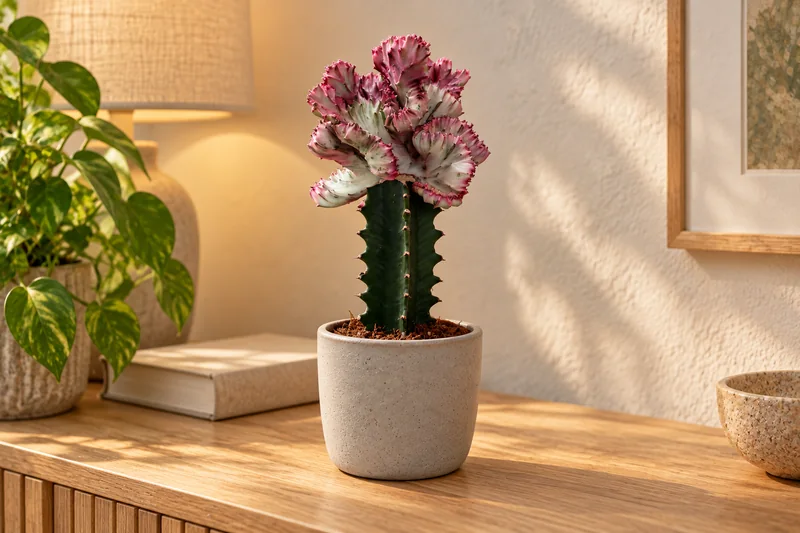
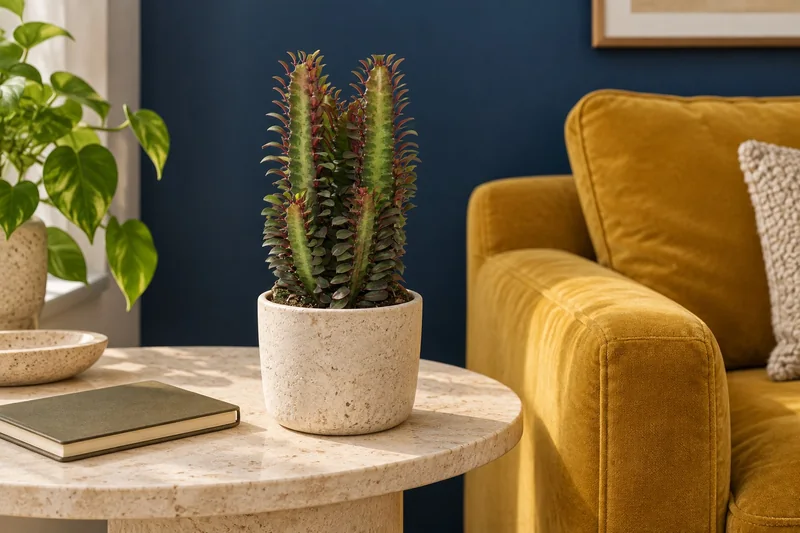
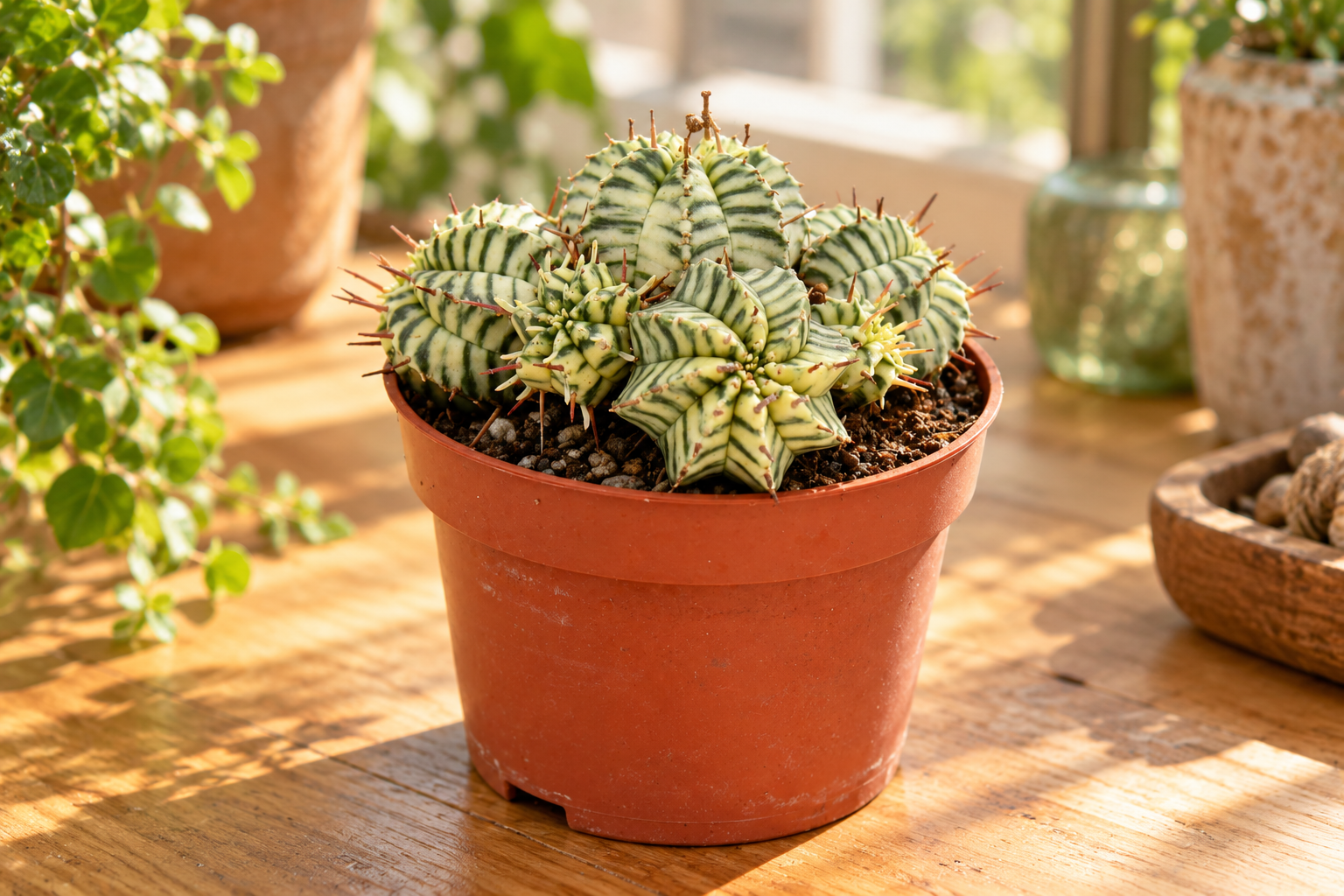
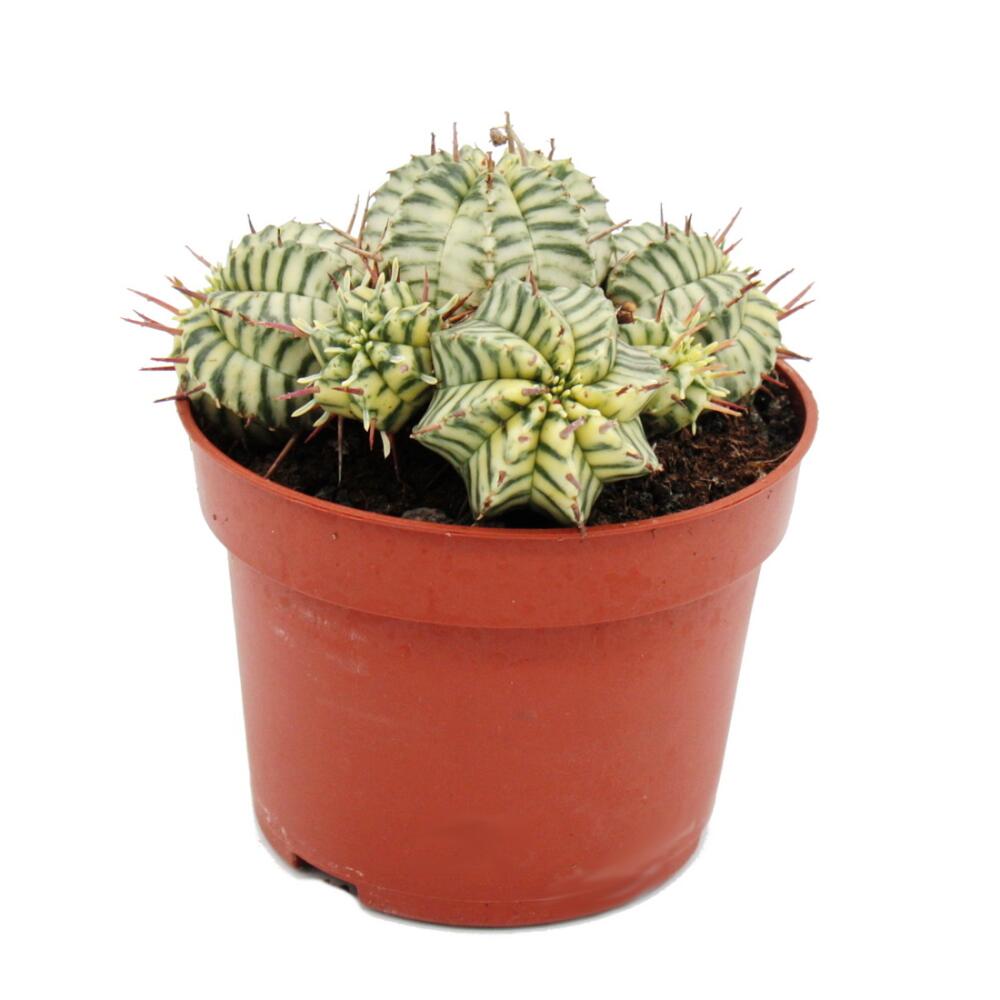
Cream fields and green lines follow the ribs of the little globes. Several shoots lie closely side by side without merging into one smooth surface. Variegated Euphorbia meloformis invites closer inspection: even another angle changes the pattern. Short brown projections may stand on ribs. Old flower stalks may remain after flowering in this spurge. It is not a cactus although its ribbed form recalls one. This botanical distinction becomes important for care and handling.
Small size belongs to its character
The assortment lists a ten-and-a-half-centimetre pot and about twelve to fourteen centimetres overall height. The low group suits a bright potting table, not as a large standalone plant in a room corner. Carry it by its container and protect shoot surfaces from scratches. An outer decorative pot may hold the nursery pot but needs space for lifting and checking. The photo shows example variegation. Number, size and pale portions of globes may change with development; they are no counted unchanging pattern.
Bring light carefully to pale surfaces
A very bright position supports compact shape. Introduce stronger sun gradually after transport or a darker stay. A hot position directly behind glass especially calls for checking pale surfaces. Do not impose constantly new conditions by frequent moves between a dark shelf and harsh sun. Look at different times of day. Gentle morning sun can be a good start; in a sunny summer position airflow, container warming and actual drying must fit together too.
Check dry soil before adding water
Let the free-draining mix dry well between waterings. Supply the root ball only after checking soil and pot weight. Excess drains fully and does not remain in the cover. Gaps between globes are no suitable place for constant little waterings. Moisture should reach roots, not stand unnoticed at sensitive shoot areas. With cool slow growth, demand falls. Inspect soft dark spots more closely rather than answering with more water simply because the outer globe looks less firm.
Root space and hands deserve protection
Minerally structured succulent mix and clear container holes make drying easier. Plan repotting according to real root needs without unnecessarily breaking the group apart. During healthy growth, feed sparingly according to a suitable fertiliser label. Take special care with pruning or damaged parts: milky sap may irritate skin and eyes and the plant must not be consumed. Gloves, distance from the face and an inaccessible position for children or nibbling animals are sensible. A decorative photo does not replace safe handling.
Observe winter shape instead of pushing growth
Choose a very bright frost-free winter position. With less growth, water more sparingly and keep checking soil. Constant warmth and little light cannot be balanced by extra fertiliser. Occasionally look between ribs; pale cottony accumulations may indicate a need for closer checking. A view from above in the plant book helps record development and variegation. New little side shoots change the group slowly. Its beauty lies in this quiet change, not forced flowering or a promise of always-identical colour distribution.
One plant, several views

Good to know
Is melon spurge a cactus?
No. Euphorbia belongs to the spurge family.
Must all globes be equally striped?
Variegation and development of individual shoots may vary.
Are short brown stalks automatically damage?
Old flower stalks may remain in the species; check soft or dark areas separately.
Why check the cover pot?
Excess may remain hidden inside even though the surface looks dry.
May I work on damaged shoots with bare hands?
Avoid milky sap contact and use suitable protection when working.
Sources and editorial note
- Exotenherz: offer and original images (03.10.2026)
- RHS – Indoor succulents, light and root space (03.10.2026)
- RHS – Euphorbia meloformis, species profile and sap contact (03.10.2026)
Shop offer, article number, GTIN, availability and original images checked directly on 02.10.2026; specialist acceptance 03.10.2026. Specialist sources read directly. SKU, original images, dimensions and orderability checked directly in the shop on 03.10.2026. Relevant specialist sections read directly; trade names and species references distinguished. No Wawi, server or tool changes. Currently not orderable: knowledge portrait without purchase link; social drafts not approved for sending.