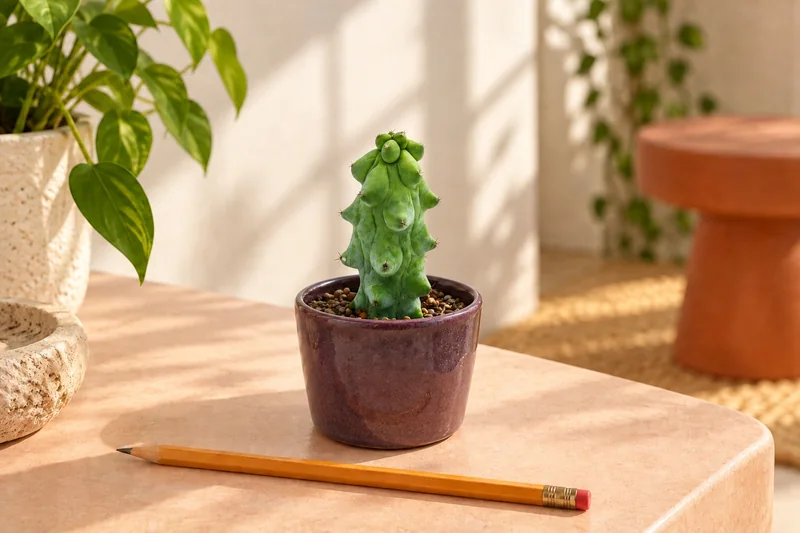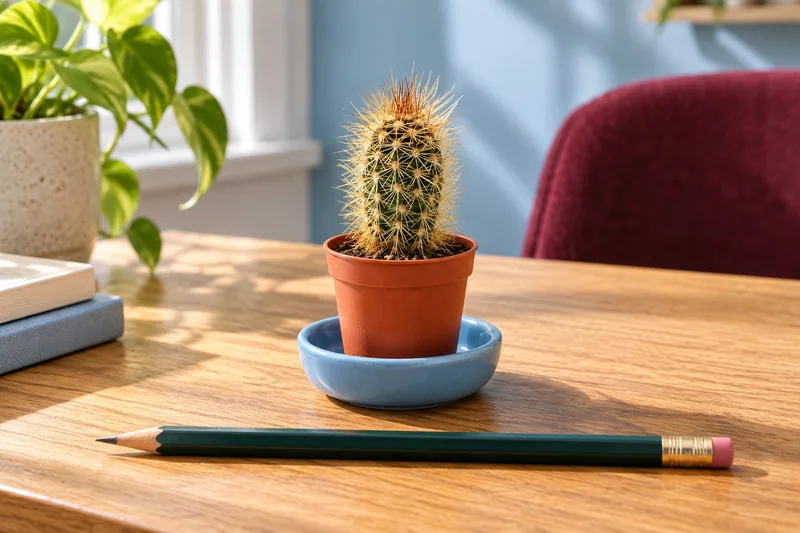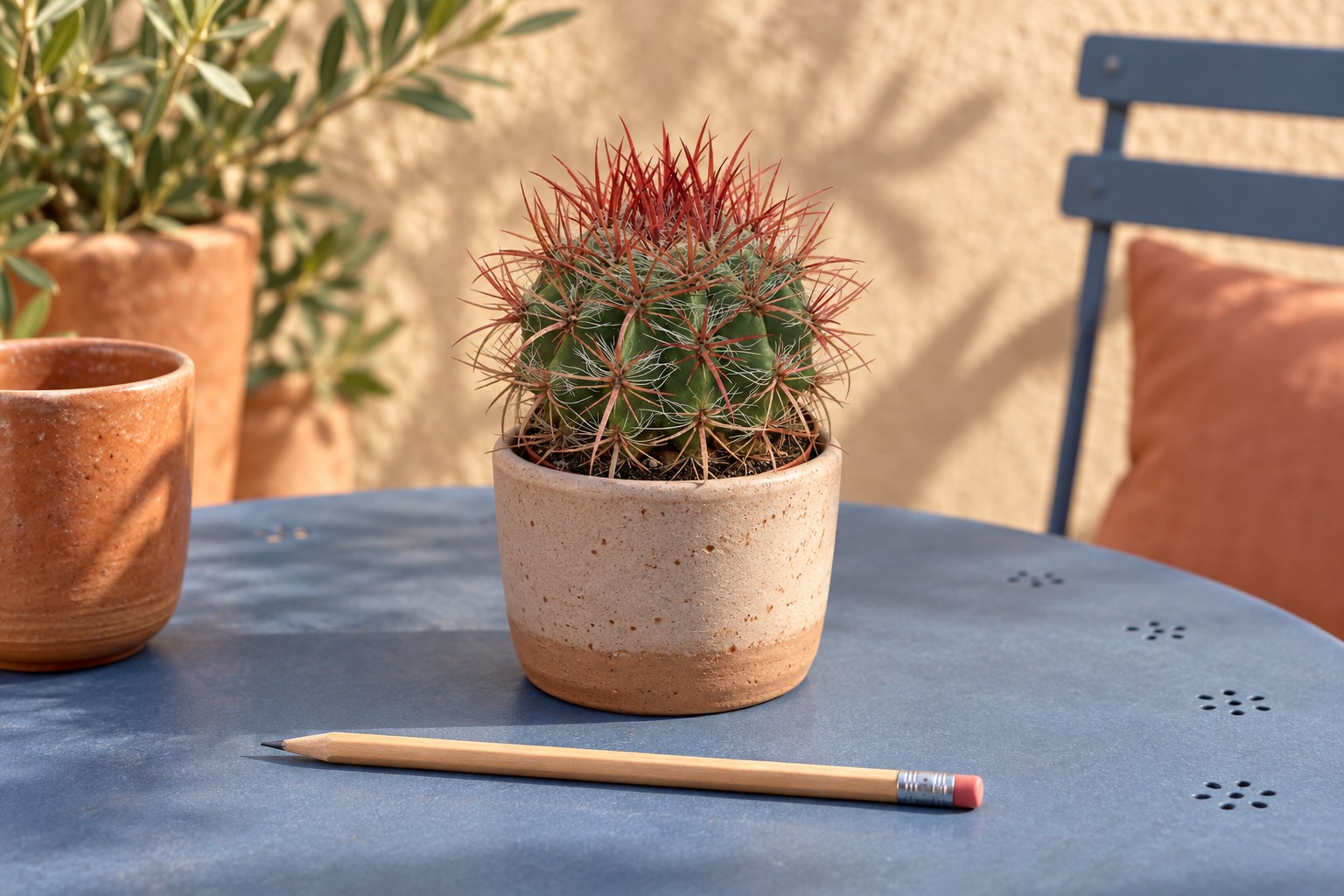
This plant at Exotenherz
Check the shop offer for current availability, price and what is included.
Product details, availability and delivery information are provided in the shop offer.
Your care table
| Topic | What to do | Why it helps |
|---|---|---|
| Light | Sunny after careful acclimatisation. | Insufficient light can stretch the body unnaturally. |
| Watering | During growth, water thoroughly after the root ball dries. | A clear alternation supports healthy roots. |
| Drainage | Remove all excess water. | A wet stem base is at risk of rot. |
| Compost | Structurally stable, free-draining cactus compost. | Compacted wet compost is unsuitable. |
| Winter | Bright and frost-free; largely dry. | Resting growth requires little water. |
| Fertiliser | Sparingly during growth, following the label. | Overfeeding cannot accelerate healthy development without limit. |
| Handling | Use suitable protection against spines. | Strong spines penetrate thin materials. |
| Pruning | No routine shaping. | The intact growing point continues natural growth. |
Check the compost and pot weight. The care table explains how far the compost may dry.
Water only when needed. The water should reach the root ball without spilling over the rim.
Remove surplus water from the saucer or cachepot. Then return the plant to a suitable position.
A small globe with plenty of structure
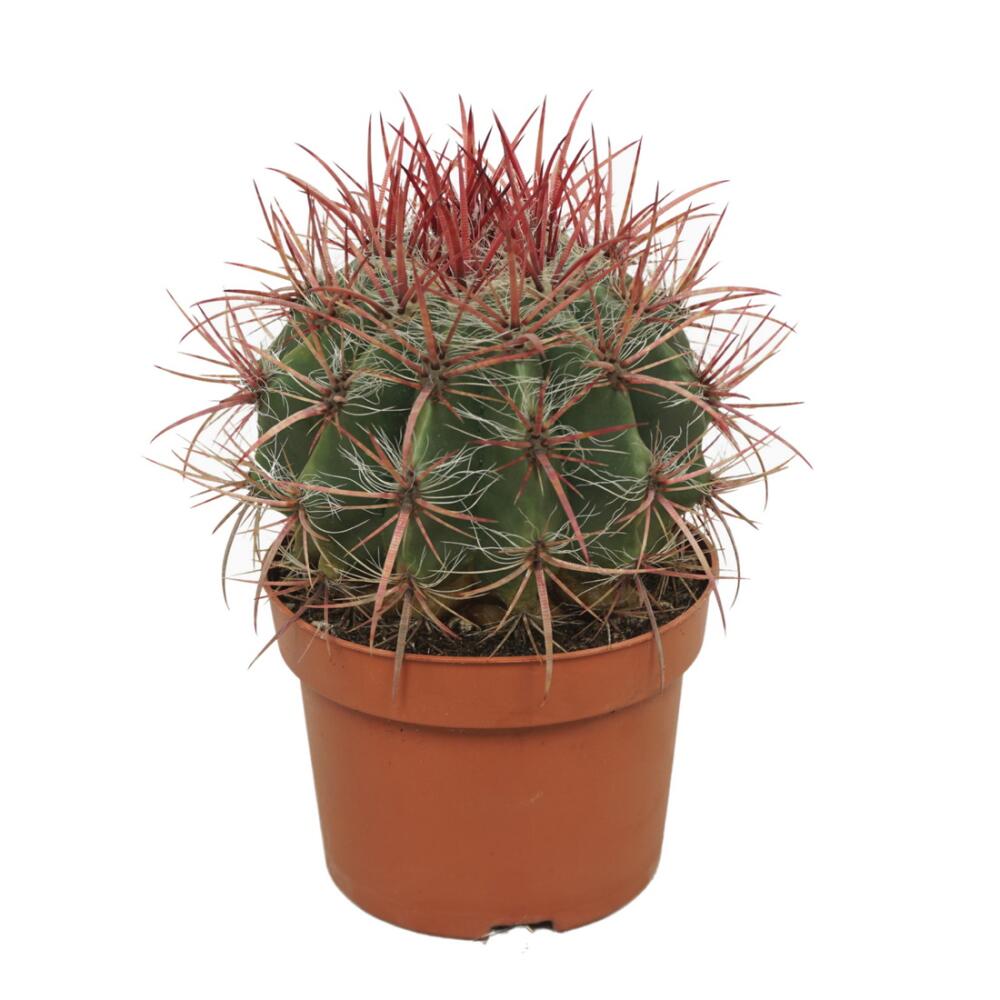
The young cactus has distinct ribs and a dense pattern of red spines and finer pale bristles. The offer lists a 12 cm pot with approximately 15–17 cm total height. The plant body is correspondingly small and sits low above the container. A metre-high specimen from a Mexican nature photograph would not be an appropriate delivery illustration. The shade of red can also vary with the age of the spines and the individual specimen.
Two botanical names for the same context
The shop uses Ferocactus stainesii. Kew lists this name as a synonym of Ferocactus pilosus. Both search terms therefore remain findable in the portrait. The species belongs to the cactus family and comes from Mexico. Young plants are globular; older ones can develop barrel-shaped bodies. The ribs allow volume changes as water reserves vary. Spines are permanent plant parts, not decoration that should be removed to make handling easier.
Sunlight makes the structure strong
A sunny position is important, but the change must be gradual. After dark transport or winter cultivation, do not place it immediately in the hottest midday sun. Too little light can cause undesirable stretching of new growth. A bright, sunny conservatory or suitable windowsill works better than a dark shelf. In a warm summer, an outdoor position protected from rain is possible. The pot must stand securely there and remain protected from prolonged rain.
Water thoroughly and let it dry again
During active growth, water after the root ball has dried completely. Then allow all excess water to drain away. Do not regularly wet only the surface. Free-draining, mineral-based cactus compost and a drainage hole make the alternation between water supply and dry intervals easier. A small pot may dry faster in warmth but remain surprisingly moist in cool weather. Check its condition and weight. Persistent moisture at the stem base is unsuitable.
Repot without pressure on the body or spines
When the root ball is densely rooted or the compost exhausted, repot carefully. Use appropriate protection and aids; thin household gloves do not reliably stop strong spines. Do not grip the cactus by the crown or squeeze it forcefully. Provide only a little more root space. Feed sparingly according to the label during growth. Shaping is not normal care for a healthy globular cactus. Seed is the typical means of propagation; do not pre-emptively divide the plant body for this purpose.
Plan for a quiet winter rest
Overwinter in bright, cool and reliably frost-free conditions, keeping it largely dry. In a warm living room, observe and adapt cultivation to the light and the leafless stem; do not force growth by generous winter watering. Slight shrinkage can occur during rest. Soft, dark patches or an unstable stem base are warning signs instead. Watch for mealybugs between areoles and distinguish them from the natural pale bristles. Flowers require suitable cultivation and sufficiently developed plants; they are not promised for this small delivery size.
One plant, several views
Good to know
Why does the portrait also mention Ferocactus pilosus?
Kew lists stainesii as a synonym of this name. This keeps the shop offer understandable botanically and through search.
Will it always remain globular?
Young plants are globular, while older ones may become barrel-shaped. This takes considerably longer than one season.
Must I remove the white bristles?
No. They are part of its natural appearance.
Is it delivered with flowers?
Flowers are not promised for this offer. The spines and ribs are already its main ornament.
Sources and editorial note
- Product and delivery contents: Exotenherz
- Royal Botanic Gardens, Kew: botanical classification
- Royal Horticultural Society: plant and care information
Sources checked: 15 September 2026. Product information and the contents of delivery follow the linked shop offer. Care advice was checked against the cited specialist sources and should still be adapted to the plant’s condition, position and season.