This plant at Exotenherz
Check the shop offer for current availability, price and what is included.
Product and delivery details are given in the individual offer.
Your care table
| Topic | What to do | Why it helps |
|---|---|---|
| Position | Place in bright indirect light, protected from hot window sunshine. | Strong leaf surfaces need daylight and gradual adjustment to direct sun. |
| Watering | Let upper soil dry slightly, then moisten evenly. | Firm leaves allow short dry spells but not permanently wet roots. |
| Drainage | Let the nursery pot drain and remove remaining water. | A filled decorative pot deprives the ball of air. |
| Soil | Choose structurally stable peat-free houseplant compost with good drainage. | A growing rubber plant needs supportive airy root space. |
| Leaf care | Remove dust with a soft damp cloth, supporting the leaf underneath. | Clean surfaces receive light without damage from hard rubbing. |
| Feeding | Supply moderately by fertiliser label only in active growth. | Nutrients cannot replace brightness and are usually reduced in winter. |
| Pruning | Shorten selectively during growth if needed and wear gloves. | Pruning can encourage branches; escaping milky sap may irritate. |
| Repotting | Give a little more room only when densely rooted. | A young plant cannot quickly root through a huge wet pot. |
Check the compost and pot weight. The care table explains how far the compost may dry.
Water only when needed. The water should reach the root ball without spilling over the rim.
Remove surplus water from the saucer or cachepot. Then return the plant to a suitable position.
A leaf pattern with weight and quiet
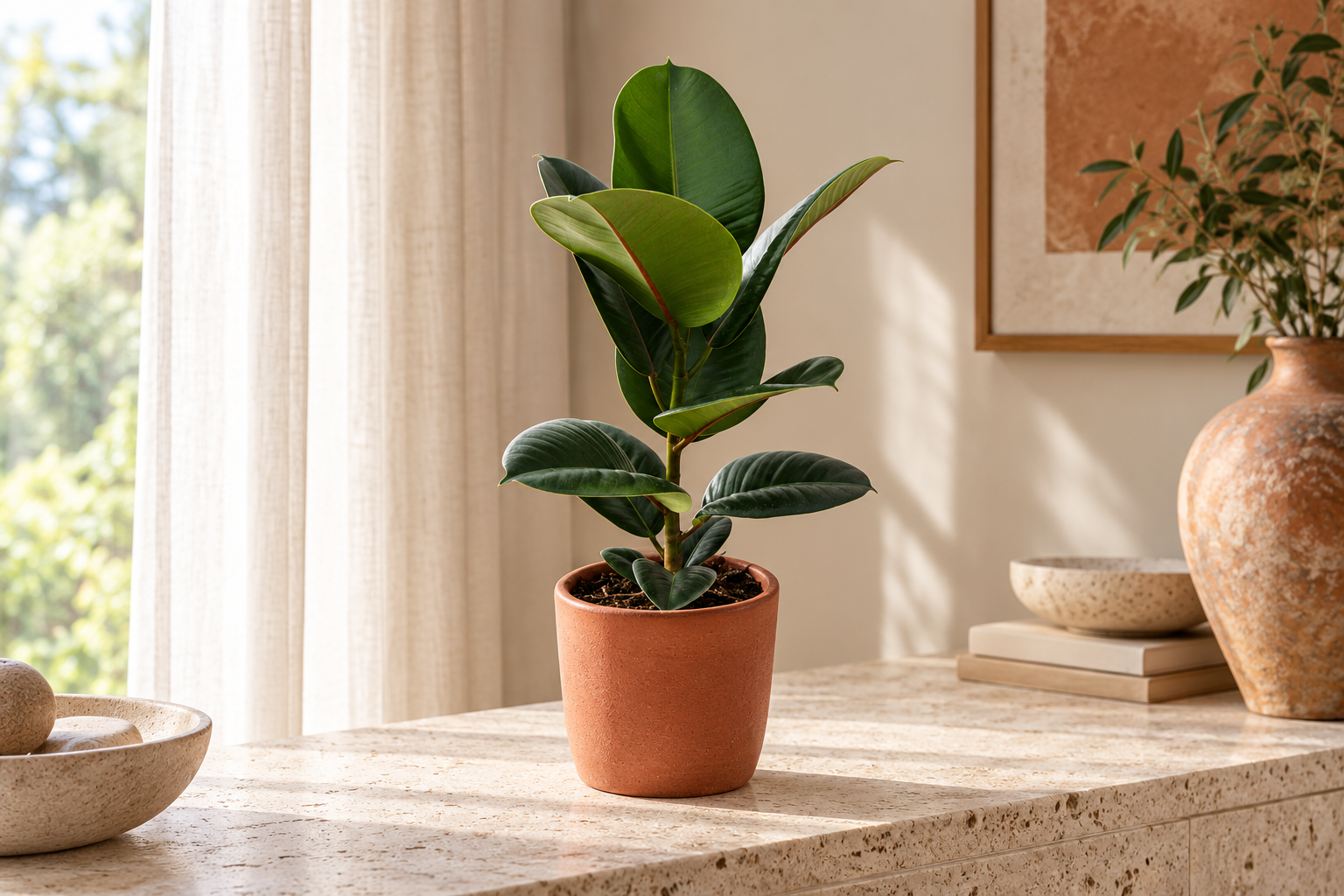
Robusta is recognisable from a distance: broad elliptical leaves sit on a strong upright shoot, forming dark green surfaces. Their leathery tissue reflects window light without extra colour. From the side the midrib and firm edge show. Young leaves first appear narrowly folded at the top and unfold from their own sheath. This is not a damaged leaf requiring removal. In a quiet plant position the contrast between fresh growth and older dark foliage stands out. The original photograph shows a young plant with a manageable leaf count; living specimens develop their own arrangement.
Robusta belongs to the rubber plants
The botanical name is Ficus elastica Robusta. North Carolina Extension explicitly names Robusta as a selection with deep green waxy-looking leaves. The species belongs to Moraceae, the mulberry family, and comes from South and Southeast Asia. There it can develop as a tree on a very different scale than indoors. Rubber plant’s name relates to milky sap formerly used for rubber production. That explains a name; it is not advice to collect sap. Cutting can release drops affecting skin or surfaces. The plant is ornamental and should stay out of reach of children or pets that chew leaves.
Delivery is a beginning
The current offer describes a 17-cm pot and roughly 50 to 60 cm total height. This guidance covers the offered potted plant, not a lasting upper limit. Suitable culture brings new leaves and longer shoots; an adult rubber plant needs increasing room sideways and overhead. Plan a stable place where foliage is not constantly pressed against a wall. Hold the transport pot when unpacking and release wrapping without pulling leaves. Then check soil and drainage. Immediately moving into the largest available decorative pot does not simplify care. The young form can initially settle into its new position.
Bright light with a gentle transition
Robusta grows well in bright indirect daylight. Some morning sun can suit after acclimatisation; hot afternoon sun through glass needs more protection. Do not suddenly move it from shipping packaging to an overheated south window. A sheer curtain or slight distance from glass eases the change. Deep inside the room leaves remain green but healthy new development needs enough light. Avoid cold draughts and frequent moves between completely different places. A consistently bright living position helps interpret new growth changes sensibly. One old lower leaf may drop; sudden extensive loss requires a combined check of light, temperature and roots.
Judge water below the surface
Let upper soil dry slightly before watering the ball thoroughly again. Do not just inspect a pale dry surface: feel with a finger and occasionally lift the pot. Water remains longer inside, especially in larger containers. Water slowly to supply the existing ball, then allow good drainage. Empty water from the decorative pot. Thick leaves do not make rubber plant a cactus, but neither justify daily precautionary watering. If a leaf yellows, check moisture before each correction. An already saturated ball gets no extra water in response to leaf loss.
Accompany structure and leaf surfaces
Dust quickly shows on broad dark surfaces. A soft slightly damp cloth is enough; support the leaf underneath with your hand. Strong rubbing and artificial leaf shine are unnecessary. If the shoot grows too tall for its place, selective cutting during active development can encourage branches. Use clean tools and gloves and protect surfaces from milky sap. The response needs time and suitable culture. Moderate nutrition by fertiliser label supports new leaves. Keep previous planting depth when repotting and offer only reasonably more root space. Stable draining soil combines support with air between watering.
The heating season needs further observation
Robusta stays bright and sheltered in winter. With less growth, the ball dries more slowly, so summer rhythm often means too-frequent watering. Direct radiator heat and cold glass can affect the same plant at once; both need distance. Occasionally inspect undersides, stalks and shoot tips for scale, mealybugs or fine webbing. Early abnormalities are easier to narrow down than a badly damaged planting. Flowers and fig fruit structures are rare in ordinary indoor culture and not this offer’s care goal. Healthy new shoots, firm leaves and increasingly stable structure provide better feedback. Existing damage does not disappear even after conditions improve.
One plant, several views
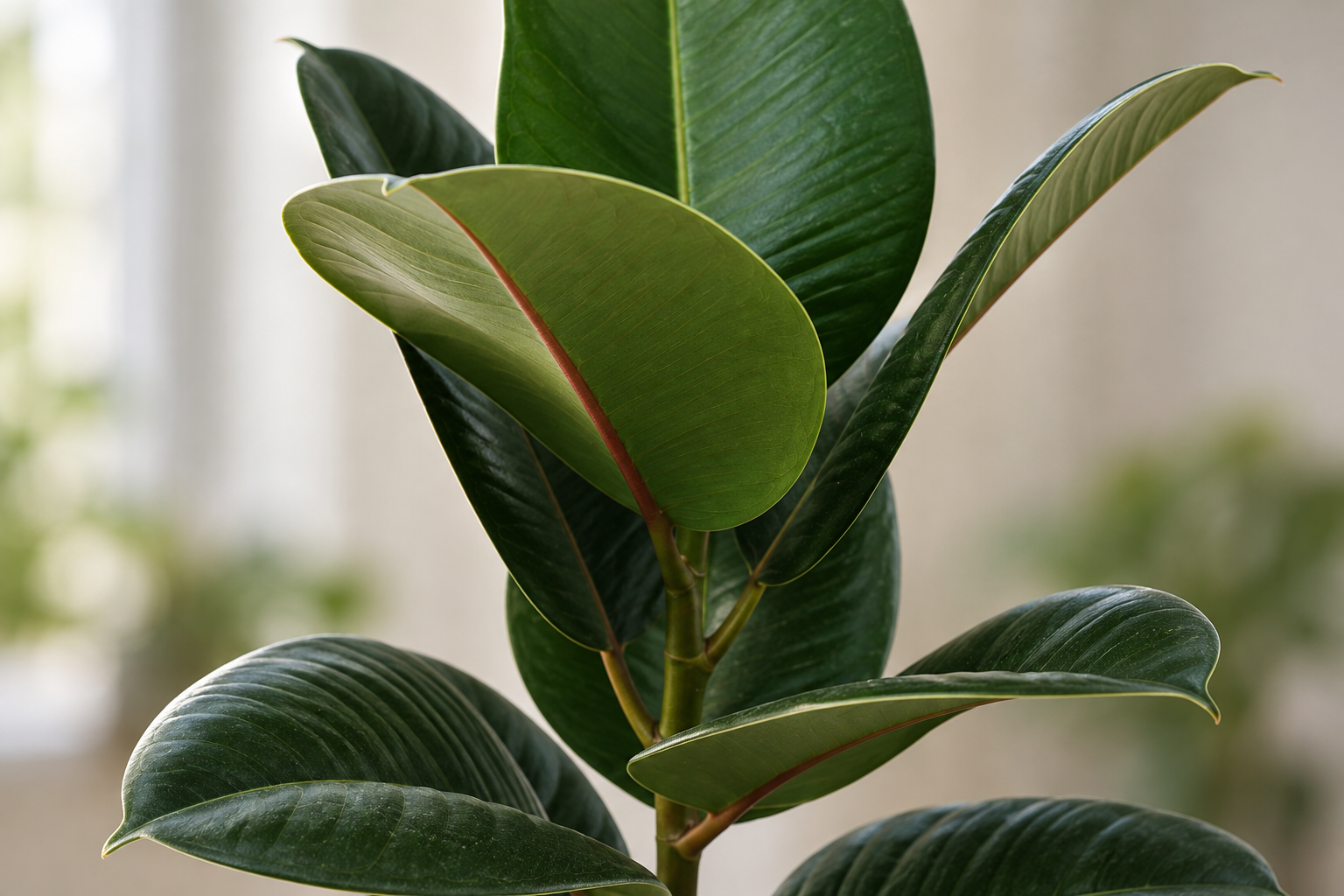
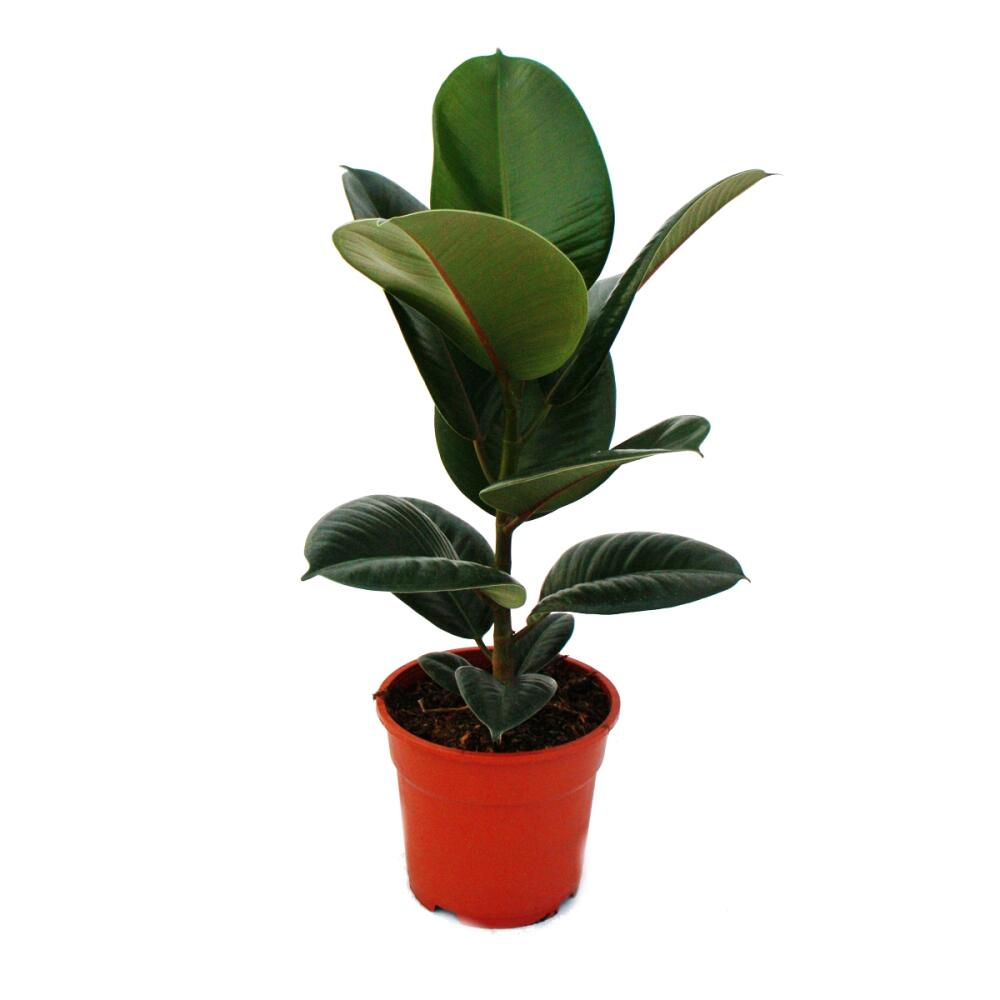
Good to know
Is Robusta a different species from Ficus elastica?
No. Robusta denotes a named selection within that species.
Does the rubber plant stay 60 cm high?
The shop figure describes young delivery. New growth and later shape depend on position and care.
What is the narrow sheath at the tip?
A new leaf unfolds inside. Do not pull off or cut away as a precaution.
Does it tolerate direct sun?
Some morning sun can suit after acclimatisation. Avoid hot direct sun through glass, particularly after shipping.
How often is it watered?
By actual root-ball moisture. Let upper soil dry slightly, supply thoroughly and empty excess.
How do I get branching?
Selective pruning during active growth can encourage it. Use clean tools and gloves.
Do leaves need shine spray?
No. A soft slightly damp cloth is enough for careful dust removal.
Does Robusta flower regularly in the living room?
Flowers and fruits are rare indoors. This offer is described as a foliage plant.
Sources and editorial note
- Exotenherz: offer and original photographs (03.10.2026)
- RHS: Robusta, leaf features and cultivation (03.10.2026)
- NC State: rubber plant and Robusta selection (03.10.2026)
Shop offer, product number, GTIN, availability and original images directly checked on 03.10.2026. Specialist sources directly read. Robusta independently named selection; RHS name status unresolved, NC explicitly names selection. No fixed final height or air-purification claim.