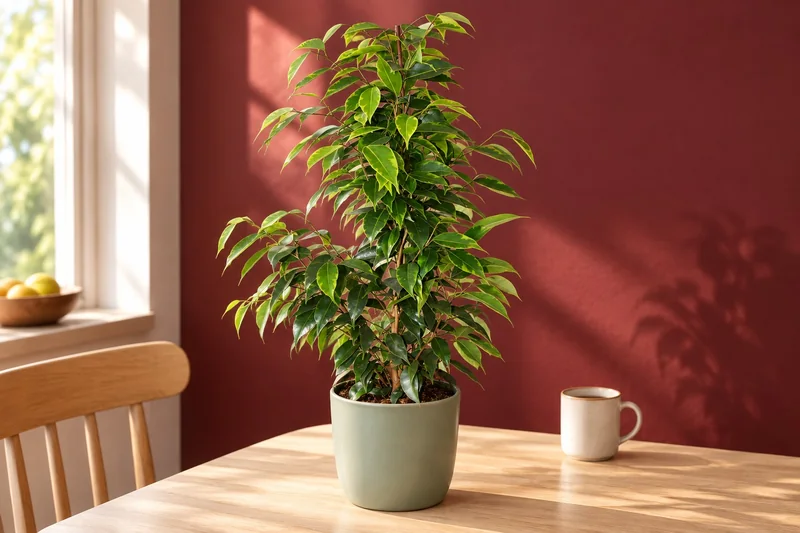
This plant at Exotenherz
Check the shop offer for current availability, price and what is included.
Check the selected shop offer for price, availability and delivery contents.
Your care table
| Topic | What to do | Why it helps |
|---|---|---|
| Light | Bright filtered light reaching the whole crown. | Pale markings do not justify a dark shelf position. |
| Watering | Check the root ball; supply evenly after slight drying. | Avoid drought stress and standing water. |
| Substrate | Structurally stable houseplant soil with free drainage. | Roots need a supplied ventilated root ball. |
| Fertiliser | During fresh growth, feed sparingly according to product instructions. | Good care cannot be accelerated through high doses. |
| Temperature | Warm, without cold draughts or strong changes. | A window position in particular may differ from the rest of the room. |
| Repotting | When well rooted, provide a little more room. | The young delivery plant needs no large reserve container. |
| Shape care | Cut individual branches thoughtfully; use gloves. | Keep milky sap away from skin and eyes while pruning. |
| Observation | Compare new growth, leaf undersides and branch bases. | This helps distinguish care problems and sap-sucking pests earlier. |
Check the compost and pot weight. The care table explains how far the compost may dry.
Water only when needed. The water should reach the root ball without spilling over the rim.
Remove surplus water from the saucer or cachepot. Then return the plant to a suitable position.
A pale border changes the whole crown
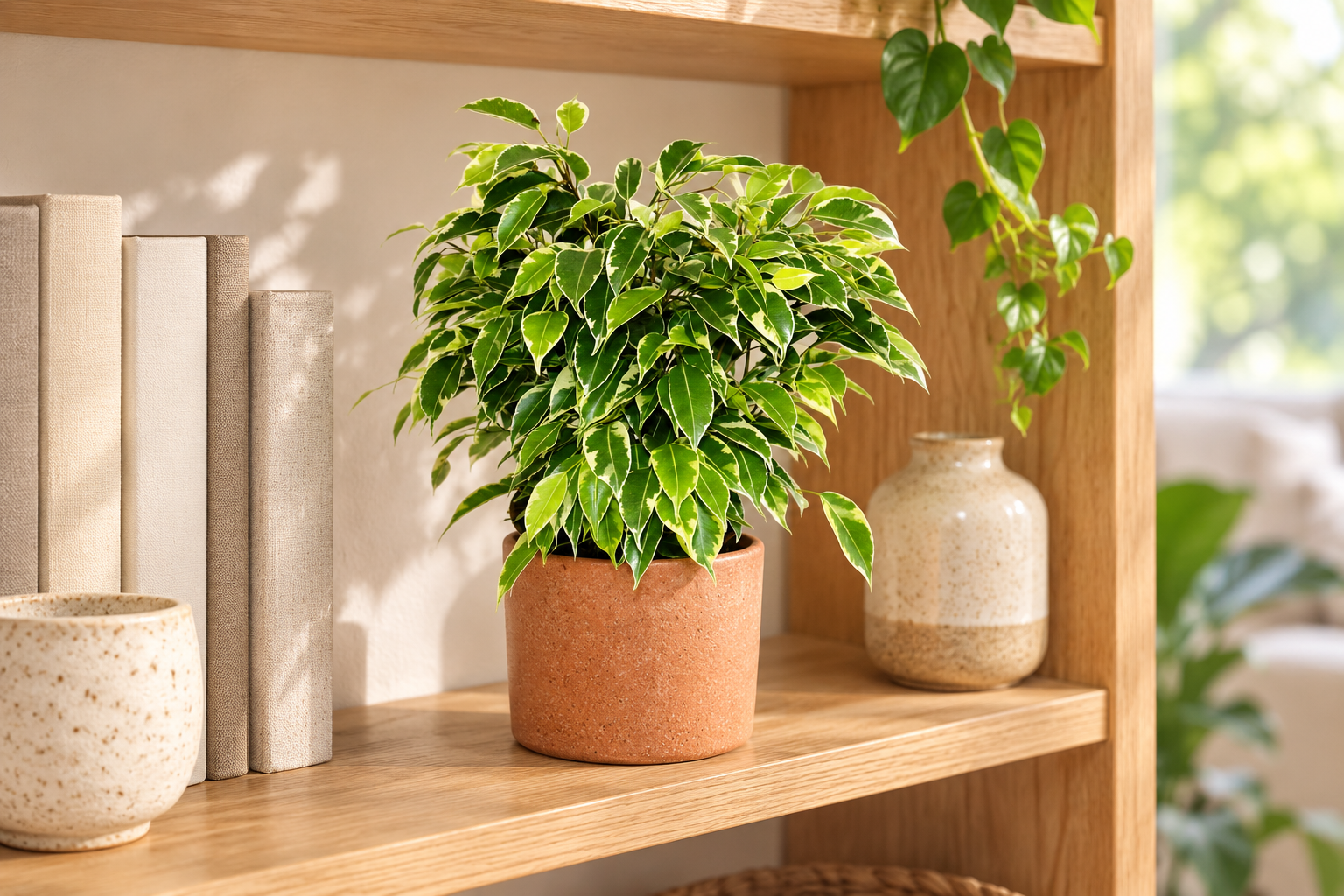
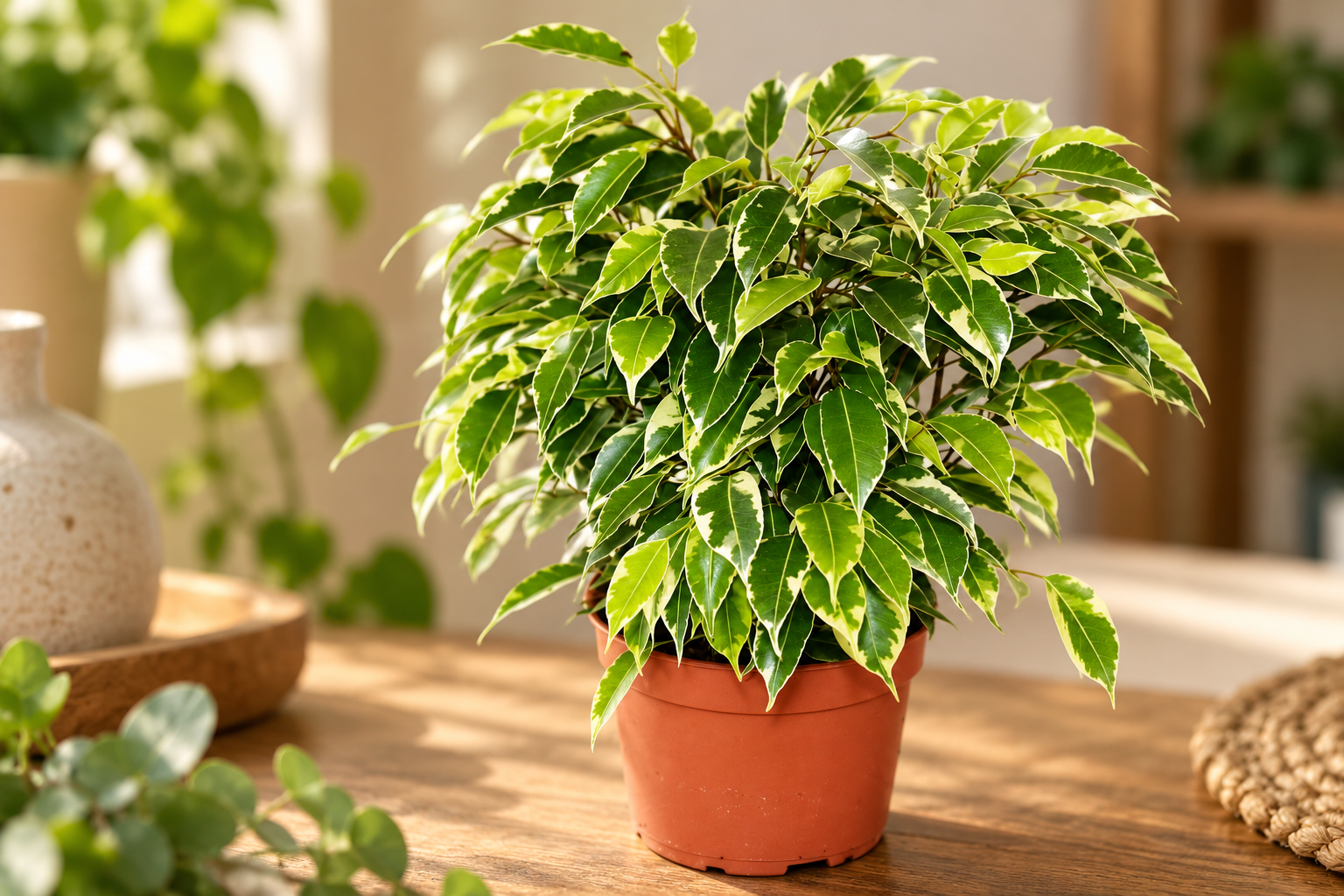
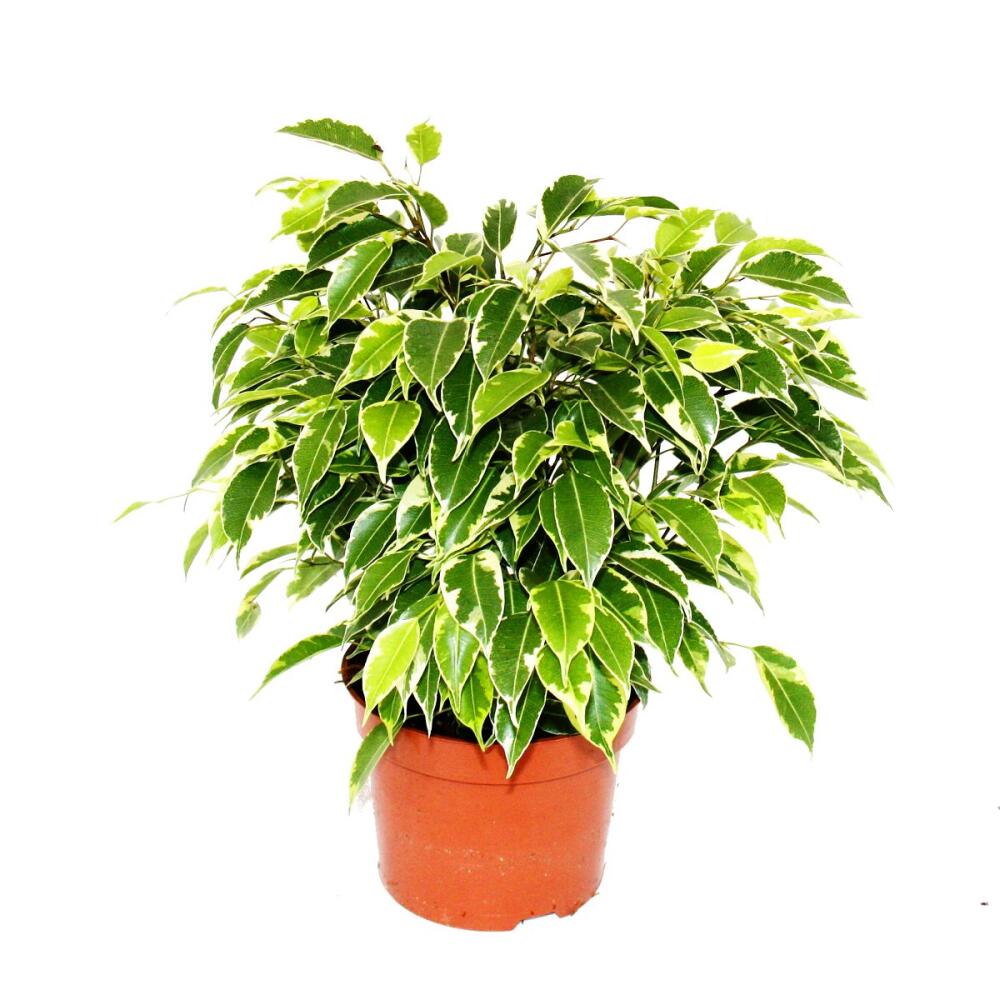
White-edged Kinky looks different from its green neighbour. Small pointed leaves show green centres and creamy margins; the crown stays airy between fine branches. The original photograph clearly reveals these markings on the young plant. It needs neither an artificially thick trunk nor large tropical leaves to attract attention. On a bright shelf, its effect comes precisely from little leaf surfaces that receive light differently.
Do not confuse the offer with a finished indoor-tree size
The plant is offered in a 12 cm pot at about 20–25 cm overall height. The distance between pot and leaf tips thus remains manageable, but new shoots later need more room. When choosing a shelf, consider the entire crown rather than just pot diameter. A stack of books or wall should not push foliage aside constantly. Our scene shows the young scale; furnishings and containers are styling, not supplied accessories.
Provide light without stressing foliage
Place Kinky bright with protection from hot direct midday sun. A shelf beside a bright window may suit better than a windowsill immediately behind heated glass. Also look towards the light from the plant’s perspective: a shelf board above or objects standing close in front may make the position considerably darker. Consistency helps while settling in. Initially keep a suitably chosen position and judge development by healthy new leaves.
Watering beneath a finely branched crown
To check soil, move branches gently aside without pulling leaf tips. The inner pot can then be lifted and taken out for watering. Supply a slightly dried root ball slowly and evenly; after drainage, no water should return to the decorative pot. A dense crown sometimes makes the soil hard to see. Precisely for that reason, a brief hand check is more useful than assuming pale leaf margins already indicate dryness. They belong to this form.
Preserve fine growth gently
Individual overlong branches can be shortened if they disturb the desired shape. View the crown from several sides before cutting so no large gap suddenly appears. Wear gloves and catch milky sap on a suitable surface. Feed moderately during active development and, if needed, move a well-rooted root ball into the next suitable pot. A generous quantity of fresh unrooted soil often instead makes moisture checks harder.
Less light changes care needs
In winter, the crown may quietly remain in its bright position as long as it touches neither cold glass nor hot heating air. Check whether soil now dries more slowly and extend intervals between waterings accordingly. The plant should nevertheless not dry completely right to the root-ball core. Fertiliser follows visible development. A new year or a particular month alone is no reason to supply a resting little weeping fig abundantly.
Distinguish markings from damage
Cream-white edges are a Kinky feature; brown dry patches or sticky deposits are not. With stronger leaf fall, check position and water balance together. Also examine fine branch forks for scale insects or cottony deposits. Transport may trigger temporary foliage loss; persistent problems deserve a closer look. Remove pruning waste and fallen leaves from accessible surfaces. This weeping fig is intended for looking at and caring for, not consumption by people or animals.
One plant, several views
Good to know
Why are leaf edges so pale?
Cream-white edges belong to the markings of the offered Kinky. They are not automatically a care mistake.
Is Kinky a bonsai?
The specific offer shows a young finely branched weeping fig, no tree with bonsai styling.
How large is it at delivery?
The shop states a 12 cm pot and about 20–25 cm overall height. This is no ultimate height.
Why do leaves fall after transport?
The weeping fig may respond to changed conditions. Also check draughts and the root ball, and avoid more frantic changes.
Should I feed more often because leaves are pale?
No. Markings are no sign of extra nutrient needs. Feeding follows growth and product instructions.
Can I put it close beside heating?
A position in direct hot airflow is unfavourable. Check the actual location rather than just general room temperature.
Sources and editorial note
- Exotenherz: offer and original images (02.10.2026)
- NC State Extension – Ficus benjamina (02.10.2026)
- RHS – Ornamental figs (02.10.2026)
- Ball Horticultural – Ficus Kinky cultivation guidance (02.10.2026)
Shop offer, article number, GTIN, availability and original images checked directly on 02.10.2026. Specialist sources read directly. Shop variant 175002112020 and original photograph checked, retrieved 02.10.2026. White Kinky with cream leaf margins; not illustrated as the green form. Individual text with Ficus benjamina care foundations; no air-purification advertising.